Visa
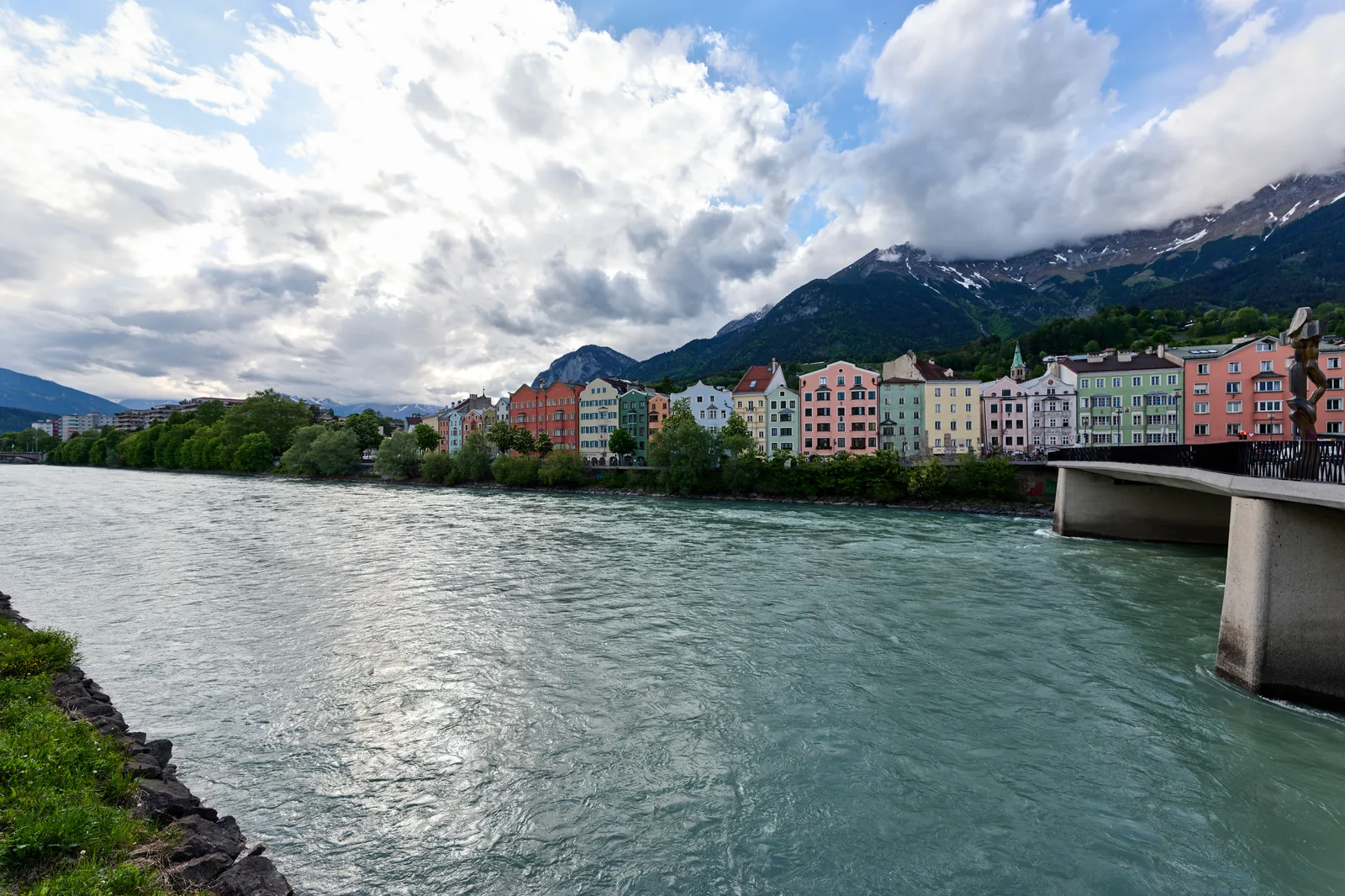
Innsbruck: choose the city and the mountains together
Innsbruck makes its strongest case when you want an urban base with mountain excursions, rather than a holiday spent entirely in a resort. A visit can put the Golden Roof, imperial apartments and a cable-car journey on the same itinerary. The practical question is how much time to reserve for each. Mountain weather, maintenance periods and different last departures can matter more than the distance on a map.
For a first visit, allow three days if you want both historic sights and a flexible mountain day. Two nights can also unlock a participating hotel's guest card, although its benefits differ from the paid sightseeing pass. For a possible move, add time to inspect actual housing and test journeys to work or university. An attractive weekend in the centre cannot establish whether an apartment, commute and monthly budget will work throughout the year.
A bridge, a court and an Olympic identity
The city's name recalls its crossing of the Inn. Its medieval market developed into a seat of Habsburg power; the official historical timeline records the court's move from Meran to Innsbruck in 1420. Maximilian I subsequently made Innsbruck a favoured residence. That history helps explain why an Alpine city has such substantial imperial monuments rather than simply a picturesque collection of mountain hotels.
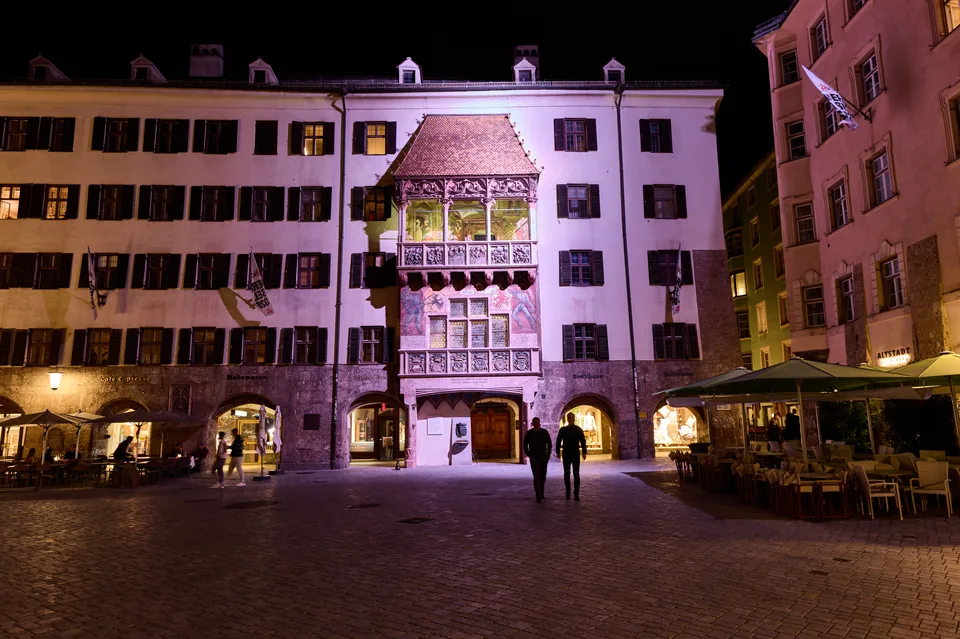
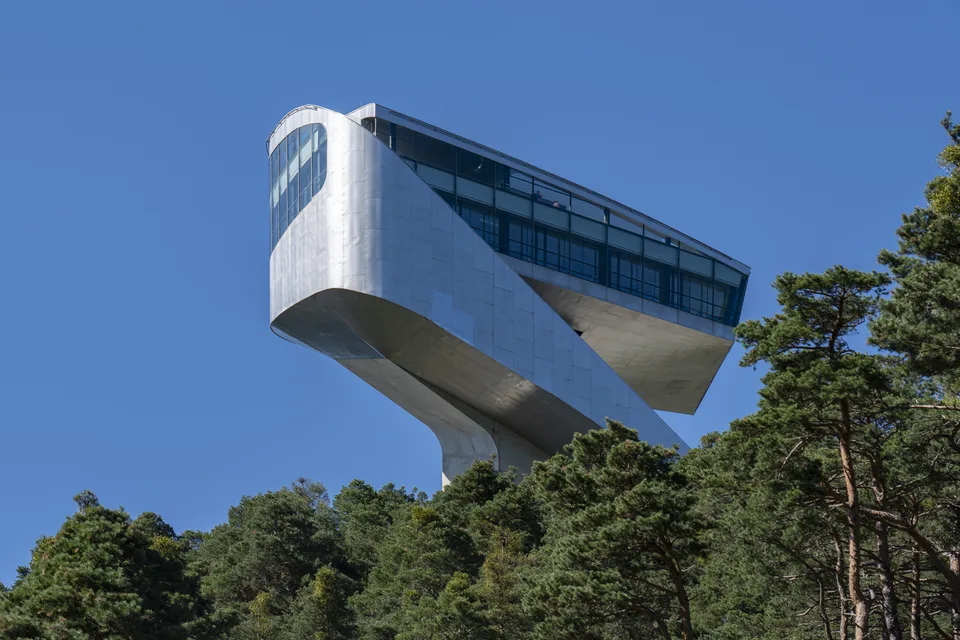
The Golden Roof gives that political ambition a remarkably compact form. Maximilian commissioned the ornate bay between 1497 and 1500, covering it with 2,657 gilded copper shingles. The metal is copper beneath the gilding, rather than solid gold. Centuries later, the Winter Olympics of 1964 and 1976 added another layer to Innsbruck's identity. Zaha Hadid's Bergisel ski jump and Hungerburg funicular stations bring modern architecture into a landscape already shaped by older monuments.
Read the neighbourhoods through your daily journeys
Begin with the Old Town for historic sightseeing, then look beyond it before choosing a longer stay. The tourism board's neighbourhood cycling circuit connects Dreiheiligen, Pradl, Wilten and the older areas of St Nikolaus and Mariahilf across the Inn. It offers a useful way to understand how the city fits together. The published circuit is roughly 10.5 kilometres; despite its “Walk” title, it is described as a cycling route. Observe posted cycling restrictions in the Old Town.
Pradl's Rapoldipark provides a reason to explore beyond the monumental centre. Wilten offers shops and varied places to eat around a different set of everyday streets. Marktplatz and the river paths connect another side of the centre with St Nikolaus and Mariahilf. For housing, compare individual addresses rather than assuming an entire district is quiet, inexpensive or convenient. Check the route to your own campus or workplace, the nearest food shop and the final evening connection.
The Golden Roof and imperial apartments
You can appreciate the Golden Roof from the street before deciding whether its museum deserves a place in your day. The municipal museum page explains the exhibits on Maximilian's era and lists standard admission at €6. From October through April, the museum opens Tuesday to Sunday, 10am–5pm, with additional holiday closures. From May through September, its regular schedule is daily. Viewing the exterior and entering the museum are separate experiences, so budget accordingly.
The nearby Hofburg museum requires another choice: the imperial apartments, the Maximilian exhibition and the temporary exhibition have separate tickets and combinations. In 2026, adult entry to the apartments costs €10.50; apartments plus Maximilian cost €16. Regular hours are 9am–5pm, with last entry at 4.30pm. The published maintenance closure runs from 11 January to 7 February 2027. Check that calendar before arranging a winter visit around palace interiors.
Hofkirche and a realistic museum plan
The Hofkirche visitor information lists a €9 adult single ticket and a €14 combined museum ticket. The combined ticket allows one admission to each participating venue within a year; it does not make every museum available on every date. The Ferdinandeum remains closed for renovation until 2028, despite appearing in some lists of included attractions. Build your plans around the venues actually operating during your stay.
Hofkirche normally opens Monday to Saturday from 9am to 5pm, but Sundays and public holidays begin at 12.30pm. The usual visitor entrance is through the adjacent Folk Art Museum. Visitors needing accessible entry should check the museum's instructions for the church's main entrance on Universitätsstraße. Choose one substantial museum visit for a morning or afternoon rather than buying a combination solely because it includes more buildings than you can comfortably visit.
Nordkette: plan the return before the ascent
The mountain excursion needs its own timetable. Nordkette's operating calendar gives different hours for Hungerburg, Seegrube and Hafelekar. A late Hungerburg departure does not mean the upper cable cars remain available equally late. Check the final descent for every stage you intend to use, and leave time to return from a viewpoint before boarding. Carry layers and suitable footwear even when the city feels warm.
For autumn 2026, the published summer season ends on 1 November. Maintenance closes the system from 2 to 19 November, ahead of the winter season starting on 20 November. These dates are particularly important for a November city break. Weather can also alter mountain plans, so keep an indoor alternative and check operating information on the day. Treat a lift-assisted viewpoint visit and a mountain hike as different outings requiring different preparation.
Bergisel and Ambras: two different excursions
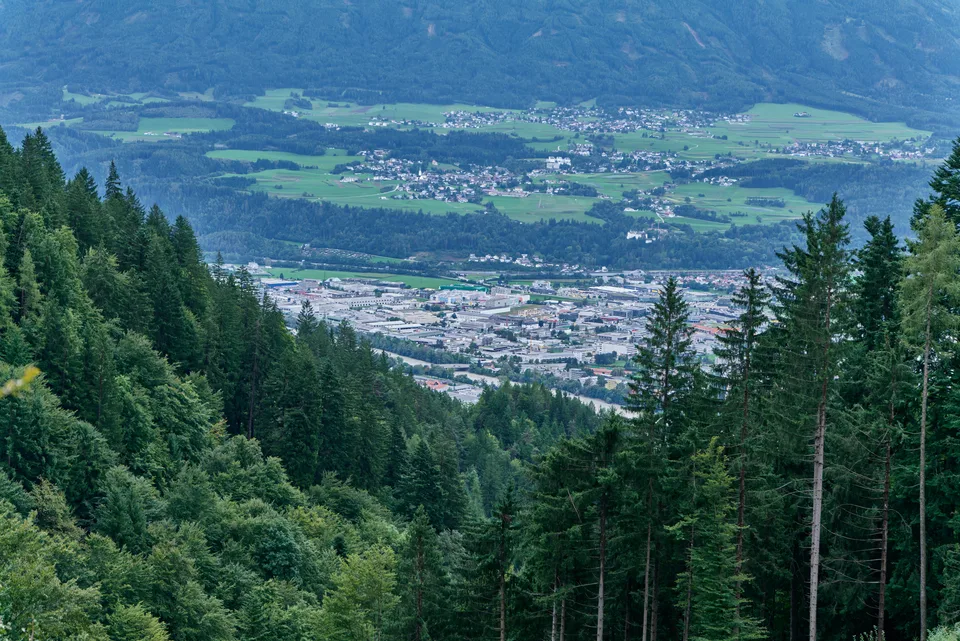
The Bergisel ski-jump visitor page lists adult admission at €12 through the end of 2026, including access by the inclined lift and tower lift. Its normal June–October schedule is daily, 9am–6pm; November–May closes on Tuesdays and otherwise runs 9am–5pm. Last admission is half an hour before closing. The €16 combination with the Tirol Panorama is worth comparing if you intend to visit both, rather than buying automatically.
Ambras Castle needs a separate half-day allowance in an unhurried itinerary. Adult museum admission is €16 online or €18 onsite, and the regular opening is 10am–5pm. The museum closes throughout November. Its transport advice also matters: some nearby tram and bus stops involve steep walks, while bus M serves the castle directly. Historic interiors have accessibility limitations, so consult the detailed arrangements before choosing a route or assuming every room is step-free.
Choose accommodation around the trip you will actually make
For a short cultural break, compare accommodation within a manageable walk of the Old Town with properties near the main station. The first arrangement can simplify evenings in the centre; the second may suit arrival with luggage and onward rail travel. Check the actual walking route, lift access, room arrangement and noise exposure rather than relying on a neighbourhood label. A room facing a busy street can change the experience within the same building.
If mountain outings are the priority, compare the journey to the relevant lift or bus departure before booking. Regional accommodation can work well, but a lower room price should be weighed against connections, evening meals and the last service home. Ask whether breakfast, parking and any guest benefits are included. For apartments, check cooking facilities and arrival arrangements, especially if you expect to arrive after shops close.
For travellers with limited mobility, ask the property specific questions about the entrance, lift dimensions, bathroom and route from the nearest stop. A central address can still involve steps, cobbles or an awkward luggage transfer. The same applies to mountain excursions: consult the operator about the exact stages and assistance required, then build the day around those answers. The castle's historic setting, in particular, should prompt a check of the published access arrangements before booking.
A useful booking comparison includes the total price, cancellation deadline, check-in window and the transport you expect to buy. Ask the accommodation to confirm guest-card eligibility in writing, including the season and length of stay. If a benefit is central to your choice, verify that its attraction or service will actually operate during your visit. An included excursion has little value if its scheduled closure overlaps your entire stay.
Three cards that should not be confused
The paid Innsbruck Card offers 24, 48 or 72 consecutive hours, with adult prices of €69, €79 and €89. It includes specified attractions, local transport and defined mountain-lift benefits. Those benefits are not unlimited rides on every mountain railway: check the participating services and the permitted ascent and descent. Compare the individual tickets for the attractions you actually intend to visit, taking closures into account before deciding the card offers value.
The Welcome Card is a different product, provided through participating accommodation for qualifying stays. The published summer 2026 offer applies from 1 May to 31 October and begins with two nights; additional benefits apply from three nights. Do not carry those summer conditions into a winter booking without checking the relevant seasonal offer. An IVB 24-hour transport ticket is different again: it covers transport in its stated area and does not serve as a museum or mountain pass.
Arriving by air or rail
Innsbruck Airport's public-transport information identifies bus F as the connection between the terminal and the main railway station, taking approximately 20 minutes. This is a bus transfer, rather than a train departing from an airport station. Match your flight time to the current service timetable. An airport announcement about the Sunday FX service from January to March 2026 describes a past seasonal operation and should not be used to plan an October arrival.
For rail travel, use Innsbruck Hauptbahnhof as the starting point for checking your onward journey and accommodation access. Consult the operator's dated journey planner before paying for a connection, particularly when travelling across borders or transferring after a flight. Leave a margin for disruption when combining separately booked services. Check whether your accommodation offers luggage storage so that an early arrival or late departure does not force an unnecessary extra journey.
Local tickets: buy first, then validate correctly
The IVB fare guide lists an adult single ticket at €3.30 and a city 24-hour ticket at €7.30. The single ticket is for a journey to your destination, including permitted transfers, rather than a pass for unrestricted sightseeing. Paper singles have a 45-minute validity after validation; digital singles have 90 minutes. The longer digital period does not turn a single into a return ticket. Use the conditions for the exact product you buy.
IVB's ticket-purchase instructions say tickets are not sold onboard its vehicles. Buy through an approved app, machine or sales outlet before boarding. Paper-ticket validation and ticket purchase are separate steps: validate the relevant paper ticket immediately on boarding, while a digital ticket must be activated beforehand. Airport and main-station machines are useful purchase points. Check the fare area for trips beyond Innsbruck rather than assuming a city ticket covers every regional destination.
Eating well without losing track of the bill
Innsbruck Tourism's food guide introduces Kaspressknödel, bacon dumplings, spinach dumplings and Schlutzkrapfen as useful starting points for exploring regional menus. Cheese dumplings may arrive in beef stock, so a meat-free main ingredient does not establish that the whole dish is vegetarian. Ask about the broth, filling and preparation if that matters to you. Restaurants can provide allergen information; clarify the details instead of guessing from a translated dish name.
Menu prices include VAT, but check any stated cover charge before ordering. Compare a restaurant meal with a simpler bakery or grocery lunch when setting your own food allowance, using current prices rather than a supposed universal daily average. Most shops close on Sundays and public holidays, with limited exceptions. Buy supplies in advance if you are using an apartment kitchen. A market visit can also fit naturally into a walk around Marktplatz and the river.
Build a budget from choices, not an invented average
Start with accommodation for your actual dates, then add arrival transport, local tickets and the attractions you have selected. A day of free outdoor sightseeing has a different cost structure from a day combining several paid interiors and a mountain lift. Use the verified admission prices as individual planning figures, not as evidence that an entire holiday will fit a fixed amount. Check whether an attraction is included before paying separately as well as for a pass.
Keep a separate allowance for meals, equipment hire if needed and changes caused by weather. For a longer stay, do not multiply a visitor's daily budget by thirty and call that a monthly household cost. Housing deposits, utility contracts, insurance and commuting require their own figures. Compare live offers and written terms, and retain room for expenses that are absent from a headline price, such as furnishing an apartment or arranging temporary accommodation.
Seasons: leave a weather-dependent day flexible
The tourism board's climate advice describes warm summers, cold winters and sometimes abrupt transitions in spring and autumn. Conditions in the mountains differ from the valley: carry layers, rain protection and appropriate footwear, and check the forecast for the place you intend to reach. Warm city weather does not establish that an exposed mountain path is suitable. Föhn, the warm Alpine wind, is another reason to pay attention to conditions rather than relying on a seasonal label.
Choose summer for a trip centred on mountain outings, subject to individual operating calendars. A winter visit can combine city sightseeing with snow activities, but book the transport and equipment appropriate to the activity. November requires particularly careful checking because of the maintenance and museum closures described above. Reserve your clearest suitable day for the mountain excursion and keep a museum-based alternative available.
A suggested three-day visit
On day one, start with the Old Town and Golden Roof, then choose the Hofburg or Hofkirche for a substantial interior visit. Spend the later afternoon around Marktplatz and the Inn. This keeps the first day manageable after arrival and leaves room for a proper meal rather than turning every landmark into a timed appointment. Adjust the order around Sunday opening times.
Use day two for Nordkette when weather and operations permit. Check the upper-stage return times before leaving, and avoid adding an ambitious hike merely because the lift makes the ascent convenient. For day three, choose Ambras or combine Bergisel with the Tirol Panorama. If a major attraction is closed, substitute a neighbourhood circuit or a trip to Hall. These are editorial suggestions, not a promise that every attraction will operate on your dates.
Housing and commuting for a longer stay
The University of Innsbruck's accommodation advice describes a difficult private rental market, particularly for furnished stays shorter than twelve months. It also warns that student accommodation is limited and cannot be guaranteed. Begin your search early, compare current offers and confirm the contents of a room or apartment. A visitor apartment with easy booking is not necessarily available or affordable as a permanent home.
Before transferring a deposit, verify the property and the person offering it; the university recommends an in-person viewing or at least a video call. Read the contract for rent, deposit, included charges, furniture, duration and notice requirements. Test the commute from the actual address at the time you would travel. For an outlying property, check the evening return as carefully as the morning journey, and compare total household costs after transport.
Registration, household services and children
The city's residence-registration instructions require each household member, including children, to register within three days of moving into accommodation. The registration form needs the accommodation provider's signature, alongside the required original identity documents. Address registration is free. Arrange the paperwork with the provider before moving day rather than assuming a rental contract alone completes the process.
Ask which utility services you must arrange yourself and which are handled through the building. IKB's service forms provide a starting point for electricity and internet enquiries; confirm availability and contract terms for your address. Families should investigate school placement before committing to housing. Austria's compulsory-schooling rules apply to long-term resident children regardless of nationality. Check admissions, language support and childcare directly with the relevant institution rather than assuming a place follows automatically from moving nearby.
Visitor entry and permission to live or work
Start with the Austrian Foreign Ministry's visa information for your nationality and purpose. Eligible visa-exempt third-country visitors generally have a limit of 90 days in a 180-day period without gainful employment; a Schengen visitor visa is likewise not permission to take a job. Do not assume that changing your accommodation, crossing a nearby border or holding another country's work permit creates Austrian work rights.
For EEA and Swiss citizens, the official residence-rights guidance sets conditions for stays longer than three months, including employment or sufficient resources and health insurance, with separate provisions for students. The registration certificate application is due within four months of arrival. That certificate is distinct from the three-day address registration. Third-country workers should examine the appropriate permit category: the Red-White-Red Card guidance explains that the initial card is tied to a specific employer. Permanent residence has separate requirements; neither a holiday nor an apartment lease establishes it.
Study and health-cover decisions
An offer of a university place should be followed by checking the applicable entry and residence route. OeAD's student-residence information distinguishes arrival travel insurance from the comprehensive cover required for a residence title. Ask your insurer and the responsible authority whether your policy meets your circumstances. Do not assume that ordinary visitor insurance covers every requirement of a longer stay, or that every private medical bill will be reimbursed.
Student residence also does not mean unrestricted employment. For work subject to Austria's foreign-employment rules, OeAD states that the employer must obtain the relevant AMS permit before the student starts. Its guidance provides for permits for up to twenty hours weekly without a labour-market test. Check the exact category and current conditions before accepting work, and keep study funding separate from an expectation of finding a job after arrival.
Nearby alternatives: give Hall its own purpose
Hall in Tirol offers a different focus for a nearby excursion: the history of salt rather than another mountain ascent. The Hall Mining Museum uses a constructed tunnel in the Old Town to explain extraction in the Hall Valley. It is not an operating mine; the valley's salt mining ended in 1967. Visits require a guided tour, so check the current arrangements before travelling rather than treating it as a walk-in museum.
For a longer regional stay, compare the balance you want between historic streets, mountain access and everyday journeys. Innsbruck works particularly well when those elements belong in the same trip. Choose the base and itinerary around verified transport, actual opening dates and your own priorities, leaving enough room to enjoy the city between excursions.
Official planning resources
Reviewed 15 October 2026. Use the official resources linked throughout this guide for admission, transport, housing and immigration decisions. Prices, services and rules can change; confirm the details relevant to your dates. Photography illustrates the locations and is not a live view.
View all official resources
- Innsbruck Tourism: Innsbruck Card
- Nordkette: operating seasons and maintenance
- Innsbruck Airport: public transport
- IVB: fares and ticket validity
- IVB: ticket purchase locations
- Ambras Castle: visiting, admission and access
- Innsbruck Tourism: summer 2026 Welcome Card
- City of Innsbruck: Golden Roof museum
- Bergisel: 2026 admission and seasonal hours
- City of Innsbruck: residence registration
- Burghauptmannschaft: Innsbruck Hofburg museum
- Tyrolean State Museums: Hofkirche visitor information
- Austrian migration portal: EU and Swiss residence rights
- University of Innsbruck: incoming student accommodation
- Innsbruck Tourism: neighbourhood cycling circuit
- Austrian Foreign Ministry: visas and permitted stay
- Austrian migration portal: work and residence permit FAQ
- Innsbruck Tourism: seasonal climate and mountain preparation
- IKB: household utility forms and service documents
- Innsbruck Tourism: food, allergens and shop hours
- Innsbruck Tourism: historical timeline
- Hall-Wattens Tourism: Hall Mining Museum
- Austrian government: compulsory schooling
- OeAD: student residence and employment
Plan the next part of your journey
Explore the Austria guide, browse other cities or compare consultants for your travel and relocation questions.