Visa
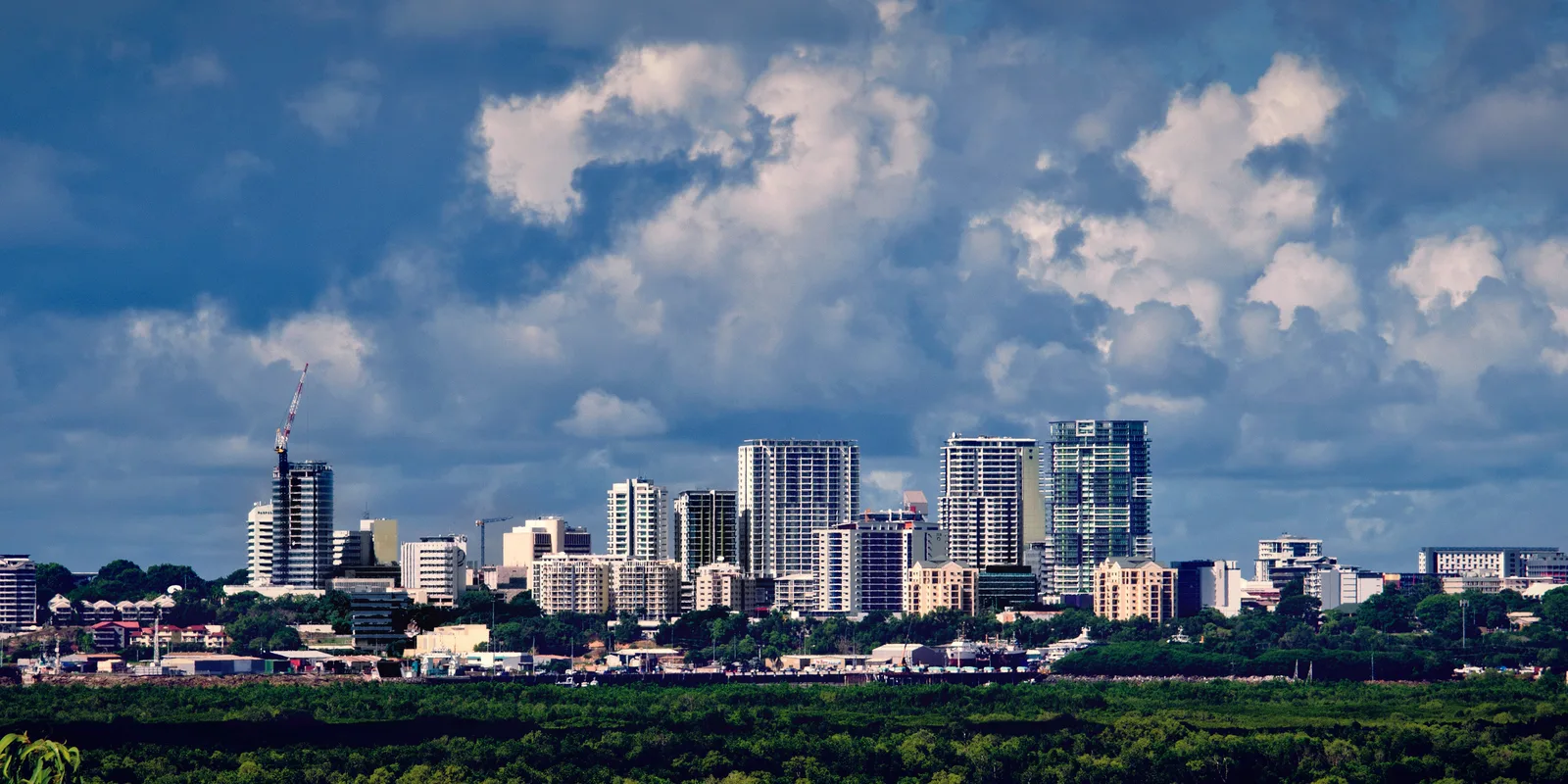
Decide how Darwin fits your Top End trip
Darwin is a harbour city where the season shapes the day. A morning market, an afternoon museum and sunset beside the water can make a satisfying visit without a long checklist. The Northern Territory capital also serves as a starting point for waterfalls, wetlands and journeys farther into northern Australia. Allow three full days for the city and a carefully chosen excursion; add nights if you want a substantial national-park trip.
The important decisions concern timing, transport and expectations. Darwin's coastline is a place to appreciate with proper attention to local water-safety advice, rather than an invitation to swim wherever the beach looks attractive. Its compact central area helps short-stay visitors, but the wider urban region and surrounding parks require more planning. Use VisaWand's Australia country guide alongside this local account when organising entry and a broader itinerary.
Darwin particularly suits travellers interested in combining city comforts with a tropical regional landscape. Someone seeking a succession of large urban museums, or an unrestricted ocean-swimming holiday, may want to compare other Australian destinations. Prospective residents should visit during an ordinary working week if possible. A holiday built around evening markets and a hotel pool provides useful impressions, but it leaves unanswered questions about the commute, household costs and how daily routines change with the weather.
Begin with Larrakia Country and the city's history
Darwin stands on Larrakia Country. Larrakia Nation's account of the Larrakia people explains their continuing relationship with the region's land and sea. That living connection belongs at the beginning of a visit, alongside an interest in museums and colonial history. When considering a cultural activity, establish who leads it and what permissions apply, rather than assuming all Aboriginal experiences represent the same people or traditions.
The City of Darwin's history records the colonial settlement as Palmerston in 1869 and its renaming as Darwin in 1911. The bombing that began on 19 February 1942 and Cyclone Tracy in December 1974 reshaped the city. Present-day buildings and streets therefore tell a story of repeated disruption and rebuilding. Today's separate city of Palmerston should not be confused with that earlier name for Darwin.
Choose a central base or a suburban routine
For an initial visit, the central business district offers a useful concentration of accommodation, dining and access to the Esplanade. The Waterfront is another option for visitors who expect to spend time around its pools, restaurants and nearby Stokes Hill Wharf. Compare the route between your accommodation and the places you will use most, including pedestrian connections and any gradients, rather than judging convenience solely from the district name.
Parap can suit a stay organised around its village shops and Saturday market, while a longer-term address elsewhere should be assessed against work, school and transport needs. A quieter room may be more valuable than proximity to evening entertainment. Check recent property information for noise and building access, and compare the total cost of your likely journeys. An attractive coastal address does not automatically provide a quick commute to every workplace.
Make the wet and dry seasons part of the booking
Tourism NT's weather guidance distinguishes the Top End's dry season, broadly May to October, from the wet season, November to April. The dry usually makes outdoor exploration more comfortable; the wet brings higher humidity, rain and the possibility of disrupted access to remote attractions. Darwin should not be planned using the desert climate of Alice Springs or Uluru, despite their shared territory.
Choose dates around the experiences that matter to you. Seasonal markets and outdoor programs may favour a dry-season visit, while a wet-season city break needs flexible plans and suitable indoor alternatives. Check cancellation terms for excursions and accommodation together. A cheaper room is less useful if your main activity cannot operate, and a dramatic storm is something to observe from a safe place, following local advice.
Distinguish the two Waterfront swimming options
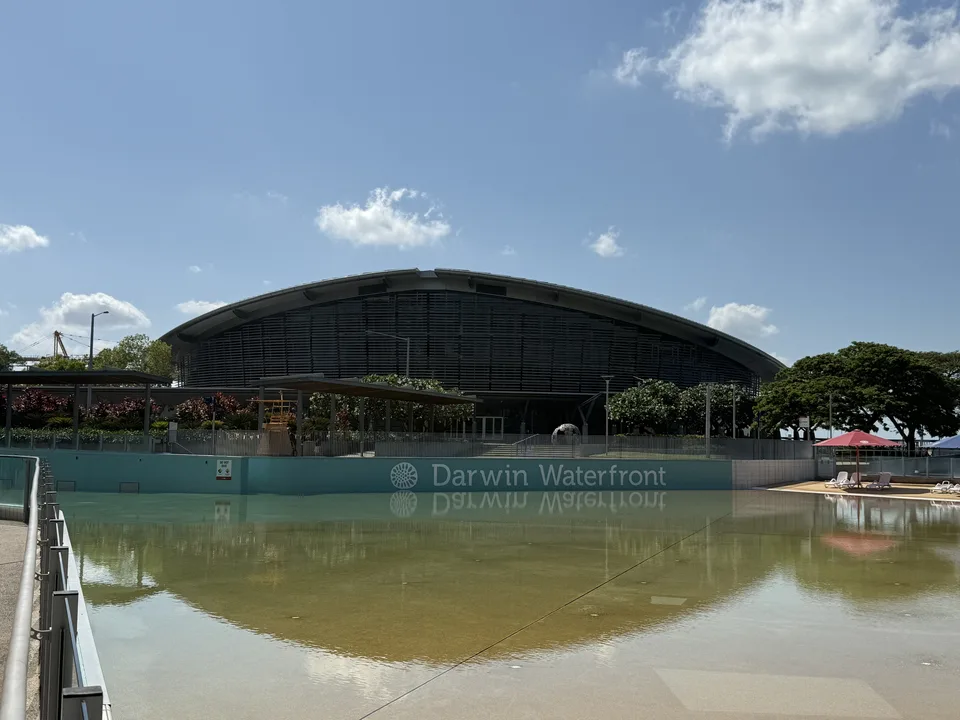
The Waterfront's free saltwater recreation lagoon has a man-made beach, lifeguard patrols and a seawall separating it from Darwin Harbour. Its operator describes filtered water and ongoing monitoring. Follow the current signs and staff instructions, including storm evacuations. Accessibility facilities include a Mobi-Mat and beach wheelchair; contact the precinct if your visit depends on particular assistance being available.
The Wave Lagoon is a separate ticketed pool with generated waves. Current general admission is AUD10 for ages 15 and over, AUD8 for younger children, with children under three free. The published family category covers up to two adults and three children for AUD29. Check maintenance notices before travelling specifically for it. Neither facility's arrangements establish that an adjacent harbour edge or an open beach is suitable for swimming.
Learn the water rules before leaving town
The NT Government's swimming guidance says to enter park water only where a sign marks the swimming area open. Its advice also warns against swimming at Top End beaches and estuaries. Saltwater crocodiles occur in fresh as well as salt water, and seasonal marine-stinger risks add another reason not to treat a calm sea as a safety assessment.
For visitors, the practical rule is straightforward: choose a managed option, check its present status and obey restrictions. A waterfall photograph, a previous traveller's swim or a dry-season date does not replace the current sign. Supervise children closely, avoid jumping from rocks and remember that floods can change submerged hazards. This matters equally on an independent drive and a guided outing; ask the operator how current conditions affect the proposed stops.
Give MAGNT a proper place in the itinerary
The Museum and Art Gallery of the Northern Territory brings art, cultural history and natural history together at its principal Darwin site. It provides useful context for the landscape and communities visitors encounter elsewhere. The museum's Cyclone Tracy exhibition was redeveloped in 2024, and its program also includes accounts of Aboriginal survivors and changing exhibitions of Indigenous art. Check what is showing for your dates.
General entry is free, with some touring exhibitions and public programs ticketed separately. The museum lists daily opening from 10:00 to 16:00, closing on New Year's Day, Good Friday and Christmas Day. Its own transport advice identifies bus 6 to the entrance and bus 4 to Gilruth Avenue, followed by a walk. Do not confuse other MAGNT sites' hours with these: each location has separate arrangements.
Give yourself time to choose a few collections that connect with your interests rather than moving through every room at the same pace. An art-focused visit and a family visit centred on natural history can use the same museum differently. If a particular exhibition is the reason for coming, confirm its dates and any booking requirement first. Leave room afterwards to reflect on what you have seen before travelling to the next stop.
Make room for a Mindil market evening
Mindil Beach Sunset Market operates on Thursdays and Sundays during its season, from the last Thursday in April to the last Thursday in October. The operator lists 16:00 to 21:00. Thursday is the larger trading night; Sunday has fewer stalls. Build your itinerary around the actual weekday and season, since arriving on an arbitrary evening does not produce the same experience.
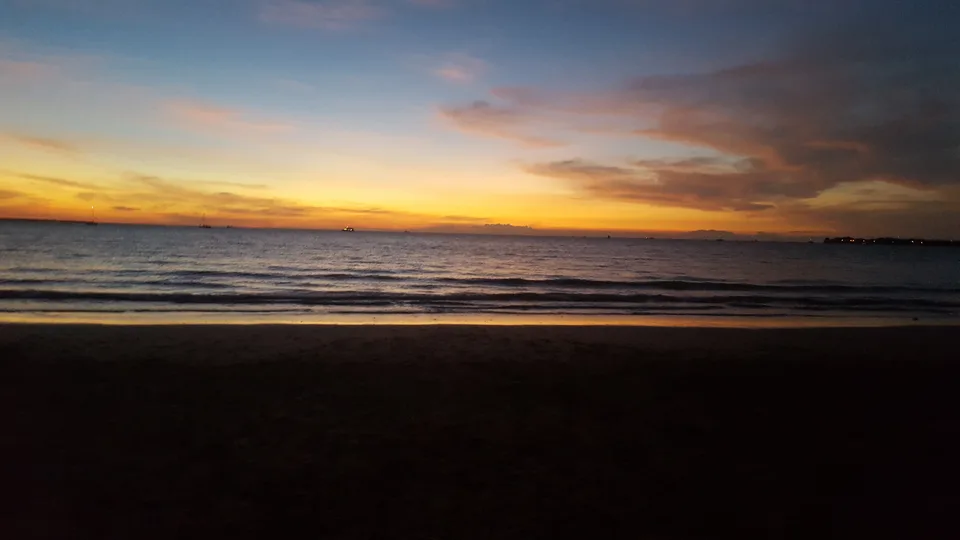
Browse before ordering dinner, then choose portions that leave room for something else if the range appeals. Most stalls accept electronic payment, while some require cash. Ask about ingredients and dietary requirements at the stall; the market's information point can also help. The beach provides a sunset setting, but enjoy that view from shore under the relevant safety guidance. Allow time for your journey home after the market, especially with children.
Use Parap for a different market morning
Parap Village Markets runs on Saturdays from 08:00 to 14:00 throughout the year. Fresh produce, herbs, Asian greens, prepared food and craft stalls make it a useful contrast to Mindil's evening format. Arrive with breakfast or lunch in mind, and leave time to browse the surrounding village shops instead of treating the market as a single food queue.
For a prospective resident, an ordinary shopping morning can be more informative than another excursion. Compare the ingredients you cook with, the practical route from a possible home and what still requires a supermarket visit. For souvenirs, ask who made an item and retain a receipt for significant purchases. Descriptions such as locally made or handmade should be supported by an explanation of the maker and production, rather than inferred from the market setting.
Explore the botanic gardens with current access in mind
The George Brown Darwin Botanic Gardens visitor page lists free entry and garden opening from 07:00 to 19:00. A morning visit can provide a quieter change of pace between markets and museums. Enter through the indicated public access points, use the current map and choose a route suited to the heat and the time you have available.
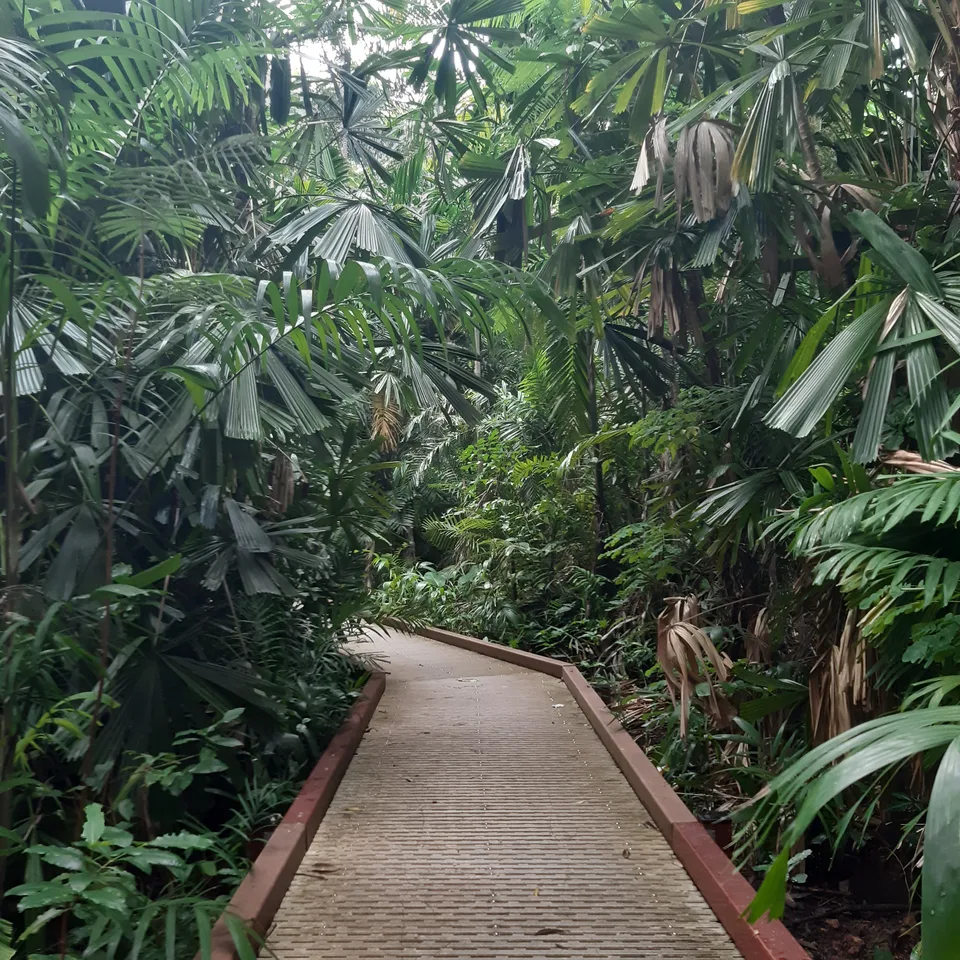
At this review, the government page lists the woodlands, Africa-Madagascar Garden and Rainforest Gully as closed sections. Check again before leaving, and follow barriers even if a photograph or older itinerary shows a route through them. The visitor centre and plant display house have shorter hours than the grounds. A historic image illustrates the setting; it cannot confirm that a particular boardwalk remains open on the day you arrive.
Connect the waterfront with wartime and aviation history
At Stokes Hill Wharf, the RFDS Darwin Tourist Facility combines the Royal Flying Doctor Service story with interpretation of the 1942 bombing of Darwin Harbour. Virtual reality, holograms and interactive displays form part of the experience. It can make a useful indoor counterpoint to the harbour outside, particularly for visitors interested in aviation, remote health services or wartime history.
The facility's current October-to-March information lists 09:00 to 16:00, with last admission at 15:00. Confirm the applicable seasonal hours and admission category before visiting; a package with another attraction is different from general entry. For an evening alternative, consult the Deckchair Cinema's current program on Jervois Road. Choose an actual screening and read its weather policy instead of assuming an outdoor film runs every night year-round.
Arrange an airport transfer that suits your arrival
Darwin International Airport's transport information lists taxis, rideshare, hire cars and shuttle options. Check your arrival time against the service you intend to use, and establish the meeting point and complete price. A transfer included with an airport hotel may be restricted to that hotel's guests, so do not assume it provides a free ride to central accommodation.
The airport identifies the public bus stop on Henry Wrigley Drive, beside the Mercure Darwin Airport Resort, approximately 600 metres from the terminal. That walking section matters with luggage, heat, rain or limited mobility. Check the government timetable for the relevant departure and connection before choosing it. A private city shuttle and the public bus are different services, with different booking and charging arrangements.
Use free buses while checking the last journey
The NT Government's current fare page confirms that public buses are free in Greater Darwin, including Casuarina, Palmerston and rural services. Visitors as well as residents can use them. This can reduce the cost of a city itinerary, but it does not establish a frequent service on every route or free travel on a private excursion or airport shuttle.
Plan the outward and return journey together, especially for evening activities and weekend visits. Save the stop location and accommodation address offline, and consider whether the final walk is practical in the conditions. A hire car may be useful for a broader regional itinerary, but compare parking, insurance, excess and vehicle restrictions before booking. Remote tracks and unsealed routes require specific attention to the vehicle and rental agreement.
Match accommodation to the season and household
A central hotel can work well for a short city stay, while an apartment with cooking and laundry facilities may suit families or a longer visit. Compare the total for your dates rather than assuming one format is always cheaper. Ask about air conditioning, room configuration, lift access and whether the advertised pool is currently available. Check check-in arrangements carefully when a flight arrives outside ordinary reception hours.
For a wet-season stay, usable indoor space can matter as much as a balcony. For a city-and-parks trip, establish where you can store luggage between excursions and whether parking costs extra. If the last night is near the airport, verify the actual transfer arrangements before changing hotels for convenience. An extra move consumes time and may add transport costs that outweigh the shorter final journey.
Build a budget around free and paid choices
Darwin offers useful free activities, but flights, accommodation, meals and regional transport still need realistic quotes. General museum admission, the recreation lagoon, the botanic gardens and current public buses can form the basis of a modest city day. The ticketed Wave Lagoon adds a known cost: two visitors aged 15 or over would pay AUD20 at the listed general rate, before food and other spending.
Price a park excursion separately, including the vehicle or tour, fuel where relevant, admission requirements and meals. Avoid combining an advertised starting price with assumptions about what it includes. Use Australian dollars for comparisons and check payment surcharges, deposits and cancellation conditions before confirming. For a move, keep one-off arrival costs separate from recurring spending; temporary accommodation and a rental deposit can make the first month unusually expensive.
Give Litchfield a full day and check its pass
Litchfield National Park lies about 120 kilometres southwest of Darwin, with waterfalls, termite mounds, walks and camping areas. A full day allows more room for the drive and a selective itinerary than a rushed add-on after city sightseeing. Check which roads and individual sites are open, and choose a guided trip if you do not want to manage the driving and route decisions yourself.
Visitors to the NT need the applicable NT Parks Visitor Pass for Litchfield. The current adult one-day pass is AUD10; camping and certain walking fees are additional. NT residents are exempt from that visitor pass but may need proof of residency. The pass does not cover Kakadu or Uluru-Kata Tjuta, which have separate federal arrangements. Swimming remains subject to current signs and closures, regardless of having paid for entry.
Spend three days without turning each into a road trip
On day one, settle into your accommodation, explore the central area and choose time at the Waterfront. Add the RFDS facility if its hours and your arrival permit. Keep dinner nearby, or book a cinema screening if the program fits. On day two, give MAGNT a substantial visit and combine the gardens with a seasonal Mindil evening when the weekday works.
Use day three for Litchfield if conditions and your interests support the excursion. If Saturday falls within the city portion, move Parap into the morning and adjust the other activities around it. A wet-season alternative is another city day with indoor visits and flexible short outdoor periods. For only two days, choose between the regional outing and a fuller Darwin visit; attempting both can leave little time at either.
Assess a move through the commute and the lease
Before signing a long tenancy, use temporary accommodation to test the journey to work or study at the time you will actually travel. Compare more than one address against groceries, transport, school access and your household's need for a car. Palmerston's destination page can help identify that separate urban area geographically, but its name alone does not establish that a particular address is convenient for Darwin-based work.
Inspect cooling, ventilation, insect screens, appliances and storage. Ask what electricity, water, internet and maintenance arrangements the lease includes. The NT Government's security-deposit guidance sets a maximum bond equivalent to four weeks' rent and explains receipts and holding the money in trust. Read the entry condition report and keep dated photographs. No single quoted rent here could responsibly represent every suburb, dwelling size and contract condition.
For an apartment, also establish parking access, lift reliability and the rules for shared facilities. Ask how cooling equipment is maintained and who to contact when an essential appliance fails. If you work remotely, test the connection from the room you would use rather than relying on an advertised internet inclusion. Compare an unfurnished lease with the complete cost of setting up a household, including bedding, laundry equipment, delivery and the eventual cost of moving out.
Organise health, schooling and tropical household needs
Check Services Australia's Medicare eligibility guidance for your own status. Some residents and visitors qualify under specific categories or reciprocal arrangements; an Australian address does not automatically provide coverage. Confirm insurance and likely payment arrangements before relying on a clinic or hospital visit. Households with regular medication needs should plan supply, prescriptions and access to an appropriate practitioner early.
Families should consult the NT Government's international school-fee information. Fees depend on the child's visa circumstances, with placement and invoicing handled through the relevant process; do not assume all government schooling is free for every temporary resident. For the home itself, follow official cyclone and emergency preparation guidance, including a household plan and emergency kit. Understand your property's arrangements and local warnings before the wet season, including provisions for pets and interrupted services.
Separate a holiday from work, study and settlement
Use Home Affairs' official visa-options service to identify the category relevant to your nationality, purpose and circumstances. Visiting, working, studying and permanent settlement involve different permissions. Home Affairs' work-restriction guidance states that a Visitor visa or Electronic Travel Authority does not allow work. Student and working-holiday permissions also carry conditions; an advertised job does not establish eligibility to take it.
Check your actual grant and conditions through Visa Entitlement Verification Online, and obtain official advice for a proposed change of activity. A lease, course enquiry or employer's promise does not itself confer residence rights. If you need professional help, compare consultants listed for Australia and verify their credentials and scope before paying. Make substantial relocation commitments only after the relevant immigration and employment questions have been resolved.
Compare nearby journeys with the Red Centre
The Tourism NT Darwin-region guide provides a starting point for wetlands, harbour activities and other trips beyond the central city. Check the actual departure point, travel time and access conditions for each proposed outing. A regional map can make places look close while concealing a substantial day of driving or a transport connection that needs advance booking.
For a wider journey, consider Katherine's destination page or Alice Springs' destination page, using each as a geographical reference rather than assuming it is a completed travel guide. Alice Springs belongs to the Red Centre, with a different climate and a substantial journey from Darwin. Explore the Australia destination directory to compare alternatives, then give each region enough time to justify the travel between them.
Official planning resources
Reviewed 28 October 2026. Use the official resources linked throughout this guide for admission, transport, housing and immigration decisions. Prices, services and rules can change; confirm the details relevant to your dates. Photography illustrates the locations and is not a live view.
View all official resources
- Larrakia Nation: the Larrakia people
- City of Darwin history
- Tourism NT weather and seasons
- Darwin Waterfront recreation lagoon
- Darwin Waterfront Wave Lagoon admission
- NT Government swimming safety
- MAGNT Darwin visitor information
- Mindil Beach Sunset Market visitor questions
- Parap Village Saturday Markets
- George Brown Darwin Botanic Gardens visitor information
- RFDS Darwin Tourist Facility
- Deckchair Cinema current program
- Darwin International Airport ground transport
- NT Government public bus fares
- Litchfield National Park
- NT Parks Visitor Pass
- NT Government rental security deposits
- Services Australia Medicare enrolment
- NT Government school fees for international students
- NT Government cyclone and emergency preparation
- Home Affairs visa options
- Home Affairs work restrictions
- Home Affairs VEVO visa conditions
- Tourism NT Darwin region
Plan the next part of your journey
Explore the Australia guide, browse other cities or compare consultants for your travel and relocation questions.