Visa
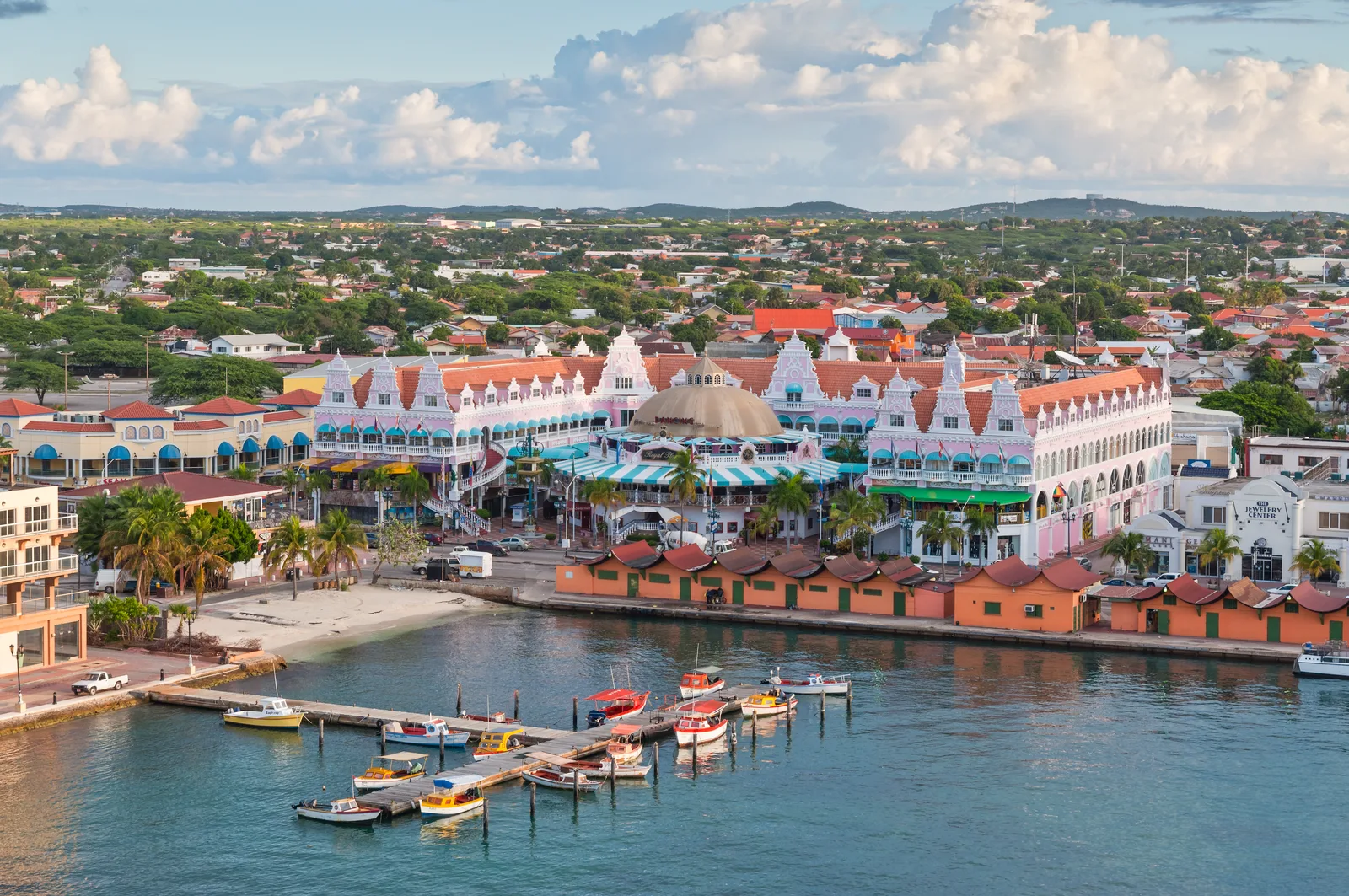
Oranjestad is more than a stop between beaches
Oranjestad brings Aruba’s waterfront commerce, museums and everyday services together in a manageable capital. It suits visitors who want to understand something of the island between beach days, and people assessing a longer stay who need to see beyond a hotel’s grounds. The waterfront is an introduction, rather than the whole city.
The official Oranjestad overview places the capital within Aruba’s wider visitor landscape. Downtown shopping and a museum visit can work well together, but Eagle Beach, Palm Beach and excursions into the island’s interior require separate planning. A property advertised for an Aruba holiday is not necessarily in walking distance of the central streets.
Allow one full day for a selective city introduction and three days to combine it with the coast and an island outing. VisaWand’s Aruba location directory and destination page provide wider context. Start with the exact location of your accommodation, then build a programme around the journeys you genuinely want to make.
A fort and two museums reveal different histories
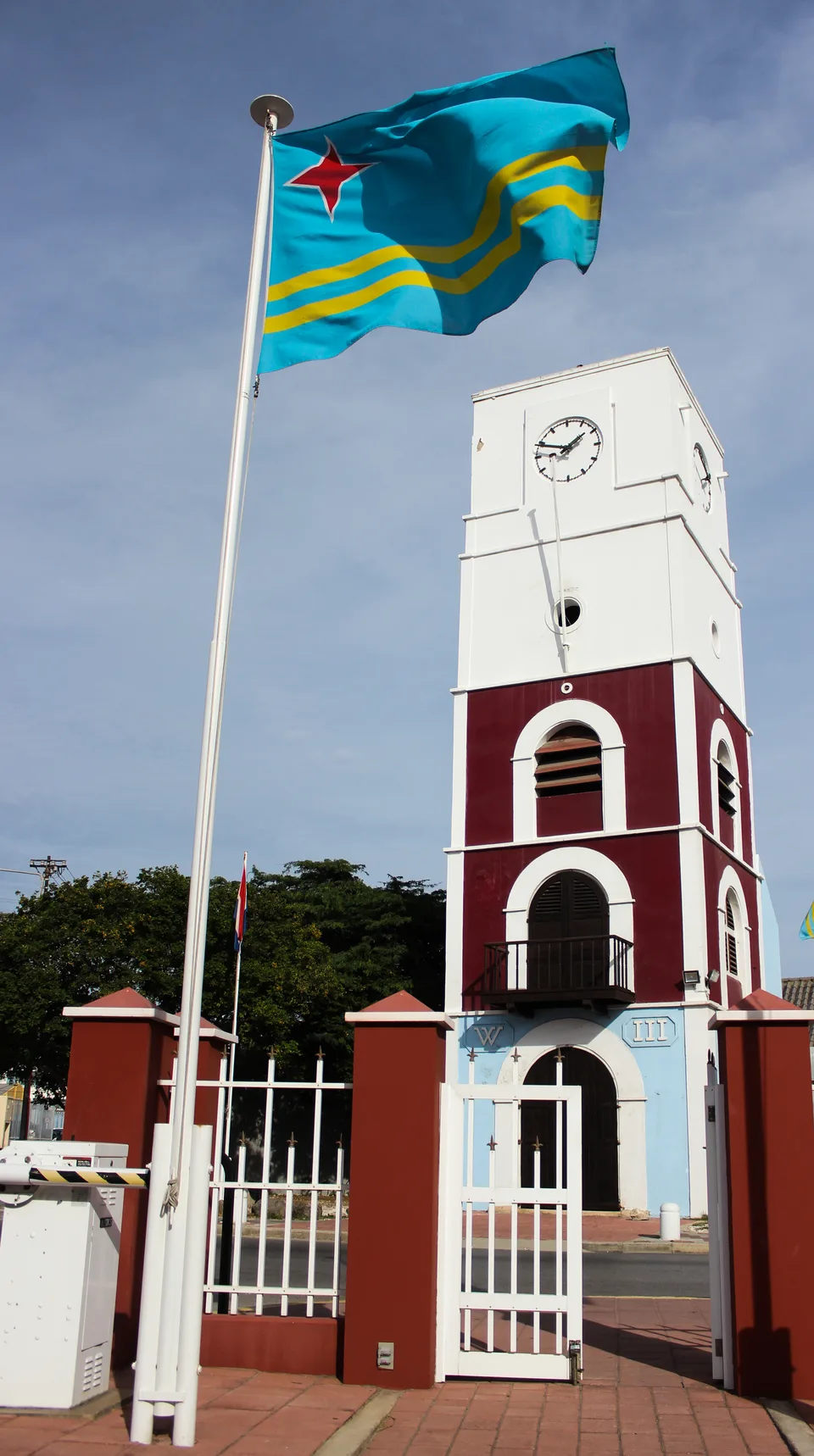
Fort Zoutman supplies a useful landmark for understanding the historic town. The tourism authority’s historical account dates the fort’s completion to 1798, after two years of construction. The adjoining Willem III Tower followed in 1868, serving as a lighthouse and public clock tower. Its light ceased operating in 1963.
These dates matter because the waterfront’s colourful appearance can blur buildings from different periods into one imagined past. Enjoy the architecture, but use museum interpretation to distinguish the fort, later development and contemporary commercial buildings. A decorative façade is not by itself evidence of a centuries-old structure.
The National Archaeological Museum adds a much longer perspective through Aruba’s Indigenous past. Visiting it alongside the historical museum helps avoid beginning the island’s story with European fortification. Give each institution time according to your interests, rather than treating them as interchangeable rainy-day stops. Two focused visits can make the rest of the city walk more meaningful.
Understand downtown, Surfside and the hotel areas
The waterfront and Main Street form the obvious starting area for a visitor. The cruise terminal and central Arubus station are useful orientation points, while the archaeological museum lies on Schelpstraat nearby. This cluster makes it possible to combine public transport, shopping and a museum without hiring a car for every movement.
Surfside lies on the coastal side of the city towards the airport. It is a different setting from the northern beach accommodation areas. Eagle Beach and Palm Beach should be compared as beach bases, rather than assumed to be parts of one continuous pedestrian city centre. Check the route from a property’s entrance, including any road crossings.
For a longer stay, an inland address may make sense for a specific workplace or household budget, but test the actual journey. VisaWand’s Noord location page provides another geographical reference. Do not use the promise of being “near everything” as a substitute for checking groceries, appointments and the evening trip home.
Walk the waterfront and use the trolley selectively
Begin with an unhurried waterfront circuit, leaving time for the central streets and a pause indoors. Look at the contrast between the harbour, shopping buildings and the town behind them. The most useful first morning is one that establishes how these places connect, rather than chasing every photographed façade.
The downtown trolley runs through the central visitor area, connecting the cruise-terminal side with Main Street and stops near shopping and cultural sites. Treat it as a sightseeing option. It is not an airport service or a substitute for the island bus network, and a photograph of a tram does not establish its operating hours on your day.
Ask about current service before making a timed museum visit depend on it. Walking can be straightforward for a short circuit, but heat, crossings and individual pavements affect the experience. Travellers needing step-free access should ask about both boarding and their destination entrance. Plan a meeting point and a return route if the group splits up to shop.
Visit Fort Zoutman for the setting as well as the tower
The Fort Zoutman Historical Museum offers a concentrated introduction to the town’s built history. Approach it as a museum visit, with the courtyard and tower setting adding context, rather than assuming the exterior photograph captures everything of interest. Read the interpretation and allow time to ask questions where staff are available.
Check current opening, admission and access before arriving, especially if a particular exhibition or event is your reason for going. Published descriptions of cultural performances are not a reliable calendar for a specific week. Ask whether any special event requires a separate ticket and what the ordinary admission includes.
For a family, keep the visit focused: the relationship between a defensive fort, a later tower and the surrounding modern city is an understandable starting point. If climbing or steps would be difficult, establish which parts can be visited comfortably. Pair the museum with lunch or another short central stop, rather than placing several exposed walks immediately afterwards.
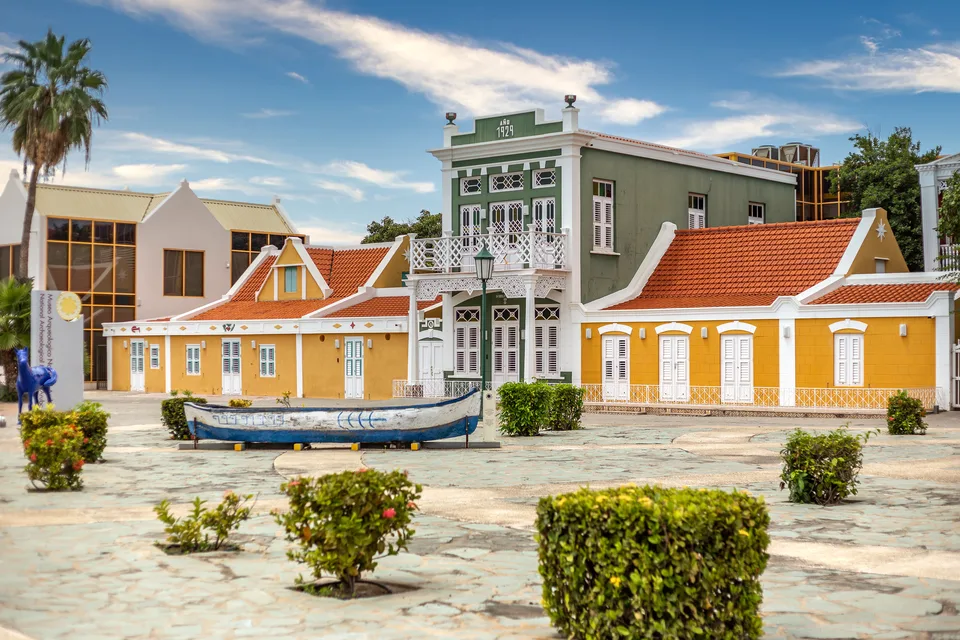
Put Indigenous Aruba at the centre of a museum visit
The National Archaeological Museum Aruba’s visitor page describes a restored historic and modern building complex, interactive interpretation and gardens. Its Schelpstraat address makes it a practical addition to a downtown day, close to the central bus station and cruise-terminal area. It offers a different experience from browsing the waterfront shops.
The current visitor page lists Monday–Friday opening from 9am to 5pm, with Saturday and Sunday closed. National celebration days can have adapted arrangements. Confirm special openings and group requirements directly. An admission amount was not reliably available in the reviewed visitor information, so check with the museum rather than assuming a price or free entry.
Give the exhibitions enough time for the audiovisual material and hands-on elements. Families can follow the pace of the children rather than rushing between every display. For visitors interested in archaeology, this is a good place to build context before island excursions; encountering a site outdoors is more rewarding when its wider history is understood.
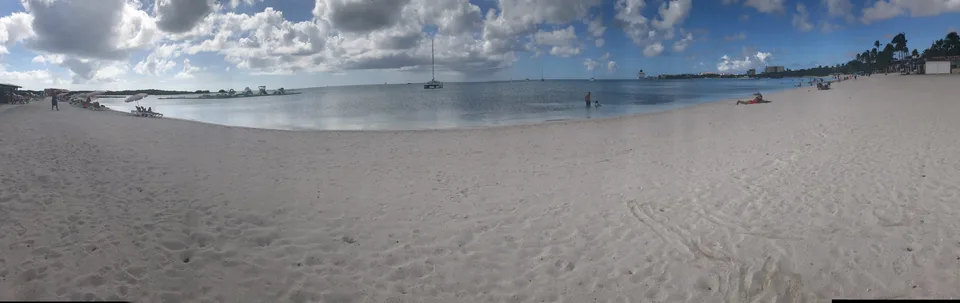
Surfside is a coastal option close to the capital
Surfside offers a beach setting on the Oranjestad side of the island, useful when you want some time by the water without turning the afternoon into a trip to the northern hotel strip. The tourism authority’s overview of Aruba’s beaches helps distinguish this setting from Eagle Beach, Palm Beach and beaches elsewhere on the island.
Choose the actual stretch and facilities that suit you. Check the walking route, shade, toilets and any paid equipment or food arrangements before settling in. A room described as being near Surfside does not establish that it has direct beach access or that chairs and umbrellas are included.
For swimming or a boat outing, follow current conditions and operator instructions. Keep clear of moving vessels and do not infer safe water from a calm photograph. Families should discuss supervision and flotation before going in. If pairing the beach with museums or a flight transfer, keep dry clothes, documents and valuables separate so the rest of the day remains uncomplicated.
Choose accommodation by the holiday you want
A downtown or Surfside-area base can work for a city-focused stay, a shorter visit or practical errands. The northern beach areas may be more suitable when most days revolve around the beach and nearby holiday facilities. Compare the total routine, including evenings, instead of selecting only by the most attractive room photograph.
Hotels offer organised arrival arrangements; apartments can provide a kitchen, laundry and space that become useful over several weeks. Ask what is included in the complete price and whether electricity or cleaning is charged separately. A lower nightly figure can be less useful if it creates repeated taxi journeys or unexpected household costs.
If a private island, beach club or particular resort facility is important, obtain written confirmation of access for your booking type and dates. A hotel brand name or nearby address does not automatically grant every advertised experience. For online work, request a connection test and discuss a practical backup. Begin flexibly if the first stay is intended for inspecting long-term homes.
Airport connections and cruise arrivals
Queen Beatrix International Airport is the air gateway to check when arranging collection. The airport’s official taxi information says fares are government-regulated and points passengers towards the current fare calculator. Quote the exact property address, agree the currency and establish luggage and passenger arrangements before setting off.
The airport’s public-transport information identifies Arubus stops outside the airport property. A bus can be economical with manageable luggage, but consider the route to the stop, the next departure and the final walk to your room. Do not plan an arrival solely around a fare without checking the full journey.
The Oranjestad cruise-port guide confirms the terminal’s city setting. It is a useful starting point for a central visit, but your berth, port exit and excursion meeting point remain different places. Follow the ship’s current instructions and work backwards from all-aboard time. Avoid fitting a distant beach or interior excursion into a margin that only works if every transfer is immediate.
Arubus fares and routes make planning concrete
Arubus publishes a single-trip fare of US$2.60 or AWG4.50, a Retour Card at US$5 or AWG8.75, and a Day Pass at US$15 or AWG26.25. Confirm the product’s conditions and where to buy it. A day pass is useful only when the journeys you expect to make justify it.
The operator’s route and schedule page identifies L2 connections between Oranjestad, the airport and San Nicolas, alongside routes serving the northern hotel areas. Check the particular direction, stop and day’s timetable rather than treating a route label as a promise of immediate service. Leave time for waiting and any transfer.
For an early appointment, a late meal or a group carrying equipment, compare the complete bus journey with a taxi quote. A rental car can help with dispersed outings, but include parking, insurance and the driver’s comfort with unfamiliar roads. Downtown sightseeing and a day in a protected natural area can have very different transport needs.
Eat for local flavour and shop beyond souvenirs
Aruban food offers a reason to pause rather than rush from a museum straight to the next transfer. The tourism authority’s account of traditional cooking introduces pastechi as a breakfast or snack option, keshi yena as a cheese-based casserole, and stews that reflect the island’s household traditions. Ask what is available that day and how it is prepared.
A waterfront meal and an everyday lunch do not need to serve the same purpose. Compare the menu, portion and full bill before deciding what represents value for you. For seafood, ask about the actual fish and preparation rather than assuming a menu description establishes where it was caught.
Use part of a shopping visit for practical needs if staying in an apartment. Find groceries, laundry supplies and any personal essentials before they become urgent. For crafts and souvenirs, ask about the maker and materials. Check your home country’s restrictions before packing food or animal-derived products, and keep receipts for valuable purchases.
Budget with florins and dollars clearly labelled
The Aruban florin uses the code AWG. The Central Bank’s exchange-rate table distinguishes banknote buying, other transactions and selling rates. Use it as a reference, while checking your own card or cash-exchange charges. Do not confuse the florin with another Caribbean jurisdiction’s currency or assume every displayed dollar sign means the same thing.
Arubus fare pairs provide concrete transport amounts, but they are not a general exchange-rate promise for every shop. Price the journeys you will actually take. Include a taxi for any connection that cannot realistically depend on a bus, alongside accommodation and meals for everyone travelling.
Ask for the final room total, applicable taxes and included services before paying. For a rental, establish electricity and cleaning charges as well as the deposit. Keep one-off arrival costs separate from daily spending. A useful budget has an ordinary day, an excursion day and a reserve for changed plans; a single island-wide daily average would hide important differences between travellers.
The ED card and sustainability fee need advance attention
The official ED-card guidance says the online card can be completed within seven days before travel. Use the linked official platform and retain the resulting approval information. The form is part of arrival preparation, rather than a residence application or a substitute for a visa where one is required.
Aruba’s published sustainability-fee information identifies a US$20 charge for applicable visitors arriving by air, integrated with the ED-card process. It lists exemptions, including children under eight and registered residents, as well as other situations. Check the applicable category instead of assuming every member of a travelling party owes the fee.
Repeat-visit and reimbursement conditions need particular care because the published explanation uses differing calendar-year and 365-day wording. Refer questions to the responsible operator, AWSS, and retain payment evidence. Cruise passengers should follow the arrangements for their vessel and ask the line whether an ED card is required. Do not apply an airline arrival process blindly to every shore visit.
Plan around heat and current sea conditions
Use the Aruba Meteorological Department’s climate information to understand the setting, and the current official forecast for the dates that matter. Warmth, wind and rainfall affect a city walk differently from a beach or boat outing. A seasonal reputation for sunshine does not establish the conditions on a particular afternoon.
Start the longer urban walk early enough for pauses indoors. Carry drinking water, wear suitable footwear and plan shade, especially when travelling with children or someone who finds heat difficult. A breeze can make the temperature feel easier without removing the need for sun protection.
For water activities, assess the marine conditions separately from the sky above your accommodation. Keep a land-based alternative to a boat day and read cancellation terms before booking. Avoid treating Aruba as immune from severe weather. During warnings or disruption, follow official instructions and allow extra flexibility for transport. On the final day, leave enough margin for the airport rather than returning late from an ambitious excursion.
A three-day plan with a purpose each day
Use day one for the waterfront, Main Street and Fort Zoutman, adding a relaxed lunch and time to learn the central layout. If you want the trolley, check its operation on arrival. Keep the schedule loose enough to enjoy the streets instead of arranging a timed activity after every short walk.
Begin day two with the archaeological museum when its opening is confirmed, then choose Surfside for a coastal afternoon. Keep the beach programme modest if the morning includes substantial museum time. Alternatively, reverse the emphasis and make this the day for a longer beach visit, moving the museum to another weekday.
Day three can be an island outing selected around your interests: the natural landscape of Arikok or the art and streets of San Nicolas. Choose one principal programme rather than combining every distant stop. A cruise visitor should select a smaller central circuit or one clearly timed excursion. A relocation visitor can replace an outing with housing viewings and a weekday commute test.
Moving here means testing a household routine
Begin a relocation assessment with temporary accommodation and the actual daily journeys you expect to make. Test the route to work or study at the relevant time, identify convenient groceries and investigate regular medical needs. A pleasant holiday address can be inconvenient for a household with a different routine.
Inspect prospective housing in person. Test water pressure, ventilation, air conditioning, appliances and the internet connection. Ask about evening noise, parking and any backup arrangements. Establish responsibility for repairs, pest treatment and shared areas, and request recent utility bills when assessing the full monthly cost.
A written lease should make deposits, notice, included services and payment terms clear. Record the condition of the property and inventory before moving in. For a purchase, obtain independent local legal advice and verify ownership and the seller’s authority. Keep the property decision separate from immigration eligibility: buying a home or signing a long lease does not by itself establish permission to work or settle permanently.
Utilities and healthcare require address-specific preparation
Use the government’s ELMAR contact listing to reach the electricity provider before moving. Ask whether the owner must co-sign the application, which identity and property documents are needed, and who pays any deposit. Establish the procedure for the existing account rather than assuming a new-build connection process applies to every tenant.
For water, consult WEB Aruba and establish the account holder, meter arrangements and the documents required for the particular property. Check for leaks and discuss responsibility for plumbing and maintenance. For online work, ask the internet provider about the exact address, installation timing and suitable service rather than accepting a general promise of island coverage.
The Horacio Oduber Hospital’s international patient office provides a contact for international-patient coordination. Confirm insurance, payment and the availability of any ongoing treatment before relocating. government health-insurance information have conditions; a tourist booking or property purchase should not be treated as automatic health-insurance coverage. Families should investigate school places, language of instruction and the daily journey before committing to housing.
Tourist entry and permission to remain are different
Check the official passport and visa requirements for your nationality and route. The tourism authority states that a passport must be valid throughout the stay, with evidence of the purpose of the visit, sufficient means and the ability to return or travel onward. Follow the linked official visa information rather than assuming European Netherlands entry rules automatically settle an Aruba journey.
DIMAS’s tourist-stay information explains that the immigration officer determines admission and duration. Its general description allows up to 30 days per visit, with different conditions for specified categories and longer stays. Read the permission actually granted and seek the appropriate extension before it expires.
Do not interpret financial-support thresholds as a recommended holiday budget. Likewise, a conditional longer tourist stay for an eligible property owner is not permanent residence or work authorisation. Prepare documentation for the actual purpose of the trip, and obtain specific advice before making commitments that depend on a longer period in Aruba.
Work, study and alternatives beyond the capital
For employment, use DIMAS’s paid-employment guidance alongside its current application portal. The portal displays a temporary policy change, effective April 2025, allowing direct DIMAS submission without first visiting DPL for the labour-market test. Recheck the current procedure when applying, because older official pages describe a different sequence.
Student residence is a separate category. DIMAS distinguishes study and training from permission for paid work. Admission to a course, a job offer or owning accommodation does not replace the appropriate immigration approval. VisaWand’s consultant listings can help identify advisers to assess, with qualifications, written scope and fees checked before engagement.
For an island contrast, use Aruba Conservation Foundation’s Arikok information to plan a protected-area outing, or explore San Nicolas’s mural art. VisaWand’s San Nicolas and Savaneta location pages provide geographical references. Keep these excursions distinct from downtown neighbourhoods, and choose Oranjestad for the combination of culture, practical services and coastal access that suits your plans.
Official planning resources
Reviewed 17 October 2026. Use the official resources linked throughout this guide for admission, transport, housing and immigration decisions. Prices, services and rules can change; confirm the details relevant to your dates. Photography illustrates the locations and is not a live view.
View all official resources
- Aruba Tourism Authority: Oranjestad
- Aruba Tourism Authority: Fort Zoutman
- Aruba Tourism Authority: downtown trolley
- National Archaeological Museum Aruba: visit
- Aruba Tourism Authority: island beach settings
- Aruba Airport: taxi transportation
- Aruba Airport: public transport
- Aruba Tourism Authority: cruise port
- Arubus: fares and passes
- Arubus: routes and schedules
- Aruba Tourism Authority: traditional food
- Central Bank of Aruba: exchange rates
- Aruba Tourism Authority: online ED card
- Aruba Tourism Authority and AWSS: sustainability fee
- Aruba Meteorological Department: climate data
- Aruba Meteorological Department: forecast
- Government of Aruba: ELMAR contact listing
- WEB Aruba: water services
- Horacio Oduber Hospital: international patient office
- Government of Aruba: employee health insurance
- Aruba Tourism Authority: passports and visas
- DIMAS: tourist stay
- DIMAS: paid employment
- DIMAS: current application portal and policy notice
- DIMAS: study residence
- Aruba Conservation Foundation: Arikok visitor information
- Aruba Tourism Authority: San Nicolas murals
Plan the next part of your journey
Explore the Aruba guide, browse other cities or compare consultants for your travel and relocation questions.