Visa

About Arthur C Clarke Institute of Modern Technologies
Research, technology and training in Sri Lanka
The Arthur C Clarke Institute for Modern Technologies, abbreviated ACCIMT, is a Sri Lankan institution concerned with developing and applying modern technologies. Its stated mission connects innovation and research with training, industrial services and international cooperation. The mandate published on its About page includes supporting government and private organizations in the use of technology, carrying out research and development, and training personnel to meet the needs of those sectors. It also includes future studies. The range of fields identified in that mandate covers information and communication technologies, electronics, microelectronics, space technology, robotics, photonics and new materials. This gives the institute a role that combines investigation with the transfer of knowledge and practical expertise, bringing educational activity into contact with professional and industrial questions.
Sources: About the institute ↗
A specialist library and resource centre
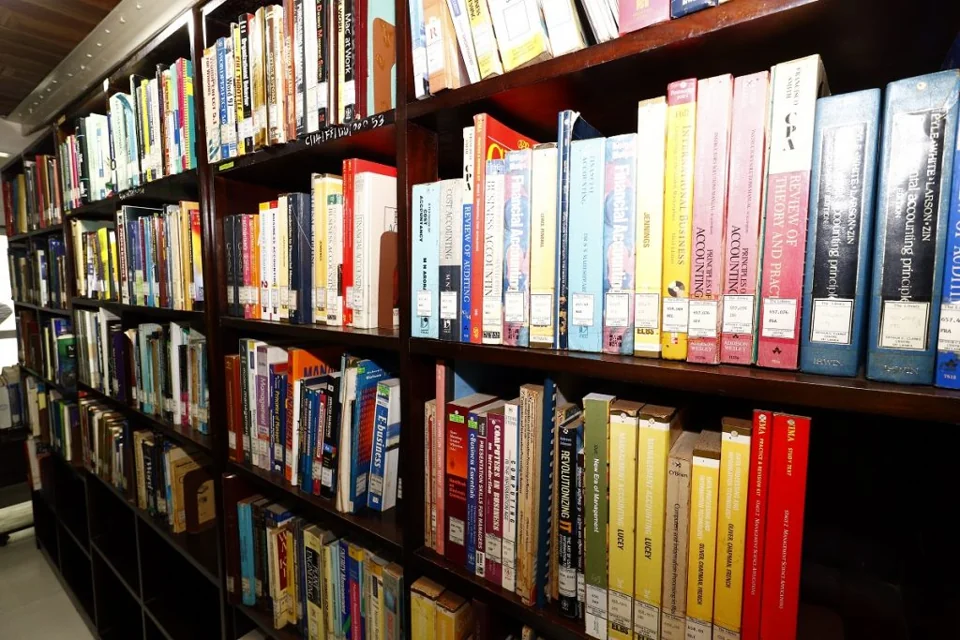
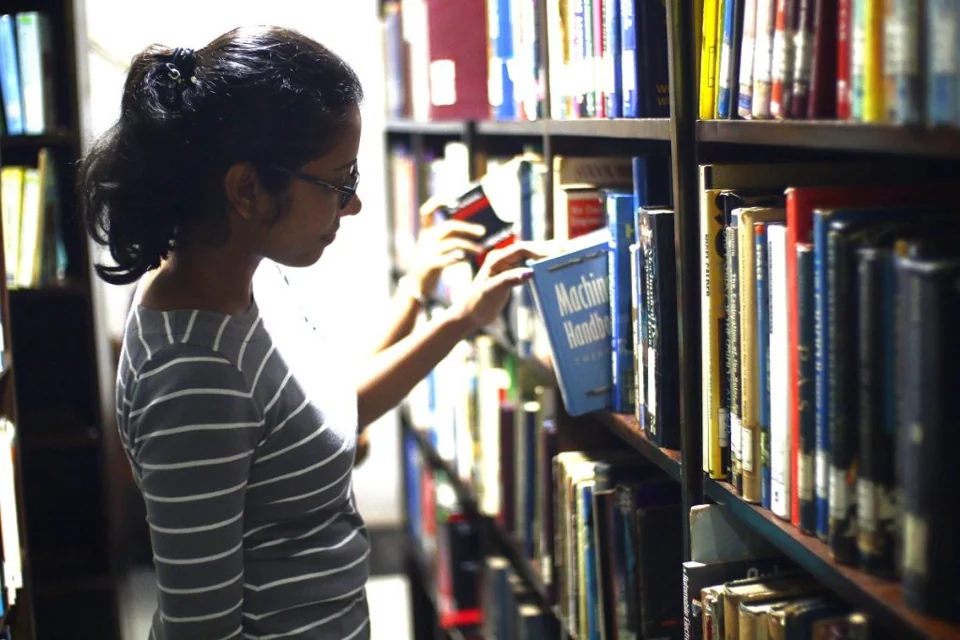
The institute's Library and Resources Centre is at Katubedda, Moratuwa. Its collection supports technological study through books, periodicals, specialist reports, standards, reference works and audiovisual materials. An online catalogue allows searching by author, title and keywords. Services include reference assistance, literature searches, scanning, interlibrary loans and information alerts. The library describes provision for staff and trainees, course participants, researchers, students and members with relevant interests. Personal and institutional membership arrangements extend access beyond the institute's own personnel. A separate Arthur C Clarke Gallery preserves historical belongings associated with its founder patron. Together, the library's information services and collections support both professional learning and engagement with the institute's technological heritage.
Sources: Library and Resources Centre ↗
Astronomy through observation and education
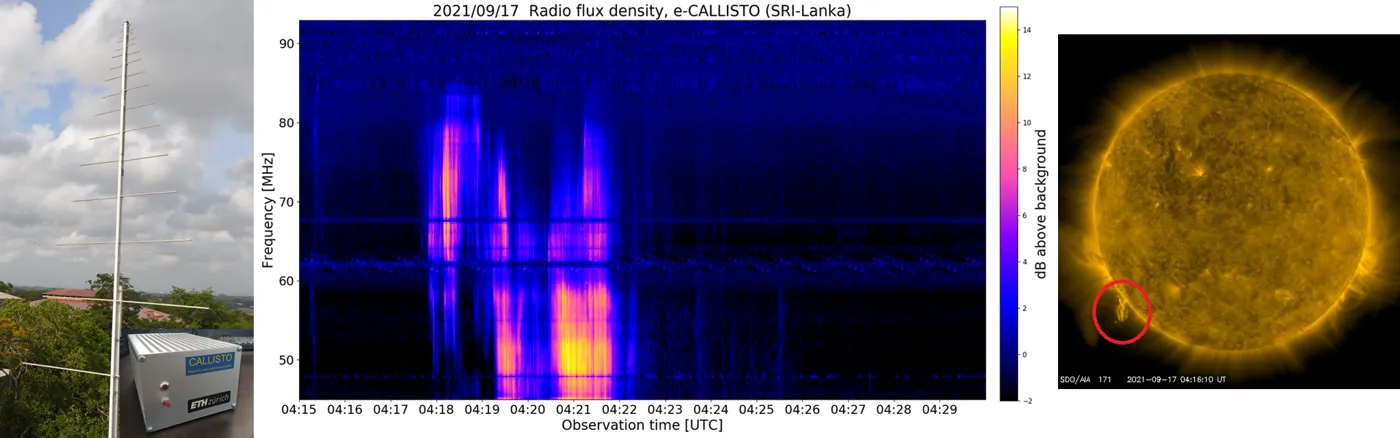
ACCIMT's Astronomy division combines observation, research and public education. Its published description identifies a 45-centimetre GOTO Cassegrain telescope and collaboration with universities and researchers outside Sri Lanka. Research areas described by the division include planets orbiting other stars, stellar oscillations, interacting binary stars and radio emissions associated with solar activity. These examples indicate the range of observational and data-based questions considered within its work. Education and outreach provide another route into astronomy for school students and the public. The division's workshop description combines theory with practical activities, including telescope observations, spectroscopy, sky mapping and the construction of simple astronomical tools. The subject range extends from the Solar System and stellar evolution to rockets and applications of space technology. This connects introductory learning with instruments and methods used to investigate astronomical phenomena.
Sources: Astronomy division ↗
Information technology and access to knowledge
The Information Technology division describes work in research, software solutions, technology transfer and training. Its account includes information systems designed around clients' needs, such as managing data and supporting the delivery of services. Examples involve financial administration, personnel information and inventories. Training is described for different audiences: introductory provision for school leavers and other learners, and more specialised programmes for people working in industry. The division also discusses efforts to make computing more accessible through local-language software and technology transfer in rural areas. Its published research interests include localization and image-based automation. Rather than treating software development and education as separate activities, the division links practical systems with the skills and language access needed to use them. This gives its work both an organizational and an educational dimension.
Sources: Information Technology division ↗
Electronics and practical technical expertise
The Electronics and Microelectronics division brings together research, testing, consultancy, equipment recovery and professional development courses. Its stated areas of expertise include microcontroller-based control, sensors, analogue circuits, data collection and display systems. Other examples extend to Internet of Things systems, automated irrigation and monitoring electrical power quality. The division describes research initiated by industrial needs, alongside facilities for testing and measurement. Repair and recovery work addresses sophisticated instruments and equipment. Continuing professional development provides a way of sharing the division's technical knowledge with people in industry. Across these activities, the emphasis is on applying electronics to particular problems, developing systems and supporting their practical use. Research and technical services therefore provide a setting for learning connected with actual equipment and design tasks.
Sources: Electronics and Microelectronics division ↗
Communication engineering and product development
Communication Engineering focuses on applied investigation and the development of products involving electronics, telecommunications and microprocessor-based hardware. The division's description connects its instruments and computing resources with research requested by government and private organizations. Promoting local technological production is part of its stated purpose. Its listed project areas include industrial automation, ground and aerial robotics, railway systems and satellites. This range places communication engineering alongside control and embedded systems, showing how the institute approaches related technical challenges across several applications. Its institutional role links research capability with problems brought by external partners.
Sources: Communication Engineering division ↗
Space applications and environmental information
The Space Applications division works with remote sensing and geographic information systems. Its account describes the use of satellite and airborne observations to examine spatial information and support applications relevant to Sri Lanka. It also records conferences intended to share knowledge about these methods, including positioning technologies. Examples in the division's published project descriptions concern agricultural drought, Earth-observation data, land cover and crop monitoring. These descriptions identify areas of investigation and feasibility work, rather than establishing the effectiveness of every proposed application. The wider approach connects environmental observations with the management of resources distributed across different places. It gives the institute a further setting for combining research, technical expertise and knowledge exchange, alongside the training and information services offered through its other divisions.
Sources: Space Applications division ↗