Visa


About Antioquia Institute of Technology
A public institution in Medellín
Tecnológico de Antioquia, commonly called TdeA, is a public higher education institution in Medellín, Colombia. Its educational work began in 1983, following the development of higher education programmes within the Centro Educacional Femenino de Antioquia. Classes started on March 14 that year in special education, preschool education and basic education. Documentary administration and micrography, commercial secretarial studies and gerontology subsequently broadened its academic work.
The name Tecnológico de Antioquia was adopted in 1989. In 1992, its higher education provision and the CEFA school became administratively and financially separate institutions. Academic activities at the Robledo campus began in the first semester of 1999. Its mission encompasses technical professional, technological, university professional and advanced education, connecting knowledge with humanistic and critical inquiry, social responsibility and sustainable development. Honesty, respect, commitment, diligence and justice form its published institutional values.
Sources: About Tecnológico de Antioquia ↗
Library support for study and investigation
The Humberto Saldarriaga Carmona Library supports teaching, learning and research through physical collections, digital resources and assistance from library staff. Its services include reading rooms, reference support, bibliographic loans, laptop lending and access to specialized databases. Library users can receive training in finding information, using electronic books and navigating subscribed resources. Guidance also covers bibliographic management tools and APA referencing.
Interlibrary lending connects users with participating university libraries in the metropolitan area, with arrangements handled through library staff. The institutional repository provides access to degree work, while older projects are retained for consultation in physical form. Readers can search the catalogue by title or author, identify a shelf location and collect material for consultation or borrowing. Reading and writing workshops are supported by students undertaking practice within the Literature and Spanish Language teaching programme, adding another connection between library activity and academic study.
Education beyond the central campus
Regionalization is an explicit part of TdeA’s approach to university social responsibility. The institution defines it as decentralizing education and training beyond its central location in Medellín. Its objectives extend across teaching, research, extension and supporting services, with attention to the needs and capacities of different territories. Cooperation with regional and municipal partners is therefore part of its educational model.
The regional education page links this work to equal opportunity, multicultural understanding and shared social and educational responsibility. It emphasizes using existing regional capacities while extending access to higher education. Its geographical directory includes communities in Antioquia as well as other Colombian departments, including Caldas, Chocó, Córdoba, Meta, Nariño, Norte de Santander and Putumayo. This territorial approach places education within local contexts and connects the institution’s Medellín base with communities whose educational and development priorities differ across the country.
Sources: Regional education ↗
Research with student participation
TdeA organizes research through an institutional Research and Innovation System, a research directorate and specialist groups. Its published principles include freedom of inquiry, social responsibility, interdisciplinarity, cooperation and the relationship between investigation and teaching. The system seeks to develop new knowledge, technological development and innovation while strengthening research capacity in scientific, educational and productive settings.
Student involvement includes semilleros, research training groups where students work with a coordinating teacher and connect their activity to an institutional research group. Their work can include exploring literature, developing applied projects, presenting at research events and sharing results. The institution also describes opportunities for students to participate in faculty-led projects and young-researcher calls. A bioethics committee advises on ethical questions in research and experimentation, formulates institutional criteria and promotes training. Together, these structures link practical participation with methodological development, collaboration and attention to ethical responsibility.
Sources: Research and innovation ↗
Community input into educational planning
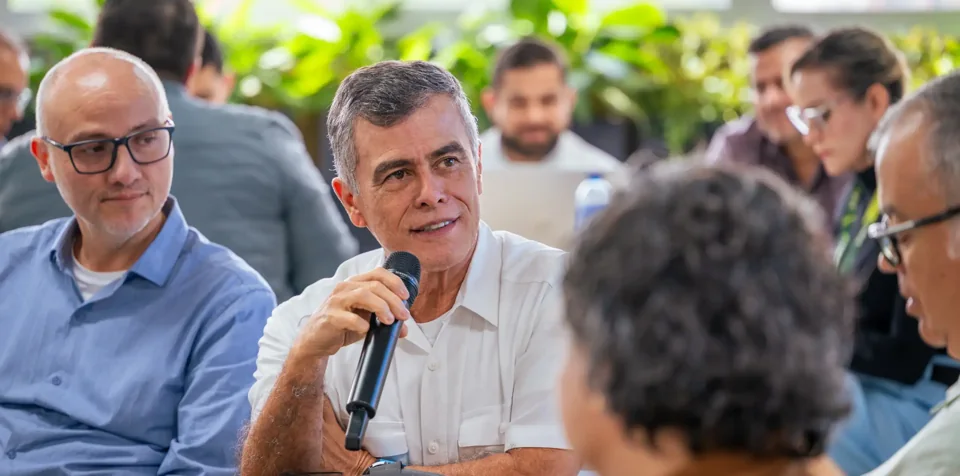
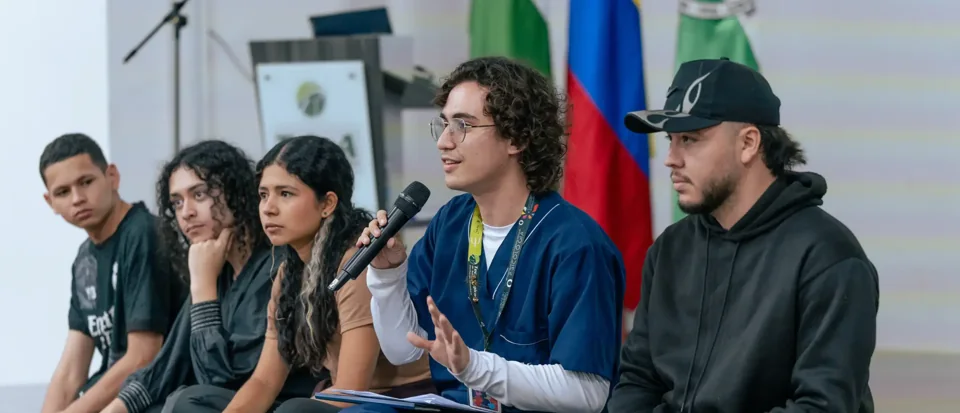
A report published on November 3, 2026 describes three workshops contributing to an updated institutional strategic education project. Students participated first, followed by teachers and then administrative staff, collaborators and contractors. The process gathered perspectives on revising the pedagogical model and connecting academic, curricular, research and extension work with the 2026–2030 development plan.
The discussions considered flexible curricula, learning outcomes, interdisciplinary exchange and the relationship between research, territory and citizenship. They also addressed different learning rhythms and needs for support within a diverse student community. Collaborative learning, communication and accompaniment were included in the reflection. The workshops supplied input for continuing development of the project, with further participation invited through virtual collaboration. They illustrate how students and staff are being involved in discussing the institution’s educational direction.
Sources: Institutional education-planning workshops, November 2026 ↗
Sustainability as a shared campus activity
The third TdeA Circular Fashion Show formed part of its second Circular Economy Symposium, according to an October 2026 institutional report. The event connected environmental education with design, material reuse and creative practice. Its programme included recovered garments, alternative textiles and artistic interventions, bringing sustainability questions into a visible campus setting.
Fundación Aquí Sí Hay Futuro presented collections exploring several approaches to circularity. The report describes work with fibres from pineapple, banana and industrial hemp, alongside biomaterials developed from organic residues. It also discusses collaboration with artisans and communities, linking technical experimentation with traditional knowledge. Within TdeA, the Engineering Faculty worked with welfare, extension, communications and culture teams to organize the experience. The event offered students and other participants a practical setting for discussing how resource choices, production methods, creativity and social cooperation can intersect in educational activity.
Sources: Circular fashion and sustainability, October 2026 ↗