Visa
About American University of Europe
From FON to the American University of Europe
American University of Europe – FON, generally abbreviated AUE-FON, is an independent, private, nonprofit institution in North Macedonia. Its institutional history begins in 2003 with the Faculty of Social Sciences, founded by Fiat Canoski. In 2007 the institution expanded its academic fields and became FON University. Its present name followed a rebranding in 2020. The history records earlier expansion beyond Skopje into Strumica, Gostivar and Struga, and identifies Struga as a continuing department.
The university connects its educational purpose with critical thinking, adaptability, diversity and sustainability. Its stated values include ethical conduct, creativity, empathy, educational quality and attention to students' development. Teaching, research and practical experience are presented as complementary elements of its approach. These aims place its disciplinary programmes within a wider ambition to contribute to society through education and inquiry.
Sources: Institutional history and mission ↗
The Skopje location
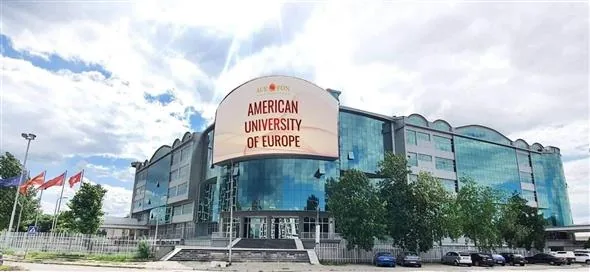
AUE-FON publishes its Skopje address as Kiro Gligorov Street 5, in North Macedonia's capital. Its campus-and-location page identifies this address and illustrates the university building. The location is distinct from the regional departments described in the institution's history. The campus photograph shows the university's name on the building, providing a visual record of the Skopje setting associated with its academic and administrative work.
Sources: Campus and location ↗
Law, political science and practical learning
The Faculty of Law and Political Science brings legal study together with political science and diplomacy. Its academic account discusses the role of law in public institutions, international organisations, business and civil society. Justice, human rights, constitutional arrangements and the organisation of judicial systems provide part of the context for legal education.
Political science is presented through comparative study and opportunities for contact with institutions and universities abroad. The faculty describes research participation and internships as ways to connect academic knowledge with practical experience. Its educational objectives also emphasise interaction between students, teaching staff and collaborators. The faculty's published material therefore links the study of institutions and public questions with investigation and professional observation, while maintaining separate disciplinary strands in legal and political studies.
Sources: Law and Political Sciences ↗
Economics and business specialisation
The Faculty of Economics describes undergraduate study beginning with a foundation in general economics, followed by more specialised work. Core and elective courses introduce the concepts and terminology used in economic analysis before students develop their chosen areas of interest. Its listed fields include business management, finance, marketing and sports management.
The faculty's account distinguishes first-cycle study from specialist and master's provision. Undergraduate study is described as four years, while further study develops knowledge in the relevant business or economic field. The postgraduate account includes the preparation and defence of a master's thesis. Across these stages, the faculty places teaching alongside scientific research. The combination offers a progression from general economic foundations toward disciplinary specialisation and independent academic work, with different programme routes serving different educational purposes.
Sources: Economics ↗
Computing and information systems
The university's Communication and IT page describes the work of its Faculty of Informatics. Its principal areas include computer engineering, software engineering and business informatics, alongside informatics education. The educational approach connects technical knowledge with practical experience, professional development and the exchange of expertise.
The published structure follows a four-year first cycle and a further year of postgraduate study. Elective groups organised into modules allow students to focus on particular computing interests. Second-cycle work is described as preparation for independent research, culminating in a master's thesis in the relevant field. The faculty also identifies the university's Knowledge Factory initiative as a route to practical experience during study. Its account thus connects computing education with both the application of knowledge and the development of research skills, while retaining distinct engineering, business and educational emphases.
Design, multimedia and creative communication
The Faculty of Design and Multimedia concentrates on graphic design, multimedia and fashion design. Its educational account brings artistic practice together with research, theoretical knowledge and the development of practical skills. Graphic design addresses visual concepts and communication for printed and electronic media, including the presentation of messages through contemporary design methods.
Multimedia combines images, text, sound and moving pictures. The faculty identifies digital video editing, animation and audio among the forms students study, with applications in communication, education and culture. Fashion design addresses clothing, accessories, textile trends and the development of collections. Students consider both the conception of designs and their practical presentation. These different strands share an interest in creative communication, while using different materials and media. The faculty also provides a link to an online exhibition of student work.
Sources: Design and Multimedia ↗
Career guidance and continuing connections
AUE-FON's Career and Alumni Center connects educational activity with professional development. It describes counselling, mentoring, specialised training, summer schools and conferences among its activities. Cooperation with companies and public institutions provides a further strand, including opportunities to explore internships and other forms of practical engagement.
The centre organises career and alumni fairs where participants can meet employers and gather information for their planning. It also works to maintain relationships with graduates and supports lifelong learning. Its stated audience extends beyond current university students and alumni to other participants in education and representatives of organisations. Services are described as being adapted to users' needs and delivered through cooperation between professionals, trained students and partner institutions. This creates an institutional setting for advice, training and exchange alongside the university's formal degree programmes.
Sources: Career and Alumni Center ↗
Learning through an institutional visit
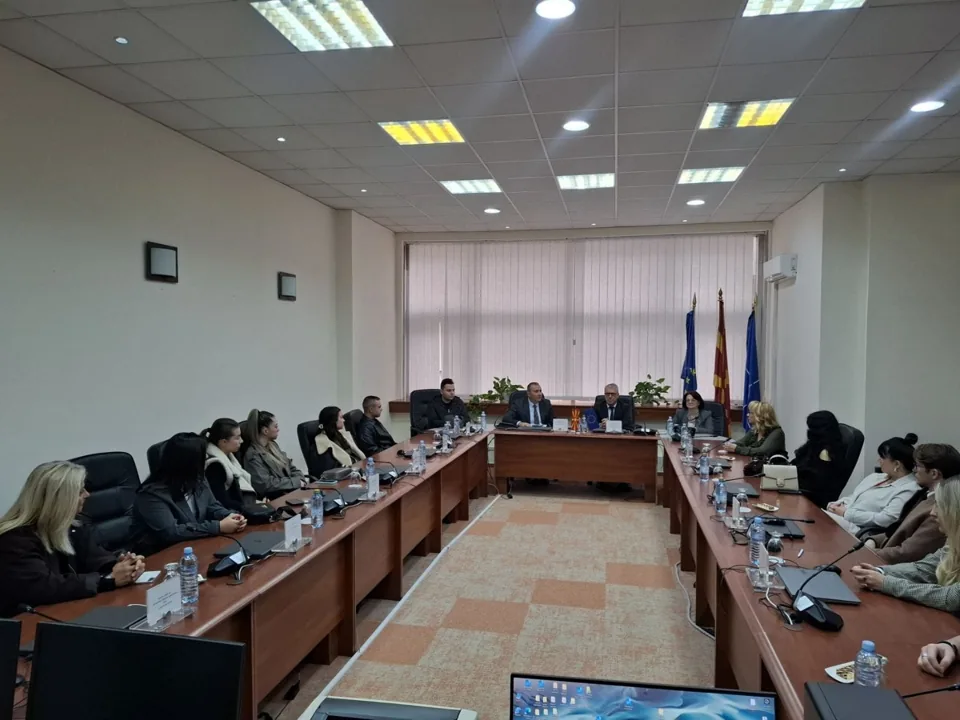
An official university report describes a visit by students from the Faculty of Law and Political Science to North Macedonia's Judicial Council. Participants met the council's president, the president of the Supreme Court and council members. Discussions addressed the council's responsibilities, practical work and current activities.
The report also describes conversation about the legal profession, challenges for young practitioners and possibilities for cooperation and internships. The visit provides a concrete example of learning through contact with public institutions. It connects classroom discussion of judicial structures with opportunities to hear directly about their work, without establishing any particular employment or internship outcome.
Sources: Judicial Council study visit ↗