Visa

About American University of Antigua
A medical university in Antigua
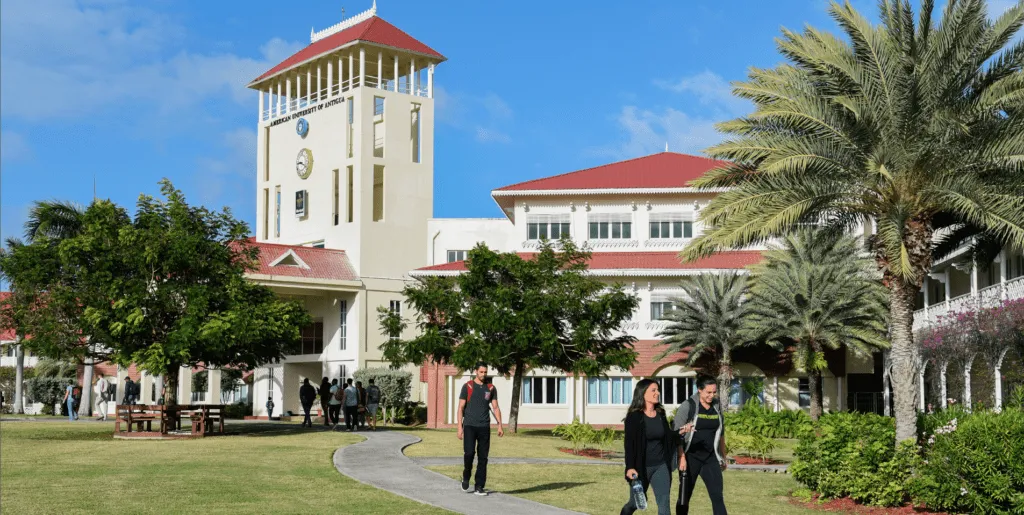
American University of Antigua, usually abbreviated AUA, is an institution in Antigua whose College of Medicine provides medical education. The university’s published address is University Park, Jabberwock Beach Road, Coolidge, Antigua. Its institutional timeline dates its foundation to 2004, with an inaugural group of nine students. A partnership with Manipal followed in 2008, and a new campus opened in 2010 with laboratories and a multistorey library.
AUA describes its educational mission in terms of learner-centred teaching, a diverse academic community, and opportunities for groups underrepresented in medicine. Compassion, professionalism and the habits of lifelong learning are explicit aims. Its founding commitment also emphasised underserved communities and primary care. The timeline records the establishment of the Education Enhancement Department in 2011, an important development in the institution’s approach to supporting students alongside their academic courses.
Sources: Mission and institutional history ↗
Biomedical foundations and active learning
The College of Medicine’s preclinical curriculum combines basic sciences, clinical sciences and health systems science. Its published curriculum, effective from fall 2025, introduces disciplines such as anatomy, physiology, biochemistry, cell biology, microbiology, immunology, pathology and pharmacology. Epidemiology and biostatistics are also included. Fundamental knowledge is subsequently brought together through organ-system courses, with behavioural science and further epidemiology and biostatistics.
Clinical reasoning and practical skills develop alongside scientific study rather than appearing only after it. From the first academic period, students work in consistent small groups for team-based activities, anatomy, ultrasound and clinical-skills sessions. The curriculum includes attention to communication and professionalism, with digital tools and simulation supporting application of knowledge. Health systems science and global health run through the programme as continuing themes. Research is another curricular emphasis, including the evaluation and production of scientific work. This structure links biomedical understanding with the contexts in which healthcare is organised and delivered.
Sources: Preclinical sciences curriculum ↗
Teaching laboratories and library resources
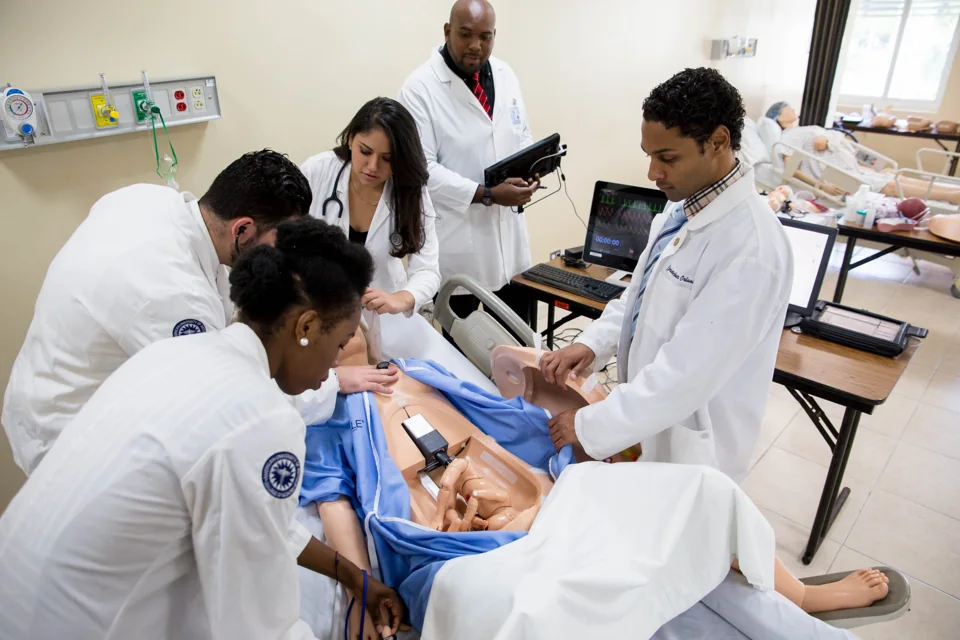
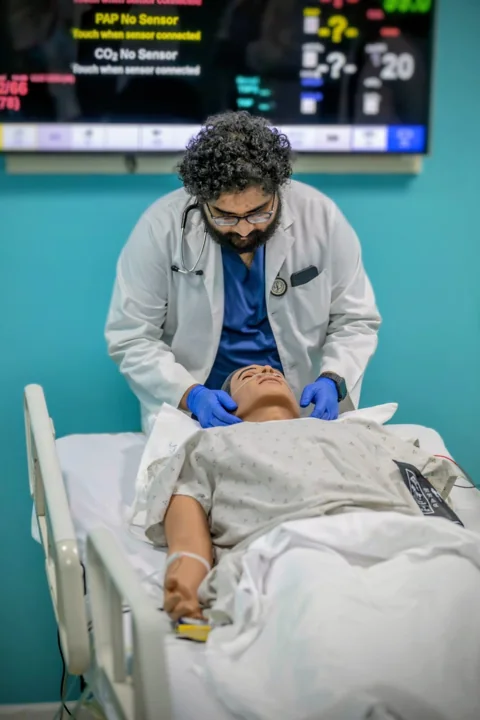
AUA’s academic facilities include a Simulated Learning Center where students work through educational scenarios using training mannequins. Its published equipment description includes SimMan 3G, SimBaby, Harvey and Noelle simulators. Skills assessments take place individually and in small groups. The Clinical Skills Lab uses case-based teaching and structured encounters to develop history-taking, examination and reasoning skills.
The Anatomy Lab combines specimens with digital resources, including cross-sectional visualisation, radiology material and dissection videos. An ultrasound simulation laboratory provides another setting for studying functional anatomy. Library provision includes quiet study spaces, group-study areas, computers and printers. Electronic resources encompass textbooks, biomedical books, journals and clinical knowledge databases. Named resources include ClinicalKey, AccessMedicine and the Cochrane Library. Access through the learning management system and Ezproxy supports use of these resources beyond the physical library, connecting campus study spaces with the university’s electronic learning environment.
Sources: Academic facilities ↗
Academic advising and peer support
The Education Enhancement Department supports students across preclinical and clinical study. Its advising model combines faculty advisers with professional advisers in the department. Individual sessions address study planning, time management, note-taking, self-assessment and preparation for academic assessments. Students can use university scheduling systems to arrange appointments.
Peer participation is part of this support structure. The Medical Scholars Program provides supplemental instruction for preclinical students through selected teaching assistants and tutors, while the Clinical Scholars Program supports students in the clinical phase. Incoming students can also join a peer-mentor programme that helps them understand academic expectations and navigate campus resources. Mentors receive training covering confidentiality, professional boundaries and referral practices. Departmental workshops address active learning, clinical reasoning and study schedules. Its published provision also includes structured coaching for students repeating a trimester, with reflection and individual follow-up forming part of that academic intervention.
Sources: Education Enhancement Department and student support ↗
The undergraduate pre-medical route
AUA also describes a pre-medical route through its College of Arts and Sciences, known as AUACAS. The published programme overview presents a two-year Associate of Science in Health Sciences involving sixty undergraduate credits. Its purpose is to build a foundation in scientific coursework before further medical study. The programme is distinct from the College of Medicine’s preclinical curriculum, which forms part of medical school itself.
The pre-medical account describes an articulation relationship between the colleges and academic guidance for applicants. Health-professions advisers assist with course selection, personal statements and interviews. The application materials listed include a personal statement, official academic transcripts and recommendation letters, with at least one recommendation from an academic source. These elements combine preparation in coursework with guidance on presenting an application and considering the next stage of study.
Sources: College of Arts and Sciences pre-medical programme ↗
Student organisations and campus participation
Campus life includes academic interest groups, representative organisations, creative activities and recreation. The Student Government Association is elected by students and represents them in university settings, while also organising activities and celebrations. AUA Ambassadors provide peer guidance and contribute to student culture.
Academic groups cover areas such as cardiology, emergency medicine, oncology, radiology, surgery and sports medicine. The Medical Humanities Club gives students opportunities to write, make art and share creative work. The Pulse, a student-created magazine, records experiences of medical education and campus events. Religious and cultural associations provide additional settings for community participation. Athletic facilities include fields and courts, and the university describes a fitness centre with exercise equipment and changing facilities. Through these organisations and shared spaces, students have ways to pursue interests and relationships outside scheduled teaching while remaining connected to the campus community.