Visa

About American University
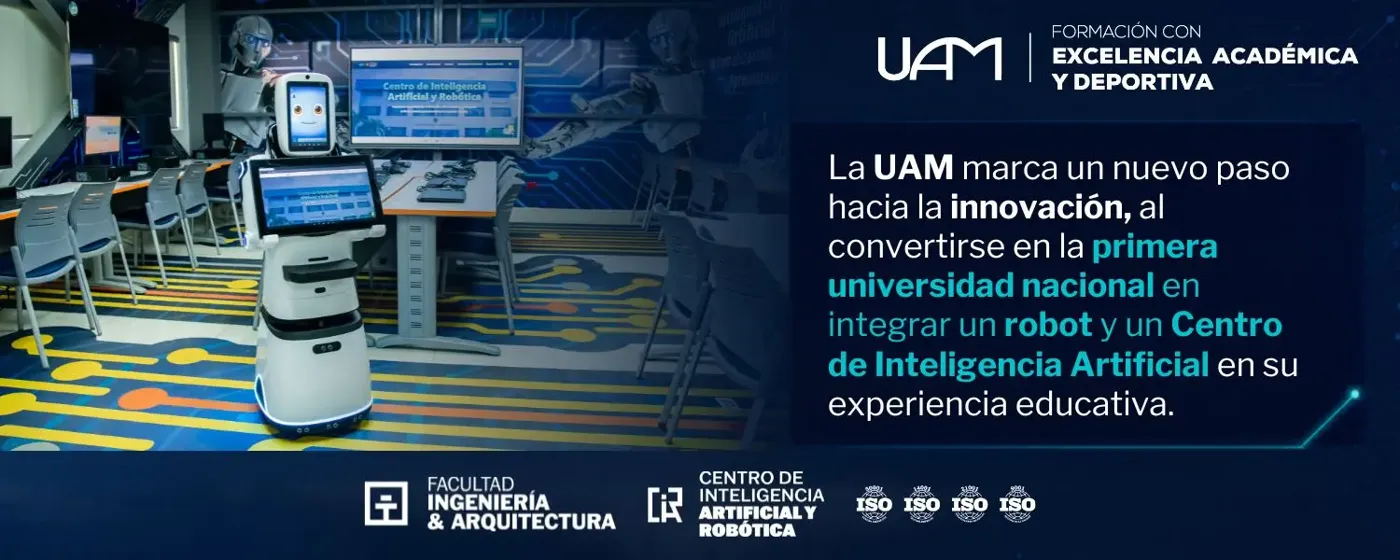
Universidad Americana in Managua
Universidad Americana, known as UAM, is a university in Managua, Nicaragua. The institution’s official profile dates its founding to 1992, when a group of university academics with teaching, research and administrative experience established it to contribute to higher education in the country. Its published mission combines scientific knowledge, humanistic principles, entrepreneurship and a global outlook.
UAM describes learning through practical activity as an important part of its educational approach. Examples include simulations, case studies, projects with real clients, academic visits and professional practice. Critical and creative thinking, continuing learning and social responsibility also feature in its account. Its stated values include ethical integrity, autonomy, respect for individual rights and constructive debate. These principles link its academic work with wider questions about professional conduct, community life and environmental responsibility, rather than presenting education solely as preparation in a particular technical subject.
Sources: Universidad Americana: institutional profile ↗
Systems engineering and information technology
The systems-engineering programme connects software development with the infrastructure used to operate information systems. Its published description covers communication networks, applications, databases, computer hardware and information security. It identifies web and intranet applications, business software, computing centres and IT projects among the areas associated with its academic preparation.
The university also describes practical work, company visits and simulation in computing environments. Its subject account connects technical learning with planning and managing projects, database administration and examining information systems. Faculty experience is described in both academic and professional terms. Taken together, these elements give the programme a combination of development, infrastructure and organisational perspectives: students encounter how a system is designed and built, how information is stored and transmitted, and how technology is managed within an organisation.
Sources: Systems engineering ↗
Industrial engineering and organisational processes
Industrial engineering combines business and technical knowledge in the analysis of production and service processes. UAM’s programme description addresses designing, implementing, controlling and improving organisational processes, with quality management and the use of resources among its themes. It also connects technical and financial analysis with management decisions.
Published examples include production planning, inventory and distribution systems, evaluation of investment alternatives, cleaner production and energy efficiency. The programme describes industrial-operation simulations and practical laboratory activity involving industrial fluids, alongside professional placements. These components connect classroom analysis with the physical and organisational conditions of production. Its academic scope therefore encompasses more than manufacturing machinery alone: it includes services, logistics, quality systems and the assessment of processes through which an organisation supplies goods or serves its customers.
Sources: Industrial engineering ↗
Language learning beyond degree study
The UAM Language Center provides English-language education for different groups of learners. UAM KIDS serves children and adolescents through project-based learning, games, collaborative activities and practical use of language. Its described methods include STEAM-related activity and attention to communication and leadership.
For older learners, communicative-English programmes focus on using the language in everyday and professional settings. The centre describes placement assessment involving written work, computer-based testing and an interview, helping match learners with a suitable level. It also publishes provision for professionals and corporate groups, including academic progress reports and feedback for participating organisations. Teacher training combines theory, lesson planning, assessment feedback and learning with peers. TOEIC preparation is another part of the centre’s published offering. This range gives language teaching a place in the university’s continuing educational activity as well as within its wider academic environment.
Sources: Language Center ↗
Inclusion as an institutional commitment
UAM’s institutional inclusion policy sets out aims concerning access, participation, continued study and graduation. It frames inclusion through respect for diversity, equal opportunity, cooperation and intercultural understanding. The policy describes inclusion as a responsibility extending across academic work, administration and university outreach.
Its discussion identifies several types of barriers: attitudes and discrimination, communication difficulties, cultural exclusion, economic obstacles, inaccessible physical infrastructure and broader social inequalities. Stated strategies include staff development, affirmative action in planning, research and extension projects, participation in inclusion networks and support for research groups examining inclusive higher education. The policy also acknowledges that institutional processes need further consolidation. It therefore presents inclusion as continuing organisational work involving people, information, facilities and teaching, with published goals for strengthening participation throughout the university community.
Sources: Institutional inclusion policy ↗
Environmental activity in a 2023 project
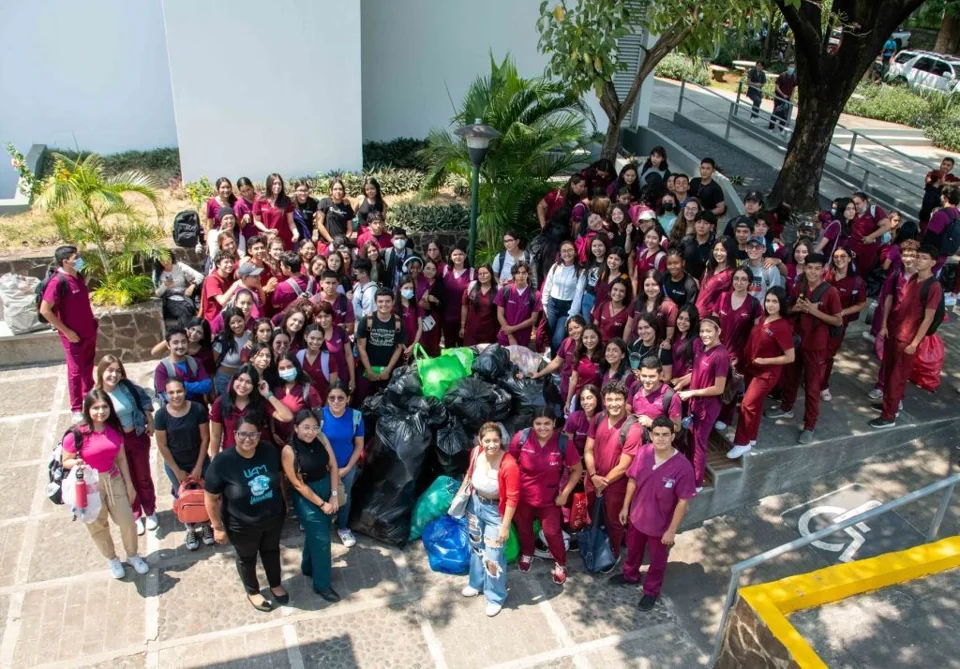
An official UAM Verde report describes a plastic-bottle collection campaign associated with Retazos Runway 2023, a sustainable-fashion competition. The Student Life Directorate and Environmental Club organised the collection with participation from psychology and dentistry students. The collected bottles were intended for reuse in the decoration of the competition’s final event.
The report connects the activity with responsible fashion and awareness of the environmental effects of the textile industry. Its account emphasises waste reduction and creative reuse, linking an environmental campaign with a design-related university event. This is a concrete historical example of student participation across different academic interests. The campaign brought together collection work, environmental education and preparation for a public activity, showing how the university’s stated social and environmental concerns could take the form of a shared project outside ordinary classroom teaching.
Sources: UAM Verde:plastic-bottle collection for Retazos Runway 2023 ↗
Library resources and reading
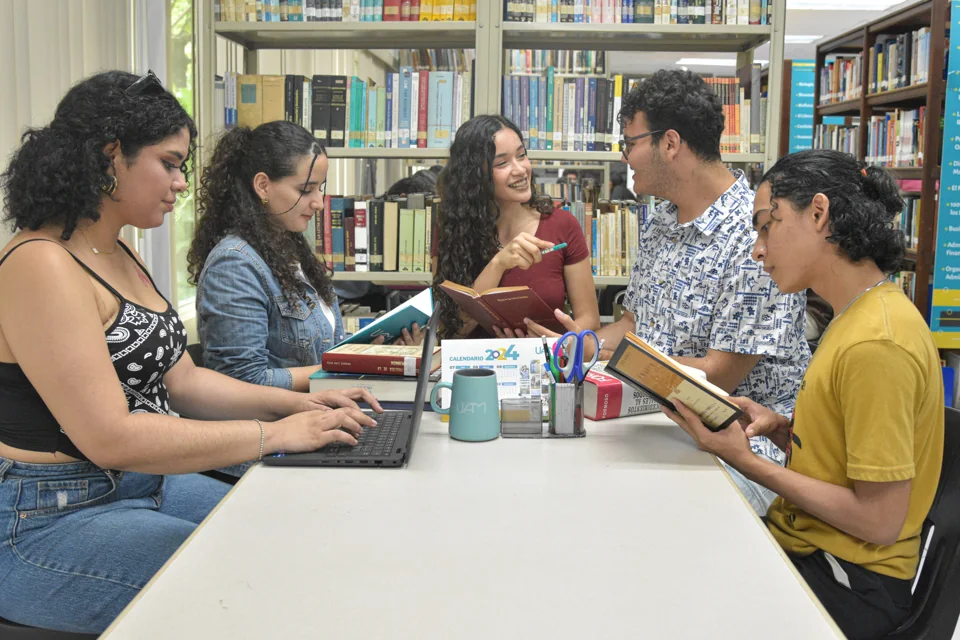
The Biblioteca Pablo Antonio Cuadra provides a further academic point of contact within UAM. Its public site brings together subscription databases, bibliographic materials, inductions and workshops, room reservations and online advice. It also publishes information about research and referencing workshops and directs readers to the university’s reading club.
Library news includes training in Digitalia Hispánica and efficient use of databases, alongside activity related to APA referencing. The site combines access to academic resources with support for using them, while reading-club activity offers an additional setting for engagement with books and discussion within the university community.
Sources: Biblioteca Pablo Antonio Cuadra ↗