Visa
About American International University West Africa
Origins and educational purpose
American International University West Africa, commonly abbreviated AIUWA, has an institutional history extending across Guinea and The Gambia. Its official account traces the project to a 1998 agreement to establish a hospital in Conakry. The American Hospital, also known as Centre Medical International, opened in the Gbessia area in November that year. The university subsequently developed a Gambian health-sciences center following government approval in August 2010. Classes at its Kairaba Avenue campus began on 31 January 2011.
The university describes promoting human health as its founding mission. Its stated educational values include collaboration, integrity, compassion, diversity and lifelong learning. Research, scholarship and communication also feature in that mission, alongside an emphasis on combining fundamental knowledge with innovation.
Sources: History, mission and vision ↗
Campuses in The Gambia
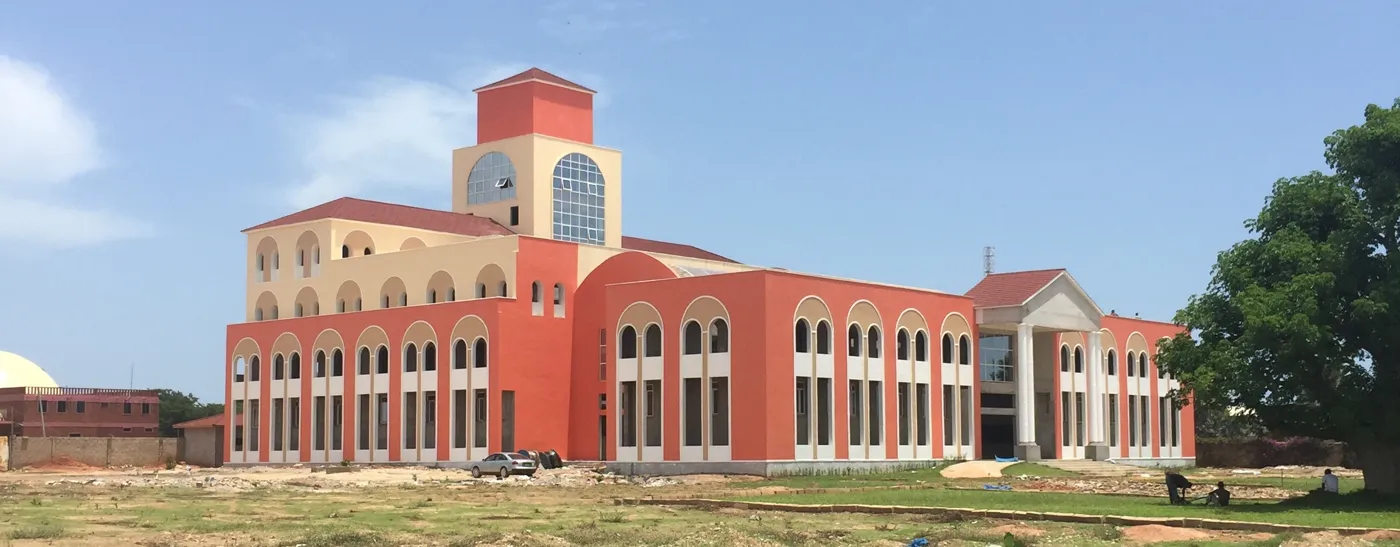
The university's contact directory identifies three Gambian teaching locations with different institutional roles. Kairaba Campus is listed as the main campus, at 89 Kairaba Avenue, with a Banjul postal address. The Health Science Campus is identified separately in Kanifing Institutional Layout, on Bertil Harding Highway near GAMWORKS. The College of Management and Information Technology, or CMIT, is associated with the Brusubi Campus at Plot 1152 on AU Highway.
These named sites show the university's geographical spread beyond the Banjul postal label. The directory also separates practical enquiries into admissions, student relations and housing contacts. Its Houston address is specifically described as an administrative office in the United States.
Sources: Gambian campuses and contact information ↗
Health-sciences education
Health-sciences teaching remains a prominent part of AIUWA's institutional presentation. The College of Nursing's published Bachelor of Science in Nursing overview combines science and humanities with professional study. It describes coursework concerned with critical thinking, human functioning, care, healthcare resources and relationships between people and their environments. The educational outline also emphasizes decision making, evaluation, scholarship and the development of professional roles through experiential learning.
The university's website carries a specific notice that enrollment in medical and dental programs is unavailable for 2026. This dated notice is important context for the health-sciences subjects described across its academic pages. The nursing overview itself presents both hospital and community settings as part of the educational approach.
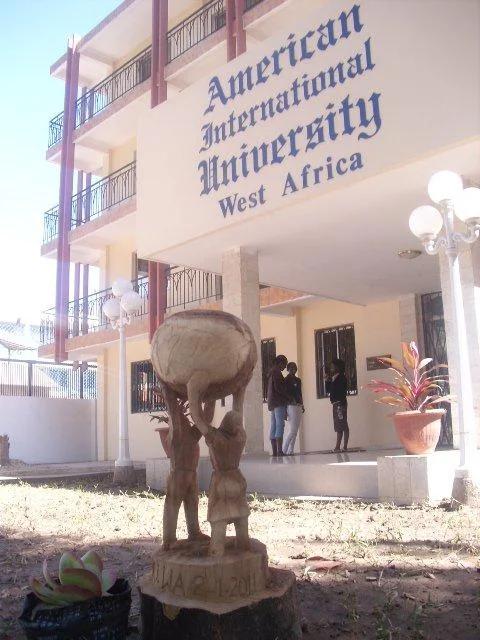
Sources: University homepage and archived campus photographs ↗ · Bachelor of Science in Nursing overview ↗
Computing and information technology
CMIT's published Computer Science and Technology outline presents a four-year Bachelor of Science organized around three trimesters per year. Its subject range includes programming, computer architecture, databases, networking, operating systems and systems analysis. Web development and multimedia sit alongside software project management and human-computer interaction, giving the outline both technical and application-oriented components.
The curriculum progresses from introductory computing and mathematical foundations to more advanced work in security, database administration, software testing and fault-tolerant systems. Research methods and a final-year research project provide an academic strand alongside the technical subjects. Practical coursework and laboratory assessment are described together with written examinations, rather than the program being presented solely as a sequence of lectures.
Accounting and finance
The Accounting and Finance curriculum brings financial reporting into contact with economics, law and quantitative analysis. Its early subjects cover basic accounting processes, business communication, banking, management information systems and international trade. Subsequent study introduces financial modeling, cost and management accounting, auditing, taxation and corporate law. The published structure is a four-year Bachelor of Science with three trimesters in each year.
Later topics include investment, public-sector reporting, professional ethics and strategic finance. The final-year outline includes a research project and industrial attachment as well as business valuation, financial markets, mergers and acquisitions, bankruptcy and accounting standards. This combination places accounting techniques within a wider study of organizational decisions, legal frameworks and economic development.
Sources: Accounting and Finance curriculum ↗
Business administration
Business Administration is another four-year Bachelor of Science described by CMIT. Its published outline connects management with marketing, organizational behavior, economics and corporate governance. Foundational study includes communication, accounting, business law, computing and quantitative analysis. Psychology, sociology and personnel management broaden the curriculum beyond the financial aspects of running an organization.
The later course sequence introduces operations management, research methodology, public administration, manpower planning and comparative management. Advanced topics include human resources, consumer behavior, sales, marketing research and production management. Corporate administration and social responsibility also appear in the outline. A research project and industrial attachment form part of the published sequence, bringing independent academic work and workplace-oriented study into the management curriculum.
Sources: Business Administration curriculum ↗
People, employment and organizations
The Human Resources and Labor Management outline approaches employment through several disciplines. Business strategy and law are considered alongside psychology, sociology, economics and accounting. Early subjects introduce personnel management, industrial relations, public policy, political theory and critical thinking. The program description emphasizes interactive classroom learning and opportunities to shape study around individual academic interests.
Its later curriculum addresses training and development, manpower planning, organizational performance, pensions, corporate governance and labor economics. Advanced industrial relations, labor-market analysis and a research project appear in the final year. The published four-year structure also includes industrial attachment. These subjects connect the administration of staff and employment systems with broader questions about institutions, management and the economy.
Philosophy, politics and economics
CMIT's Philosophy, Politics and Economics program joins questions about ideas and values to the study of political institutions and resource allocation. Its overview discusses democracy, culture, conflict, globalization, equality and sustainable development. The curriculum begins with philosophy, political science, comparative politics, logic, public policy and environmental economics, supported by communication and quantitative subjects.
Later study includes epistemology, political analysis, public-sector economics, trade policy, democratic theory and political philosophy. Econometrics and behavioral economics introduce further analytical approaches. The final-year outline adds monetary economics, game theory, mathematical economics and the political economy of African development, together with a research project and industrial attachment. This interdisciplinary course extends the university's academic presentation beyond its original health-sciences focus into social inquiry and economic analysis.