Visa
About Agricultural University of Iceland
Life sciences in an Icelandic setting
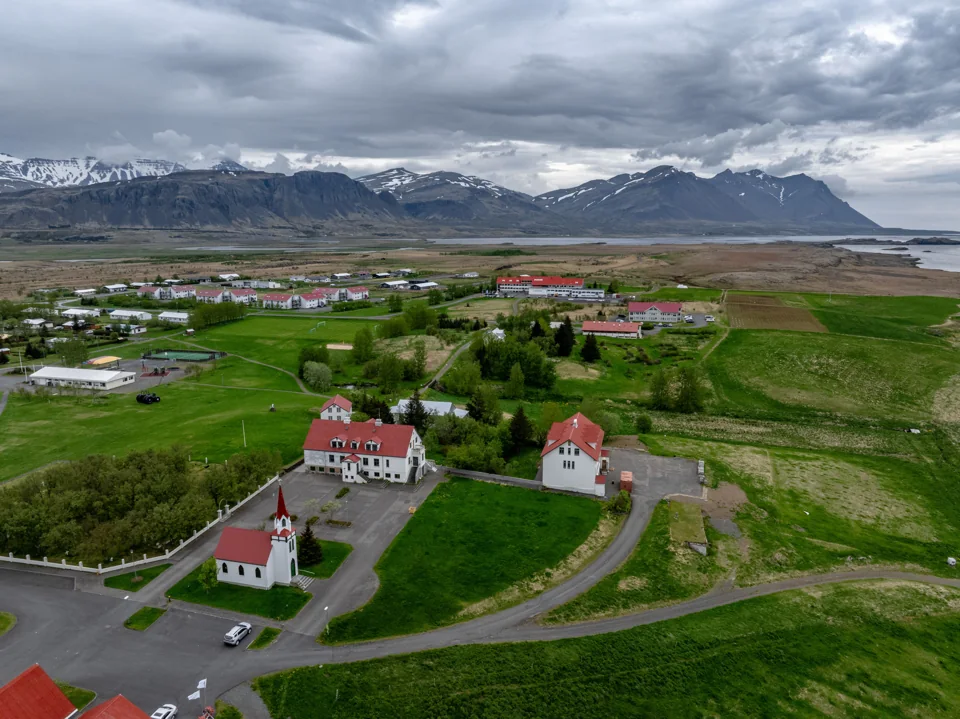
The Agricultural University of Iceland is a life sciences university based at Hvanneyri in western Iceland. Its Icelandic name is Landbúnaðarháskóli Íslands, commonly abbreviated LBHÍ, while its English-language pages use AUI. Its teaching and research connect agriculture with the environment, forestry, land restoration and the planning of places where people live and work.
Hvanneyri is described by the university as a rural campus with student accommodation. The institution also uses Keldnaholt in Reykjavík, identified as the location for on-site teaching in its planning master’s programme. These settings reflect the breadth of its work, ranging from agricultural landscapes and biological production to urban communities. The university’s programmes bring practical questions about land and resources together with scientific investigation and design.
Sources: Research facilities and activity ↗ · Landscape Architecture BSc ↗ · Planning MSc ↗
Agriculture, livestock and land use
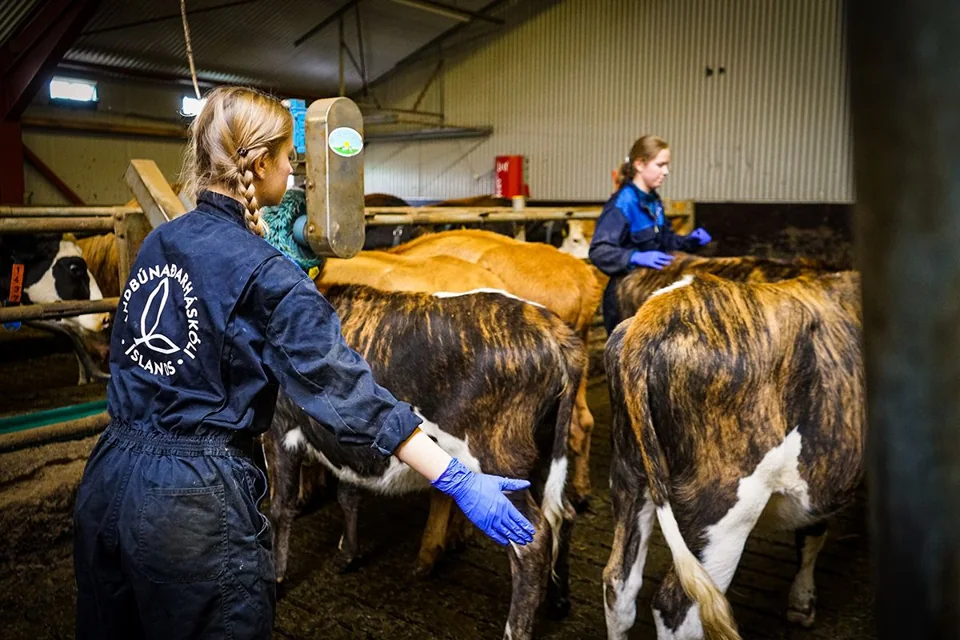
The Agricultural Science bachelor’s programme examines the biological, economic and technical conditions affecting livestock and the use of land. Its subject matter includes crop production, feeding and nutrition, breeding, animal biology and welfare. Chemistry, biology, ecology and soil science provide scientific foundations, while business and technology subjects address the organisation and practical operation of agriculture.
The programme is presented as three years of full-time study leading to a BSc, with a final project and thesis. Its stated language of instruction is principally Icelandic, although textbooks are commonly in English or Scandinavian languages. The university describes a particular emphasis on Icelandic agriculture and sustainable natural resource use. Its International Office supports exchanges through Erasmus+ and Nordplus. Student life also includes subject-related associations, such as clubs devoted to cattle, horses, sheep and goats, connecting academic interests with the university community.
Sources: Agricultural Science BSc ↗
Research infrastructure and environmental questions
The university’s research facilities support agricultural science, natural and environmental science, soil chemical analysis and molecular genetics. Forestry, land reclamation, soil erosion, carbon sequestration and greenhouse gas emissions are also identified as research areas. Chemical analysis facilities and equipment support work across these subjects.
AUI relates this research activity to its research-based master’s and doctoral education. The range of facilities brings together the study of production and the investigation of environmental processes. Work on soils, genetics and forestry sits alongside questions about the movement of carbon and the restoration of land. These are concrete areas in which laboratory methods and field investigation contribute to the institution’s scientific activity.
Sources: Research facilities and activity ↗
Restoration ecology and independent investigation
The Restoration Ecology MSc is concerned with degraded ecosystems and ways to restore them. Its programme combines courses on the theory, practice and wider context of restoration with an independent research project. The Icelandic setting is significant: the university describes a long history of efforts to address erosion and ecosystem degradation associated with land use, demanding climatic conditions and volcanic activity.
The master’s programme comprises 120 ECTS credits, with a thesis of either 30 or 60 credits and a corresponding balance of coursework. Research is developed with academic supervision, including a supervisor from AUI. Core study is supplemented by electives and training relating to research methods, ethics and scientific writing. The programme generally teaches in English and emphasises monitoring, assessment and adaptive management. It connects ecological investigation with the social context in which restoration decisions are made.
Sources: Restoration Ecology MSc ↗
Forests and landscape design
The Forest Science bachelor’s programme treats forests as renewable resources and as ecosystems. Its topics include sustainable forest management, silviculture, forest utilisation and the restoration of degraded land. Students also encounter planning, management, engineering, economics, geographic information systems and landscape studies. The programme is offered through campus study and distance learning, reflecting different ways of accessing this field of education.
The forestry programme also examines the planning and management of forestry projects and the relationship between forests and land-use decisions. Its scientific and practical approach includes landscape adaptation and the establishment of forests, placing attention on how wooded environments can contribute to environmental protection and rural economies.
Landscape Architecture brings a different combination of subjects to the study of land. Its bachelor’s curriculum connects design with natural and environmental sciences and social considerations. Ecology, soil science, botany, cartography and spatial analysis underpin work in landscape design, built environments, outdoor recreation and community aspects of place. Computer-aided design is included among its specialised subjects. The programme places particular attention on Icelandic environmental conditions, and students have access to a studio with assigned working space. Together, forestry and landscape architecture illustrate the university’s interest in managing living environments and designing their use.
Sources: Landscape Architecture BSc ↗ · Forest Science BSc ↗
Planning for sustainable communities
The Planning MSc combines theoretical study with practical approaches to creating sustainable and liveable communities. Its curriculum includes quantitative and qualitative methods, spatial design and applied planning. Public involvement and collaboration with different stakeholders form part of the approach described by the university.
The two-year programme allocates three quarters of study to coursework and one quarter to a research project. Students take courses at AUI and collaborating universities, with the university’s own on-site teaching based at Keldnaholt. The course emphasises critical examination of planning problems and the development of strategies for addressing them. This extends AUI’s educational scope from the production and conservation of natural resources to the organisation of settlements and the environments shared by communities.
Sources: Planning MSc ↗