Visa


About Agostinho Neto University
A public university rooted in Angola’s history
Agostinho Neto University, known in Portuguese as Universidade Agostinho Neto or UAN, is a public university based in Luanda, Angola. Its origins lie in the university-level general studies established in 1962, with teaching inaugurated in Luanda in 1963. The institution became the University of Luanda in 1968 and took the name University of Angola after independence.
In 1985, it was renamed in honour of António Agostinho Neto, Angola's first president and the university's first rector after independence. Its development connects the history of higher education with the formation of the independent country. A restructuring in 2009 changed its earlier nationwide organizational pattern.
The first phase of the university campus at Camama opened in November 2011. The rectorate and much of the Natural Sciences and Engineering teaching moved there, while other academic units continued at locations within Luanda. The university describes its wider responsibilities through undergraduate and postgraduate education, scientific inquiry and service to society. Its institutional principles include freedom of scientific, cultural and technological creation and respect for people, communities and the environment.
Natural sciences and their development
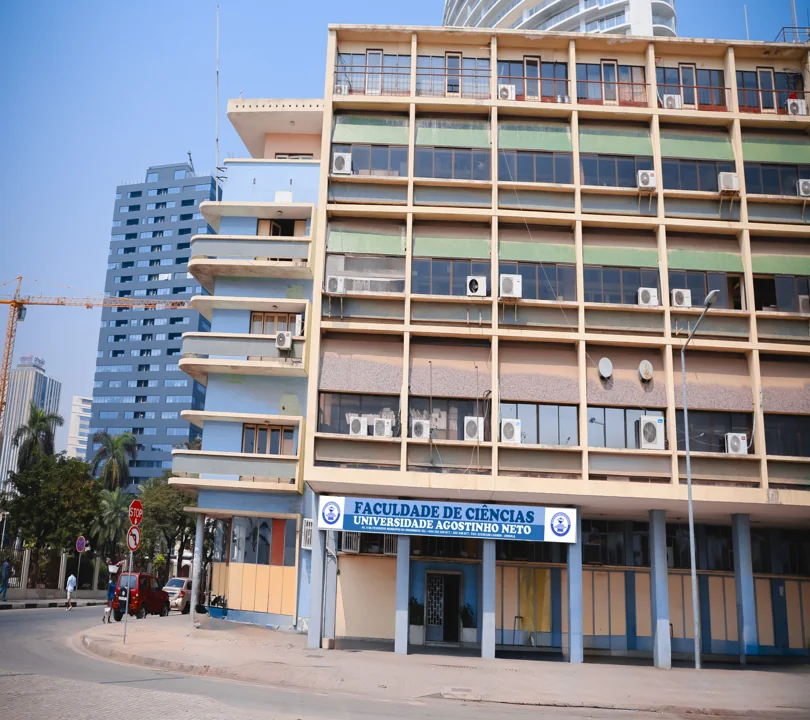
The Faculty of Natural Sciences traces its beginnings to 1963. Its historical account describes the expansion from preparatory and professional studies into full degree subjects including biology, physics, geology, mathematics and chemistry. Later developments included geophysics and computer science, the latter beginning in 2006.
The faculty's present course listings span computing, geographical engineering, physics, geophysics, geology, chemistry, mathematics and meteorology, among other subjects. Its mission connects scientific education with research, applied innovation, public communication and university outreach. Sustainable development is a recurring theme in its explanation of how natural sciences relate to the needs of the university and Angola.
The faculty also identifies academic rigour, ethical conduct, autonomy, social responsibility, diversity and inclusion among its values. These commitments place the technical study of natural systems alongside responsibilities concerning the use and communication of scientific knowledge. The combination of established sciences and newer fields illustrates how the faculty's subject range has developed over time.
Sources: Faculty of Natural Sciences ↗
A longstanding medical faculty
Medical education is another longstanding part of UAN. The Faculty of Medicine identifies its origin as the Medical-Surgical Course introduced within the general university studies in 1963. The course retained that designation when the institution became the University of Luanda in 1968.
The faculty title emerged during the post-independence reorganization in 1976, when the University of Angola's earlier courses were designated as faculties. The present name, Faculty of Medicine of Universidade Agostinho Neto, followed the university's 1985 renaming. The faculty's official page lists medicine as its undergraduate subject. Its institutional history therefore links medical teaching with several stages in the university's wider development, from the original course to a named academic faculty.
Sources: Faculty of Medicine ↗
Botanical research and collections
The Centre for Botany studies and inventories plant diversity across Angola, including plants of food, medicinal, forestry, timber and ornamental interest. Its stated responsibilities include maintaining and conserving herbarium specimens and providing training in biodiversity, pharmacognosy and environmental subjects. It also prepares and promotes scientific and educational publications.
The centre describes links with southern African botanical diversity work and with institutions holding related collections abroad. These include Kew, Belgium's Meise Botanic Garden and Portuguese botanical and herbarium institutions. Its combination of field inventory, preserved specimens, training and publications connects research on Angola's plants with the resources needed to document and study them.
Sources: Centre for Botany ↗
Earth sciences and sustainability
The Centre for Earth Sciences and Sustainability presents sustainability as a responsibility toward both present and future generations. Its description connects this purpose with teaching, scientific investigation and engagement in public service. The centre's page identifies its location as Viana.
Its stated interests include environmental awareness, habits and attitudes consistent with a wider understanding of the environment, and socioeconomic development that takes social equality and community integration into account. This gives its work a social as well as an environmental frame. Within the university, the centre adds a specific sustainability perspective to the broader range of scientific disciplines.
Academic life and new student residences
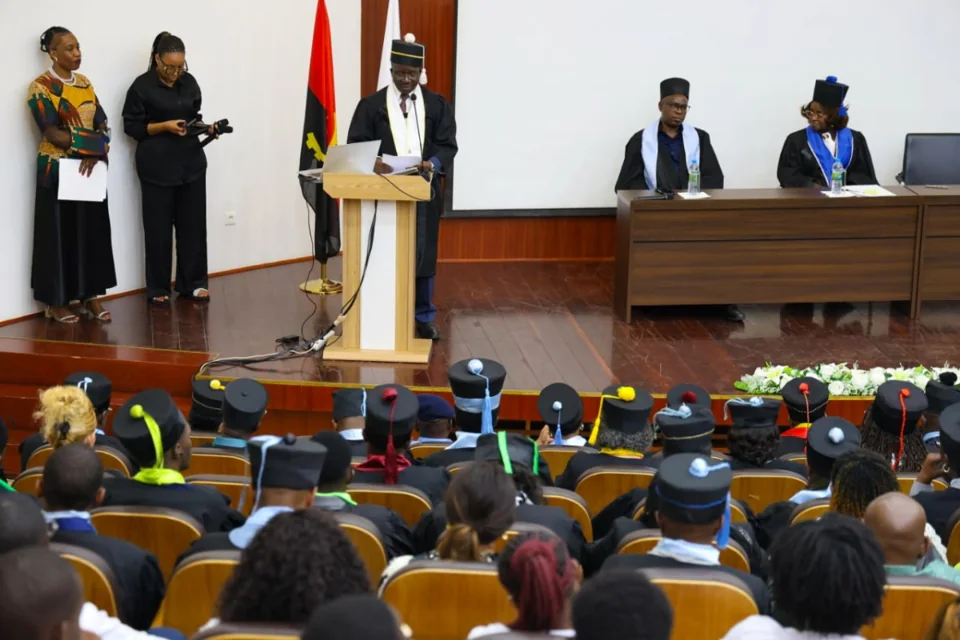
On 16 October 2026, UAN held its opening lecture for the 2026/2027 academic year at the Doutora Suzanete Nunes da Costa auditorium on the Camama campus. The programme included a welcome for newly admitted students, contributions from university leadership and student representatives, and cultural activities.
The opening lecture addressed how higher education institutions respond to change, with attention to innovation in teaching, research and society. The occasion also included ceremonies welcoming new students into the academic community. In the same programme of activities, the university inaugurated two student residence buildings, one for men and one for women.
The official report describes furnished bedrooms, shared rooms and equipped kitchens, together with a laundry area. It presents the residences as support for students' accommodation and continued participation in university life. This dated development adds a practical student-support dimension to the university's academic work, alongside the teaching and research represented by its faculties and centres.
Sources: Opening lecture and inauguration of student residences, October 2026 ↗
Postgraduate subjects
UAN's published postgraduate catalogue includes master's study in electronics and telecommunications, applied mathematics, applied microbiology, applied chemistry, and mineral resources and the environment. It also lists geographic information systems within the postgraduate offering. These examples show advanced study across mathematical, laboratory, technological and environmental subjects. The catalogue provides a route to programme-specific information, complementing the descriptions of the university's academic units.
Sources: Postgraduate course catalogue ↗