Visa
About Aga Khan University
Aga Khan University in Dar es Salaam
Aga Khan University's presence in Dar es Salaam forms part of a multinational, not-for-profit university within the Aga Khan Development Network. Founded in Pakistan in 1983, AKU began expanding internationally from 2000, including into Tanzania and other East African countries. Its wider mission brings together teaching, research and service, with attention to problems affecting the communities in which it works.
The Dar es Salaam setting is an important distinction: AKU's activities extend across several countries, and individual programmes and facilities belong to particular locations. In Tanzania, its academic work connects health professional education with teacher education and research. These subjects place the university in regular contact with schools, health services and education professionals.
Sources: About Aga Khan University ↗
Tanzanian academic institutions
AKU's Tanzania website identifies three principal academic components: the School of Nursing and Midwifery, the Medical College and the Institute for Educational Development. Its published contact address is Salama House, 344 Urambo Street, Dar es Salaam. The national site provides routes to undergraduate, graduate and postgraduate programme information, together with research and faculty resources for the different academic units.
The university describes its Tanzanian work in terms of strengthening knowledge and professional capacity in health and education. Its regional structure also creates links with colleagues elsewhere in East Africa, while its local teaching addresses the circumstances in which graduates and practising professionals work.
Sources: Aga Khan University in Tanzania ↗
Education and teacher development
The Institute for Educational Development, East Africa, was established in Dar es Salaam in 2007. It draws educators and education professionals from Tanzania and neighbouring countries, including Kenya, Uganda and Mozambique. Its Master of Education is a central part of its academic provision, combining professional knowledge with reflective practice for teachers and educational leaders.
The institute's interests extend well beyond a single teaching method or subject. Research areas include mathematics and science teaching, technology in learning, early childhood education, educational leadership, teacher education, gender and inclusion, and language and literacy. Thematic research groups support work in areas such as multilingual literacies, equity, digital literacy and school leadership.
Short courses and professional development are offered through the Centre for Continuing Education and Lifelong Learning. The institute also works with local and regional partners on teacher development and school improvement initiatives. These activities connect university research and postgraduate study with the continuing professional needs of schools and educators.
Sources: Institute for Educational Development, East Africa: About us ↗
Nursing education in Tanzania
The Tanzania direct-entry Bachelor of Science in Nursing is described as a four-year programme. Its curriculum focuses on patient-centred care, teamwork, interprofessional practice, evidence-based practice, quality improvement and the use of information and technology. The programme aims to develop critical thinking alongside professional knowledge.
AKU describes a blended learning environment combining face-to-face and online modules. Simulation-based learning and clinical rotations in hospital and community settings provide practical components of the educational experience. These settings allow nursing students to relate classroom learning to professional situations under supervision. The School of Nursing and Midwifery's broader regional work includes education for practising nurses and midwives, but the direct-entry Tanzania course is a distinct undergraduate route.
Sources: Direct-entry Bachelor of Science in Nursing, Tanzania ↗
Postgraduate medical training
Postgraduate clinical training began in Dar es Salaam and Nairobi in 2004, at Aga Khan Hospital and Aga Khan University Hospital respectively. AKU's Medical College, East Africa, offers Master of Medicine education at both locations. In Dar es Salaam, its published programme information includes family medicine, general surgery and internal medicine.
The educational model combines clinical rotations with structured study and examinations. Experienced supervisors and preceptors guide residents' clinical work, while the curriculum emphasizes learning relevant to African health systems. The programme description also identifies a substantial place for self-directed learning. Its purpose is specialist professional education, connecting supervised clinical experience with the academic development of doctors.
Sources: Postgraduate Medical Education and Master of Medicine ↗
Libraries and information skills
The Faculty of Health Sciences Library in Dar es Salaam supports teaching, learning and research through the selection and organization of information resources. Its two branches serve different academic settings. The nursing and midwifery library is at Salama House on Urambo Street in Upanga, while the Medical College library is on Ufukoni Road beside Aga Khan Hospital.
The library provides information literacy teaching to help users find, evaluate and use resources. Its website also links to the EBSCO Discovery Service, online databases through OpenAthens and off-campus access services. This combination of physical collections and digital access supports work that takes place across classrooms, research activities and professional education settings.
Sources: Faculty of Health Sciences Library, Dar es Salaam ↗
Regional exchange on teacher preparation
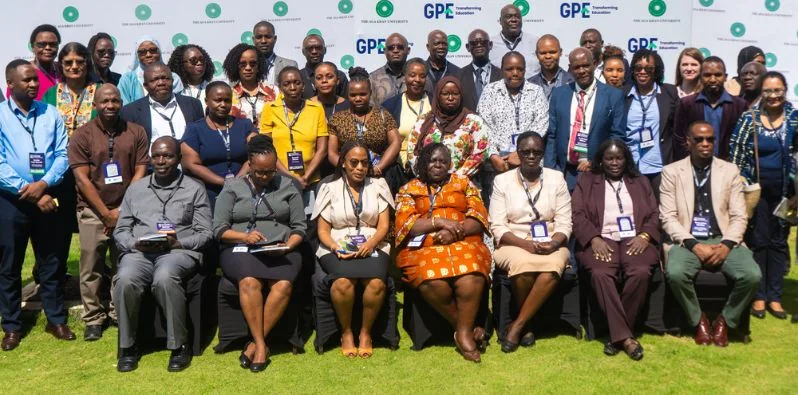
An official August 2026 report describes a Regional Learning Exchange hosted at the Dar es Salaam campus by the Institute for Educational Development. It brought together teacher educators, policymakers, researchers, school leaders, student teachers and development partners. The programme emphasized active participation through storytelling circles, implementation labs, masterclasses, roundtables and panel discussions.
The exchange considered teacher preparation in relation to digital technology, artificial intelligence, inclusion, climate disruption and changing expectations of education. It also discussed classroom practice, mentoring and professional learning communities. These subjects reflect the institute's interest in bringing research, policy and the practical experience of educators into the same conversation.
Sources: Regional Learning Exchange on teacher preparation, August 2026 ↗
Introducing younger learners to university life
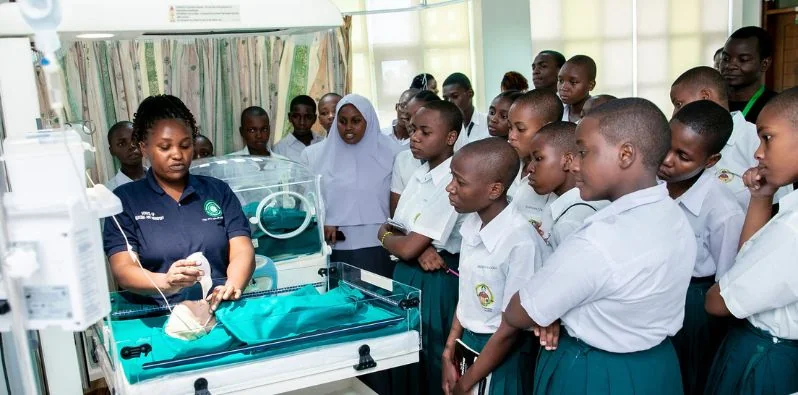
The campus also hosts activities for school students. In March 2024, AKU reported a career day jointly organized by its education, medical and nursing units. Visiting high school students met current students and alumni and discussed educational opportunities in nursing, medicine and education.
The event included discussion of the factors influencing career choices and a session on mental health awareness. An accompanying photograph shows visitors observing a demonstration in a simulation laboratory. Such events give school learners a direct introduction to professional learning environments and the people studying and teaching in them.
Sources: Career day for Tanzanian high school students, March 2024 ↗