Visa
About Africa Center of Excellence for Prevention and Control of Communicable Diseases
A university centre in Conakry
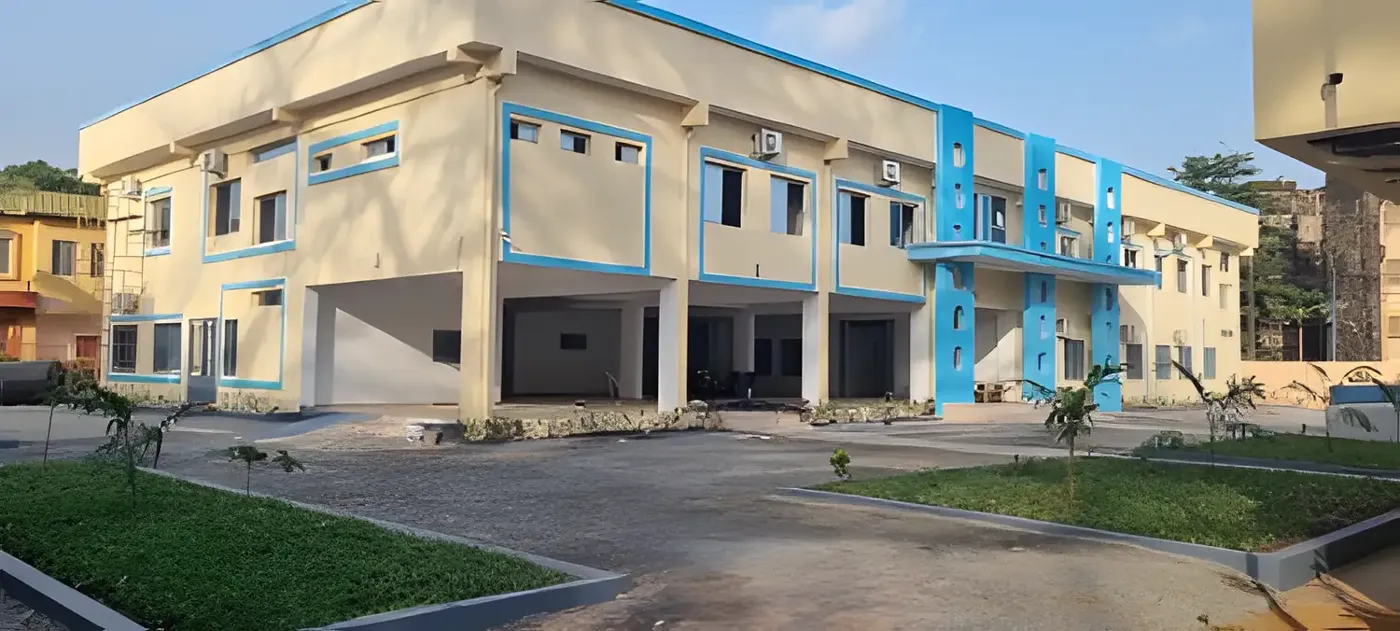
The Africa Center of Excellence for Prevention and Control of Communicable Diseases is known in French as the Centre d'Excellence Africain pour la Prévention et le Contrôle des Maladies Transmissibles, or CEA-PCMT. It is based in Conakry, Guinea, within the Faculty of Health Sciences and Techniques of the University Gamal Abdel Nasser of Conakry, UGANC. The centre connects postgraduate education, research and the needs of health programmes and services. Its identity is therefore that of a specialist university centre rather than a separate general university.
UGANC submitted the centre project through a competitive World Bank selection process in 2018. Financing was notified in November that year. The centre's institutional history records its creation and the launch of the project's first phase in November 2020. Its educational and research mission emphasizes scientific evidence, partnerships and the development of professional capability. The university rector and faculty dean provide institutional oversight, supported by strategic, executive, audit and academic governance arrangements.
Sources: Institutional identity and history ↗
Public health education with several perspectives
The public health master's programme brings together epidemiology, health programme and project management, community health, and global health. Each specialization is offered through professional and research pathways. The research route also provides preparation relevant to subsequent doctoral study. The programme is carried by the university's health faculty and advanced studies service, with support from CEA-PCMT and CERFIG.
Its teaching areas include statistics, medical informatics, research methodology, management and the quality of health services. The published objectives connect analytical methods with the ability to understand health systems, design research or intervention projects and assess programmes. Ethical and professional conduct and communication are also part of the educational approach. These elements combine knowledge of population health with attention to institutions, communities and the practical organisation of services.
Sources: Master in public health ↗
Microbiology and immunology
The master's programme in microbiology and immunology is taught at UGANC's Faculty of Health Sciences and Techniques in Conakry. It is structured over two years, with four semesters carrying thirty credits each. Its purpose is to develop theoretical understanding and practical knowledge in fields relevant to microbiology and immunity, bringing laboratory-oriented study into the centre's wider educational environment.
The published subjects include bacteriology, virology, cellular biology, immunology, immunological techniques and bacterial and parasitic genetics. Infectious-disease epidemiology, outbreak investigation and scientific English add further dimensions to the curriculum. The teaching team draws on biology, medicine and anthropology and includes contributors from institutions in Guinea, other African countries and Europe. This combination links specialist biological science with population-level questions and communication within an international scientific community.
Doctoral research within UGANC
The public health doctorate is organised under UGANC's doctoral school EDSVSE. Its published structure comprises 180 credits, with three years of full-time study or five years part-time. Specializations include epidemiology, management and community health. The programme seeks to develop researchers capable of working through the research cycle independently while participating in the faculty's teaching environment.
Its hybrid format combines an annual period at UGANC with continuing distance supervision. The on-site period includes required academic units and French or English learning, while remote teaching and follow-up continue during the year. Joint thesis supervision is encouraged. The programme pages also provide information on supervision and applications. Admission and scholarship details are attached to particular calls, so the historical figures shown for an earlier cohort describe that call rather than a permanent allocation.
Sources: Public health doctorate ↗
Continuing professional learning
CEA-PCMT also offers university diplomas and shorter courses for professionals already working in health-related roles. Its catalogue includes infection prevention and control, health-service quality, hospital management and emergency-related subjects. Some provision is delivered in person, while separate online courses address sexual and reproductive health and research methodology. The catalogue also states that individual master's modules may be followed separately within a university diploma framework.
This continuing-education role complements longer postgraduate programmes. It gives the centre a way to organise focused learning around particular professional subjects rather than requiring every participant to enter an entire master's or doctoral course. Its listed areas range from primary health care and epidemiological surveillance to socio-anthropology and operational research. Specific sessions and application arrangements are published through individual calls, reflecting differences between courses and cohorts.
Sources: University diplomas and short courses ↗
Research connected to services and programmes
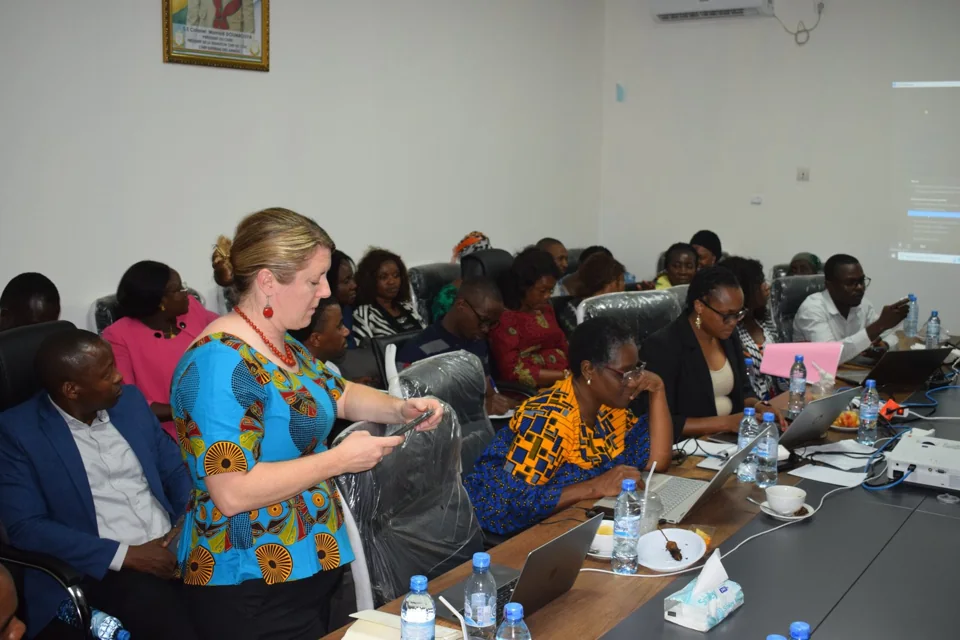
The centre presents three complementary research directions: implementation research, epidemiological surveillance and resistance. Its priorities include malaria, tuberculosis, HIV, hepatitis, viral haemorrhagic fevers, measles and meningitis. Collaboration involves national disease programmes, Guinea's health-security and public-health institutions, and regional and international partners. This structure connects research questions with organisations that collect information or deliver services.
Implementation research examines how existing tools are used and how new approaches can be introduced. The centre describes work undertaken with research institutions, laboratories and other partners to generate evidence relevant to policies, programmes and services. Its publication listings include studies of health-worker deployment, community engagement and blended professional learning. These examples illustrate an interest in how health systems work in practice, alongside the biological and epidemiological subjects represented in its teaching.
Sources: Research overview ↗ · Implementation research ↗
From observations to usable information
The epidemiological surveillance programme focuses on understanding how diseases are distributed within populations. Its description covers the information pathway from collection and transmission through centralisation, analysis, interpretation and dissemination. Relevant dimensions include seasonality, age, geographical distribution and the circumstances of vulnerable groups. The work is organised with national institutions and disease-control programmes rather than as an isolated academic exercise.
The centre's related publication directory includes studies of disease-surveillance information systems in Guinea and research drawing on observations over several years. By linking the organisation of data with interpretation and communication, this research direction complements the analytical skills taught in postgraduate programmes. It reflects the centre's broader purpose of bringing university education, scientific investigation and the information needs of public services into a connected institutional setting.