Visa

About Admal Aviation College
A specialist aviation college in Sepang
Admal Aviation College is a private aviation institution in Sepang, Selangor, Malaysia. Launched in July 2011, it is based at BBST Business Park in Bandar Baru Salak Tinggi, close to Kuala Lumpur International Airport. Its educational identity centres on aviation maintenance and the relationship between technical knowledge and practical experience. The college's stated mission emphasises professionalism and ethical standards, connecting subject competence with the responsibilities involved in work around aircraft and aviation organisations.
The college grew from the experience of Admal Sdn Bhd and its associated aviation businesses. Its About page describes access to a hangar, workshops and aircraft resources, together with a connection to the Subang Flying Club. These links provide an industrial setting for its training activity. The academic portfolio includes diploma study, skills programmes and separately described aircraft-maintenance and pilot-training pathways, bringing several different kinds of aviation learning within the college's wider educational offer.
Sources: About Admal Aviation College ↗
Aircraft, workshops and practical spaces
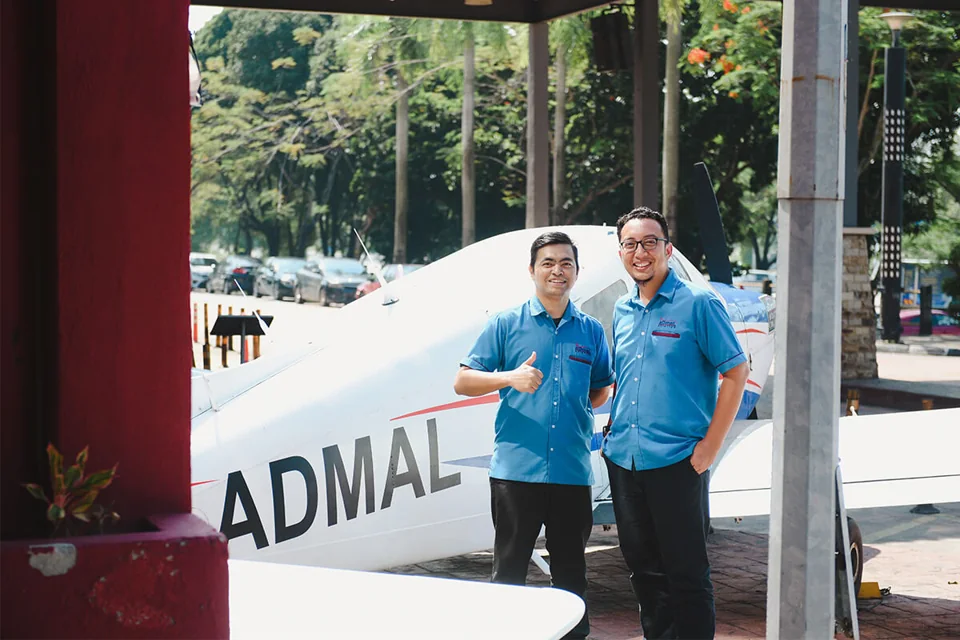
The facilities page identifies airframe, avionics, composite and engine workshops, alongside an examination hall and a cabin mock-up room. These spaces reflect the range of technical and service-related subjects within aviation education. Aircraft structures, engines and electronic systems require different learning environments, while the cabin setting supports another part of the aviation experience. The college presents the use of aircraft and real components as an important connection between classroom study and practical familiarity with the industry.
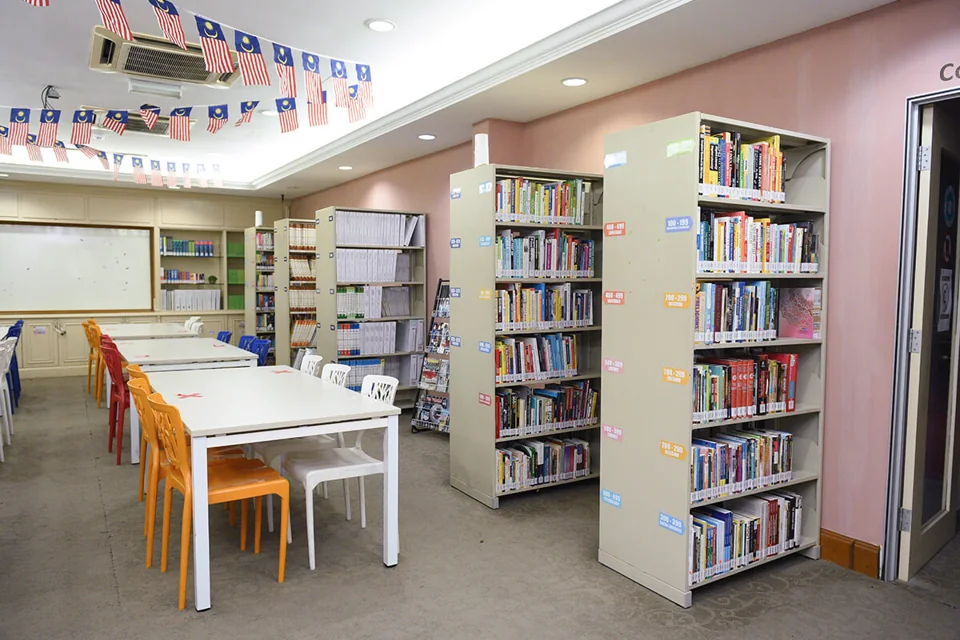
Its facilities gallery also documents study and campus spaces alongside aircraft-related resources. A library area provides bookshelves, reading tables and room for independent study, complementing the workshop environment. The college's Sepang location places it among nearby townships including Salak Tinggi, Kota Warisan, Nilai, Putrajaya and Cyberjaya. The facilities page identifies local food outlets and public-transport connections as part of the setting in which students attend classes and organise their daily lives.
Sources: Training facilities ↗
Aviation business and diploma study
The Diploma in Aviation Business offers a management-oriented route within the college's aviation portfolio. Its published full-time duration is three years, with six months of on-the-job training identified in the programme overview. The course connects aviation knowledge with business and communication skills. Its subject scope includes airport management, airline ticketing, crew-control management, flight operations, airport retailing, logistics and warehousing. These areas show how an aviation qualification can address the organisation of services as well as technical activity around aircraft.
The programme page emphasises early exposure to aviation companies through industrial training. This gives students a setting in which to relate their academic work to the processes and responsibilities of an aviation organisation. The diploma portfolio also lists Aviation Management and Aircraft Maintenance Technology. These programmes have different educational purposes and structures; the college presents business, management and maintenance as distinct pathways within its broader aviation specialisation, rather than a single interchangeable course.
Sources: Diploma in Aviation Business ↗ · Diploma programmes ↗
Skills training and ground operations
The certificate and skills portfolio includes cabin-crew and airline-service preparation, aircraft manufacturing and aircraft ground handling. The college's description of flight-attendant preparation also includes customer-service and ground-service work. Its manufacturing programme is aimed at practical skills development for young people seeking a training route outside a conventional diploma or degree. Together, these offerings extend the college's scope from longer academic programmes to training centred on specific areas of aviation work.
The Aircraft Ground Handling Technician page describes a six-month structure divided between three months of theory at the college and three months of industrial training. Listed subjects include baggage handling, basic dangerous-goods handling, ramp safety, ground handling and ground-equipment maintenance. Communication, personal behaviour and work ethics are included alongside technical subjects. The page currently marks its sponsored programme as unavailable for applications, so the published training description should be distinguished from an assurance that a new sponsored intake is open.
Sources: Certificate and skills programmes ↗ · Aircraft Ground Handling Technician ↗
Student support and the living environment
The college describes support for new students during registration and assistance for international students adjusting to their surroundings. Its stated student-support functions include sharing information, responding to campus-related needs and organising activities that recognise different cultures. This adds a social and administrative dimension to a specialist training environment. For students learning away from home, understanding the institution, its routines and its surrounding community forms part of settling into an aviation-focused course of study.
Accommodation is presented as another component of the student experience. The college's accommodation page lists recreational and shared facilities including swimming pools, a gym, jogging space, badminton, squash, tennis, basketball and futsal. Meeting rooms, a business lounge and multipurpose areas are also identified. These are described as hostel facilities, providing settings for recreation and interaction outside scheduled learning. They complement the academic and workshop spaces by supporting a broader pattern of student life.
Sources: About Admal Aviation College ↗ · Student accommodation ↗
A documented research and development project
The college also publishes an account of the AMPAV-80 research and development project, initiated at the end of 2020. The project concerned a multipurpose unmanned air vehicle intended for transport and agricultural applications, linking aviation technology with uses beyond conventional passenger operations. Its account invited partnerships and collaboration with industry. The page described a prototype completion target in 2022; it presents the project’s objectives and development ambitions, without establishing that the stated completion target was achieved.