Visa
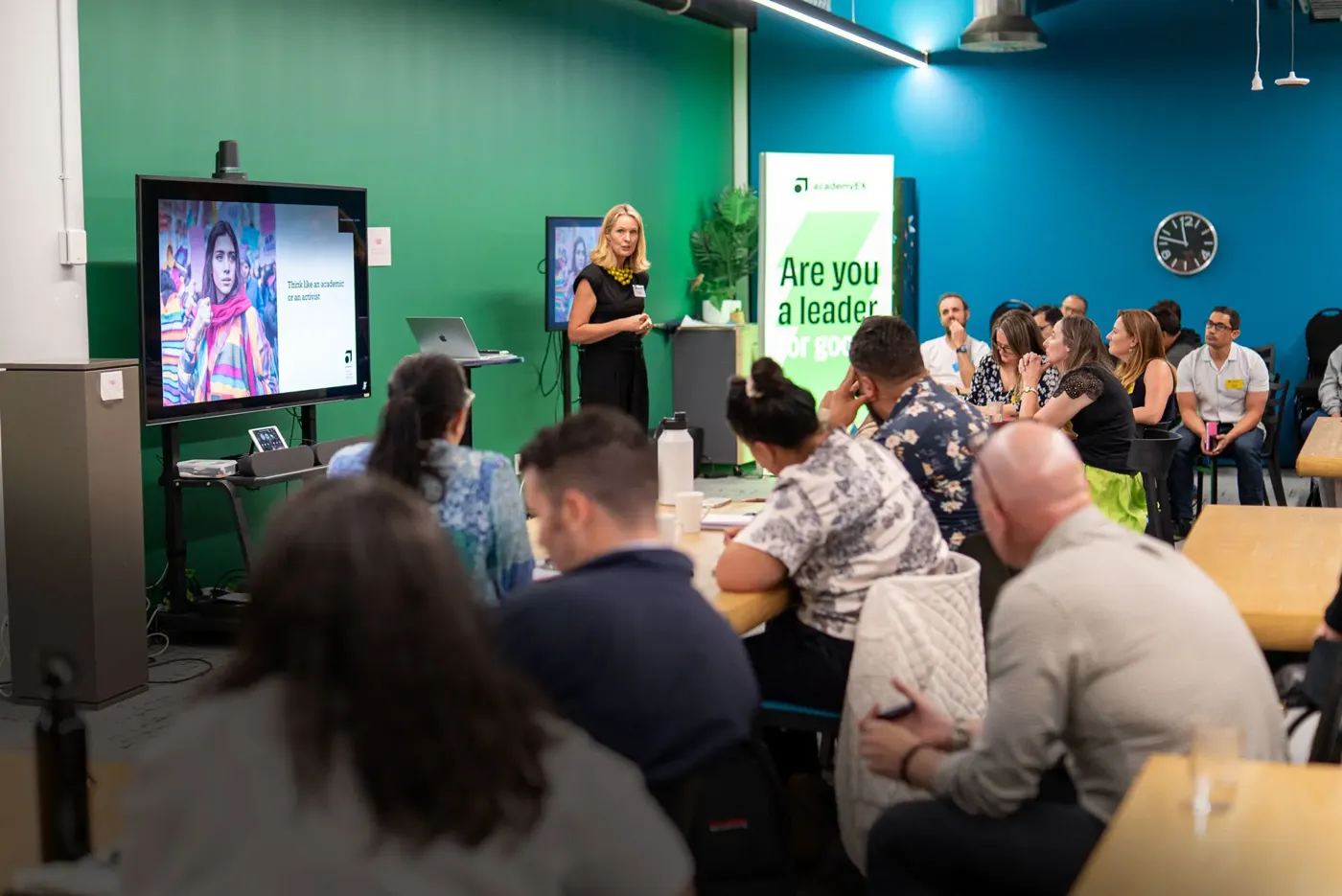

About academyEX
Postgraduate learning in Auckland
academyEX is a New Zealand postgraduate education provider based at 99 Khyber Pass Road in Grafton, Tāmaki Makaurau/Auckland. Its educational model is directed toward adults who bring professional experience into further study. Rather than treating work and study as separate stages, it designs learning around the challenges participants encounter in their organisations, professions and communities.
Its institutional presentation includes The Mind Lab, Tech Futures Lab and Earth Futures Lab within academyEX. The offer combines master’s programmes, postgraduate certificates and shorter forms of learning. A stackable approach allows selected shorter qualifications to contribute toward a longer postgraduate pathway, with an applied project forming an important part of master’s study. The institution identifies people, planet and purpose as themes informing its work, while its team brings together educators, technologists, researchers and professional specialists.
Sources: About academyEX ↗

Technology considered through a practical challenge
The Master of Technological Futures is designed around the relationship between emerging technology and decisions in professional life. Its published structure is part-time over eighteen months and centres on a challenge selected by the learner. An industry advisor supports the research and workplace project from scoping through implementation, helping connect the academic work with the participant’s context.
The programme begins with foundations in technological futures, including artificial intelligence, blockchain, human-centred design, business thinking and ethics. It then moves toward the definition and development of an individual project. Coding is not presented as a prerequisite: the emphasis is on understanding technology, experimenting with possibilities and exercising judgement about its use. This makes the programme relevant to people approaching technological change through leadership, strategy, policy, organisational development or community work, alongside those with more technical experience.
The published sequence allocates twelve weeks to scoping the industry challenge and forty weeks to the applied research project. Project outputs can take different forms, including a prototype, framework, report or demonstration, depending on the question and the context being investigated.
Sources: Master of Technological Futures ↗
Change and organisational resilience
The Master of Change and Organisational Resilience focuses on a live organisational challenge. Its first phase develops foundations in resilience through change, systems thinking, ethics and culture. Teaching also addresses culturally intelligent approaches and the place of human judgement when artificial intelligence is used within organisations.
In the second phase, learners define the problem they will investigate, identify stakeholders and risks, and establish measures of success. The final phase is an applied research project in which a change initiative is implemented and documented. Possible practical outputs described in the programme include risk maps, adoption plans and an AI-use playbook. Advisor support accompanies the project, connecting research with planning and implementation. The structure treats organisational resilience as something to investigate through an actual setting, with evidence gathered from the work undertaken.
Contemporary education through a change project
The Master of Contemporary Education is a practice-based research master’s carrying 180 credits at Level 9. It is intended for educators, leaders and learning designers who want to examine and develop their own educational practice. Study can be fully online or combine online sessions with selected in-person learning in Auckland.
The programme has three parts. Discovery considers digital and collaborative pedagogies and possible innovations in the learner’s setting. The project proposal stage develops the research and planning for a practice-based change project. Implementation then puts that project into practice. The programme description connects this work with learners, whānau and other stakeholders, and includes attention to culturally responsive change. The sequence allows a participant to move from identifying an educational issue to researching, designing and implementing a response within an existing professional context.
Sources: Master of Contemporary Education ↗
A certificate pathway for working educators
The Postgraduate Certificate in Digital and Collaborative Learning is a Level 8 qualification carrying 60 credits. Its published part-time structure is designed for educators who continue practising while studying. Learning and assessment relate to participants’ own professional experience, with collaborative work forming part of the assessment approach.
The first course investigates transformation and leadership, including the role of digital technologies and collaboration in education. The second turns toward research and innovation, developing evidence-based and culturally intelligent approaches to digital and collaborative learning. Subjects identified in the presentation include design thinking, cultural intelligence, AI literacy and research-informed educational innovation. The certificate can stand alone or form the first part of the Master of Contemporary Education, giving a defined route into the later project proposal and implementation stages.
Sources: Digital and Collaborative Learning certificate ↗

Research conversation through Converge
Converge is a free online community meetup involving academyEX students, alumni, staff and industry professionals. Its purpose is to provide a setting where research ideas can be shared, questioned and developed collaboratively. The published event information describes weekly Zoom conversations shaped by the people presenting their work, including ideas still at an early stage.
The themes connect with the institution’s wider interests in technological transformation, sustainable change and inclusive leadership. A related Converge Symposium extends the opportunity for emerging researchers and other participants to exchange ideas. This community activity provides a space around the formal programmes in which people can discuss projects, encounter different perspectives and continue developing their research interests beyond an individual class.
Sources: Converge research community ↗