Visa

About Academic Bridge Program
A bridge between school and university
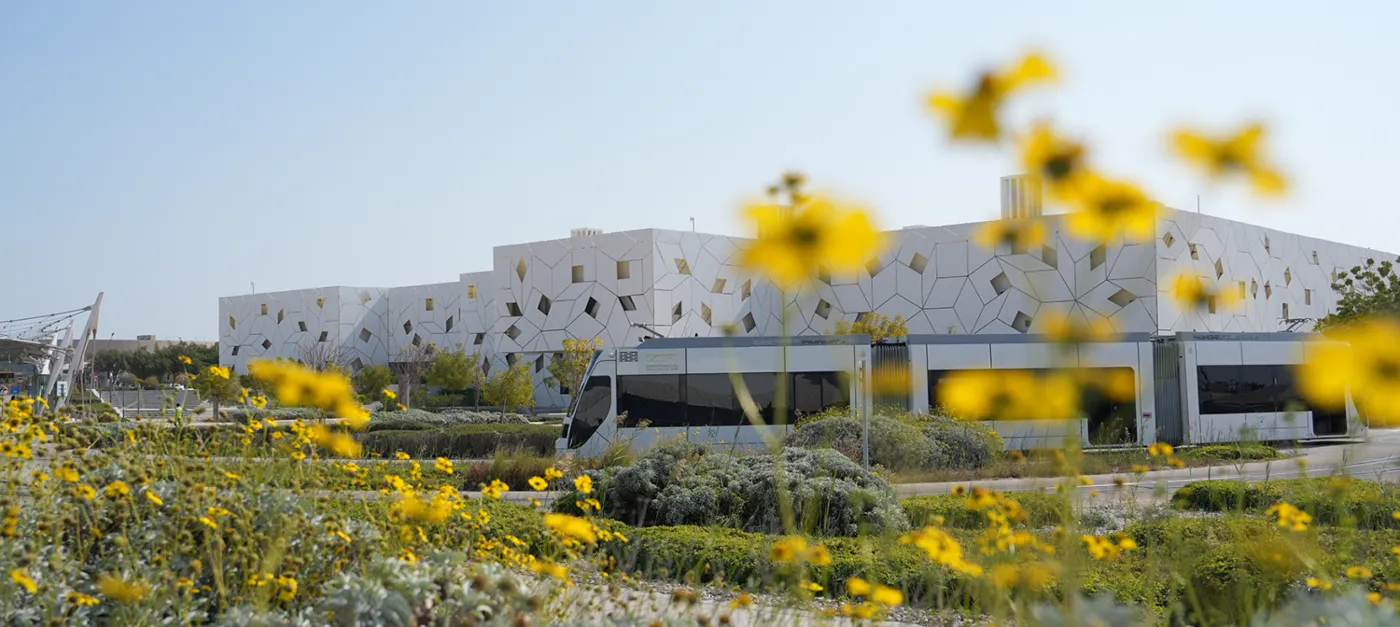
The Academic Bridge Program, known as ABP, is a pre-university educational programme within Qatar Foundation in Doha, Qatar. Launched in 2001, it helps secondary-school graduates develop the academic knowledge, English proficiency and personal skills needed for university study. Its address is Penrose House in Education City, placing the programme within the same wider educational setting as Qatar Foundation’s partner universities. It offers a foundation year rather than a conventional undergraduate degree.
ABP’s mission links academic support with preparation for local and international universities, giving particular attention to Qatar Foundation partners. Its emphasis extends beyond subject knowledge to the habits needed to participate independently in higher education. Critical thinking, problem solving, proofreading, time management and working with others appear among its identified academic skills. The programme also stresses initiative, responsibility and academic integrity. These goals describe a transition from the routines of secondary school toward the expectations of university learning.
Sources: About the Academic Bridge Program ↗ · Qatar Foundation programme profile ↗
Academic tracks and subject foundations
The programme organises study through three tracks: Science, Technology, Engineering and Mathematics; Social Sciences; and Humanities and Visual Arts. These reflect students’ intended university interests. The STEM route relates to fields such as engineering, computing and the sciences; Social Sciences connects with business, economics and international affairs; and Humanities and Visual Arts encompasses creative, linguistic and related disciplines.
English provision distinguishes foundation learning from advanced academic work. Foundation courses combine reading, writing, listening and speaking with IELTS preparation. Students reaching the top placement level take academic literature, writing composition and academic communication in the spring. Mathematics includes college algebra, precalculus and calculus, with placement informed by tests and intended majors. Science combines classroom and laboratory work in biology, chemistry and physics. Computing develops office-software and research skills, with later options including Python programming, digital storytelling and advanced spreadsheet and presentation work. This structure allows a common foundation to lead into different forms of university preparation.
Sources: Programme of studies ↗
An interactive English-medium classroom
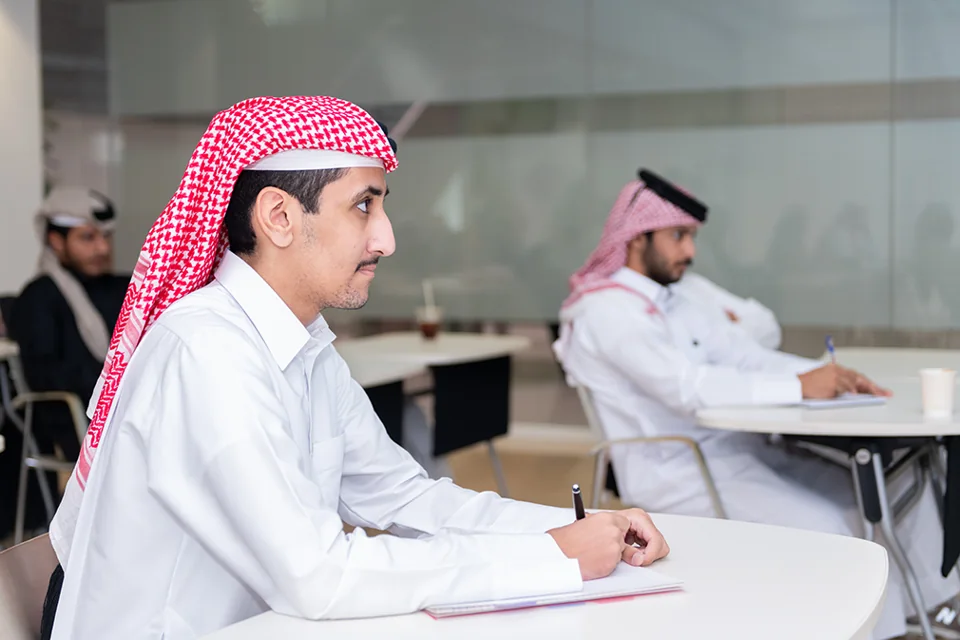
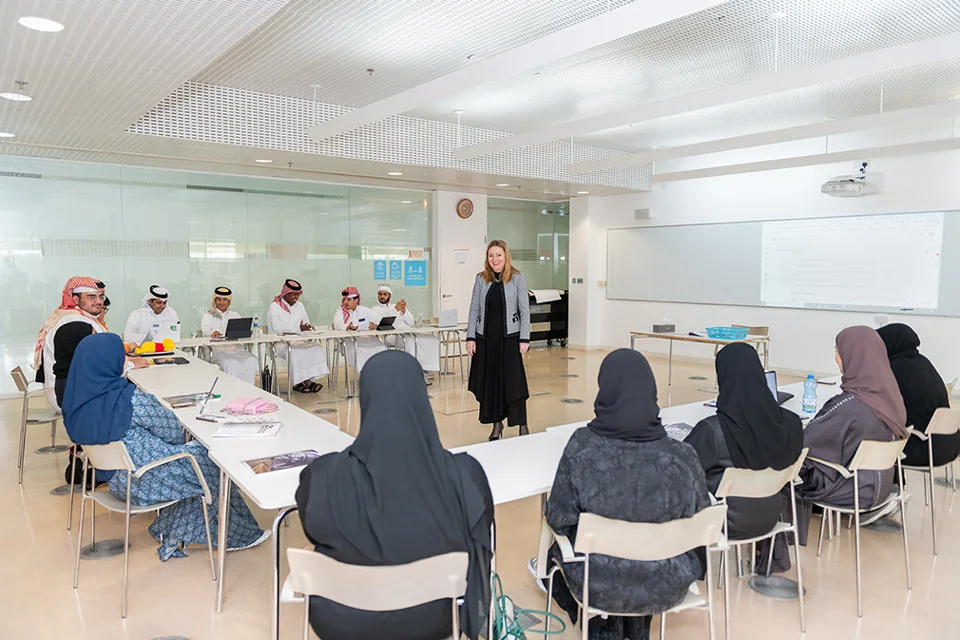
English is the medium of instruction at ABP, and students are encouraged to use it outside lessons as well as during teaching. The classroom model is based on small groups and active participation. Round-table discussion, role-play, presentations, laboratory work, educational games and technology appear among the teaching methods described by the programme. These activities ask students to communicate, investigate and explain ideas, alongside receiving instruction.
The programme is co-educational, bringing male and female students into the same learning environment. Its account also emphasises respect for Qatari customs. This combination connects an English-medium academic setting with the cultural context in which the programme operates. Participation in discussion and group activities provides opportunities to practise the communication and collaboration expected in later study.
Sources: Classroom learning ↗
Guidance for university applications
College counselling helps students navigate university selection and applications from the beginning of their academic year. Support includes individual appointments, group planning sessions, application workshops, college fairs and meetings with university representatives. Visits to Education City universities provide another way to explore potential destinations. The guidance service connects academic preparation with the practical steps involved in choosing and applying for further study.
Career development forms part of this process. Workshops address majors and careers, CV preparation, college essays and interviews. Students can explore how their interests relate to educational choices while learning to present their experience and ambitions clearly. Personal and social counselling is also available through Student Services. This provides a contact point for concerns involving stress, health and relationships as students manage their coursework and decisions about the next stage of education.
Sources: Student services ↗
Student voice and activities
ABP students elect a Student Association, campaigning and giving speeches as part of the process. Student Services coordinates its work and helps develop activities such as guest lectures, fundraising, beach clean-ups and museum visits. Faculty-supervised clubs offer further participation in interests including debate, creative writing, Model United Nations, music, photography, robotics and community service. These activities complement the formal academic programme.
Sources: Student services ↗
Advising and individual academic help
Each ABP student is assigned an academic adviser. The adviser helps students follow their academic progress and find the guidance or information they need. This establishes an individual point of contact as learners move through their courses and consider their next educational steps.
Faculty office hours provide another form of support. Teachers set aside time each week to work individually with students on their studies. The arrangement complements group instruction by giving students a setting for questions and additional explanation. Advising and office hours therefore support different aspects of progress: one helps students navigate their overall academic experience, while the other offers direct assistance with learning.
Library resources and information skills
The ABP Library supports students, faculty and staff through information services and resources connected to the programme’s educational mission. Its objectives combine developing print and electronic collections with helping users find and retrieve information. Information literacy and lifelong learning are explicit priorities, making the library’s contribution broader than lending books alone.
The library provides access to the Destiny catalogue for book searches. An interlibrary loan service allows members of the programme to request materials unavailable locally from other Education City university libraries. Its published goals also include cooperation with other libraries, collecting resources in several formats and subjects, and creating a setting conducive to study. Feedback, staff development and continuing improvement of services form part of that approach. Together, catalogue access, collections and professional assistance support students beginning to undertake independent academic research.
Sources: Library resources and services ↗