Visa
About Abdou Moumouni University
A public university serving Niger
Abdou Moumouni University is a public higher education institution in Niamey, the capital of Niger. Its official history begins with the creation of the Centre for Higher Education of Niamey in September 1971. That centre became the University of Niamey in 1973, and in 1992 the institution took the name of Abdou Moumouni Dioffo, a former rector. The university describes its status as a public scientific, cultural and technical establishment with academic, scientific, administrative and financial autonomy. Its mission combines initial and continuing education with fundamental and applied research, particularly in areas connected with the country's needs. It also emphasises the circulation of scientific and technical knowledge and the development of cultural understanding. Located in the Harobanda area on the right bank of the Niger River, UAM presents itself as an institution contributing to the country's economic, social and cultural development through education and research.
Sources: University presentation and history ↗
Academic breadth across faculties and institutes
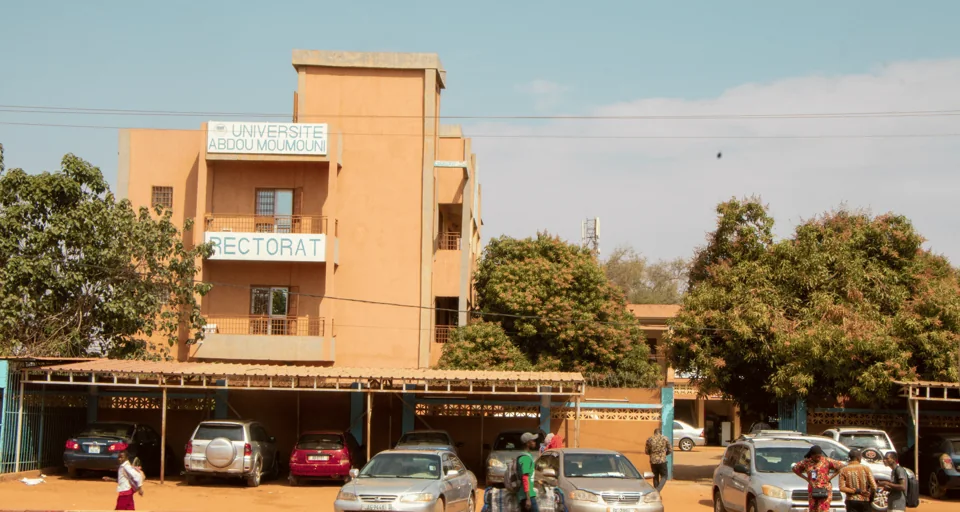
The university's faculty directory shows a broad academic structure rather than a single specialised school. Its faculties cover agronomy; science and technology; health sciences; economics and management; law and political science; and letters and human sciences. The École Normale Supérieure adds a distinct teacher-education setting. The institutional directory also identifies a central student-records service, reflecting the administrative support needed across these teaching units. Alongside the faculties, the research institute directory lists the Institute for Research on Mathematics Teaching, the Institute for Research in the Human Sciences and the Radioisotope Institute. These units bring different forms of investigation into the university's wider organisation. For prospective students and researchers, the directories provide a useful first map of the institution, helping distinguish teaching faculties from specialist research settings. The relevant faculty or institute remains the appropriate contact for the precise programmes and research opportunities available.
Sources: Faculties and school ↗ · Research institutes ↗
Agronomy linked with rural development
The Faculty of Agronomy illustrates the university's connection with the practical needs of Niger and the Sahel. Created as a higher school of agronomy in 1974, it became a faculty in 1984. Its stated mission includes training specialists and researchers, conducting applied research relevant to rural communities, and strengthening capacity in the rural sector. Academic areas encompass animal and plant production, rural engineering, water and forests, rural sociology and economics, soil science, and food and nutritional sciences. Its teaching extends from licence-level study into master's and doctoral work. Research laboratories and experimental sites support activity in areas such as crop production, animal nutrition, food hygiene and rural engineering. The official presentation identifies rice-growing, horticultural and livestock-related settings among its practical resources. This combination links scientific education with production systems, food security, nutrition and the environmental conditions affecting rural livelihoods.
Sources: Faculty of Agronomy ↗
Research into society and cultural heritage
The Institute for Research in the Human Sciences, known as IRSH, adds a historical and cultural dimension to the university's research. Its institutional history traces its beginnings to 1944 as a branch of the Institut Fondamental d'Afrique Noire in Niamey. It later became the Nigerien research centre for human sciences and joined the university in 1974 under its present institute name. The institute contributes to research and the supervision and training of students and researchers. Its fields include art and archaeology, history and popular traditions, development sociology, geography and spatial planning, and Arabic and Ajami manuscripts. These areas connect the study of society with the preservation and interpretation of Niger's cultural heritage. The institute describes both fundamental and applied research, including questions related to national development. Its place within UAM demonstrates that research serving society involves historical and cultural knowledge as well as technical innovation.
Legal learning through community service
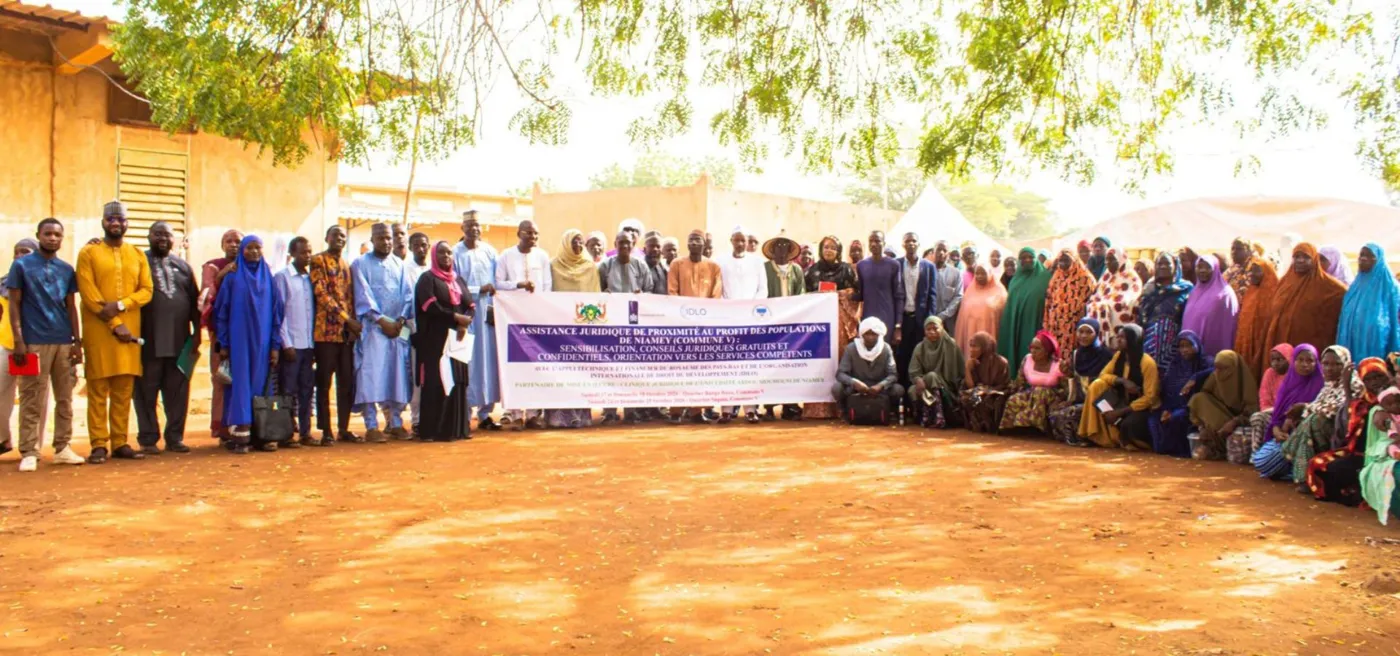
An official university report from October 2026 provides a concrete example of community engagement through the legal clinic. On 17 and 18 October, the clinic organised local legal-assistance activities in Banga Bana in Niamey's fifth commune, with support from the International Development Law Organization. The first day focused on public legal awareness, including access to law and justice, land questions, civil registration, family law, women's rights and gender-based violence. The following day offered individual consultations described as free and confidential, with listening, advice and referral for residents. The university presents the activity as a way of bringing legal knowledge closer to communities while allowing student clinicians to use their skills in service. This dated example shows an educational setting in which academic knowledge can meet practical questions raised by the public. It documents a particular initiative rather than guaranteeing identical participation for every student.
Sources: Legal clinic community activity, October 2026 ↗
Applied science and accessible technologies
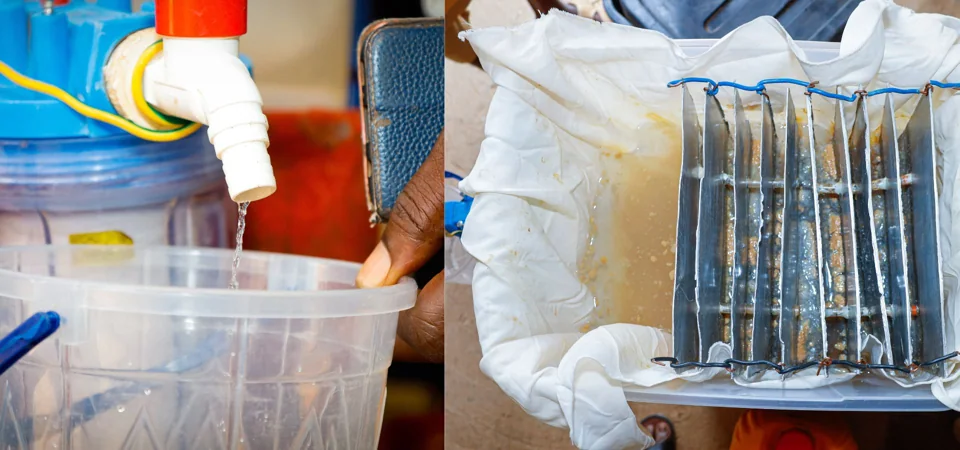
A second university report, published in October 2026, describes water-treatment research presented by a Faculty of Science and Technology team at an African invention and innovation exhibition. The researchers developed a solar-powered system using electrocoagulation, flocculation and filtration to treat surface water. The report emphasises the team's aim of using simple, locally obtainable equipment and reducing dependence on external energy sources. According to the researchers, the approach had been tested in five villages in the Kollo area with support from SwissAid. The article also includes perspectives from master's students working with the water chemistry laboratory, showing their participation in research intended to address local needs. These statements describe the team's reported work and development goals, rather than independent certification of a treatment system. As an institutional example, the project illustrates how research, student training and questions of access to essential resources can come together at UAM.
Sources: Solar-powered water-treatment research, October 2026 ↗