Visa
About Abdelmalek Essaâdi University
A university serving northern Morocco
Abdelmalek Essaâdi University is a Moroccan university headquartered in Tétouan, with an institutional presence across the country's northern region. Its official history records its foundation on 23 October 1989. The university takes its name from the Saadian ruler Abu Marwan Abd al-Malik, connecting its identity with an important period in Moroccan history. Its location in the Tangier–Tétouan–Al Hoceima region places it within a part of the country facing both the Mediterranean and Atlantic. The university's development is therefore tied to a region with strong links between different cities, industries and cultural settings. Rather than operating through a single teaching site, it brings together a network of faculties and schools. This regional structure is important for prospective students: the university name identifies a wider academic organisation, while the relevant institution and city determine the immediate setting in which an individual programme is taught.
Sources: University history ↗
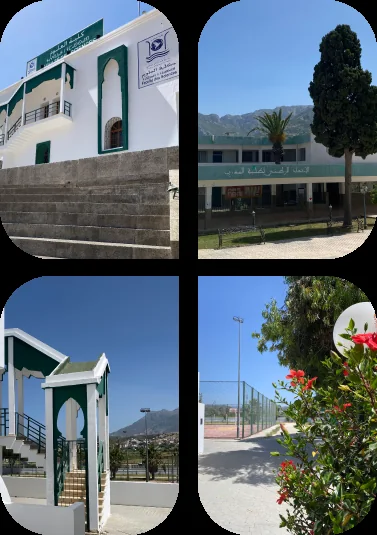
Faculties and schools across several cities
The official institution directory illustrates a broad academic range and a distributed campus structure. In Tétouan, it lists institutions concerned with sciences, letters and humanities, economics and management, legal and social sciences, teacher education and applied sciences. Tangier's institutions include commerce and management, sciences and techniques, applied sciences, translation, legal and social sciences, and medicine and pharmacy. The directory also identifies institutions in Larache, Al Hoceima and Ksar El Kebir. This variety brings together disciplinary faculties and more specialised schools within the same university. It gives students routes into scientific, technological, health-related, professional and humanities study without reducing the university to one subject area. It also creates different academic environments within the regional network. The institution directory helps applicants identify the appropriate school or faculty before checking the specific programme information and current entry requirements issued by that institution.
A shared framework for doctoral education
The university's Doctoral Studies Pole brings together research training across its institutions. Its official presentation records a reorganisation adopted by the University Council in July 2023. The new arrangement groups doctoral activity into three centres covering sciences, techniques and medical sciences; legal, economic, social and management sciences; and letters, humanities, doctrine, arts and educational sciences. This replaced the earlier configuration of five doctoral centres. The presentation describes the pole as the university structure responsible for doctoral organisation and coordination, supporting the relationship between research structures and doctoral training. For prospective researchers, it provides an overview of how diverse fields fit into a common institutional framework. The named centres identify broad research environments, while particular doctoral programmes and supervision arrangements remain subject to their own requirements. The doctoral pole's published procedures and communications are therefore important complements to information supplied by a faculty or laboratory.
Sources: Doctoral Studies Pole: presentation ↗
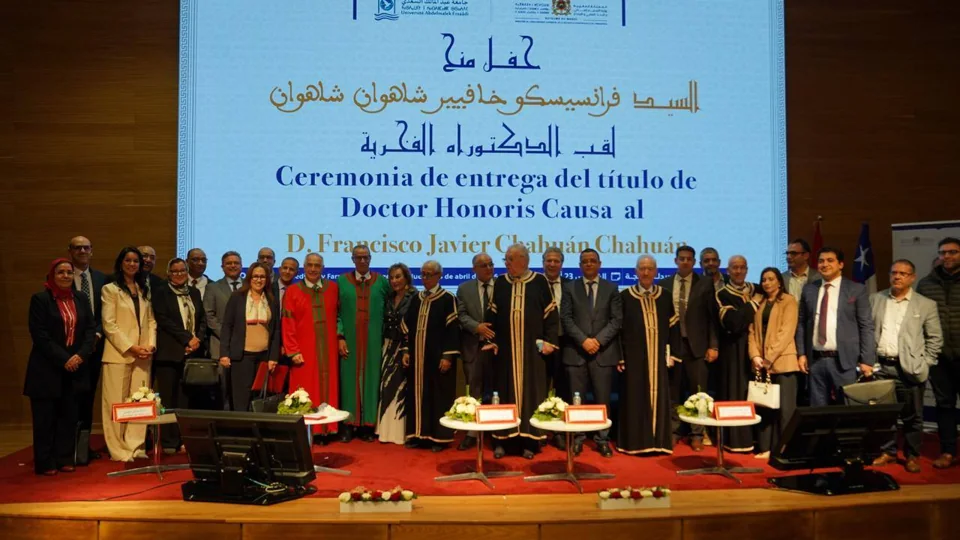
Entrepreneurship and connections with organisations
Abdelmalek Essaâdi University's entrepreneurship information places cooperation with businesses among its development priorities. Its published approach links scientific research and advanced training with the needs of the surrounding economy, describing pathways through which universities and enterprises can exchange knowledge. The page identifies incubators, introductory entrepreneurship modules, partnerships and career centres as parts of this environment. Named examples include an incubator associated with Tangier's commerce and management school, Future Gate at the multidisciplinary faculty in Larache, and incubator initiatives linked to institutions in Tétouan and Tangier. These examples show that entrepreneurship support is distributed through the university's network rather than presented as a single standalone activity. The university describes this work as creating conditions in which ideas can emerge and develop. Such support provides a framework for exploration and collaboration; it does not guarantee that an individual idea will become a business or receive funding.
Sources: Incubators and startups ↗
Working towards inclusion and accessibility
The university's inclusion statement recognises the importance of adapting higher education to students with disabilities. It connects this responsibility with equality of opportunity and the wider goal of access to quality education. The statement describes an ambition to improve reception, guidance and the transition of students into university life and professional settings. It also places particular emphasis on digital tools that can respond to different educational needs and support more personalised learning pathways. These are presented as strategic directions for making the university more accessible and inclusive. They should be understood as a commitment to development rather than proof that every building, service or course already meets every accessibility need. The published approach is nevertheless significant in showing that inclusion forms part of institutional planning. Students can use it as a starting point when discussing individual requirements with their chosen faculty or the relevant university service.
Sources: Inclusion and accessibility ↗
Library discovery and resources for research
The Faculty of Sciences in Tétouan provides access to an online catalogue covering documentary resources across the university's library network. Its official explanation identifies Koha as the catalogue system and describes remote bibliographic searching, locating books and consulting information about available collections. This gives readers a way to discover materials beyond an individual course reading list or a single local shelf. The faculty also publishes a research-document portal containing doctoral regulations, thesis guidance, transfer and mobility forms, research-structure rules and information concerning academic habilitation. Together, these resources connect the discovery of scholarly literature with the administrative and academic framework of research training. They are useful for understanding the responsibilities involved in developing a research project as well as finding relevant reading. Access to particular materials and the applicable research procedures should be confirmed through the library, faculty and doctoral centre concerned.
Sources: Faculty of Sciences: university library catalogue ↗ · Research documents and doctoral resources ↗