Visa

Moving & Living - Uruguay - Complete Guide
Move to Uruguay step by step: choose your base, apply for the right residence route, prepare documents and income, and establish identity, housing, healthcare, banking and everyday services.
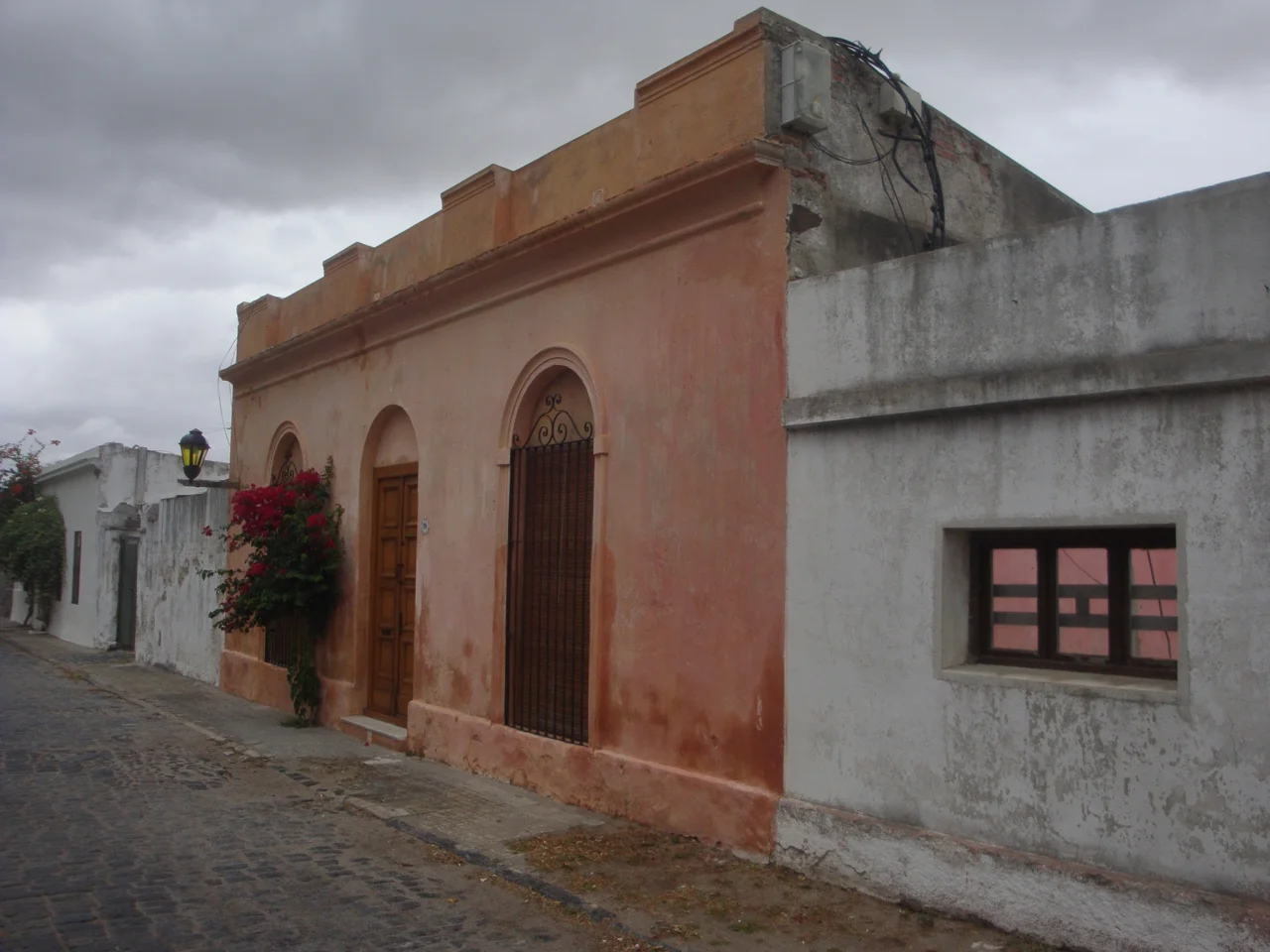
Photo credit
A move to Uruguay might begin with a Montevideo bus commute, a home near the rambla, or a working routine based in Colonia or Maldonado. Choosing the right base matters, but the administrative order matters too: entry, residence processing, local identity and the services that depend on them are separate tasks.
This guide follows fourteen practical steps from planning to the first month in your new home. It explains local documents, rental guarantees, payment channels and healthcare, with optional routes for remote workers, students, families and pensioners. Examples identify their place, date and conditions so you can build a plan for your own household.
Uruguay at a glance
- Currency
- Uruguayan peso · UYU; U.S.-dollar amounts are identified separately
- Indexed charges
- UI · Unidades Indexadas; not a peso or dollar amount
- Possible bases
- Montevideo · Maldonado/Punta del Este · Colonia del Sacramento
- Immigration authority
- Dirección Nacional de Migración · DNM
- Identity document
- Documento Nacional de Identidad, commonly called cédula · DNIC
- Tax and social security
- DGI · Banco de Previsión Social (BPS)
- Reviewed
- 16 October 2026
Follow your moving journey
Start at step 1, or jump to the task you are working on.
01Choose a base around your commute and daily life
Begin with the places you will use every week: workplace, school, health provider and shops. Montevideo offers several different routines within the same city. Its municipal destination guide places Centro and Cordón along the Avenida 18 de Julio corridor, Ciudad Vieja around the historic centre, and the coastal neighbourhoods farther east.
| Base | What to test before choosing |
|---|---|
| Centro or Cordón, Montevideo | Walk the route to your office or faculty; compare traffic noise, nearby shops and the bus journey after work. |
| Parque Rodó, Punta Carretas or Pocitos | Compare access to the rambla and park with your actual commute. The municipal neighbourhood guide helps locate their public spaces. |
| Malvín or Carrasco | Test the journey to central Montevideo rather than assuming a coastal address makes all trips easy. |
| Maldonado and Punta del Este | Compare addresses against the job, school and healthcare arrangements you actually need; specify an annual rental when requesting offers. |
| Colonia del Sacramento | Check whether your work can be organised locally or remotely before making this your permanent base. |
Use the Tourism Ministry’s destination directory to orient yourself beyond Montevideo, then investigate residential streets rather than choosing solely from holiday photographs. Book an initial furnished stay that leaves time for viewings and administrative appointments. Visit shortlisted streets in daylight and after dark, test the internet where you will work, and price the complete journey to school or work. An apartment that is cheaper on paper can lose that advantage through transport, building charges or unsuitable heating.

02Choose the residence category before assembling the application
First establish how you may enter. The Interior Ministry’s admission table distinguishes ordinary, diplomatic and service passports and contains nationality-specific footnotes. Some travellers need a visa issued through a Uruguayan consulate before departure. Visa-free visitor entry does not replace the residence process for a move.
Then choose the legal residence category. General permanent residence is available as an application for foreign nationals intending to settle. Permanent Mercosur residence has a separate checklist for the nationalities expressly listed on that page, including Argentina, Brazil, Chile, Bolivia, Paraguay, Peru, Ecuador, Colombia, Venezuela, Suriname and Guyana. Do not decide eligibility simply from a passport’s regional label.
Temporary residence covers qualifying work, study and other prescribed purposes. The category overview describes stays from six months to two years, but individual subcategories have their own periods and supporting evidence. Family links to a Uruguayan citizen also have a distinct route in the residence selector.
DNM’s illustrated online application instructions show how category selection, the application inbox, payment and scheduling fit together:
- Open the official page for your category and create or access your Usuario gub.uy account.
- Use its “Iniciar trámite en línea” button, choose the category and upload the required PDFs.
- Pay through an offered method and retain the confirmation.
- Follow the DNM review in your inbox. Correct observations if requested; once accepted for scheduling, choose an available appointment.
- Attend with the original documents and arrange an interpreter if you do not speak Spanish.
Do not confuse acceptance for an appointment with the grant of residence. Keep the application reference, payment receipt and subsequent certificate separately so you can use the correct evidence for work and identity procedures.
03Arrange employment, remote work or business registration
For a local job, agree the role, pay, start date and employer’s registration arrangements in writing. The Labour Ministry’s guidance on hiring foreign workers says Uruguay does not issue a separate document called a “Permiso de Trabajo”. It explains how an employer can hire a person without a Uruguayan identity card when valid evidence shows temporary or permanent residence is being processed. The employer must keep that evidence and register the worker with BPS and occupational accident insurance; update the BPS record when the Uruguayan identity card is issued.
For a temporary remote-work stay
Consider the Hoja de identidad provisoria nómada digital rather than treating visitor admission as a work arrangement. The current service lists an identity-document copy and signed declaration for the initial digital-nomad application. The official declaration identifies remote tasks for companies abroad and asks about lawful means of support, prior residence countries and criminal history.
The government’s programme explanation describes an initial six months after lawful tourist entry, with a possible six-month extension. Use the current service’s renewal list: it adds a valid Uruguayan identity document, relevant national police certificates and a vaccination certificate issued in Uruguay. The service lists a 55.71 UI fee, checked on 16 October 2026, which cannot be paid from abroad. This limited arrangement is different from permanent residence, and does not determine the tax treatment of your earnings.
For self-employment
The unipersonal registration service is a concrete starting point for an applicable sole business. It links BPS and DGI registration and sets timing relative to the activity’s start. Choose the correct commercial, personal-service or professional category before invoicing; a regulated profession may also need recognition of qualifications. Budget for ongoing contributions and tax administration as well as the initial registration.
04Price the departure and recurring household costs
Keep Uruguayan pesos (UYU), U.S. dollars and indexed units separate in your spreadsheet. UI means Unidades Indexadas, not pesos. Immigration charges expressed in UI need the authority’s payable conversion; a dollar-denominated savings account does not make daily peso expenses disappear.
| Item and scope | Published amount |
|---|---|
| General permanent residence application | 557.30 UI; the page also lists a 55.70 UI migratory certificate. Brazilian and Paraguayan permanent applicants are exempt from the stated residence processing cost; related charges depend on the route. |
| First identity document, specified foreign-resident category | UYU 456 from 1 July 2026; some payment channels add operating costs. |
| Montevideo one-hour STM fare | UYU 52 with electronic payment; UYU 64 in cash. This is urban Montevideo pricing. |
| Antel Fibra Básico, standard recurring price | UYU 1,650 monthly, two-year contract; availability and conditions apply. Temporary discounts are separate. |
| Applicable unipersonal professional stamp | UYU 270 during calendar 2026; this is not the total cost of running a business. |
For the initial fund, obtain quotes for flights, temporary accommodation, translations, certificates, shipping, rental guarantee, any agent’s fee, insurance and furnishings. For each month, list rent, gastos comunes, electricity, water arrangements, food, transport, phone, internet, healthcare and childcare or school costs. Request recent utility and building-charge bills for the actual home.
A labelled example helps expose upfront costs: if rent were UYU 30,000 and the parties agreed a five-month BHU deposit, the deposit would be UYU 150,000. At the BHU’s published 5% constitution charge, the fee would be UYU 7,500 before any applicable exemption. Adding the first month’s rent gives UYU 187,500, excluding everything else. The rent is hypothetical, not a Montevideo market average.
For tax, DGI distinguishes tax residence from other status. More than 183 days in the calendar year is one test, with its own counting rules; family, activity and investment tests can also matter independently. List salary, foreign clients, pensions, investments and rental income for a qualified assessment. Do not assume a residence card, foreign payer or digital-nomad permission makes income tax-free.
05Arrange school placement or university admission
For children, bring identity documents, previous school reports and vaccination records. In the Education Ministry’s migrant enrolment guide, initial and primary registration starts through Guri Familia. The responsible adult supplies their own and the child’s details, preferences and address or workplace information. Placement considers several factors; listing a preferred school is not a guaranteed place.
For secondary school, locally called a liceo, follow the department-specific registration instructions. Montevideo, Canelones and Maldonado have designated coordinating services; elsewhere the guide directs families to a nearby liceo. For arrival outside the normal December–February registration period, it supplies the migrant-education contact. Arrange recognition of prior studies with DGES, taking the requested identity and study documents. Tell the service promptly if papers are missing rather than keeping the child out of education while waiting.
University of the Republic
Udelar’s own migrant admission page explains entry for residents who completed secondary education abroad. Applicants may present a legalised or apostilled completion certificate for assessment by the relevant faculty, school or institute, or an ANEP recognition. Apply through the chosen programme’s actual intake and bedelía, its student administration office. Recognition of unfinished university studies is a further process after enrolment.
Udelar states that its degree programmes have no tuition or enrolment charge regardless of country of origin. Housing, transport, materials and living costs remain yours. Compare the programme location with your prospective home, and keep admissions, residence and professional recognition as separate tasks.

06Document pension income and plan care before retiring
A pension-funded move can use the appropriate residence process without assuming that every retiree needs to buy property. Under general permanent residence, the published means-of-support options include foreign pensioners and people living on investment income: a Uruguayan notarial certificate records the income type, monthly amount and how it is received in Uruguay.
- Obtain the pension award or entitlement statement and recent payment evidence. Ask the notary what is needed to certify how the money reaches you.
- Confirm overseas-payment arrangements with the pension payer and compare transfer charges and exchange methods.
- Price the health coverage available for your age, medical history, prescriptions and chosen location before deciding the monthly budget.
- Arrange continuity of treatment and a practical return plan while residence and local services are being established.
Uruguayan pension-system membership, a foreign pension and eligibility for a rental guarantee or healthcare programme are different questions. Ask each institution to assess its own conditions. Customs publishes a separate regime for qualifying foreign retirees; do not treat its investment conditions or vehicle benefits as the universal requirements for an ordinary pension-funded residence application.
Choose a home with the same care you would use for a job-based move: walking distance to shops and care, lifts where needed, manageable building charges and a comfortable winter routine matter more than a holiday view alone.
07Prepare civil records, shipments and pets in the right order
Create a document checklist for every household member. The temporary-residence guidance explains that verifiable electronic documents can be exempt from apostille or legalisation; other foreign documents generally need the appropriate authentication and, where applicable, a Uruguayan public translation, with an exception for documents issued in Brazil. Preserve the exact category’s rules rather than ordering a generic package.
For general permanent residence, applicants aged 18 or over need national police certificates from the origin country and countries where they lived for at least six months in the preceding five years. Order national rather than provincial or state-only records. The selected route determines the complete list. For minors, arrange birth records and explicit parental authority to reside: a power made abroad can require additional Uruguayan notarial formalities. Bring vaccination records so a Uruguayan vaccination centre can assess them, and arrange the required local health documentation rather than assuming your home-country certificate is sufficient.
Shipments
Uruguayan Customs’ settlement guidance lists the declaration, passport copy, inventory, migration arrival records, residence-in-process evidence and transport document for unaccompanied household effects. Its published arrival window is three months before to six months after the traveller’s arrival, with guarantees relevant to non-residents. Have Customs or your clearance representative establish the regime before dispatch. Cars and similar vehicles are excluded from the ordinary baggage regime; do not put a car into the same budget as household boxes.
Dogs, cats and other animals
Give the exporting veterinary authority the MGAP import checklist. Dogs and cats require the specified official veterinary documentation. The health examination is within ten days before CVI issue; parasite treatment has its own fifteen-day window. Dogs also have microchip and origin-dependent leishmaniasis requirements. First rabies vaccination, where required, must precede entry by at least 21 days; exemptions and young-animal rules are specific. Do not apply the dog checklist unchanged to a cat.
Accompanied dogs and cats do not need a separate MGAP entry authorisation under that service. Cargo arrival at Carrasco needs advance notification at least 72 working hours before entry; other species need prior authorisation. Confirm the airline’s carriage arrangements separately.
08Use the first days to establish an address and local contacts
Arrive with the address and contact details for your initial accommodation saved offline. Keep original documents, medication and essential clothing with you within the carrier’s baggage rules. If arriving at Carrasco, the airport operator’s transport page links taxis, buses and shuttles. Compare the arrival-time service and final destination before choosing; obtain the actual fare rather than using the city’s STM price as an airport-transfer quote.
- Confirm the accommodation handover and record the complete street address, building and apartment details.
- Set up a local phone connection and test calls, data and incoming appointment messages.
- Find the nearest grocery shop, pharmacy and suitable health service. Keep the temporary stay covered until any local health membership is effective.
- Organise the vaccination assessment, health card and outstanding document work required by the chosen residence route.
- Check your application inbox and attend booked appointments with the originals.
Leave some unallocated time between arrival and a fixed job, school or lease deadline. This lets you correct a document problem without repeatedly paying for rushed transport or extending unsuitable lodging. Keep receipts and a simple dated record of entries, exits, applications and payments; those records will also help when establishing tax facts.
During these first days, revisit your neighbourhood shortlist. Test a real weekday bus trip and an evening walk from the stop to the door before committing to the long-term home.
09Turn residence evidence into the correct identity document
The identity card remains commonly called the cédula; official services now use Documento Nacional de Identidad. DNM handles migration status and certificates, while DNIC handles the identity document. Use the service for your actual status, including the separate temporary-residence or provisional-identity categories where relevant.
- For the category covering residence in process, permanent residence or permanent Mercosur residence, obtain the DNM residence certificate.
- Prepare the Uruguayan registered extract of your foreign birth record. The foreign civil-record registration service explains the original authenticated record, copies, form, appointment and payment. Its listed fee is UYU 1,436, checked on 16 October 2026; retain the payment instructions and deadline.
- Book the DNIC appointment and attend personally with the category’s documents. The service describes a provisional-document alternative when the full papers are not available, using residence evidence and the stated foreign birth or consular documentation.
- Collect the document as instructed and update your employer, bank and health provider where necessary.
Use the translation rules of the receiving service: an exemption in an immigration checklist does not automatically settle a Registry or DNIC requirement. Ask which original will be retained before handing it over.
For permanent Mercosur applicants, DNM lists re-entry permissions while residence is pending, with the published charge of 225.60 UI. Resolve this before a trip abroad. Temporary-residence renewals must be requested within the 90 days before expiry under that route’s guidance; put the relevant deadline and any missing-document task in your calendar.
10Open an account for your status and test local payments
Choose the account after telling the bank your actual residence situation. BROU’s foreign-customer checklist requests valid identity, a second photo document if required, proof of address, and evidence of activity and monthly income. Product-specific and tax-related documentation may also be needed. Bring the records behind your income rather than only a total balance.
BROU Cuenta Ahorro offers peso, dollar and euro accounts, with digital applications or branch appointments for new clients. Compare maintenance, transfer and foreign-exchange charges for the currency you need. A foreign-non-resident account has additional conditions: BROU’s separate page requires new customers in that segment to place at least US$5,000 or equivalent in a term deposit for at least 181 days, and lists separate opening and monthly commissions. That requirement is for this bank and customer segment, not every bank account in Uruguay.
- Ask the bank which applicant category and product it will use; obtain its exact document list.
- Complete onboarding and the applicable tax declarations, then save the account and transfer instructions.
- Activate the bank’s supported authentication method and test a small payment before moving a large balance.
- Set up rent and bill payments according to the contract and provider’s instructions; keep confirmations.
Redes de cobranza, including Abitab and Redpagos, appear in many public-service payment instructions. Use the reference or barcode issued for your transaction and observe its expiry. Do not assume a government appointment remains reserved simply because you generated a payment ticket.
11Agree the guarantee before signing the rental contract
Ask early which garantía de alquiler the landlord accepts. Uruguay has several systems; the government’s rental-options directory links public guarantees and the BHU deposit route. Availability depends on the guarantee provider’s criteria, so an attractive listing and an acceptable applicant can still require further work before a contract is ready.
ANDA’s tenant FAQ says membership is required and its guarantee service costs 3% of the guaranteed rent monthly. Where income or employment history is insufficient, a guarantor or deposit may be considered case by case. Obtain approval before counting on this route, and ask about all membership-related costs.
With a BHU deposit guarantee, money is held in UI under an agreement between the parties. The bank publishes a residential maximum equivalent to five months’ rent and a 5% constitution charge, subject to applicable benefits. Understand how the deposit is released at the end; it is distinct from paying several months’ rent in advance.
- View the home and verify who is authorised to let it. Request the complete draft contract and proposed guarantee procedure.
- Confirm currency, rent adjustment method, term, renewal and early-exit conditions.
- Itemise gastos comunes, water, electricity, municipal charges, agent’s fee and any other tenant payment. Ask what is included rather than assuming all building costs are part of rent.
- Inspect damp, ventilation, heating, hot water, electrical outlets, locks and internet provision. Record the inventory, meter readings, condition and keys at handover.
- Sign the completed agreement, use the agreed payment method and retain receipts and the condition record.
For a furnished coastal property, establish that the contract covers the full period you need. An attractive short seasonal offer is not evidence that the same property is available for the following year.
12Choose a provider and complete the actual affiliation
Uruguay’s system includes ASSE, mutual providers and private insurance arrangements. BPS explains Fonasa as the fund financing the National Health Insurance system and describes qualifying workers’ household coverage. Residence paperwork alone is not proof that your household is already enrolled or that a particular private provider will cover you.
- Ask the employer or BPS to establish whether you and any dependants have a Fonasa entitlement.
- Compare eligible providers near your home: routine consultations, specialists, emergency arrangements, prescription charges and the practical appointment system.
- Complete the provider’s affiliation and confirm its effective date. Arrange bridging coverage for any gap.
- Transfer relevant records, prescriptions and treatment summaries, and book necessary ongoing care.
For public provision, ASSE’s affiliation instructions request household identity and income information. Migrants without a Uruguayan identity card can present origin-country identification with the stated residence-in-process or MIDES evidence. ASSE distinguishes means-assessed free affiliation, Fonasa affiliation and paid Cuota ASSE; it also describes a paid route for people without residence processing. Let the service assess your household rather than assuming all public care is free for every newcomer.
For private cover, ask for a written quote matching ages, existing conditions, dependants and location. Confirm co-payments, exclusions, waiting periods and emergency arrangements. Keep the residence-required health card and vaccination evidence in the administrative file, while storing clinical records where the treating provider can use them.
13Connect the home and learn the transport system
Antel’s 2026 prepaid conditions describe activation with a recharge of at least UYU 220 and identity registration through *611#, including a passport option. Use the official registration service or a commercial office for the appropriate document, then test data and calls. This recharge is activation credit, not a verified monthly data budget.
For home internet, Fibra Básico lists a standard UYU 1,650 monthly price, a two-year contract and maximum 400/30 Mbps speeds. After 500 GB, speed may be reduced substantially. Its current promotion has separate channel and timing conditions ending 31 October 2026; use the standard charge for a recurring budget. Establish address-level availability and responsibility for the contract before ordering.
For electricity, UTE’s change-of-name service is free and must be initiated by the new adult holder. Collect the account number, address and former holder’s details. A first-time customer should use the appropriate office or telephone route: online and WhatsApp access have prior-customer conditions. For water, OSE lists the identity and property information for changing an existing service; first establish whether your apartment’s water is individually billed or handled through the building.
In Montevideo, obtain the first ordinary STM card free at a user-service point with accepted identification, including a passport. Load credit, tell the driver the journey type, check the display and tap the card; retain the ticket where issued. The published urban fares are UYU 52 for electronic one-hour travel and UYU 78 for two hours. Forty-four UYU 52 journeys would cost UYU 2,288 before any applicable refund: a calculation, not a monthly pass. Confirm separate fares and routes for airport or intercity travel.

14Build local connections and close the first-month tasks
Build a routine around your actual neighbourhood. Walk to the shops, learn the bus stops and establish where you will seek routine healthcare. Montevideo’s municipal market directory lists Tristán Narvaja at Avenida 18 de Julio on Sundays and other neighbourhood markets on different weekdays. A regular shopping trip is a useful way to learn local prices and Spanish without treating a supermarket estimate as a national cost of living.
For language support, Montevideo’s adult migrant Spanish page describes free provision for non-Spanish-speaking foreigners over 18, but at this review it states that no courses are currently planned and offers a waiting list. Use the listed contacts for future editions or conversation spaces; do not plan around an assumed immediate class. ANEP’s school-linked Spanish programme has a separate route for non-Spanish-speaking migrant students already in public education.
- First week: test phone and transport, organise health and vaccination paperwork, and review the application inbox.
- Second week: complete viewings and the guarantee assessment, pursue school or university tasks, and resolve any missing authenticated document.
- After moving in: retain the signed inventory, confirm utilities and internet responsibilities, and update the addresses held by relevant services.
- By the end of the month: reconcile actual expenses, confirm payroll or business records and healthcare affiliation, and calendar residence, identity and re-entry tasks.
Keep one current list of outstanding actions with a named authority, document and next date for each. Once the fundamentals are working, extend your routine through the park, a neighbourhood club, a faculty activity or a local cultural programme. The useful measure of settling in is being able to handle an ordinary working week without improvising every payment, appointment and journey.
Sources & further reading
Reviewed 16 October 2026. Sources are linked beside the relevant instructions. Visitor entry, residence processing, identity-document issue, employment registration and tax residence are separate. Nationality and family-specific checklists apply; Mercosur eligibility follows the published list. A pending-residence certificate can support specified employment arrangements, while the actual card is handled by DNIC. Use each receiving authority’s own translation rules. Digital-nomad permission is limited and has its own renewal requirements; it is not a tax exemption. The adult municipal Spanish service currently offers a waiting list rather than an immediately scheduled course. Charges checked 16 October 2026: DNM residence and migratory certificate amounts in UI, stated Brazilian/Paraguayan permanent-processing exemptions, digital-nomad HIP fee and Mercosur pending-residence re-entry fee; DNIC UYU 456 first-document price from 1 July 2026; civil-record registration UYU 1,436; 2026 unipersonal professional stamp UYU 270; Montevideo urban STM fares; Antel UYU 220 prepaid activation recharge and UYU 1,650 standard monthly Fibra Básico price with two-year contract and data threshold; ANDA 3% monthly guarantee service; BHU residential deposit maximum and 5% constitution charge; BROU foreign-non-resident segment’s US$5,000 minimum term deposit for 181 days. Antel discounts ending 31 October 2026 are separate from standard budgeting. The UYU 30,000 rent and all sums based on it are hypothetical; UYU 2,288 for 44 STM journeys is a fare calculation. No national living-cost average is invented. Housing, utilities, care and moving costs need household quotations. Photograph credits, licences and capture years appear with the images.
Browse the source directory
- Its municipal destination guide
- The municipal neighbourhood guide
- Tourism Ministry’s destination directory
- Interior Ministry’s admission table
- general permanent residence
- permanent Mercosur applicants
- temporary-residence guidance
- illustrated online application instructions
- Labour Ministry’s guidance on hiring foreign workers
- Hoja de identidad provisoria nómada digital
- official declaration
- government’s programme explanation
- Applicable unipersonal professional stamp
- the category covering residence in process, permanent residence or permanent Mercosur residence
- The published urban fares
- Fibra Básico
- BHU’s published 5% constitution charge
- DGI distinguishes tax residence from other status
- Education Ministry’s migrant enrolment guide
- department-specific registration instructions
- Udelar’s own migrant admission page
- Uruguayan Customs’ settlement guidance
- MGAP import checklist
- airport operator’s transport page
- foreign civil-record registration service
- BROU’s foreign-customer checklist
- BROU Cuenta Ahorro
- BROU’s separate page
- government’s rental-options directory
- ANDA’s tenant FAQ
- a BHU deposit guarantee
- BPS explains Fonasa
- ASSE’s affiliation instructions
- 2026 prepaid conditions
- official registration service
- UTE’s change-of-name service
- OSE lists the identity and property information
- ordinary STM card
- municipal market directory
- Montevideo’s adult migrant Spanish page
- ANEP’s school-linked Spanish programme
Make your next step a practical one
Shortlist a city, confirm your residence route and build a budget before committing to a move.