Visa
Moving & Living - Tuvalu - Complete Guide
Plan a move to Tuvalu in fourteen steps: arrange permission and sponsorship, choose a base, budget in Australian dollars, find housing and establish banking, healthcare and daily services.
Photo credit
A move to Tuvalu starts with the island, the host and the services the household will need. An office assignment in Funafuti and a posting on another island need different arrangements for housing, supplies, communication and medical care.
These fourteen steps follow that process from the first offer or residence enquiry to a functioning first-month routine. They include local forms, institutions, service providers and photographs, with sources beside the relevant instructions. Education and non-working-stay planning are optional steps.
Tuvalu at a glance
- Currency
- Australian dollar · AUD / A$
- Main planning base
- Funafuti · Fongafale · Vaiaku
- Immigration
- Permission matched to the purpose of residence
- Investment
- Foreign approval and local operational licensing
- Household essentials
- Water storage · communication · transport
- Reviewed
- 16 October 2026
Follow your moving journey
Start at step 1, or jump to the task you are working on.
01Choose the island and the address your move actually needs
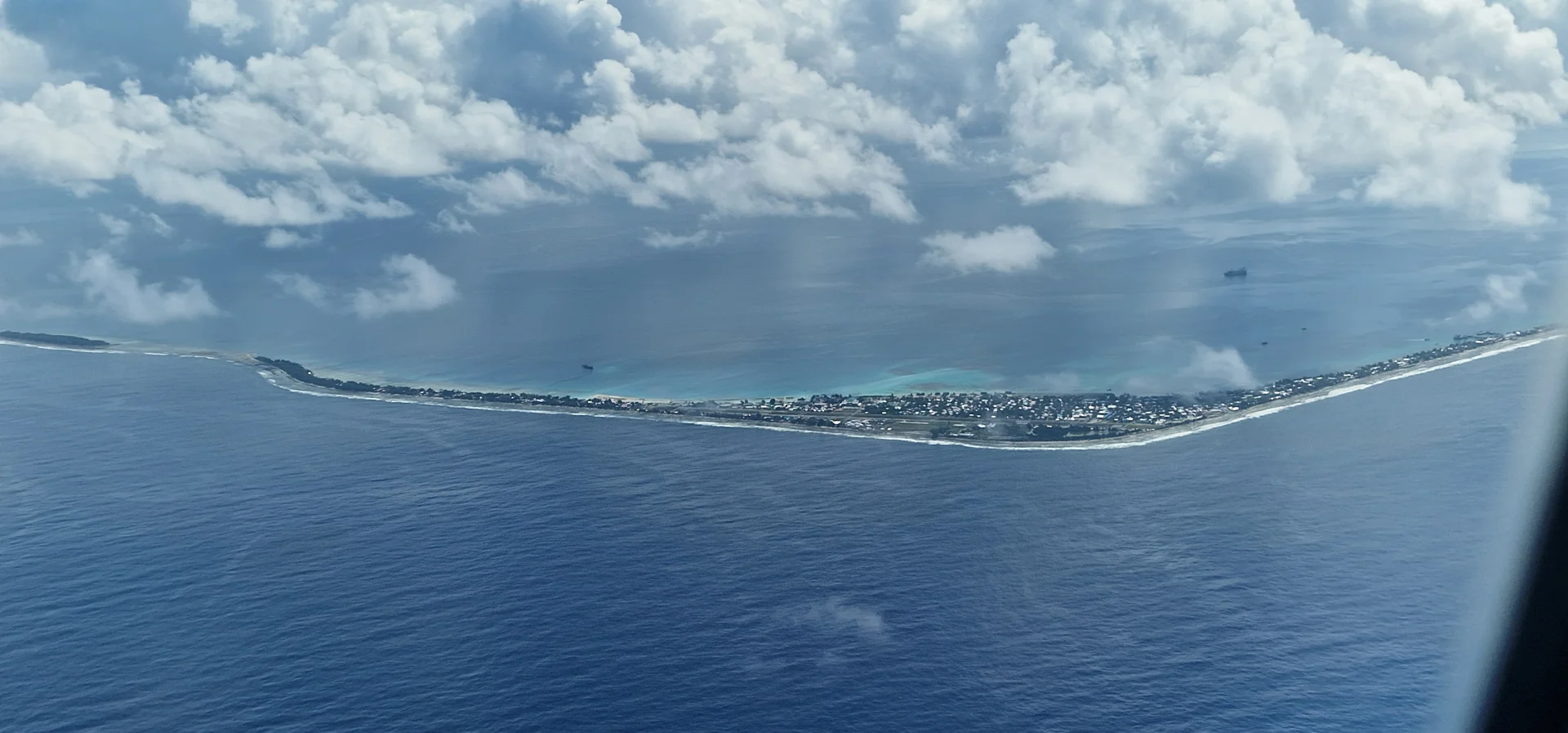
For many incoming assignments, the practical starting point is Funafuti. Look at the inhabited strip of Fongafale and the Vaiaku area rather than searching for an apartment in a large city. A move to another island needs a separate plan for shipping, medical care and trips to government offices.
- Ask the employer or host for the exact workplace and the island on which you will spend most of your time. Establish whether accommodation is provided, suggested or entirely your responsibility.
- Put the workplace, likely accommodation, healthcare contact and school or study location on one map. Ask someone at the host organisation to explain the journey and the practical options after dark or in heavy rain.
- Compare central accommodation with a quieter address farther away. For orientation, the Tourism Department's accommodation directory places Esfam close to the airport, bank, telecom and government buildings; it also lists Niueti on the southern side of Funafuti. These are enquiry starting points, not confirmed vacancies or annual rental offers.
- If posted outside Funafuti, ask which supplies and appointments require travel back. Agree who books the passage, pays freight and helps if the planned connection changes.
| Situation | Start with | Resolve before moving |
|---|---|---|
| Office assignment in Vaiaku | An address within a manageable journey of the actual office | Accommodation, water storage and reliable communication |
| University study | The Tuvalu campus and the delivery mode of the accepted course | Which teaching, assessments or placements require another country |
| Outer-island posting | The host's local accommodation and supply plan | Transport, clinical support and emergency communication |
02Apply for permission that matches your purpose
Plan a move around a permission to enter and reside, not around repeated tourist visits. Employment, study, research, family support and accompanying another applicant are distinct purposes. Explain the activity you will actually undertake when asking immigration which category to use.
- Read the published Immigration Regulations and identify your purpose. The regulations provide Form 3 for an application to enter and reside and Form 5 for employment sponsorship.
- Prepare the passport, two passport photographs, purpose evidence and financial-capacity evidence or the applicable resident-sponsor form. Ask the receiving office to confirm the current submission method and fee before paying.
- Resolve the outward-ticket or repatriation-bond requirement and the medical, radiological and police evidence needed for the intended duration. Ask which current form version to use; the printed explanatory notes are not entirely consistent in their form numbering.
- Obtain the decision and read its conditions before starting work or study. Record the dates and the permitted activity for accompanying family members too.
The published regulations cap a permit to enter and reside at one year. They allow no more than three extensions in any five-year period unless the Minister, acting on the Citizenship Committee’s advice, certifies a national-interest exception. Use Form 4 for an extension and have Immigration confirm the conditions applying to your case before planning a longer commitment. If you intend to reside for more than one year, the regulations also require a medical examination, radiological examination and police reports from every jurisdiction where you lived for more than one year during the preceding five years.
For British citizen passport holders, FCDO's nationality-specific entry guidance describes a visit of up to one month and a passport valid for at least six months after arrival. It directs longer stays and work, study or business enquiries to Immigration in Funafuti. Other nationalities should obtain their own entry determination rather than treating that British-passport description as universal.
Ask the employer or host to identify the receiving immigration officer and obtain acknowledgement of the submission. This guide has not verified a general public online residence-application service; do not send passport information to a commercial website simply because it offers a Tuvalu visa.
03Agree the employment package or obtain investment approval
Use the employment offer to settle the practical terms of relocation. An assignment with accommodation, transport and evacuation insurance is financially different from an identical salary that leaves those costs to you.
- Obtain a contract specifying role, location, duration, gross pay in its stated currency, leave, probation and the conditions for ending the assignment.
- Allocate responsibility for immigration submissions, medical checks, freight, arrival accommodation and dependant applications. Ask what happens if approval is delayed after you have left your previous job.
- Discuss the tools needed to do the job: internet access, working space, power arrangements and any professional registration. Test the plan against the actual workplace rather than a general promise that internet is available.
- Keep the signed contract and sponsor's contact details with your immigration file. Agree that the start date follows the required permission.
For a business, the Foreign Direct Investment Act 2025 requires approval before foreign investment, distinguishes reserved and restricted activities and provides an application in Schedule 4. Do not base a new application solely on the older 1996 investment framework still reproduced on some websites.
Send the proposed activity, ownership and location to the business office at business@gov.tv, using the Ministry of Finance business-registration instructions as the official contact point. Ask for the foreign-investor process, the applicable sector conditions and subsequent registration steps. An investment certificate, a business registration and permission for you personally to reside and work are separate questions.
The ministry also distinguishes registration from the operational licence issued through the relevant Kaupule, or local government. Resolve that sequence before renting commercial premises or ordering equipment.
04Build a budget from actual quotations and local payment needs
Use Australian dollars, written here as A$, for your Tuvalu budget. Start with the costs your contract covers and then price the remaining items. There is no verified national monthly living-cost total in this guide: a hosted assignment and a self-funded household would not share one meaningful figure.
| Service | Published price | What it covers |
|---|---|---|
| TTC Lagoon 20 | A$20 | 8 GB, valid for 30 days |
| TTC Ocean 50 | A$50 | 20 GB, valid for 30 days |
| Two Ocean 50 subscriptions | A$100 | Calculation for two separate 30-day plans; not a household internet quotation |
These are the provider's published mobile-data plans. Coverage, device compatibility and the right amount of data still depend on your location and use. The night-only Starlight product is not a substitute for daytime work connectivity.
| Initial money | Recurring money |
|---|---|
| Flights, transit stay, permits, medical checks, freight and customs | Rent or lodging, food, drinking water and transport |
| Accommodation advance, any deposit, equipment and connection charges | Electricity top-ups, phone or home internet, insurance and school costs |
| Accessible cash and a reserve for changed travel | Tax deductions and other applicable payroll items |
For example, if a host quotes A$100 per night for ten nights, the lodging calculation is A$1,000 before any separately charged items. This is hypothetical arithmetic, not a Tuvalu accommodation price.
Ask payroll and the Revenue and Customs Department how your earnings are treated. The published Income Tax Act includes both a permanent-place-of-abode test and presence exceeding 183 days in a twelve-month period; counting calendar-year days alone is inadequate. Review continuing obligations in the country you leave and obtain advice for foreign income or business receipts.
05Confirm a school place or the course you can actually attend
Resolve children's schooling before accepting a family move. Ask the host to arrange a direct discussion with the relevant school and education office about the child's age, previous curriculum, language needs and proposed arrival date. A nearby school does not itself establish eligibility or an available place.
- Prepare the latest reports, proof of age, previous-school contact details and any learning-support or medical information the receiving school needs.
- Ask for the proposed year placement and teaching language, the school calendar, required supplies and transport arrangements. For an outer-island posting, establish whether the appropriate stage can be completed locally.
- Obtain the actual fee and supply list. Ask how missed lessons or a mid-year move would be handled, and keep an alternative plan until the placement is confirmed.
- Align the child's permission to reside with the agreed schooling arrangement. Do not assume a parent's contract settles the child's application.
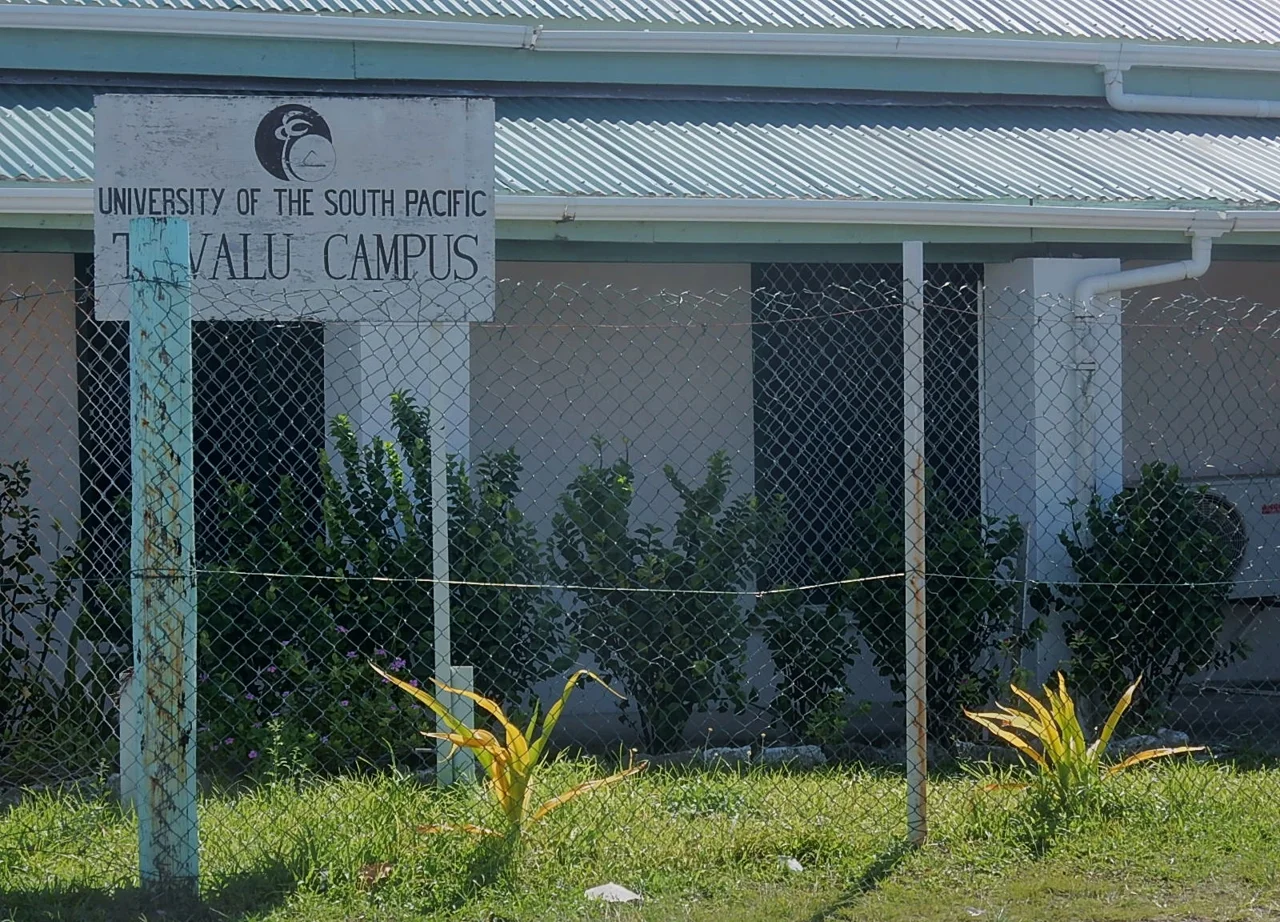
For tertiary study, start with USP Tuvalu Campus in Funafuti, telephone +688 20811. Ask which courses and support are available locally and whether the programme uses online, blended or another campus's teaching. A university-wide programme list is not a promise that every component can be completed in Tuvalu.
Use the University of the South Pacific's 2026 admission regulations to identify the qualification or alternative entry pathway relevant to your course. Send transcripts and request a formal assessment of prior learning where needed. Obtain a fee quotation appropriate to your nationality, programme and delivery mode from the 2026 fee schedule and campus staff, then complete the university's application process. Accepting a university offer and obtaining immigration permission remain separate tasks.
06Establish whether a non-working move is viable
Do not assume that receiving an overseas pension creates a retirement route. This guide has not verified a dedicated retiree or digital-nomad permission. A family connection, an accompanying household member or another proposed purpose needs its own immigration assessment.
- Describe the intended stay to immigration: why you are moving, how long you intend to remain, who will accompany you and how the household will be supported.
- Obtain confirmation of the applicable permission before paying for a long lease or shipping possessions. Ask how extensions would work for your category rather than projecting a short permission into indefinite settlement.
- Discuss routine care and potential overseas treatment with your clinician and insurer. Price cover using your actual age and medical history.
- Plan access to pension income and a practical emergency reserve. Confirm the transfer method with the receiving bank before arranging a large recurring payment.
The Tuvalu National Provident Fund is an employment-related savings and benefits institution. Its existence does not establish a right for an arriving retiree to receive a local pension, nor does a fund account confer residence permission.
For a couple, test the arrangement for the less mobile partner as well: access to appointments, heat management, safe water, familiar foods and communication with family overseas. If the plan requires frequent specialist treatment abroad, include the journeys and accompanying person's costs in the decision. Make those arrangements before committing to a move that depends on services you have not confirmed.
07Prepare the document file and obtain import instructions
Divide belongings into what must travel with you, what can follow by freight and what is cheaper to obtain or leave behind. Keep the immigration file and essential medicines in your personal baggage rather than in a shipment.
- Make a household file containing identity and civil-status documents, the employment or study decision, sponsor details and medical and education records. Obtain certification or translation only to the receiving authority's specification.
- Create a dated inventory for freight. Record the owner, description, quantity and value of significant items, and retain invoices and the shipping documents.
- Ask the customs authority or your appointed clearing agent about the particular goods, any import permits, clearance costs and whether a concession applies. A relocation should not be described as automatically duty-free.
- Obtain a freight quotation separating transport, destination handling, clearance, storage and final delivery. Match the likely arrival to a person authorised to collect the shipment.
The government-supported Tuvalu Trade Portal provides entry points for animal and plant import permits and airport or seaport clearance. The detailed pet-import conditions could not be verified in a usable current checklist during this review. Before booking an animal, obtain written instructions from the responsible biosecurity authority through the portal or government contact: species or breed eligibility, origin conditions, veterinary evidence, inspection and arrival arrangements. Airline acceptance alone is insufficient.
For any medicine needing special permission, ask the prescriber and the receiving authority about the exact product, quantity and supporting letter. Keep the medicine in its labelled packaging and allow time for an answer before travel.
08Use the first day to establish your status and contact point
Arrange a person and an address for your arrival rather than leaving everything to an internet search after landing. Give the host the flight details and agree how to make contact if the service changes.
- Carry the passport, approval documents, sponsor contacts, accommodation confirmation and the relevant onward-travel or financial evidence together. Keep the documents for accompanying children accessible.
- Complete the required arrival formalities and explain the purpose of the stay accurately. Check the dates and conditions entered on the permission you receive.
- Resolve any difference between the approved purpose and the admission record with immigration before assuming you may start the assignment.
- Declare goods as required and follow any pre-agreed inspection procedure. Keep customs receipts and the reference for unaccompanied belongings.
- Reach the booked accommodation, confirm the water and electricity arrangements and contact the employer or host. Save the address and a telephone number offline.
Make a photograph or scan of the relevant permission and store it securely with the approval letter. Keep a paper copy of the host's contact details for use when the phone is flat or has no connection.
For the first evening, prioritise food, safe drinking water, a charged phone and rest. Make a short list of the next working day's appointments: immigration follow-up if required, the employer, the bank and TTC. Ask which office hours and payment methods apply before setting out, especially if your arrival falls near a weekend or public holiday.
09Resolve tax and provident-fund status with payroll
Start with the employer's payroll officer. Explain whether you are a new incoming employee, an accompanying spouse or someone with an existing Tuvalu record. A rule applying to a Tuvaluan employee should not simply be copied into an expatriate payroll file.
- Provide the identity, contact, contract and immigration evidence payroll requests. Ask which tax reference is needed and who submits any registration to Revenue and Customs.
- Ask whether the Provident Fund exception for certain non-citizens applies. The published regulations describe non-citizens domiciled outside Tuvalu who reside there solely or principally for their own employment or a spouse's employment. Domicile concerns a fixed, permanent home; nationality alone does not answer the question.
- If contributions apply, obtain the current employee and employer rates in writing from TNPF. Its public member and employer pages contain inconsistent percentages and arithmetic, so this guide does not calculate a deduction from them.
- Where registration is needed, use TNPF's member-registration instructions to prepare identification and the registration and nomination forms. Ask the officer how the applicable category is recorded and retain the member reference or written exemption response.
Check the first payslip against the agreed gross pay, authorised deductions and amounts actually received. Correct a misspelled name or incorrect reference immediately so payments do not accumulate against a duplicate record.
Keep immigration renewals in a separate calendar. A payroll record, tax number or provident-fund account does not extend an immigration permission. Make the sponsor responsible for identifying the required follow-up office and submission date, and retain the acknowledgement rather than relying on a reminder alone.
10Arrange access to money without assuming every card works
Banking information about Tuvalu can be out of date. The government's 2025–2026 National Budget records the introduction of ATMs and point-of-sale equipment. That is newer evidence than travel pages still describing a country with no ATMs. It does not establish that your particular foreign card works, or that every shop accepts cards.
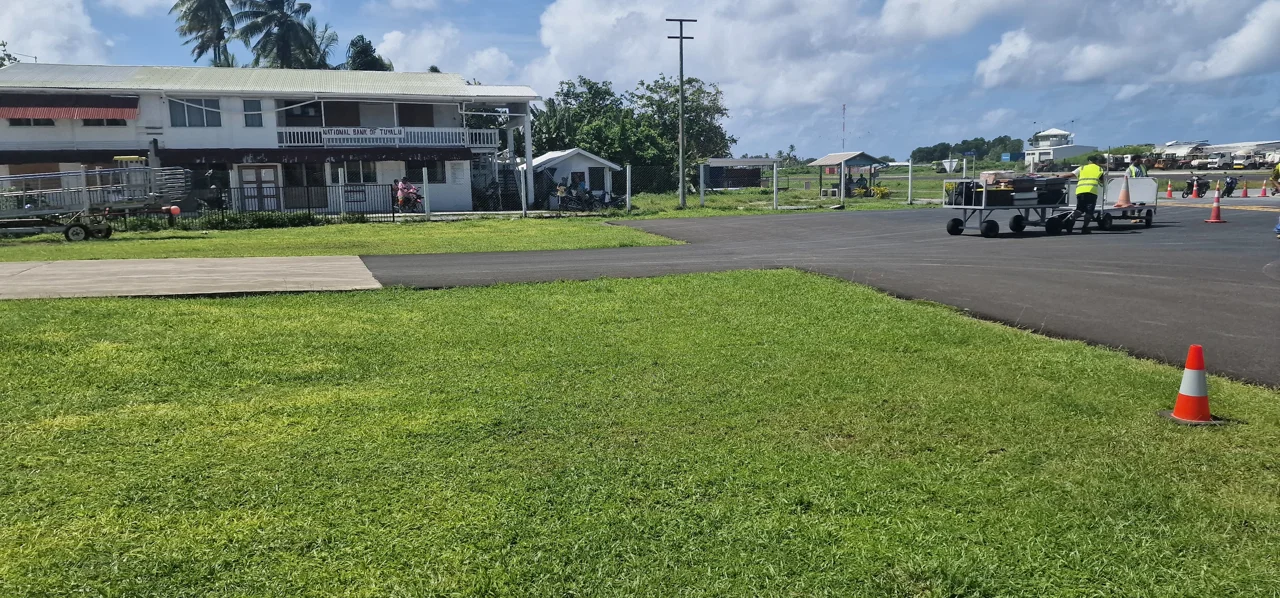
- Ask the employer how salaries are paid and arrange an introduction to the National Bank of Tuvalu if a local account is needed.
- Request the bank's current document checklist before the appointment. Prepare identity, lawful-status, address or host and income evidence, but let the bank confirm what is mandatory for your category.
- Confirm supported card networks, withdrawal limits, charges and a fallback if a machine or connection is unavailable. Bring an appropriate Australian-dollar cash reserve for the arrival period and secure it sensibly.
- Test a modest incoming transfer before changing the destination of your full salary or pension. Obtain the correct beneficiary details and payment reference directly from the bank.
- Agree how rent, utilities and other recurring bills will be paid, and keep receipts for cash transactions.
TTC also describes M-Tupe customer and merchant payment services. Ask its customer team about registration, funding methods, fees and the merchants relevant to you. Use its official app links and keep the customer account separate from the merchant product. The existence of a wallet does not prove that a foreign card can fund it.
Keep access to an existing account during the transition. Store bank and payment-provider contact details somewhere other than the phone used for authentication.
11Inspect the home and put the arrangement in writing
Ask the host or employer for direct introductions to accommodation owners, then inspect the particular property. A tourism-directory listing is useful for an initial stay, but it is not evidence of a long-term tenancy or an available family home.
- Confirm who owns or is authorised to let the accommodation, the exact unit, permitted occupants and move-in date.
- Obtain the price, payment interval, any advance and deposit, and the length of the agreement. No verified nationwide standard deposit is asserted here.
- Ask what the price includes: electricity, drinking water, cooking facilities, furniture, laundry, internet or transport. Put the exclusions beside the rent figure in your budget.
- Inspect the water tank and delivery arrangement, roof and drainage, windows, ventilation, cooking equipment and power meter. Ask what happens during a service interruption or severe weather.
- Write down notice, early departure, repair reporting and deposit-return terms. Photograph the inventory and condition at handover and keep the owner's acknowledgement.
Do not confuse renting a dwelling with acquiring rights over land. If the proposal involves land, construction or a long lease rather than ordinary accommodation, obtain local legal advice about title, authority to grant the interest and required approvals before transferring money.
Where the employer supplies housing, ask whether occupancy ends immediately with employment or allows a defined departure period. Agree how a dependant can remain while final travel is arranged. Those contract details can matter more than a small difference in monthly rent.
12Arrange routine care and an overseas-treatment plan
Healthcare planning should come before the move if you need regular treatment. Discuss the destination with your clinician and ask what monitoring, medicines and specialist access your condition requires.
- Ask the employer or host to establish a contact with the appropriate local healthcare facility and explain any registration or payment procedure for foreign residents.
- Give the clinician a concise history, allergies, generic medicine names and relevant recent results. Confirm the local availability of continuing prescriptions rather than assuming every product can be obtained immediately.
- Choose insurance that covers the actual length and purpose of the stay. Ask specifically about pre-existing conditions, work activities, overseas referral, evacuation and the cost of an accompanying person.
- Save the insurer's assistance number and establish who authorises and organises treatment outside Tuvalu. Keep funds accessible for costs that require payment before reimbursement.
FCDO's healthcare guidance distinguishes the hospital on Funafuti from nurse-led services on the outer islands and notes that more complicated conditions may require evacuation to Fiji or Australia. Ask whether that service pattern can meet your needs before agreeing to an outer-island posting.
For drinking water, the same guidance recommends boiled or bottled water. Confirm how you will obtain and store it at the accommodation, including during a supply interruption. Do not infer that water from an unfamiliar tank is ready to drink.
Carry enough prescribed medicine for the transition within the applicable import rules and retain the supporting prescription. Arrange the first review appointment before supplies run low. Pension savings or an employment contract should not be treated as confirmation of medical-insurance cover.
13Connect electricity and telecoms around the actual property
Identify which services belong to the landlord and which you must arrange. Write down account or meter references at handover so your payments are allocated to the correct property.
- For a new connection, follow Tuvalu Electricity Corporation's residential instructions: obtain the application at the TEC office and take it to a TEC-registered electrician. Ask which parts are the owner's responsibility and obtain the current connection and deposit quotation.
- If the home already has a prepayment meter, ask how to buy credit, recognise a low balance and reconnect after running out. Record the starting balance and establish who pays any previous occupant's debt.
- Visit TTC with your handset and the identification it requests. Activate a local service, test calls and data at home and at work and choose a plan suited to actual use.
- Use the provider's top-up and data guidance to distinguish money credited to the account from an active bundle. Ask for help activating the bundle before using mobile data.
- Agree a transport arrangement with the host while you resolve the licence and insurance appropriate to your nationality and length of stay. A hired motorbike needs the correct entitlement and suitable protective equipment, just as a car does.
For an outer-island trip, confirm the vessel, departure, baggage allowance, return plan and contact person directly with the operator or host. Do not plan a critical appointment around an old timetable reproduced online.
For remote work that has been authorised, test a normal working call and file transfer before relying on the connection. Clarify any installation survey, equipment, power and recurring-charge requirements for a home service.
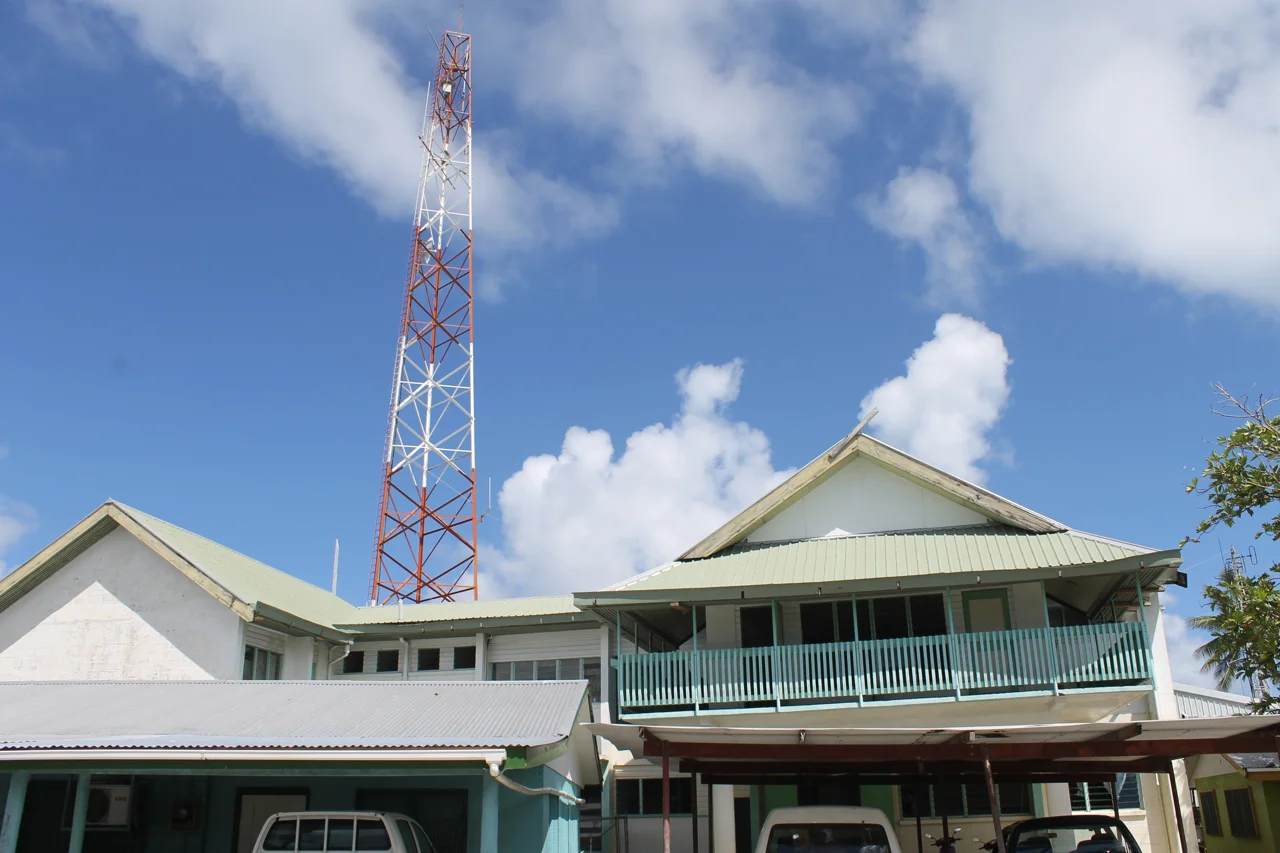
14Build a first-month routine with the local community
Use your first weeks to replace assumptions with working arrangements. Try the journey, pay a bill and contact the responsible office yourself while the host is available to help.
| Period | Complete |
|---|---|
| First days | Record admission, reach accommodation, obtain safe water and establish contact with the host |
| First week | Resolve payroll status, test banking and communication and confirm any education placement |
| Second week | Check the dwelling inventory, service accounts, food supply and routine-care arrangements |
| By month's end | Reconcile the first payslip and bills, calendar renewals and agree a household disruption plan |
Ask colleagues or neighbours how local gatherings work before attending: whom to greet, suitable clothing and whether contributions or permission are expected. Learn everyday Tuvaluan greetings and ask how names are pronounced. Let invitations and genuine shared interests guide involvement rather than treating community occasions as a visitor attraction.
Make a household plan for bad weather, interrupted electricity and changed travel. Identify how to obtain official weather information, whom to contact and how to keep essential medicines, documents and drinking water accessible. Ask the landlord and host to assign responsibility for securing the home.
Finally, compare actual spending with your plan. Separate initial purchases from recurring costs and identify what must be ordered ahead. Keep a small list of unresolved tasks with the office, reference and next action beside each. A move is functioning when the household can manage these ordinary tasks, not merely when the boxes have arrived.
Sources & further reading
Reviewed 16 October 2026. Sources are linked beside the relevant instructions. Use the application appropriate to the intended activity and nationality. The guide identifies missing public checklists, conflicting provident-fund figures and older banking statements instead of filling gaps with assumed requirements. TTC mobile-plan prices were viewed on 16 October 2026 and retain their data allowance and thirty-day validity. Lodging arithmetic is hypothetical. Rental, moving, insurance and connection charges require household-specific quotations. Photograph credits, licences and capture years appear with the images.
Browse the source directory
- Tourism Department's accommodation directory
- published Immigration Regulations
- FCDO's nationality-specific entry guidance
- Foreign Direct Investment Act 2025
- Ministry of Finance business-registration instructions
- published mobile-data plans
- customs authority
- published Income Tax Act
- USP Tuvalu Campus in Funafuti
- University of the South Pacific's 2026 admission regulations
- 2026 fee schedule
- Tuvalu National Provident Fund
- Tuvalu Trade Portal
- Provident Fund exception for certain non-citizens
- TNPF's member-registration instructions
- 2025–2026 National Budget
- M-Tupe customer and merchant payment services
- FCDO's healthcare guidance
- Tuvalu Electricity Corporation's residential instructions
- provider's top-up and data guidance
Make your next step a practical one
Shortlist a city, confirm your residence route and build a budget before committing to a move.