Visa

Moving & Living - Sao Tome and Principe - Complete Guide
Move to São Tomé and Príncipe with a practical journey through residence, work, schools, tax records, banking, housing, healthcare and everyday services.
Photo credit
A move to São Tomé and Príncipe starts with the island where you will actually live. A city home on São Tomé and a home near Santo António on Príncipe create different journeys to work, school and services. Test the address against those daily needs before making a long commitment.
This numbered journey follows the move from the first shortlist and immigration decision through arrival, local records and household services. It distinguishes visitor entry, residence and paid activity, with optional employment, business and study instructions. Dated source material is identified beside the relevant advice; the photographs retain their historical capture dates.
Sao Tome and Principe at a glance
- Location starting points
- São Tomé city · Santo António, Príncipe
- Immigration authority
- Serviço de Migração e Fronteiras (SMF)
- Tax authority
- Direção dos Impostos — NIF and activity registration
- Electricity and water
- EMAE — confirm the supply at the actual address
- University starting point
- Universidade de São Tomé e Príncipe (USTP)
- Currency
- Dobra — distinguish new and old denominations
- Reviewed
- 17 October 2026
Follow your moving journey
Start at step 1, or jump to the task you are working on.
01Choose the island, then inspect the home against daily journeys
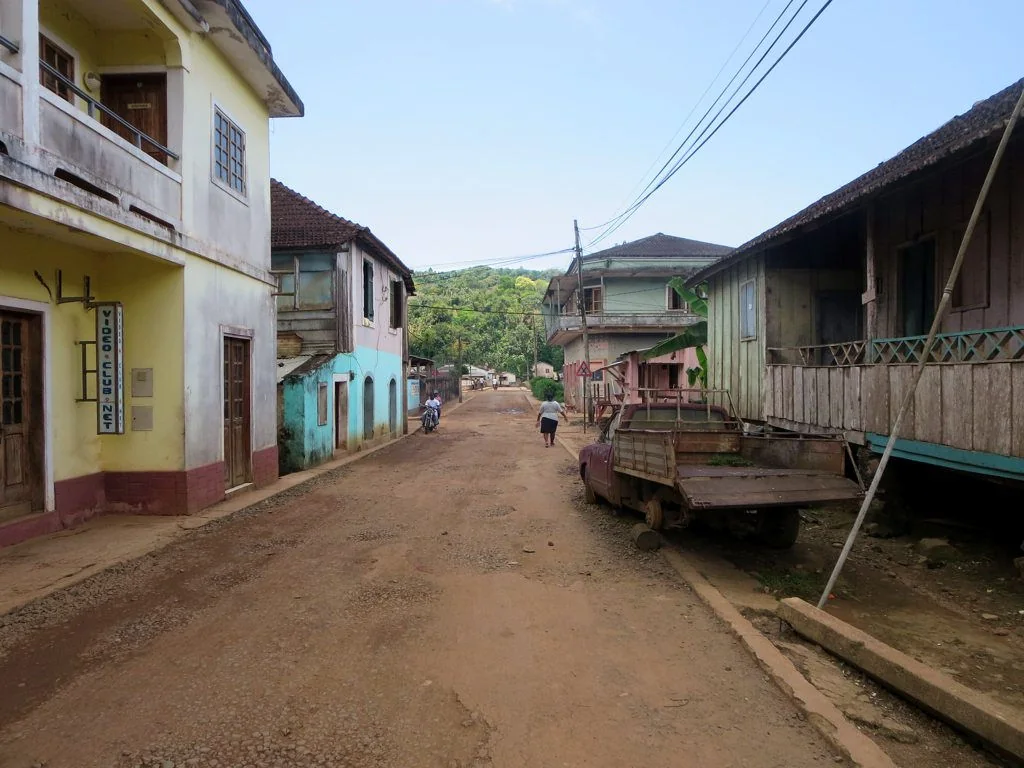
Begin with the island where the job, school or activity is actually based. São Tomé city and Santo António on Príncipe are different relocation decisions, with an inter-island journey between them. The UCCLA municipal profile identifies Santo António as the administrative centre of Príncipe and Pagué. An attractive photograph of the other island does not establish a practical commute.
On São Tomé, use the workplace, school and receiving offices as anchors for viewings. Include the actual approach road and entrance in the assessment. A central address near Avenida 12 de Julho may suit an office-based routine; a property farther inland needs its own tested transport plan. Compare addresses individually rather than assigning a single rent or service standard to an entire district.
- Reserve temporary accommodation that allows enough time for viewings and paperwork.
- Inspect the home with the person authorised to let it; establish that person's authority before paying.
- Test taps, sanitation, sockets, locks, ventilation and mobile reception. Inspect drainage, screens, damp and the access after rain where possible.
- Read the proposed contrato de arrendamento with assistance if needed. Record the currency, payment dates, advance rent, deposit, term, notice and repair responsibilities.
- List the furniture and appliances, photograph defects with agreement, record meter numbers and readings, and obtain receipts for payments and keys.
Make the utility arrangement explicit: a bill included in rent, an existing contract remaining with the owner and a new personal supply application have different consequences. Establish who pays arrears and who authorises repairs. Ask for the procedure and evidence required to recover the deposit; no universal deposit cap is asserted here.
If the residence application depends on accommodation evidence, agree the document and receiving requirements before signing. A holiday booking may solve the first nights without satisfying the longer-term file. Keep the lease and handover records together so that the address supplied to services matches the place you actually occupy.
02Match the first journey to the passport, purpose and intended stay
Write each person's citizenship, passport type, residence country, travel purpose and intended dates at the top of the moving file. Add every transit point and the next destination. An exploratory visit to inspect homes is different from entering for an approved job or a longer residence arrangement.
As a nationality-specific example, the UK government's entry advice for full British-citizen passports travelling from the UK describes visa-free tourism for up to fifteen days. It directs longer stays, work and study to the relevant São Tomé and Príncipe requirements. Do not extend that example to another passport or treat a tourism exemption as permission to relocate.
- Establish the entry branch for the actual passport and purpose with SMF or the responsible diplomatic mission.
- Resolve permission for transit and the onward destination separately.
- Prepare the applicable passport, itinerary, accommodation and supporting records.
- Where an online application applies, retain its process reference and the issued decision.
- Carry the accepted records and compare them with the admission actually granted on arrival.
The official eVisaST instructions request a PDF passport scan valid at least three months beyond the visa's stated stay limit, a return itinerary and accommodation contact. They identify birth and guardian records for minors and describe an estimated seven-working-day response after completing the application. The residence portal has a different passport-validity instruction, so use the checklist for the selected route.
For applicants using eVisaST, the same official service page, checked on 17 October 2026, lists proof of support funds of €100 per day for presentation at the border and says payment is made there. The support amount is not the visa fee. Prepare the financial evidence and obtain the assessed fee, accepted currency and payment method from SMF before departure; the page does not specify a fee amount or payment method.
Passport guidance varies by source and application branch. Resolve the actual document's acceptance before travelling instead of relying on the least demanding description. Keep a separate deadline calendar for family members arriving on different dates.
The online service warns that submitted details cannot be changed. Compare the passport number, names and dates before submission, save the response and distinguish an application reference from permission to travel or remain.
03Choose the residence basis and the correct receiving channel
Describe the reason for the move, the activities each adult will perform and how the household will be supported. Identify employment, self-employment, study or an applicable family connection from the real circumstances. A home rental, savings balance or overseas pension does not itself establish residence.
In Law 5/2008 hosted by SMF, Article 33 distinguishes a residence visa used to enter and request a residence certificate. Articles 45–46 identify SMF as the receiving service for that certificate and set out general conditions, including the applicable visa and suitable accommodation. Use the current receiving checklist alongside this dated statutory framework; entry and the local certificate are separate stages.
The e-Cidadão residence service explicitly limits its online channel to countries without a São Tomé and Príncipe diplomatic representation. It asks for a PDF passport scan with more than one year's validity and separates the employment, independent-work, family and study branches. Where a mission exists, obtain that mission's receiving instructions instead of assuming the online route replaces it.
- Identify the purpose and receiving office for the actual residence country.
- Obtain the current branch-specific checklist and assessed charges.
- Prepare the supporting personal, activity, accommodation and financial records.
- Retain the issued pre-entry decision and its conditions.
- Arrange the SMF residence-certificate stage within the permission actually granted.
For accompanying family, establish the sponsor's eligibility and each relationship before making everyone's travel depend on one adult's application. The portal identifies relationship, accommodation and household-support evidence and a parental-consent or custody branch for minors. A family enquiry is not approval of a partner's proposed work.
No dedicated retirement or digital-nomad route is asserted here. Give SMF the actual income and activity plan and obtain an individually applicable residence basis. Retain the conditions attached to the issued decision and organise renewal from that document rather than assuming indefinite permission.
04Have the employer coordinate the contract and ministry opinion
Obtain the employer's legal name, duties, workplace, pay, hours, contract duration and proposed start in writing. Agree who prepares the employment and immigration files and what happens to pay, accommodation and travel if the decision is delayed. Explain the accompanying family's proposed activities at the same time.
The SMF employment branch lists the employment contract and responsible ministry's opinion, NIF and accommodation evidence, together with company, social-security and tax-compliance records. Have the employer identify which records it supplies and how the job file connects with the personal application.
- Confirm the employer, role and written terms.
- Have the employer obtain the applicable ministry opinion and supporting business records.
- Prepare the personal evidence requested for the corresponding immigration branch.
- Compare the accepted activity and duration with the proposed contract.
- Confirm the lawful start and payroll arrangements before performing duties.
Articles 35 and 57 of the hosted immigration law connect the employed-work visa and residence certificate to a favourable labour-ministry opinion. An offer and an application reference should therefore remain distinct from the actual accepted work and stay arrangements.
For overseas employment or freelance clients, describe where the work will be performed and how the activity is organised. Ask SMF and the relevant labour or business service to identify the applicable route rather than assuming that foreign payment makes the work a tourism activity. Assess a working partner separately.
Keep the accepted contract, opinion, immigration decisions and payroll references together. If the employer, role or business arrangement changes, establish the applicable update before treating an earlier decision as covering the new activity. Compare the first payment and deductions with the written terms and resolve differences promptly.
05Put an independent activity through the business and tax sequence
Explain exactly what you will sell, who will pay you and where the work takes place. Include services delivered to overseas clients. Separate the business's registration, its tax treatment and the permission allowing you personally to carry out the activity.
The Direção dos Impostos' business guidance describes an initial Guiché Único stage in which the counter requests the taxpayer number, followed by attendance at the tax service. With the NIF in place, the entrepreneur requests the start of activity. The authority then determines the applicable VAT regime and whether personal or corporate income taxation applies to the chosen structure. Registering a business name alone does not complete that sequence.
- Take a written activity description, proposed ownership and business address to the receiving business counter.
- Establish whether the activity will operate individually or through a company, and which sector permissions apply.
- Obtain the NIF and retain the issued registration records.
- Complete the tax start-of-activity stage and obtain the applicable filing, payment and invoicing instructions.
- Resolve personal work and residence permission before beginning the activity.
Have an accountant explain the obligations attached to your actual structure before agreeing prices or signing a commercial lease. Record who keeps the books, prepares returns and receives official correspondence. If staff will be hired, establish payroll and social-security responsibilities separately; company incorporation does not itself put employees on payroll.
06Build a quoted moving budget and a dated tax file
Collect quotations for the household and island where you will live. Keep refundable deposits separate from money spent permanently. A quoted furnished apartment with electricity, water and internet included cannot be compared directly with an unfurnished home where all three are separate.
| Budget line | What to obtain | When to allow for it |
|---|---|---|
| Travel and temporary accommodation | Tickets, baggage, island connections and a nightly rate multiplied by the planned stay | Before the first regular salary |
| Documents and permissions | Route-specific assessed charges, translations and certification | Before departure and at local registration |
| Housing | Rent, deposit, advance payments, inventory and utility arrangements | At signing, then monthly |
| Everyday spending | Food basket, actual school journey, phone and internet plan | Monthly, checked against receipts |
| Healthcare and contingency | Insurance quotation, prescriptions and the agreed emergency arrangements | Before travel, then at renewal |
| Shipping or pets | Carrier, handling, clearance and destination delivery quotations | Before dispatch and on release |
The central bank's exchange display dated 15 October 2026 shows the euro at 24.5000 in its redenominated-dobra table, alongside a separate old-denomination table. Record the denomination on every quotation. As arithmetic only, a hypothetical €1,000 expense converts to 24,500 new dobras at 24.5 per euro, before fees or the actual provider's terms. This is not a local rent estimate or household cost forecast.
- Record each quotation's currency, date, island, inclusions and expiry.
- Calculate initial cash needed separately from the first three months' recurring expenses.
- Ask the employer for gross pay, expected deductions and the actual pay date.
- Take the work, pension, business and overseas-income facts to the tax authority or an appropriately qualified adviser.
- Keep the written determination, filing calendar and payment evidence with the residence records.
The citizen portal still labels its NIF service as forthcoming when reviewed. Do not plan around online issuance through that listing. Obtain the receiving instructions for your personal circumstances directly from the tax service. No universal tax-residence day count or exemption for foreign-paid work is asserted here.
For retirement, add ongoing prescriptions, insurance renewal conditions and the cost of accessing care to the pension calculation. Obtain the pension provider's payment and address-change instructions. An affordable budget and a payable overseas pension remain separate from an accepted residence basis.
07Secure the actual school place or university admission
Make education a condition of the housing search. Record each child's age, completed year, subjects and teaching language, then discuss placement with the receiving school. A school name on a map does not establish an available place, support for a new language or a workable journey from a particular home.
- Send the proposed school the recent reports, curriculum and intended arrival date, using its requested channel.
- Ask which year the child would enter, how placement is assessed and which records need translation or certification.
- Obtain the complete charges, calendar, daily hours, uniform and materials list in writing.
- Test the journey from a prospective rental at the relevant times and arrange collection by an authorised adult.
- Retain the written acceptance or outstanding conditions before treating the place as secured.
For higher education, start with the Universidade de São Tomé e Príncipe's own course directory. Its listed departments include languages, economic and financial sciences, management and natural sciences. Select the actual course and receiving unit rather than sending a general residence enquiry to the university.
The USTP announcement published through the citizen portal on 14 September 2026 gives 21 September as the start of the 2026/27 academic year's classes. That is a calendar reference, not evidence that late admission remains open. Ask the course office for the applicable intake, foreign-qualification assessment, teaching language, tuition and enrolment conditions. Keep academic acceptance separate from immigration permission.
The immigration portal's study branch contains wording about volunteer organisations alongside student instructions. Have SMF identify the checklist for the actual course before ordering translations or relying on that mixed wording. For a household arriving during term, obtain an interim learning plan from the child's current school while the receiving placement is resolved.

08Prepare the personal file and clear belongings before dispatch
Use a document table with one row per household member and one column per receiving service. Keep passports, civil-status records, the relevant job or admission decision, accommodation evidence and financial records distinct. Ask the receiving office which originals, translations and certifications it accepts before paying to prepare them. Keep accessible copies separately from the originals travelling with you.
The CPLP customs service's São Tomé and Príncipe guidance separates accompanied air baggage, non-commercial consignments and commercial imports. Its non-commercial sea-shipment instructions identify an invoice or value declaration, freight and insurance evidence and a taxpayer number, followed by assessment, payment and release. Its published monetary tables contain older figures; obtain a current itemised assessment rather than treating those amounts as a moving quotation.
- Prepare an inventory with quantities, values and ownership evidence, separating household effects from stock or business equipment.
- Send the inventory and route to the receiving customs service or appointed representative before dispatch.
- Obtain the applicable records, classification, any accepted exemption and an itemised destination-cost quotation.
- Agree who receives the shipment, pays assessed charges and collects the release documents.
- Retain transport, insurance, assessment and delivery records with the inventory.
For a pet, the same customs guidance requires veterinary authorisation for live animals. Obtain the destination veterinary service's written requirements for the species, origin and itinerary, then coordinate them with the exporting official veterinarian and carrier. The precise current certificate, vaccine timing, examination and any isolation conditions must be established for that animal. Do not assume a pet passport or the airline's acceptance completes destination clearance.
Price port or airport handling, storage, clearance and onward delivery separately from the headline freight. Arrange somewhere to receive the goods before they arrive. Keep essential medicines, work records and the first weeks' clothing with the household so that a delayed shipment does not prevent ordinary life.
09Plan the first nights, island connection and first-month routine
Give the accommodation provider the flight number and agree collection, meeting point, price and payment currency. Carry the address and a reachable contact offline. If the final home is on Príncipe, confirm the onward journey separately from the international ticket and allow for baggage collection, transfer and any overnight stay.
The STP Airways schedule page identifies the São Tomé–Príncipe airport pair as TMS–PCP, but the displayed tables end in March 2024. Use the carrier's current booking or contact service for the actual date, baggage and connection conditions; those old departure times are not a current timetable.
- After admission, retain the entry record and note the authorised stay for every traveller.
- Reach the agreed temporary address and tell the receiving employer or host that the household has arrived.
- Test a local contact method, organise drinking water and food, and identify the practical route to the first appointments.
- Put the immigration, accommodation and service tasks on a calendar using their actual dependencies.
- At the end of the first month, reconcile documents, payments and outstanding appointments.
Agree the daily school and work journeys before relying on a vehicle. With any taxi or hired transport, establish the destination, fare, return arrangement and payment beforehand. For a rental vehicle, have the operator and insurer confirm licence acceptance, authorised drivers, excess and breakdown arrangements for your circumstances.

10Complete the local residence certificate and organise its follow-up
Compare the entry record with the pre-entry decision and identify the next action in the household's file. Keep the actual local address and contact number available. If the final home differs from the accommodation supplied earlier, explain that change to the receiving service rather than leaving inconsistent records.
The SMF service directory identifies residence certificates, extensions and family-reunification functions. Its main contact is on Avenida 12 de Julho, CP 513, São Tomé, with +239 2222098 and direccaosmf@gmail.com. Establish the receiving arrangements and required personal attendance before making another service depend on the document.
- Obtain the local certificate-stage checklist for the actual permission and activity.
- Prepare the accepted identity, admission, accommodation and supporting records.
- Retain the submission reference, payment evidence and any request for additional documents.
- Check the issued title's names, purpose and validity.
- Record renewal and change-reporting actions and keep copies accessible for subsequent services.
Articles 48–49 of the 2008 framework describe annual temporary certificates and a renewal request at least thirty days before expiry. Article 55 identifies a sixty-day period for reporting a change of address or civil status. Have SMF confirm the application of those provisions to the actual title and record any different instruction attached to the decision.
A submission receipt does not establish that every requested condition has been accepted. Keep the next follow-up date and missing evidence in the household calendar. Resolve how the issued name and reference should be used for tax, payroll and banking so the subsequent files describe the same person and address.
11Take the NIF and source-of-funds file to the bank
Choose an account for the actual transactions: salary receipts, local bills, savings or international transfers. State your residence status and proposed source of funds before visiting, and obtain the branch's additional requirements for a foreign applicant. An account advertised to individuals does not guarantee approval for every newcomer.
Afriland First Bank STP's personal-account instructions direct applicants to a branch with the signed application, valid identification copy, two colour 4×4 photographs, NIF copy, location sketch and evidence of the funds' origin. Its listed services include salary receipts, domestic and international transfers, Dobra 24 and internet banking. Ask which identification and residence evidence it accepts for your circumstances and which services require separate activation.
- Obtain the receiving branch's current checklist and tariff for the selected account.
- Prepare the issued NIF and accepted identity, address and income or source-of-funds evidence.
- Attend the branch, complete the verification process and retain the agreed account terms.
- Confirm maintenance, card, withdrawal, transfer and currency-conversion charges before funding.
- Test a modest transfer, balance enquiry and the agreed card or online access before relying on the account for essential payments.
Ask how a Dobra 24 card works for the local transactions you expect and whether a separate product is needed overseas. Do not infer worldwide acceptance from the existence of a local card. Keep receipts and confirm the beneficiary details through the bank before a substantial transfer.
For shared household finances, establish whose name is on the account and who may authorise payments. Confirm recovery procedures if a phone or card is lost. Maintain an accessible alternative for immediate expenses while onboarding and card issuance are outstanding, with the currency and fees understood.
12Arrange treatment and evacuation cover before departure
Discuss the move with the clinician who manages any ongoing condition. Give the intended island, length of residence, work and travel itinerary. Ask what records, medication supply and follow-up arrangements are needed, then establish whether those arrangements can be maintained at the destination.
The UK government's health advice describes limited medical facilities and conditions that require treatment overseas. It lists 222 22 22 for an ambulance and recommends cover for treatment and evacuation. Confirm how the insurer activates assistance, who authorises a transfer and which expenses you must initially pay yourself.
The health ministry's published sanitary planning document identifies Hospital Ayres de Menezes and the hospital in Santo António, Manuel Quaresma Dias da Graça. This older planning document is a starting point for identifying facilities, not proof that a particular specialist, test or medicine is available today. Contact the intended provider about the actual care needed, fees, appointment process and referral arrangements.
- Obtain a policy quotation that explicitly covers residence duration, planned activities and disclosed medical conditions.
- Read the treatment, evacuation, repatriation and renewal terms, including exclusions and any waiting periods.
- Agree a lawful medication plan with the prescriber; carry the prescription and clinical summary with the medicine.
- Identify the local provider and practical route from home, and save its confirmed contact details.
- Store the insurer's assistance number, policy reference and relevant health information where another household member can find them.
Ask a travel-health professional to assess vaccination and disease-prevention needs for the actual itinerary, including transit. Entry documentation and a clinician's recommendation are separate questions. Families should arrange the next routine appointments and a plan for urgent care; a residence certificate does not by itself establish an insurance benefit or a free service.
During the first month, test the route to the chosen facility in ordinary circumstances and establish how prescriptions are renewed. Keep a record of providers, payments and clinical results so that a referral or insurer's assessment does not depend on reconstructing the history during an emergency.
13Arrange the meters, supply contracts and a tested connection
Ask the landlord to identify the electricity and water supply, meter numbers and account holders for the exact property. Establish whether service is active, whether charges are shared and who handles technical access. Test the arrangements needed for cooking, working and storing medicines before committing to the home.
EMAE's household-contract instructions request identity or a foreign applicant's passport and a copy of the taxpayer card; company records apply to the corresponding organisational branch. The page describes a technical inspection before approval and a bank payment followed by confirmation at the EMAE cashier and signed contract conditions.
- Identify whether the request concerns a new contract or a change to an active account.
- Obtain the current applicant and property checklist from EMAE.
- Prepare the accepted identity, taxpayer and meter records.
- Arrange the required inspection and obtain the assessed payment instructions.
- Retain the receipt, signed conditions and starting readings and confirm the actual supply arrangements.
The published page includes a connection-price table labelled as effective from September 2012. Those amounts are not presented here as current quotations. Obtain the assessed charge for the actual supply and installation, including any work the landlord or applicant must arrange separately.
EMAE distinguishes a name change with service connected from a new contract. For the latter, its instructions include checking that no active contract remains at the address and that the applicant's relevant accounts are up to date. Resolve the previous account's position with the provider rather than assuming it transfers with the keys.
Record who receives bills and how payment is acknowledged. Compare the first account period with the handover date and meter readings. If the property uses an independent water or backup-power arrangement, obtain its maintenance, fuel and payment terms separately; an EMAE application does not establish those arrangements or uninterrupted service.
Activate a tested phone and internet connection
Test calls and data inside the proposed home, including the room used for work. Run an ordinary video call and file upload at the hours you expect to use them. Ask the landlord which connection belongs to the property, whose name is on the account and whether its charges are included in rent. Treat a host's Wi-Fi password as temporary access, not a service contract transferred to you.
CST's Netmóvel post-paid page directs applicants to a CST shop. When reviewed on 16 October 2026, its advertised examples were 80 dobras monthly for 1 GB, 220 dobras for 4 GB and 450 dobras for 12 GB. The same page specifies a maximum 1 Mbps for these plans, additional usage charges and a one-month allowance that does not roll forward. These are that published product's terms, not a price or speed promise for every mobile or fixed connection.
- Estimate the household's actual data use, including work calls, backups and children's lessons.
- At the shop, obtain the current plan sheet, accepted identification requirements and total activation cost.
- Confirm coverage at the exact address, the device or router needed and whether the service is prepaid or billed afterward.
- Have the service activated and test a call, message and internet session before leaving.
- Record the renewal date, additional-data price, support channel and cancellation procedure.
If overseas banking uses a home-country number, preserve access to its verification messages during the transition. Change account recovery details only after testing the new arrangement. For remote work, agree a practical interruption plan with the employer and price a second connection separately; do not assume two SIM cards provide independent electricity or network infrastructure.
14Build a routine and close the first-month tasks
- Put regular school, work, shopping and healthcare journeys into the household calendar.
- Contact a group connected with an existing interest and establish how to participate.
- Review issued documents and outstanding applications against their actual deadlines.
- Reconcile the first bills and receipts with the agreed contracts.
- Assign a follow-up date and responsible contact to each unresolved task.
Build community through places you will use repeatedly: the receiving school, workplace, a language exchange, sports group or neighbourhood association. Ask about participation and current meeting arrangements, then attend an ordinary activity. Portuguese practice tied to shopping, appointments and the home is more useful than postponing all interaction until fluent.
By day thirty, review the actual permission expiry dates, address records, school placement, account access, utility opening readings, insurance and prescription plan. Compare spending with the original quotations and follow up unresolved files using the reference issued by the responsible office. Keep one household contact sheet that another person can use.
Sources & further reading
Reviewed 17 October 2026. Sources are linked beside the relevant instructions. SMF hosts the 2008 immigration framework; confirm its application with the receiving office. The residence portal restricts its online channel and has mixed study wording. NIF issuance through the citizen portal is listed as forthcoming. The airline schedule shows expired 2023/24 tables. The health planning document establishes named starting points rather than current capacity. Foreign bank onboarding, tax circumstances and pet entry need individually applicable receiving instructions. Reviewed 16 October 2026. CST prices refer only to the specified published post-paid plans, with their stated limits. The euro conversion is a hypothetical arithmetic example using the central bank reference dated 15 October 2026. No national household cost total is asserted. Older utility and customs price tables are not current quotations. Photograph credits, licences and capture years appear with the images.
Browse the source directory
- UCCLA — Santo António do Príncipe
- UK government — entry requirements
- SMF — eVisaST
- SMF — e-Cidadão residence service
- SMF — Law 5/2008, immigration framework
- SMF — service directory and contacts
- Direção dos Impostos — taxpayer and business guidance
- Central bank — regulations and dated exchange display
- Government — citizen portal
- USTP — course directory
- USTP through the citizen portal — academic-year announcement
- CPLP customs — São Tomé and Príncipe baggage guidance
- STP Airways — schedule page
- Afriland First Bank STP — personal accounts
- UK government — health and medical assistance
- Health ministry — sanitary planning document
- EMAE — supply contracts
- CST — Netmóvel post-paid
Make your next step a practical one
Establish the actual residence and activity branch, inspect the home, and use the accepted records to complete the household services.