Visa

Moving & Living - Saint Pierre and Miquelon - Complete Guide
Move to Saint Pierre and Miquelon: compare the home islands, arrange territorial permission, employment, schools, local tax, CPS healthcare, banking and household services.
Photo credit
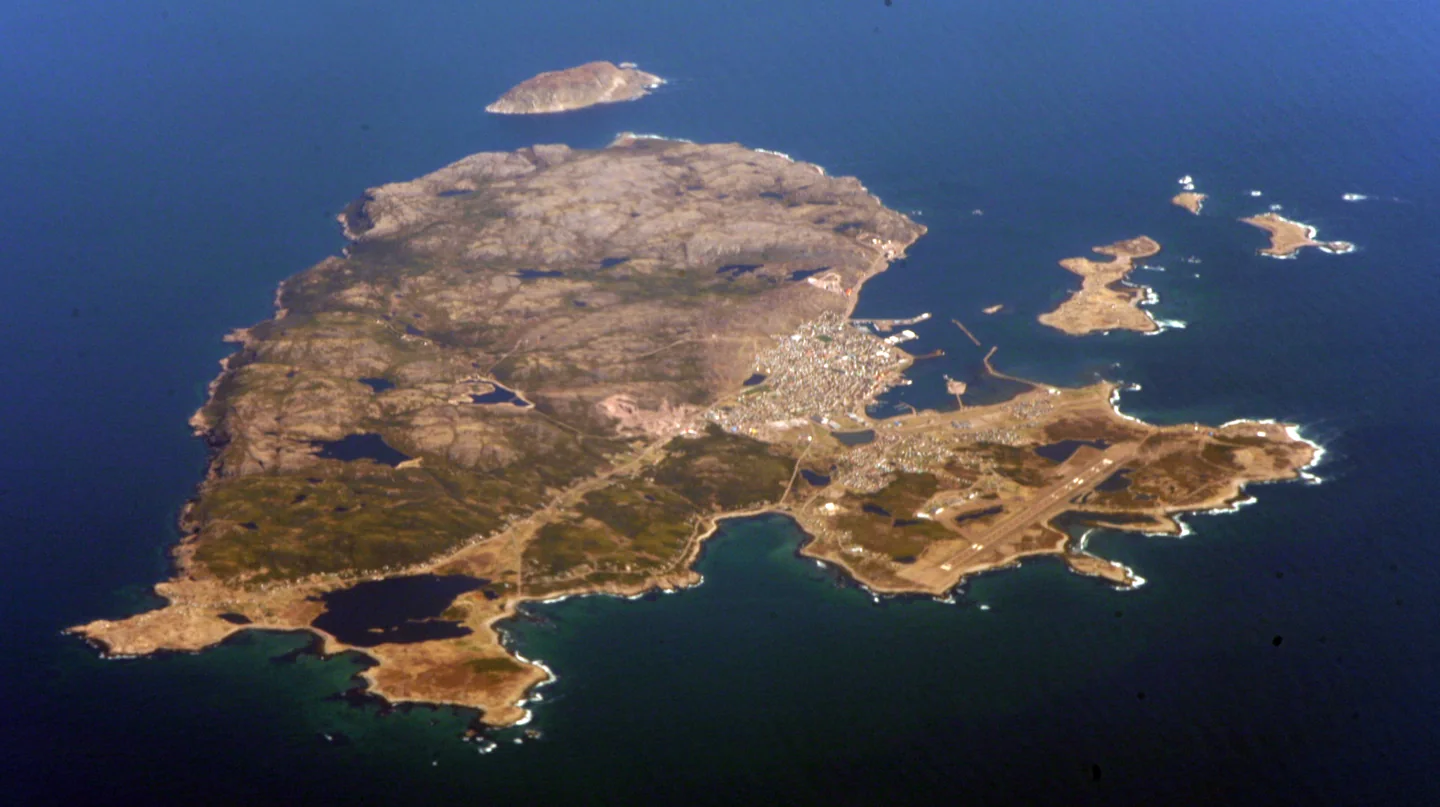
Choosing between a home in Saint-Pierre and one in Miquelon means connecting the address with a real job, school placement and transport plan. The photographs show the compact settlements, harbours and surrounding coastline; the moving decisions begin with how the household will use them each week.
These fourteen steps take that plan through entry and residence permission, local employment and tax, school arrangements, arrival records and everyday services. Follow the numbered journey to prepare the next application with the records obtained from the previous one. Dated official guidance is identified beside the relevant instructions, and unresolved procedures are described precisely so the household can obtain the right receiving checklist.
Saint Pierre and Miquelon at a glance
- Home-island choices
- Saint-Pierre · Miquelon
- Entry planning
- Destination and transit permissions assessed separately
- Employment
- Establish locally valid permission for the actual activity
- Tax administration
- Direction des services fiscaux
- Health institution
- CPS
- Budget currency
- Euros (€)
- Reviewed
- 17 October 2026
Follow your moving journey
Start at step 1, or jump to the task you are working on.
01Choose the home island and examine the lease before paying
Begin with the actual workplace, school offered and medical appointments. A Saint-Pierre home and a Miquelon home need different transport plans; do not make regular appointments on another island depend on an assumed connection. Compare the final walk, parking and access to shops as well as the advertised size of the property.
CACIMA’s April 2024 installation guide describes a mainly private rental market and identifies the local Cheznoo listings as a starting point. A listing helps find a contact; establish the actual home, authority to let it and written terms before paying.
- Request the address, photographs, furnishing inventory and intended rental term.
- Inspect the property or arrange a trusted inspection of that exact home.
- Separate rent, heating, utilities, security and any agency charges in the written offer.
- Read the notice, renewal, repairs, insurance and deposit-return clauses.
- Record condition, keys, equipment and meter readings at handover.
Use the rental terms precisely: bail is the lease, état des lieux the condition record and dépôt de garantie the security deposit. If a caution is requested, establish whether it means a guarantor or is being used informally for the deposit. Have the actual obligation recorded in the agreement.
Ask how the home is heated, who arranges fuel deliveries and maintenance, and which expenses are outside the quoted rent. Obtain equipment instructions and an emergency repair contact before occupation. For a shared or employer-provided home, record permitted occupants, shared-bill calculations and what happens if the job ends.
A universal local deposit cap and notice period were not established in this review. Have the lease type and any unclear clause assessed before signing. Keep the first stay flexible while confirming the home, service activation and daily journeys, and obtain promised repairs in writing.

02Establish the visa requirement for the archipelago and every transit point
Write down the citizenship, travel document, departure country and complete itinerary for each person moving. Select Saint Pierre and Miquelon as the destination in France-Visas. If another territory is crossed on the way, establish its admission or transit requirements separately and keep the relevant decisions with the tickets.
The French Interior Ministry’s overseas-entry guidance distinguishes territorial short-stay permission from Schengen permission. An applicant may need a visa valid for the overseas destination, while nationality, a French residence document or a long-stay visa can change the requirement. An overseas short-stay visa does not itself grant admission to the Schengen area.
- Run the actual nationality and destination circumstances through the visa assistant.
- Record the exemption or application branch and the document on which it depends.
- Prepare the accommodation, purpose, funding and journey evidence requested for that file.
- Submit through the responsible consulate’s instructed channel.
- Compare the territorial wording, dates and permitted stay on the issued decision with the final itinerary.
Keep an exploratory visit separate from the move itself. A visit to meet an employer or inspect a home does not establish permission to begin work or remain indefinitely. Retain entry evidence and the admission date, because later local procedures may need to distinguish the application date from the date on which the household actually arrived.
03Choose the residence basis before making the move depend on overseas income
Identify the real reason for the stay: a local job, a family relationship, study, retirement or another private arrangement. Give each accompanying adult and child a documented position in the plan. A pension, savings account or rental contract supports an application; it is not the permission itself.
The France-Visas long-stay page has a separate section for non-European French territories. Most nationalities require advance long-stay permission for residence beyond 90 days. Its listed exemptions include EU, Monaco and Andorra nationals, and EEA and Swiss nationals subject to territorial exceptions; Saint Pierre and Miquelon is not among those listed exceptions. The earlier metropolitan-France arrival instructions should not be adopted automatically for the archipelago.
- Select the destination and purpose in the assistant and retain the resulting checklist.
- Prepare the requested identity, family, resources, accommodation and insurance records.
- Explain any proposed paid activity explicitly, including overseas employment or clients.
- Submit where the receiving consular instructions require.
- Read the issued decision and obtain the corresponding local arrival procedure before travelling.
For retirement, establish healthcare continuity and the treatment of pension income alongside the residence application. For remote work, obtain the employer’s agreement and establish the locally permitted activity and registration obligations. No dedicated retirement or digital-nomad route is asserted here. Keep the renewal and arrival dates attached to the actual document issued, rather than using a deadline quoted for a different territory or status.
04Connect the written job offer with locally valid work permission
Obtain the employing entity, workplace, duties, weekly hours, pay, contract length and intended start date in writing. Establish who prepares the immigration and employment files and who pays the move’s initial costs. Include the consequences of a delayed start if the offer includes accommodation.
CACIMA’s April 2024 installation guide says non-French nationals, including Europeans, need local authorisation for salaried employment. Use that warning to establish the actual status and activity branch; a nationality-based visa exemption is not a complete work-permission assessment.
- Give the employer the citizenship, current residence document and proposed activity details.
- Establish whether the existing document permits that job locally or whether an authorisation or documented exemption is needed.
- Obtain the current receiving checklist for the employee and employer, including the applicable application location.
- Retain the submission reference and the issued decision with the contract.
- Compare the permitted job, employer, territory and dates with the work before beginning it.
The prefecture’s detailed direct-employment instructions could not be read during this review, so its indexed advertising period and pre-arrival submission deadline are not reproduced as verified instructions. Start at the prefecture’s foreign-worker procedure directory and obtain the current file and receiving arrangements for the actual recruitment.
For self-employment, a short specialist assignment or remote work, describe the activity rather than assuming the ordinary employee branch applies. Establish the work, residence, social-security and business-registration decisions separately. A company’s existence or an overseas client contract does not by itself establish the person’s right to perform the activity locally.
05Build the moving fund and separate local tax obligations from metropolitan returns
Obtain quotations for the household’s journey, freight, first accommodation and intended home. Put the payment date, currency, included services and cancellation terms beside each item. Keep the cash needed before the first salary separate from the eventual monthly budget.
| Initial cash | Recurring spending | Evidence to retain |
|---|---|---|
| Travel, freight and temporary accommodation | Rent, household charges and heating | Carrier and landlord quotations |
| Agreed security and connection costs | Electricity, water and communications | Lease and provider terms |
| Documents, applications and first purchases | Food, transport, school and healthcare | Individual service prices |
For hypothetical arithmetic only, €1,100 first rent plus €1,100 agreed security requires €2,200 before other moving costs. These inputs are not local market quotations or a legal deposit limit. Replace them with the chosen property’s actual terms and record which heating and utility costs are included.
The Direction des services fiscaux’s newcomer note explains the archipelago’s fiscal autonomy and separate local code. Its example concerns a move from metropolitan France in 2025 and the returns made in 2026: income is divided around the establishment date, with additional treatment for retained metropolitan or DOM rental income. Use it to identify the questions raised by the move; do not copy its dates into a later filing year.
The local tax portal’s 2026 campaign notice requires paper for a first declaration and for specified family-status changes. The March and April 2026 filing dates it publishes concern 2025 income and have passed at this guide’s review date. Obtain the correct campaign and first-filing instructions for the actual arrival year.
- Prepare the arrival date, former residence and household details.
- List salary, pension, business, property and investment income by territory and period.
- Ask DSF which local and other-territory returns apply.
- Obtain the current forms and filing dates for that situation.
- Retain foreign assessments and payment evidence with the local file.
DSF establishes the tax assessment; the newcomer note distinguishes collection by the Direction des finances publiques. The note lists DSF at 27 boulevard Constant Colmay, Saint-Pierre, 05 08 41 10 80. Direct the question to the correct service so an assessment enquiry is not mistaken for a payment instruction.
06Confirm the island’s school provision and the actual placement process
Record each child’s age, current class, subjects, language needs and any learning or medical support. Gather the previous reports and school-leaving records before departure. Ask the receiving education service which documents need translation or certification and which office makes the placement decision.
The local chamber’s April 2024 guide describes schooling from nursery through lycée in Saint-Pierre and through collège in Miquelon-Langlade. That difference matters when choosing the home island. Establish the current programme and placement for the particular pupil rather than assuming every course is available on both islands.
- Give the Service de l’éducation nationale the pupil’s current level and intended island.
- Obtain the applicable school-registration or placement instructions.
- Prepare the requested identity, family, address, previous-school and health records.
- Retain the placement response and contact the receiving establishment about the start date.
- Confirm the actual midday, transport and childcare arrangements before finalising the household’s daily timetable.
For vocational study, CACIMA’s CFA presentation explains alternating training between the centre and an employer, with some qualification requirements involving mobility outside the archipelago. Its description includes historical first-year information, so it should not be read as a current list of places or open intakes.
Ask the CFA about the intended qualification, employer contract, eligibility, selection, assessment location and next intake. Treat course acceptance, an apprenticeship contract and permission to work as separate decisions. For a university course elsewhere, obtain the receiving university’s admission and residence instructions rather than treating a local training enquiry as admission abroad.
For 2026/27 childcare, the Saint-Pierre municipal notice identifies the CCAS family portal for Île aux Enfants nursery pupils and Feu Rouge pupils in CP, CE1 and CE2. It requests acceptance of the rules, both parents’ employer attestations, a personal-information form and current child liability insurance. Pre-registration needs validation after the complete file is received; this is a childcare procedure, not school allocation.
07Prepare the personal records and clear belongings and pets before dispatch
Organise identity, civil-status, work, education, health and housing files separately. Keep originals and the records needed for early appointments in hand luggage, with encrypted copies accessible offline. Ask each receiving institution which translations, certifications or legalisations it requires before commissioning them.
- Compare names and dates across the household’s passports and supporting records.
- Obtain missing school, employment and medical records before departure.
- Prepare an itemised inventory, values and the carrier’s collection and delivery instructions.
- Have the local customs service establish the declaration and any relocation relief applicable to the actual goods.
- Retain the clearance, shipping and insurance records with the arrival file.
For a dog or cat, the local customs animal-import FAQ links the prefectural order of 26 February 2018 and a conditions summary. Obtain the applicable protocol from those authority links and the veterinary service, giving the animal’s age, identification, vaccination history, origin and every transit point.
The linked summary could not be read during this review, so exact health-certificate windows and vaccination intervals are not reproduced as current rules. Have the veterinarian plan the required records and treatments around the authority’s instructions, then obtain the carrier’s separate acceptance. Permission for the journey’s final destination should not be assumed to cover an intermediate border.
For belongings, distinguish a passenger allowance from a freight consignment and from relief on a transfer of residence. Establish who makes the declaration and which documents prove the move; do not assume every household shipment is automatically tax-free. Put storage and handling charges into the contingency budget if clearance takes longer than expected.
08Organise the actual arrival port and onward journey
Keep tickets, identity, issued permissions, accommodation details and the first contact number in hand luggage. Record the arrival territory and any transit permissions separately from the archipelago’s residence file. Have a plan for the final transfer and a delayed arrival before the household sets off.
SPM Ferries’ pedestrian-passenger instructions ask travellers to present themselves one hour before departure at Saint-Pierre’s maritime terminal and one and a half hours before departure at the Fortune ticket office, 8 Bayview Street, for document checks. They list the ticket, passport or accepted identity documents and any required visa. Use the instructions for the actual sailing, not a generic assumption about ferry check-in.
- Confirm the route, date, departure point and ticket conditions with the operator.
- Establish the required documents for every traveller and any vehicle or animal.
- Allow for the published check-in and onward collection arrangements.
- Retain admission and journey records with the actual arrival date.
- Test the route to the workplace, school and first appointments after reaching the home.
Langlade is a distinct boarding case: the operator describes transfer from the Jeune France by zodiac, with no quay on the island. A household member needing assistance should discuss the real embarkation and landing conditions before choosing that journey. Do not treat that service as interchangeable with a conventional terminal arrival.
For an appointment on another island, confirm both directions of the journey before fixing the time. Obtain the relevant current timetable and cancellation terms rather than making the move depend on an assumed frequency. Keep a flexible first stay when a missed connection would otherwise leave the household without accommodation.

09Complete the arrival action attached to the issued permission
Read the visa, permit and accompanying consular instructions before departure, then attach the actual arrival date when recording the next actions. Identify a first residence request, renewal, address change or child’s document separately. The online procedure for one category should not be assumed to cover another.
The official prefecture directory lists the state authority at place Lieutenant-Colonel Pigeaud and links its website. Use that official contact route to identify the current Citizenship and Legality receiving service and the procedure applicable to the document issued. The detailed local residence pages could not be read during this review.
- Prepare the passport, issued permission, entry evidence and actual local address.
- Identify the action and deadline stated in the issued decision or consular instructions.
- Obtain the current receiving checklist and appointment or online-submission route.
- Keep the dated acknowledgement and answer any additional-document request.
- Record the collection, follow-up and renewal instructions in the household calendar.
Keep each person’s record separate and describe the precise document type when asking for instructions. Retain an acknowledgement for its actual stated effect; do not treat the existence of an application as unrestricted permission to work or travel. Link the employment file to the residence file while keeping their decisions distinct.
10Establish the CPS registration branch for each household member
Prepare a record of existing social-security numbers, current insurance, employment or pension basis and the household’s actual establishment date. Distinguish a transfer or update from a first registration. Tell the employer which records exist so the personal details used for payroll and social registration remain consistent.
CLEISS’s 2025 overview identifies CPS as the local social-security institution. It describes affiliation branches based on stable regular residence, professional activity and dependent children, with adults registered individually. It also distinguishes the conditions for different benefits. This is a dated explanation of the system, not a determination of a newcomer’s current rights or contribution amount.
- Describe each person’s employment, residence, pension or posting circumstances to CPS.
- Obtain the current first-registration, transfer or rights-update checklist.
- Prepare the requested identity, civil-status, address, activity and payment records.
- Submit through the instructed channel and retain any request for additional evidence.
- Obtain confirmation of the effective coverage position before relying on reimbursement for planned care.
Download CPS’s two-page registration information form (source unavailable). Enter the arrival date, street address and postal box, employment, family details and any existing social-security number, then complete the children’s section and sign page two. Its document panel lists identity, a RIB bank-details statement, supplementary-insurance card, previous CPAM affiliation evidence and carte Vitale; it also lists a family record book and school certificates where there are dependent children. For non-civil servants it requests a payslip or local work contract; civil servants have a transfer-order branch. Prepare the records matching the actual situation and ask the service how to handle any item that does not exist, including a pending bank account.
The form gives Service Accueil Affiliation at the corner of boulevards Colmay and Thélot, 05 08 41 15 70 and accueil.cps@secuspm.com. Use these contacts to establish the submission channel and whether a foreign-national or coordination form is required instead. This general form does not establish a universal waiting period or a foreign newcomer’s complete eligibility checklist.
For retirement or an overseas posting, ask the previous institution and CPS which coordination records are needed and which institution remains responsible for each benefit. Keep the responses beside the insurance terms and hospital file. Correct a changed name or incomplete civil-status record early, so follow-up requests can be answered from an organised file.
11Prepare the bank application and keep evidence if it is refused
Identify the payments that must work first: salary receipt, rent, utilities and money sent from the previous country. Ask an existing bank what changes when the residence address changes, and keep a second means of payment while any new application is assessed.
CEPAC’s local branch directory lists its Saint Pierre and Miquelon agency at 24 rue du 11 Novembre and a Miquelon agency on rue Anne-Claire du Pont de Renon. Use the specific branch listing to establish adviser availability and the accepted newcomer documents; the directory is not an account-approval decision.
- Describe the actual citizenship, residence, tax and employment position to the bank.
- Obtain the identity, address, income and funding checklist for the selected account.
- Resolve temporary accommodation or bills in another person’s name before the appointment.
- Keep the submission receipt and the bank’s response.
- Once accepted, obtain the account details, activate the approved services and test a small payment.
If refused, assess the IEDOM right-to-an-account procedure. Its eligibility branches include residence in France regardless of nationality, specified residence abroad, absence of an individual account and certain closure situations. Preserve a written refusal or the evidence of a qualifying unanswered application.
IEDOM’s file includes the signed request, refusal or qualifying submission evidence, valid identity and address evidence under three months old. A registered or receipted request unanswered for 15 days can establish refusal under its procedure. Submit through the indicated Banque de France personal space or IEDOM office, then follow the designated bank’s document request. Designation and completed account opening are separate stages.
Compare the actual card, transfer and currency-conversion tariffs before selecting a package. Give salary and bill services the accepted account details through their required channels, and compare the first transactions with the expected amounts.
12Prepare the hospital file and resolve local and off-island cover
Bring current prescriptions, diagnosis summaries, relevant test results and the previous clinician’s contact details. Identify which treatment is needed soon after arrival and give the receiving team time to assess the records. Keep each person’s insurance and reimbursement position explicit, including accompanying children.
The Centre Hospitalier François Dunan’s patient booklet describes pre-admission using identity, valid social-insurance or rights evidence and supplementary-insurance records. It distinguishes planned admission from emergency administrative follow-up. Patients coming from Miquelon can ask about temporary accommodation during pre-admission; the booklet does not establish that a room will be available for a particular date.
- Ask the receiving service how to arrange the proposed consultation or treatment.
- Obtain its current admissions and financial-assessment requirements.
- Prepare identity, coverage evidence and the medical records requested for the actual procedure.
- Have the insurer confirm any prior approval, direct-billing and reimbursement arrangements.
- Retain the invoices, decisions and follow-up instructions with the treatment file.
The booklet also describes planned specialist care outside the archipelago being organised with the treating team and CPS. Establish the transfer, transport, accommodation and onward-treatment responsibilities before relying on an insurance policy. Its broad billing examples are not a current personalised coverage decision or a tariff quotation.
If a procedure involves a child or a person under legal protection, obtain the specific consent and representation instructions early. Inform the clinical team of changes in treatment since the last consultation. Keep the local registration response and any private insurer approval together, because they answer different questions about who pays and how the care is arranged.
13Open the correct EDF contract and record the starting supply
Identify the exact home and meter with the landlord or agent. Establish whether electricity is already available, whether the household has an individual contract and how any shared consumption is charged. Keep the opening reading with the condition report rather than relying on an estimate from a previous occupant.
The local EDF contact service offers a subscription enquiry followed by adviser contact to finalise the request. Its form distinguishes an existing customer from a new one, asks for the address and previous occupant, and records whether supply is present and whether the applicant rents or owns. It lists the agency at 23 boulevard Constant Colmay, Saint-Pierre, with customer number 05 08 41 04 10.
- Prepare the address, account-holder contacts, meter details and intended handover date.
- Describe whether the request concerns an existing supply or a new property.
- Use the local contact channel and obtain the adviser’s document and payment instructions.
- Retain the contract, agreed activation arrangements and quoted charges.
- Compare the first bill with the account holder, home and starting reading.
When leaving another local home, EDF’s moving page says to terminate the old contract and, where needed, open another for the new address. It requests the customer reference and a reading taken 24 hours before departure, then sends a closing bill. Starting a new tenancy should not leave an unwanted old account running.
Ask the landlord which heating equipment and fuel costs sit outside the electricity contract, and obtain the maintenance and operating instructions for the actual installation. A new network connection requires its own assessed works and timing; no universal activation period or deposit is quoted here.
14Finish water, communications and the first-month records
Establish with the landlord who is responsible for water and wastewater services and how any shared charges are calculated. Saint-Pierre’s municipal directory lists the Régie Eau Assainissement at local numbers 41 41 76 and 55 80 61. Ask for the procedure for the actual address; the Saint-Pierre contact should not be substituted for Miquelon’s arrangements.
For communications, SPM Telecom’s own service information identifies fixed, mobile and internet services, with Saint-Pierre and Miquelon contacts. Describe the home and intended use to obtain the current subscription checklist, installation assessment and tariff. The older indexed mobile contract is not used here as a current universal document list.
- Test mobile reception inside the home and where work will be done.
- Obtain the selected plan’s activation, commitment, cancellation and roaming terms.
- Confirm that calls, messages and account-verification codes work before retiring the old contact number.
- Compare the first bills and salary with the contracts and opening readings.
- Calendar outstanding submissions and renewal dates, with one person responsible for each action.
The chamber’s installation guide also directs newcomers to register at the post office for a postal box. Establish the household’s delivery and collection arrangements early and use the correct postal details when updating institutions. Keep the physical home address available separately for visits and service connections.
Use the municipality’s local-services links to find cultural, library, sporting and family activities. Ask the receiving group about its current location, session time, membership and equipment before attending. Build the weekly routine around the transport and school arrangements that actually work for the household.
At the end of the first month, replace temporary assumptions with the decisions received: the occupied home, school placement, accepted account, active coverage and permissions issued. Keep unresolved actions in a short list with references, the next contact date and the evidence still needed.

Sources & further reading
Reviewed 17 October 2026. Sources are linked beside the relevant instructions. Detailed current prefecture submission procedures, CPS first-affiliation requirements, the school placement checklist and exact animal-entry veterinary windows were not established. The April 2024 chamber guide, 2025 CLEISS overview and dated tax examples are identified where used; they do not establish a current individual decision. Reviewed 15 October 2026. The rent and security figures are explicitly hypothetical inputs, not market quotations or a legal deposit cap. Obtain dated household-specific quotes for the actual move. No universal monthly cost, connection charge or current treatment tariff is asserted. Photograph credits, licences and capture years appear with the images.
Browse the source directory
- Interior Ministry — overseas entry
- France-Visas — long stay
- DSF — newcomer tax note
- DSF — local tax portal
- EDF Saint-Pierre-et-Miquelon — contact
- EDF — moving home
- CACIMA — April 2024 installation guide
- CACIMA — CFA presentation
- Centre Hospitalier François Dunan — patient booklet
- Service de l’éducation nationale
- Prefecture — foreign workers
- Caisse d’Epargne CEPAC — local branches
- IEDOM — right to an account
- SPM Ferries — boarding and crossing
- CLEISS — local social-security system
- Service Public — prefecture directory
- Saint-Pierre municipality — services
- SPM Telecom — service information
- Local customs — importing a dog or cat
- CPS — registration information form (source unavailable)
Make your next step a practical one
Choose the home island around the actual work and school plan, obtain the applicable permissions, and carry each accepted record forward into household registration and services.