Visa
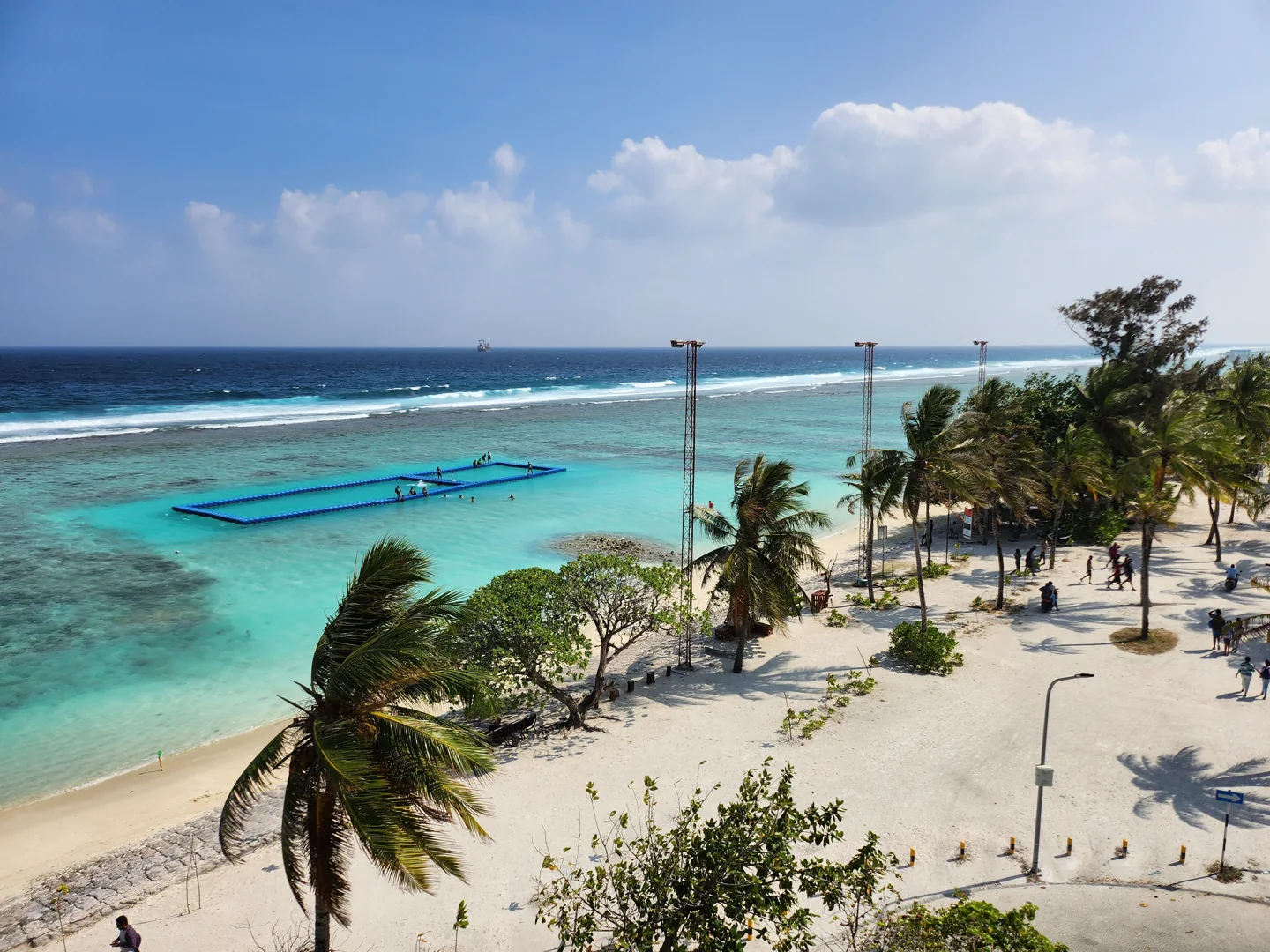
Moving & Living - Maldives - Complete Guide
Move to the Maldives in fourteen practical steps covering island choice, work eVisas, professional-category family sponsorship, schools, tax, banking, housing, healthcare and transport.
Photo credit
A move to the Maldives starts with an island decision. Life in a Malé apartment, a Hulhumalé neighbourhood or employer-provided accommodation on a resort island involves different journeys to work, school and healthcare. A beach address alone says little about whether the household can make everyday life work.
This fourteen-step journey takes you from choosing that base to the first month after arrival. It explains employer-led work permission, family eligibility, university admission and household services, with the current digital immigration process and clear distinctions between visiting, residing and working.
Maldives at a glance
- Capital
- Malé
- Currency
- Maldivian rufiyaa · MVR
- Local language
- Dhivehi
- Time zone
- UTC+5
- Tax authority
- MIRA
- Work application service
- Xpat
- Immigration assistance
- 1434
- Ambulance
- 102
- Reviewed
- 15 October 2026
Follow your moving journey
Start at step 1, or jump to the task you are working on.
01Choose an island around work, school and medical access
The first distinction is between living on an inhabited island and taking a job with accommodation on a resort island. An employer’s postal address in Malé does not establish where you will sleep or work. Ask for the actual workplace island, accommodation location and transfer arrangements before comparing an offer with a city apartment.
| Base to investigate | Useful starting point | Question to resolve |
|---|---|---|
| Malé: Henveiru or Maafannu | City employment, administration and established services | Can you walk to work and school from the actual building? |
| Hulhumalé: Phase 1 or Phase 2 | A household considering a separate apartment near the airport area | Which bus stop and building entrance serve the address? |
| Addu, including Hithadhoo | An institution or employer specifically based in the south | Are flights and specialist appointments included in the household budget? |
| A resort or another inhabited island | An island-specific contract or an established local connection | Can dependants live there, and who provides transfers? |
- Put the workplace, prospective school and nearest suitable clinic on the same map. Identify any journey requiring a boat rather than treating distance across water as a road commute.
- Use the RTL operator portal to investigate the actual public route and timetable. Obtain a separate transfer plan from the employer for a resort; a public ferry listing does not prove it serves the staff jetty.
- Book temporary accommodation convenient for the first appointments. Inspect the permanent home and test the journey before signing a long tenancy.
University location can change this decision. Maldives National University has its main campus in Malé and campuses in Kulhudhuffushi, Gan, Hithadhoo and Thinadhoo. Confirm where the particular course is taught rather than moving to the capital on the strength of the university’s name.
02Identify the permission that matches your purpose
Visitor entry, permission to reside and permission to work are different decisions. Choose the category from the actual purpose and sponsoring relationship. The application service also changes with the category: employer work applications use Xpat, family applications use IMUGA, and corporate residence uses oneGov.
| Purpose | Responsible starting point | Boundary to keep clear |
|---|---|---|
| A local job | Employer: Work Visa instructions | Entry Pass before travel; work eVisa after arrival. |
| Eligible worker’s family | Dependent Visa and approved sponsorship | The worker must hold the professional category; children must be under 18. |
| Marriage to a Maldivian citizen | Marriage Visa | A relationship with a foreign worker follows different rules. |
| Qualifying investment | Corporate Resident Visa | Specific investment criteria apply. |
| University study | Receiving university and Immigration | An offer and the student immigration process are separate tasks. |
| A temporary business visit | Business Visa | Approval before arrival; cumulative stay limited to 90 days in 12 months. |
- Write down nationality, passport expiry, proposed activity and family relationship for each traveller.
- Ask the sponsoring employer or institution to identify the category and the documents it will prepare.
- Save the approval and check that the passport number and purpose match the trip. A sponsor’s submitted application is not an approval.
The current tourist-entry guidance requires a machine-readable passport with at least one month’s validity and appropriate travel arrangements; that minimum belongs to tourist entry and should not be substituted for a work, business or residence checklist. Immigration also states that entry on Israeli passports is prohibited from 15 April 2025. Resolve nationality-specific eligibility before making bookings.
03Agree the employment package and employer’s application tasks
A job offer should explain both salary and island logistics. Housing, meals, return flights, medical cover and transfers can materially change what the cash salary supports. Keep the contract, accommodation schedule and immigration responsibilities together so an attractive headline salary does not conceal an unbudgeted second household.
- Obtain a written description of duties, workplace island, pay currency, working arrangements and the accommodation being offered. Ask whether a room is shared and whether family occupancy is allowed.
- Have the employer obtain the valid Entry Pass associated with the work permit before you travel. Match it to the passport you will use at the border.
- Agree who will handle any required medical screening, insurance and post-arrival documents. Give that person a reachable local number when you arrive.
- Set a visa follow-up appointment during the first week. Under the current work eVisa process, the employer or authorised representative must apply for and obtain the eVisa within 15 days of arrival. Keep your own downloaded copy.
For remote work, the published immigration categories do not offer an ordinary digital-nomad permission. A foreign employment contract and a laptop do not establish the right to settle and work on a visitor admission. Put the intended activity to Immigration before arranging a long stay; do not build the move around repeated tourist entries.
If establishing a business, separate investment approval, registration and immigration. The current foreign-company registration service requires the relevant foreign-investment approval or other applicable government approval before registration and explains the legal representative requirements. Prepare the ownership documents and select the correct entity service with a local adviser. Registering an entity does not itself complete the individual’s visa application. For a short business visit, follow the invitation and advance approval procedure instead.
04Build an island-specific budget and determine tax status
Make two budgets: money needed before the first salary and the recurring household bill. Quote the actual apartment, school and island transfer. Resort accommodation included in a contract cannot be converted into a representative Malé rent, and a visitor’s hotel package is a poor measure of resident spending.
| Item | Verified figure or method | Scope |
|---|---|---|
| Expatriate bank account | MVR 200 minimum deposit; MVR 75 monthly maintenance | Bank of Maldives expatriate account, checked 15 October 2026; a deposit remains account money. |
| Home fibre example | MVR 550 monthly before 8% GST; calculated total MVR 594 | Dhiraagu Limitehneh 20M, subject to address availability and plan terms. |
| Dependent visa | MVR 750 | Immigration’s published fee; not a quoted monthly household charge. |
| Rent and utilities | Obtain written rent, deposit and recent meter bills | The inspected unit and the people sharing it. |
| Schooling, insurance and transfers | Request dated invoices or quotations | Grade, policy cover and actual island route. |
For a hypothetical offer of MVR 12,000 rent with one month’s refundable deposit and one month paid in advance, the initial housing cash is MVR 24,000. That calculation illustrates cash timing; it is not a surveyed rent or a legally standard deposit. Add airfare, temporary lodging, baggage or freight, document preparation and a reserve for delayed salary.
MIRA’s individual tax guidance distinguishes ordinary residents, taxed on worldwide income, from temporary residents and non-residents, taxed on Maldives-source income. “Temporary resident” is a tax category: a qualifying foreign resident permitted under immigration law and not married to a Maldivian. The Act’s residence test includes permanent living arrangements and an aggregate 183 days in a qualifying 12-month period; immigration visa labels alone do not settle tax status.
Annual individual marginal bands begin at 0% up to MVR 720,000, then 5.5%, 8%, 12% and 15% across the published thresholds. Ask payroll how withholding and your registration will be handled. Under the current tax regulation, single-payer remuneration can qualify for a return exemption, but that is not a universal exemption for work performed for a foreign employer. Arrange advice for overseas income, a business or a changing household status.
05Secure a school place or course offer before fixing the address
Choose a school by the child’s age, curriculum, language and journey. Send the current school report and ask which year group the admissions team would assess. A familiar curriculum name does not establish that a place is available or that the timetable fits the household’s commute.
- For a Malé starting point, contact Ghiyasuddin International School’s admissions office. Its checklist includes the birth certificate, previous school records, student and parent photographs, parent identity documents and the child’s ID or passport.
- Request written confirmation of the offered grade, start date, teaching language, attendance arrangements and any assessment. Ask how the school records a foreign child’s immigration status.
- Obtain an invoice covering tuition, registration, books, uniform, activities and any transport. The 2026 fee page lists amounts by grade but does not specify the billing interval clearly; confirm whether the relevant charge is monthly, termly or annual before using it in a budget.
- Inspect the route from the prospective home during school travel time. Include collection arrangements when an adult works on a different island.
For university, apply through the MNU admissions portal. Its international-student instructions call for English academic transcripts, verified certificates, English-proficiency evidence and passport documentation. After an offer, coordinate the pre-travel sponsorship approval with the university; do not travel while it remains unapproved. MNU describes a student-visa application within 30 days after arrival, alongside medical and insurance documentation. Its page links older forms, so obtain the current checklist from Student Support before preparing the final submission.
Keep accommodation separate from admission. Ask the institution whether a room has actually been allocated, what kitchen facilities it provides and whether the contract covers the full course period. A campus housing application or an offer letter is not a room booking.
06Test whether a genuine residence route supports retirement
The published resident categories do not describe an ordinary pension-based retirement visa. A wish to retire near the sea, an overseas pension or a long apartment lease does not create a settlement route. Start with a qualifying family relationship or the actual investment conditions rather than a retirement budget built around visitor entry.
Immigration’s Corporate Resident Visa guidance identifies three qualifying investment bases: at least USD 1 million invested in the Maldives during the preceding three financial years; a USD 250,000 fixed deposit in a licensed Maldivian bank for five years; or at least USD 250,000 invested in a government-approved project. An arbitrary property purchase is not automatically an approved project.
- Document the proposed basis with the responsible authority and a qualified adviser before transferring funds. Ask which evidence establishes approval, ownership and the required holding period.
- Use the oneGov corporate-resident service for the actual application. Obtain the current service guideline, full fee schedule, household eligibility and renewal conditions for your case.
- Request health-insurance terms for your age, existing conditions, prescription needs and emergency transfer. Compare an inhabited-island routine with the cost of reaching specialist care.
- Plan what happens if a spouse needs to leave, an investment is withdrawn or a medical condition changes. Keep sufficient accessible funds outside any committed deposit for travel and treatment.
Do not confuse a route’s investment threshold with a complete relocation price. Legal work, banking, accommodation, insurance and annual household spending are additional. Where eligibility depends on a Maldivian spouse, follow the marriage category and document requirements rather than assuming investment rules apply.
07Prepare matching documents, belongings and any pet application
Create one folder for each traveller and a separate shared folder for housing, employment and insurance. Use clear scans with the full page visible. Check names, dates of birth and passport numbers across the employment documents, certificates and applications before an authority has to resolve a mismatch.
- Keep passports, approval slips, employment or university letters, relationship certificates, insurance details and arrival accommodation accessible in hand luggage. Save an offline copy and a second secure backup.
- Use the Immigration forms catalogue for the current category. Ask the receiving authority which translation or certification is required for each foreign document instead of commissioning every available legalisation.
- List belongings by item and value before requesting a freight quote. State the final island, unloading point, delivery stairs or lift and any storage requirement. Confirm the receiving agent and customs treatment before shipping.
- Review the official customs guidance before packing food, alcohol, religious items or regulated goods. Personal baggage does not create permission to import prohibited items.
For a pet, start with the Animal Welfare Department’s January 2026 import application, before booking carriage. Its live-animal form asks for the animal’s species or breed, origin, carrier, expected arrival and holding address, and identifies pet documents among the attachments. The published form does not establish every species-specific vaccination, quarantine or admissibility condition. Obtain those conditions for the animal and origin from the department, including which identity document a foreign applicant should supply.
Only then arrange the vet documents and carrier requirements against the actual travel date. Confirm in writing that the apartment or employer accommodation permits the animal and that onward island transport will accept it. Keep a practical fallback if approval and the passenger booking do not align.
08Complete the arrival declaration and reach the correct island
Reconfirm the first-night address, arrival contact and transfer before boarding. Someone arriving for a resort job should know whether the employer meets the flight, which luggage is accepted on the onward service and what happens if the international flight arrives after the final transfer.
- Complete the official IMUGA Traveller Declaration within 96 hours before arrival, using the same passport as the entry approval. The current Immigration instructions say submission is free and each traveller, including a child, needs an individual declaration.
- Keep its confirmation with the category-specific entry documents. Show the officer the actual purpose of the trip and the relevant approval; do not describe employment as a holiday.
- After clearance, save the arrival record or passport stamp needed for subsequent applications. Send a legible copy to the employer or institution through its agreed secure channel.
- Activate a phone connection, confirm the accommodation address and take the booked transfer. Photograph any baggage damage before leaving the delivery area.
Use the arrival day for essentials: drinking water, a meal, access to cash and a reachable local contact. Put the next immigration task in the calendar immediately. A successful border admission is the start of the post-arrival process, not proof that the work or residence application is finished.
For a family, carry the approved sponsorship separately from the main worker’s documents. Check every traveller’s recorded permission and dates, rather than assuming the household shares one entry decision.
09Finish the eVisa, family and tax registrations
Make a simple tracking sheet with applicant, application reference, responsible person, deadline and final document. Mark “submitted” separately from “approved”. This is particularly important where the employer controls the portal but the worker must carry evidence of permission.
- For employment, the employer uses Xpat, opens the worker’s permit record, starts the visa request and uploads the photograph, passport data and required supporting material. Obtain the approved digital work visa within the 15-day arrival deadline.
- For eligible family, follow the sponsorship process while the applicant is still outside the country. Download the approval and respect its 30-day entry window. The dependent guidance asks for submission at least seven working days before travel.
- After a dependant’s arrival, use the dependent application checklist in IMUGA. Prepare the main worker’s permission, relationship evidence in English, passport, arrival evidence, photograph, medical and expatriate-insurance documents as required.
- Ask payroll or your adviser whether MIRA registration is complete and obtain the taxpayer reference when applicable. The current regulation uses MIRA 117 for registration and changes; report a relevant new income source within the specified 15-day notification rule.
Current work eVisas replace passport stickers; the old stickers ceased to be valid after 23 November 2025. Validity also depends on the underlying permit and its paid fees. Ask for a fresh copy when a passport changes and verify the document before an international trip.
The government’s 2026 biometric programme update confirms that foreign-worker records include biometric data. Have the employer verify that your required record and any appointment are complete; the publication does not provide a universal new-arrival appointment deadline to copy into every case. Contact Immigration on 1434 for the instruction applicable to the actual record.
10Open a suitable account and establish everyday payments
Ask the employer which account and currency its payroll can use. Keep enough accessible money for the period before onboarding and the first payroll run. An account application should be complete before you send account details to payroll, and the beneficiary name must match the bank record.
- Start from the Bank of Maldives expatriate-account page and use its own first-account application link. Work-visa applicants need a work permit with at least one month’s validity remaining at onboarding; other expatriate applicants need a valid visa.
- Prepare the identity, permission, address and employment or income evidence requested for the application. If a document cannot yet be supplied, ask the bank which acceptable alternative applies rather than uploading an unrelated certificate.
- Budget the published MVR 200 minimum deposit and MVR 75 monthly maintenance. The deposit is not an application fee. Do not assume a salary-related fee rebate applies unless the bank confirms eligibility.
- After approval, activate the available card and online services, set secure access and test a small transfer or purchase. Send the verified account details to payroll through its normal channel.
Separate local spending from international remittances. Before committing to regular overseas transfers, consult the bank’s current remittance instructions for the currency, limits, documents, charges and processing cut-off applicable to your channel. A local MVR balance does not guarantee unrestricted immediate access to another currency.
For rent or a deposit, confirm the recipient through the landlord or authorised agent and include the property and payment period in the reference. Save the receipt outside the banking app as part of the tenancy file. Never treat a payment screenshot from the other party as your own proof that money has arrived.
11Inspect the apartment and agree a complete rental record
A useful rental comparison begins with what is actually included: the whole apartment or one room, the number of occupants, furniture, cooling, cooking facilities and the way water and electricity are billed. Ask for the exact island, house or building name, street and floor. A listing described simply as “Malé area” is insufficient for a daily journey.
- View the home or have a trusted representative inspect it. Check ventilation, signs of leaks, window security, cooling, water pressure, sockets, mobile reception and the approach after dark.
- Verify who owns the unit or has written authority to let it. If someone offers a room in an existing tenancy, establish whether subletting and your occupancy are authorised.
- Request a draft identifying both parties, address, permitted occupants, rent currency, due date, deposit, notice, repairs, inventory and deductions. Agree how the deposit will be returned and which charges can be deducted.
- Record meter numbers, opening readings and previous unpaid balances. Establish whether utilities have separate meters, are included or are apportioned among units.
- Sign, pay by a traceable method and obtain receipts. Photograph the handover condition and list keys, furniture and appliance defects while both parties can acknowledge them.
These are practical negotiation points, not a claim that every landlord uses one national deposit formula. Obtain a translation or independent explanation if the agreement is in a language you do not understand. Keep written amendments together with the original contract.
In Hulhumalé, a property-service application may involve the owner’s HDC agreement; MWSC’s checklist explicitly distinguishes that document from other land-registration evidence. Ask the owner to resolve building-level service issues before handover. A tenant should not assume that paying rent gives access to the owner’s service account or authority to order structural changes.
12Arrange routine care and insurance that covers the island journey
Start with the care your household actually needs: prescriptions, pregnancy care, ongoing specialist treatment or routine child appointments. Identify both the nearest suitable provider and the route to a larger hospital. The FCDO health guidance stresses the practical limits of island medical access and the importance of cover for unexpected evacuation; an attractive accommodation address does not shorten a sea transfer.
- Obtain the policy wording and membership evidence from the employer or insurer. Confirm insured names, start date, territorial limits, exclusions, outpatient benefits and any pre-authorisation requirement.
- Ask whether the policy pays the hospital directly or requires reimbursement. Keep the claims contact, membership reference and a payment reserve accessible.
- For a Greater Malé starting point, investigate IGMH’s trauma and emergency services and Tree Top Hospital in Hulhumalé. Tree Top publishes a 24-hour emergency/ambulance contact, 1610; its location is Lot 10608, Dhumburi Magu. An insurer logo on a hospital website does not confirm your individual treatment is covered.
- Book a routine appointment where needed, take the medical summary and prescriptions, and establish how repeat medicine will be supplied locally.
Read evacuation language carefully. The published Allied Expatriate Plus description has local treatment conditions and exclusions, including medical evacuation. Repatriation of mortal remains is a different benefit from transferring a living patient for treatment. Obtain a current quotation and suitable additional cover where necessary rather than relying on an older advertised premium.
Do not budget on automatic access to a citizen’s publicly funded benefits. Ask the provider what your foreign status and insurance mean for the actual consultation and tests. For an ambulance, the official travel-health guidance gives 102. On a workplace island, also save the employer’s emergency coordinator and the agreed transfer procedure.
13Connect the home and test the daily transport route
Handle building services with the landlord before ordering a second connection. Take photographs of the electricity and water meters and confirm which account belongs to the unit. For an existing home, the task may be arranging access and payment rather than applying to construct a new connection.
- For Greater Malé electricity, start with STELCO’s customer services and the owner’s existing account details. Ask how the bill will reach you and when payment is due. Obtain a recent bill from the actual unit instead of calculating a current bill from an old tariff table.
- For metered water, consult MWSC’s service instructions. New premises require owner and property documents, including plumbing drawings and council approval; that is a separate process from paying an occupied apartment’s bill.
- Obtain a registered mobile service from the operator and verify calls and data at home. Keep the number used for bank or immigration authentication active when changing plans.
- Check Dhiraagu fibre availability for the actual building and unit. Its listed 20M plan is MVR 550 monthly before 8% GST, a calculated MVR 594 including that tax. Ask about installation, equipment, contract length and applicable usage conditions before ordering; advertised speed is not a guaranteed measured speed in every room.
- Use RTL to select the actual route, date, departure point and return journey. Check fares at booking and distinguish an inter-island service from a Greater Malé bus or ferry.
Test the trip before the first working day with the baggage or school items normally carried. Note the final departure, a missed-connection option and the cost of the fallback. For an employer-operated boat, obtain the staff timetable and contact rather than assuming the tourist transfer can be used freely.
Keep utility setup receipts and opening readings in the rental folder. If the landlord divides a shared bill, agree the calculation and access to the original invoice before the first payment is due.
14Build a local routine and close the first-month checklist
Begin with repeatable local errands: where to buy groceries, where to collect medicine, how to get to the clinic and which route works when the weather or timetable changes. Walk the immediate neighbourhood and learn the building name and street well enough to describe the address to a driver or service team.

- First week: confirm entry records, the employer’s eVisa progress and any required appointment. Check that each family member’s application has its own reference and evidence.
- By the work-visa deadline: obtain the approved document, not just a promise that the employer submitted it. Save it offline with the passport and permit information.
- After housing handover: test bills, bank payments, connectivity and the school or workplace journey. Resolve unexplained shared utility charges while the opening readings are still clear.
- Before the month closes: confirm payroll, tax registration where applicable, insurance membership and the school or course start. For a student, follow the institution’s post-arrival visa deadline.
- For the next trip: check passport and permission validity, underlying permit fees and the return transfer to the airport. Record renewal responsibilities and reminders well before documents expire.
Find community through the institution or neighbourhood you actually use: colleagues, a school’s parent activities, the university’s student support and suitable local recreation. Ask which activities welcome newcomers and what participation costs. Learn practical Dhivehi greetings and local expectations around public spaces, dress and visiting; ordinary community life differs from a resort holiday setting.
Keep a short list of unresolved household tasks with an owner and date. An outstanding bank document, an incomplete visa request and a missing school invoice need different follow-ups. Bring the relevant reference when contacting the responsible organisation, and keep its written answer alongside the application rather than relying on a conversation remembered weeks later.
Sources & further reading
Reviewed 15 October 2026. Sources are linked beside the relevant instructions. Immigration guidance uses the September 2026 digital visa pages, and tax guidance uses the August 2026 consolidated legislation. Older passport-sticker procedures and undated national living-cost estimates are excluded. MNU links older form versions: confirm the current student checklist with the university before travel. Where a tariff, pet condition or school billing interval cannot be verified, the relevant authority or provider is identified. Prices checked on 15 October 2026. Dhiraagu’s listed fibre charge is before GST; the tax-inclusive figure is a calculation. Bank charges describe its expatriate account, not every bank. GIS fee figures do not state a billing interval. Housing and move calculations are hypothetical examples, not surveyed national prices. Photograph credits, licences and capture years appear with the images.
Browse the source directory
- Immigration — work eVisa and Entry Pass
- Xpat — employer work permit and visa services
- Immigration — professional-category dependent visa
- Immigration — sponsorship declaration
- Immigration — marriage visa
- Immigration — business visa
- Immigration — resident and corporate resident categories
- oneGov — business and corporate resident application
- oneGov — foreign company registration
- Immigration — tourist entry and arrival declaration
- IMUGA — traveller declaration
- Immigration — forms and category checklists
- MIRA — individual income tax and marginal rates
- MIRA — consolidated Income Tax Act
- MIRA — consolidated Income Tax Regulation
- Ghiyasuddin International School — admissions
- GIS — academic-year 2026 fees
- Maldives National University — international students
- MNU — admissions application portal
- Agriculture and Animal Welfare — live animal import permit
- Animal Welfare — January 2026 import application form
- FCDO — entry and personal customs guidance
- Bank of Maldives — expatriate account
- Bank of Maldives — banking and remittance FAQs
- FCDO — healthcare access and emergency assistance
- Tree Top Hospital — Hulhumalé care and emergency service
- IGMH — trauma and emergency department
- Allied — Expatriate Plus policy scope
- MWSC — metered water services
- MWSC — applications and supporting documents
- STELCO — electricity and customer services
- Dhiraagu — fibre plans, availability and documents
- RTL — public transport routes and schedules
- President’s Office — February 2026 biometric programme update
Make your next step a practical one
Confirm your actual island, employer or university, and the immigration category for every household member. Arrange approval before travel, then schedule the post-arrival visa and household tasks around the responsible institution.