Visa
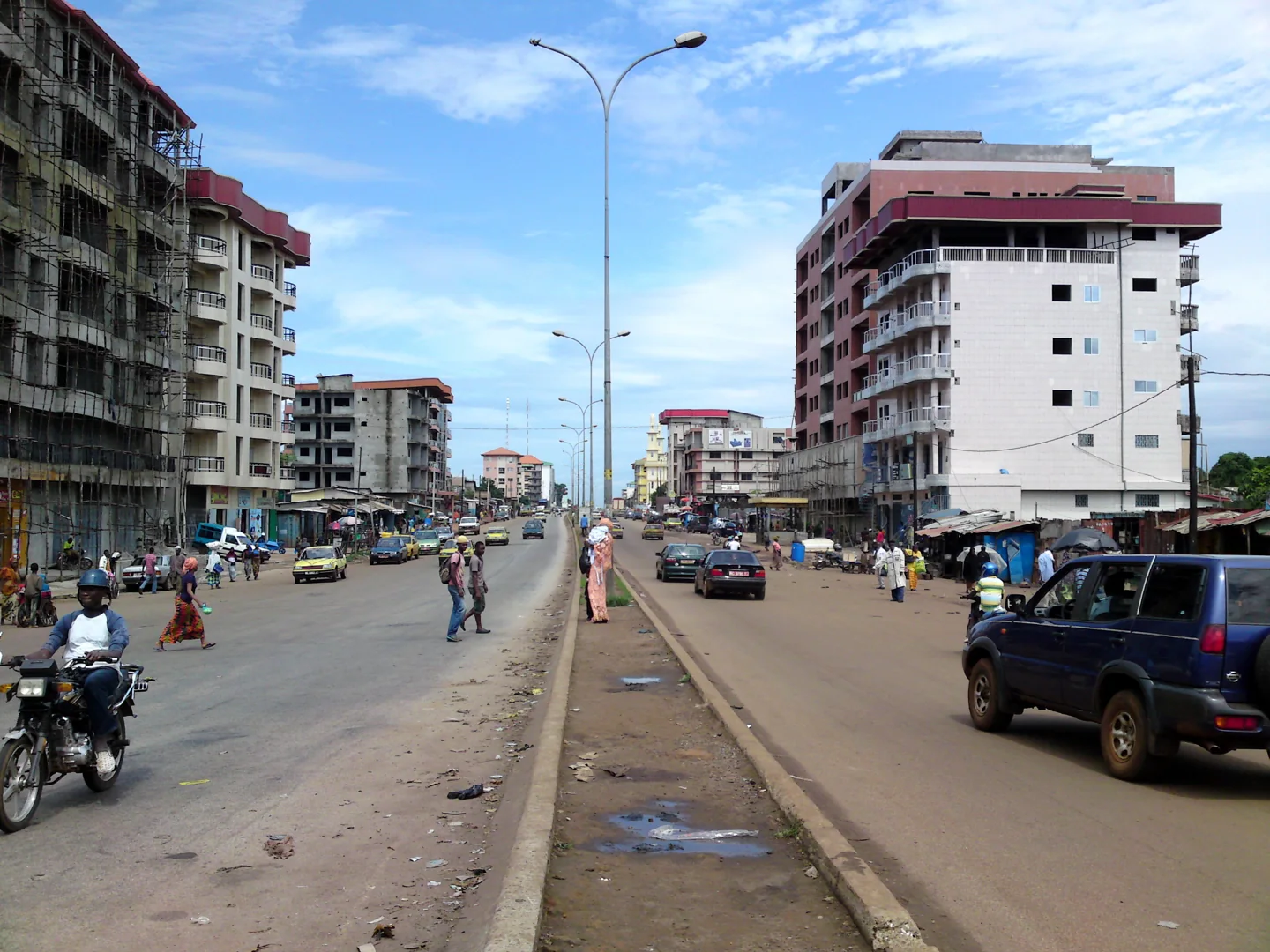
Moving & Living - Guinea - Complete Guide
Move to Guinea in fourteen practical steps: choose a Conakry neighbourhood or regional base, secure entry and work permissions, arrange school and housing, then complete local records, banking, healthcare and utilities.
Photo credit
A move to Guinea might centre on work in Conakry, a regional assignment in Kindia or Kankan, or family life around a school in Kipé, Nongo or Sonfonia. The right address depends on the journeys you will make each week and the services available at the actual property.
This guide follows the practical move from permission and preparation to a lease, local records, payments, healthcare and a workable daily routine. It covers the Republic of Guinea, whose currency is the Guinean franc; Guinea-Bissau and Equatorial Guinea have different systems.
Guinea at a glance
- Capital
- Conakry
- Currency
- Guinean franc · GNF · FG
- Working language
- French; regional languages in daily use
- Entry authority
- DCPAF · Police Aux Frontières
- Employment service
- AGUIPE-E
- Business registration
- APIP / Guichet Unique · RCCM
- Tax administration
- DGI · NIF / NIFp
- Social insurance
- CNSS, subject to affiliation
- Utilities
- EDG electricity · SEG water
- Reviewed
- 14 October 2026
Follow your moving journey
Start at step 1, or jump to the task you are working on.
01Choose the base around the job, school and daily journeys
Begin with the workplace and school, then choose the address. In Conakry, compare Kaloum, the Dixinn and Camayenne area, Kipé, Nongo and Sonfonia by the journeys you actually need. A school in Sonfonia and daily work in Kaloum create a different routine from living close to either destination.
| Starting point | Practical reason to investigate it | What to establish |
|---|---|---|
| Kaloum | A job or frequent administrative appointments there | The actual entrance, parking, deliveries and journey home |
| Kipé or Nongo | Proximity to a selected school or local workplace | The route from the property to the school gate, not just the neighbourhood name |
| Sonfonia | A school, university or work arrangement in that part of Conakry | Weekday travel and services available at the address |
| Kindia, Labé, Kankan or N’Zérékoré | A regional job or family base | Housing, medical contacts, schooling and onward transport locally |
- Obtain the exact work address and expected hours. If the assignment is at an industrial or regional site, ask where staff live and which transport and services the employer actually provides.
- Map the proposed school, medical contact and regular shopping route. The investment agency’s local-services overview provides regional starting points; it does not establish availability at a particular home.
- Visit or arrange a viewing by someone who can inspect the property and test the weekday journey. Review access during rain, water storage, electricity arrangements and mobile reception.
Book the first accommodation around arrival and appointments. Keep the long-term search open until you have compared homes on the same practical criteria. A neighbourhood label alone cannot tell you whether the water reaches the upstairs taps or the school journey fits your morning.

02Establish the purpose of entry and obtain approval before travel
Use Guinea’s DCPAF electronic visa service and select the actual issuing country and passport details. Exemptions depend on nationality and applicable agreements; the page’s unselected “no visa” message is not a decision for everyone. Entry as a visitor, longer residence and permission to work are separate questions.
- Identify the purpose: employment, business or professional activity, joining family, study, or a visit. The portal identifies different supporting evidence, including approved employment documents, relevant professional authorisation, family relationship documents and an institution’s registration certificate.
- Prepare the passport scan and the documents requested for the selected route. The service lists at least six months’ passport validity and a yellow-fever certificate. Coordinate any health-related exception with the authority and your clinician rather than assuming it is accepted.
- Enter names and dates exactly as in the passport and use the correct host or accommodation details. Review the live fee and conditions before payment; the portal describes application charges as non-refundable.
- Submit and retain the acknowledgement and reference. Use the application-status service to follow the request. Wait for approval before travelling where approval is required.
The government’s published procedure distinguishes the acknowledgement from the entry-approval letter and explains that photographs and fingerprints are taken at the airport before the visa is issued. The application summary expressly says it is not a visa and does not authorise travel.
For a move, ask DCPAF to identify the residence procedure, application location, supporting documents, current fee and deadline for your category. Those details could not all be verified from a current public checklist. Use the actual authority’s enquiry service with your nationality, purpose, family circumstances and planned dates; do not replace the answer with a tourist visa or an assumed universal 90-day settlement rule.
03Have the employer secure permission or register the appropriate business
For employment, settle the permission sequence with the employer. Article 131.1 of the Labour Code requires prior public-employment-service authorisation when hiring a foreign worker outside the ECOWAS framework. The foreign-worker provisions also address written contracts, approval and the work permit required before issuing an employee’s residence visa. The employer must establish the treatment of your actual nationality and role, including any regional arrangement.
- Agree the role, worksite, salary, accommodation, transport, medical cover and proposed start date in writing. Identify who handles the employment submission and pays the applicable charges.
- Have the employer coordinate the approved contract and required work permission through the employment service. Obtain copies of the documents needed for immigration, then align the entry application and travel.
- Begin the activity only when its permissions are in place. The Code does not make a tourist residence visa ordinary permission to take employment.
For a job search, AGUIPE-E’s current platform explains profile creation, an appointment and orientation. A recruitment profile is a useful starting point; it is not an issued work permit. Keep that distinction when discussing a vacancy with a prospective employer.
For an individual business, APIP’s registration sheet requests a biometric identity document or passport, two recent identity photos and a residence certificate. Use the actual Guichet Unique form for the business type, activity, headquarters and promoter details. Its June 2026 form lists 212,500 GNF for an individual business; other structures and additional registrations have different charges.
Collect the RCCM commercial registration and tax details, then resolve any sector licence and immigration authorisation. Registration does not create a general remote-work route. A foreign client or overseas payer also does not settle whether the activity is permitted or how it is taxed in Guinea.
04Separate the initial move fund from recurring costs and payroll
Use Guinean francs for local quotes and record any foreign-currency commitments separately. Before comparing two homes, ask what the quoted rent includes: furniture, water, electricity, security, backup power, internet and maintenance. A lower rent with separately funded services can produce a different total.
| Initial move fund | Recurring budget |
|---|---|
| Travel, first accommodation, removals and clearance | Rent and the services expressly excluded from it |
| Rent in advance, agreed deposit and agent charges | Food, transport, phone and internet |
| Quoted immigration and employment charges; business registration where relevant | Payroll deductions, business tax and social contributions where applicable |
| School registration or first tuition instalment, medical preparation and household equipment | Later school payments, medical cover, consultations and household maintenance |
As a hypothetical example, if a particular landlord quotes 2,000,000 GNF a month, asks for three months’ rent in advance and a 2,000,000-GNF deposit, those items require 8,000,000 GNF before other charges. The invented figures illustrate cash flow; they are neither typical rents nor a statutory advance or deposit requirement.
Phénix International’s 2026–27 new-primary-pupil schedule is a real, specific commitment: 4,700,000 GNF across the stated instalments. Banque Islamique de Guinée’s posted ordinary account conditions identify a 300,000-GNF initial deposit for the described non-civil-servant category. Account money is not the same as a bank fee.
Agree how salary withholding, known locally as retenue sur les traitements et salaires or RTS, will be handled. For business, foreign salary, pension or mixed income, establish the filing and residence treatment with the DGI. Its April 2026 fiscal précis identifies the current publication, but the underlying download was inaccessible during review; no unverified 2026 tax bands are supplied here.
The CNSS contribution instructions list employer and employee shares of 18% and 5% of the applicable contribution base. The base has a floor and ceiling: ask payroll to apply the relevant limits rather than deducting those percentages from every franc of gross pay.
05Select the school or university and arrange the actual admission
Compare the curriculum, teaching language, year placement and daily journey together. Three practical Conakry starting points are the Lycée français Albert-Camus in Kipé, American International School of Conakry in Nongo, and Phénix International in Sonfonia. Each institution has its own admissions process; none can promise a place merely because your family is moving.
- Send the school the child’s age, current year, reports, teaching language and proposed arrival date. Ask about assessment, support needs and any mid-year intake.
- For Phénix, prepare the application, birth extract, previous school record and four recent identity photos. A level test is required for a new pupil; higher-year entry also needs the specified exam evidence. Its September 2026 scheduled test has already passed, so arrange the actual next assessment with the secretariat.
- Review the complete payment terms. A new primary pupil’s 2026–27 tuition is 2,700,000 GNF initially, then 1,000,000 GNF on 30 December and 1,000,000 GNF on 28 February. Ask separately about transport, equipment and other services.
- Use the school’s specified payment method and obtain a receipt. Phénix lists bank transfer and Orange Money at the secretariat and states that cash payments are not accepted.
For Albert-Camus, follow the school’s current online admissions process: create or access the Eduka account, select the year, enter the family and previous-schooling information, and upload the requested documents. Children arriving from outside the specified French school system require entrance tests. Follow the school’s assessment and decision, then pay the required fees to finalise the place. Keep the admission and payment confirmations together; a completed online dossier is not the final enrolment.
For university, contact UGANC’s Service de scolarité about the programme, foreign qualifications and required student documents. The university’s GTSCO registration information concerns students authorised to enrol. Establish admission first, then arrange the student’s immigration evidence and funding; a portal account alone completes neither task.
06Confirm a lawful residence basis and a sustainable retirement plan
Do not start from a supposed automatic retirement visa. The official sources reviewed do not establish a general pension-income threshold that entitles a newcomer to settle. Explain the intended retirement stay, nationality, family links and income to DCPAF and obtain the applicable residence instructions before committing to a long lease.
- Ask each pension or investment administrator how payments continue after a change of country. Record the accepted address evidence, payment currency and any proof-of-life requirement.
- Arrange a receiving account or transfer method and compare the actual charges and conversion used. The BCRG provides official financial information; a reference rate is not a promise of the rate your provider will use.
- Prepare a medical summary and a plan for recurring medication, consultations, dental care and possible treatment away from your home base. Price the cover offered to your household, including any existing conditions.
- Test the proposed property as an everyday home: access, storage, water, power and the route to appointments matter throughout the year.
Guinean pension entitlements depend on the insurance record and scheme conditions. The CNSS describes benefits for affiliated workers, while its current proof-of-life notice concerns people already receiving a pension. Neither publication makes a new arrival entitled to a pension simply by obtaining an address.
If one household member continues employment or runs a business, keep those permissions, contributions and tax tasks in the plan. Make the arrangement workable even when a pension transfer is delayed: identify which bills must be paid locally, when they fall due and which accessible funds will cover the interval.

07Prepare the document file, shipment and animal entry
Prepare a household file organised by task: passport and entry approval; employer or business evidence; family and school documents; medical records; housing correspondence. Keep the originals needed for arrival accessible outside the removal shipment. Obtain certified copies or French translations where the receiving authority requires them for the specific process.
- Give the removal company an inventory, shipping origin, arrival address and delivery window. Ask for separate transport, storage, insurance, port and clearance charges.
- Have the clearing arrangements assessed as a household move through Guinea Customs. The Customs Code distinguishes personal, non-commercial goods from other imports. Do not apply a commercial-import calculation to every suitcase or assume every shipment is entirely exempt.
- Resolve vehicles, restricted items and any goods intended for sale separately. Obtain the actual assessment and receipts rather than presenting an older published customs charge as a current universal fee.
For a pet, give the veterinary authority the animal’s species, breed, origin and transit route before booking transport. The 2018 animal code provides for veterinary inspection of imported live animals and further implementing conditions. Ask the ministry responsible for livestock for the current import document, vaccination, certificate-validity and entry-point requirements for your animal. Breed restrictions also need assessment; a carrier’s booking confirmation is not veterinary entry clearance.
Once the requirements are identified, book the appropriate veterinary appointments and obtain the official export endorsements needed in the departure country. Coordinate crate size and animal acceptance with the carrier, retain the records with the traveller, and arrange a local veterinary contact and pet-compatible accommodation. No unverified quarantine exemption or generic ten-day certificate rule is assumed here.
08Complete the airport formalities and establish the first address
Travel with the approval letter, passport, vaccination record, first-address details and documents relevant to your purpose. At Ahmed Sékou Touré International Airport, the official e-visa procedure provides for photo and fingerprint capture before visa collection. An email acknowledging submission is not the approval letter for this process.
- Follow the DCPAF instructions for the approval and issued visa. Before leaving the counter, read the name, validity and any stay conditions on the document and resolve errors there.
- Complete the applicable customs declaration and retain records for goods whose clearance continues separately. Keep the removal inventory and clearing contact readily accessible.
- Meet the prearranged host or driver and confirm the exact destination. Ask your employer, hotel or host to agree the arrival transfer and price ahead of the journey, including luggage requirements.
- At the accommodation, establish working locks, water, electricity, phone reception and the way deliveries or official letters will reach you. Identify who to contact if an included service stops working.
Give the employer, school and any administrative representative the confirmed arrival and address details they need. Book the residence follow-up at the stage identified for your route, and schedule the bank or local-certificate tasks around the documents actually available.
In the first few days, test the route to work or school at the intended travel time and identify a nearby grocery option and medical contact. Keep a small accessible household kit until the shipment arrives. Record problems with the temporary address before committing to a longer arrangement; the first stay is an opportunity to learn how the area functions in daily use.
09Complete residence records, local address evidence and social registration
Take the entry document and route-specific supporting records to the authority identified for your residence application. Obtain the receipt or issued document and record what it authorises, its expiry and the next action. Current consular guidance emphasises the need to carry appropriate residence and, where required, work documentation during the stay.
- Establish the residence-card procedure with DCPAF. Ask for the current category checklist, fee, application deadline and renewal instructions in writing; do not use a ministry webpage’s text labelled as a draft law as the issued procedure.
- Where a local service requests a certificat de résidence, identify the correct address-certification route. The public-service page describes the chief-of-quarter attestation followed by the mairie for Guinean nationals. As a foreign applicant, confirm the document and supporting evidence accepted by the mairie and receiving service instead of assuming that nationality-specific checklist applies unchanged.
- For employment, have payroll confirm the worker’s CNSS registration and retain the number. The CNSS instructions require employer registration after the relevant opening or first hiring event; the employer handles the appropriate employee records.
- For a registered business, collect the RCCM and tax identifier, establish the responsible DGI office and confirm the filing arrangements for that activity.
The 2023 identification law provides for foreigners’ registration in the national persons register in connection with residence documents and a personal identification number. That number, a tax NIF or NIFp, and a social-insurance number serve different purposes. Use the identifier requested by the form rather than treating them as interchangeable.
Keep a record of applications, payments, references and collection appointments for every person. Notify the relevant office if the permanent address differs from the first accommodation so subsequent records remain usable.
10Open the account and organise local payments
Choose a provider by the payments you need to make: salary, rent, school, utility bills and international transfers. Ask how a newly arrived foreign resident is assessed and which address document is accepted. The published general checklist is a starting point, not an account approval.
- For Banque Islamique de Guinée, the posted non-civil-servant current-account conditions list an opening request, residence certificate, identity document or passport, two photos and a phone number. The stated initial deposit is 300,000 GNF. Ask which additional evidence applies to your residence and income circumstances.
- As another comparison, COFINA Guinée’s personal-account page lists identification, photos, a residence certificate and a location plan. Obtain the actual fee and service schedule; missing online prices are not zero charges.
- Submit consistent identity, address and income information. Keep the earlier account and a working payment option available while the new application, cards and access are processed.
- When the account is active, test an incoming transfer and confirm the details with payroll. Review transfer fees and the conversion separately from the amount received.
For mobile money, use the operator’s own service and have the account registered to the correct holder. Confirm the recipient and transaction charge before sending a rent or school payment, then keep the reference and receipt. A mobile-money confirmation should correspond to the invoice or obligation it pays.
Some receiving services have specific payment rules. Phénix, for example, lists Orange Money at its secretariat or bank transfer rather than cash. Confirm large-payment instructions with the institution itself. Budget separately for accessible account funds, transaction charges and money that must be paid before an approval or key handover.
11Inspect the home and put the rental terms in writing
A residential rental is a bail à loyer. The 2019 Civil Code permits written or oral arrangements, but a written contract and an état des lieux, or condition inventory, make the obligations far easier to demonstrate. The Code’s rental provisions distinguish the landlord’s major repairs from the tenant’s use and maintenance obligations.
- Verify who owns or is authorised to let the home and who will receive payments. Inspect the actual property, not a comparable unit in the same building.
- Test taps, water storage and pumping, lighting, sockets, ventilation and the included equipment. Inspect access and drainage, and establish the backup-power arrangement and who funds its operation.
- Agree rent, payment currency and frequency, the tenancy dates, notice, any advance, deposit and agent fee. Ask for separate treatment of rent already paid and refundable security money.
- Record the services included and responsibility for EDG and SEG bills, refuse, repairs, security, internet and equipment maintenance. Take dated inventory photographs and meter readings with the landlord.
- Sign, pay the verified recipient and obtain receipts. Keep the lease available for administrative tasks; EDG’s tenant checklist asks for a legalised copy.
The Code requires written landlord authorisation for subletting and provides a three-month notice rule in article 1395. Have the termination provisions of the proposed contract reviewed in that context rather than assuming any informal promise overrides the law. The inventory provisions also make existing damage important: record it before occupation.
No verified universal deposit cap or standard number of prepaid months is supplied here. Use the actual agreement and current legal advice for those terms. Resolve any discrepancy in the identity of the landlord, property or payment recipient before transferring a large sum.
12Arrange medical continuity and cover before you need treatment
Start with the household’s actual needs: ongoing medication, children’s care, pregnancy, dentistry or specialist follow-up. Arrange a pre-departure consultation and provide the destination, duration and living conditions. The current health-preparation guidance covers vaccination and mosquito-related risks; your clinician should determine the appropriate plan rather than a relocation article prescribing it.
- Carry a medical summary, prescription details and records needed for continuing care. Ask how supplies and routine prescriptions will be maintained after arrival.
- Identify a facility close to the home or workplace and confirm its appointment process, services and payment arrangements. Public starting points include Donka, Ignace Deen and the Sino-Guinean hospital; use the health authority and the facility for current service information.
- For private contacts, the September 2026 consular directory lists Clinique Pasteur and Clinique Ambroise Paré in Conakry. Confirm the relevant service and current contact before a planned visit; inclusion in a directory does not promise a particular treatment outcome.
- Ask the insurer about hospitalisation, existing conditions, evacuation, direct billing, reimbursement and the area covered. Obtain the written terms offered to the household, including anyone accompanying an employee.
CNSS affiliation and an employer’s package need to be understood individually. Ask payroll what affiliation exists, which benefits require qualifying conditions and what additional cover the employer supplies. A residence document or contribution deduction is not proof that every clinic accepts the same payment arrangement.
Save the chosen provider’s contact, the insurer’s assistance details and the practical route there. For a regional assignment, establish how urgent transport and any referral to Conakry are organised. Plan these arrangements before the household needs them, and seek clinical assistance promptly when care is needed.
13Activate the utilities, register the phone and test transport
For electricity, use EDG’s subscription process. Its published documents include identification, a neighbouring customer reference and a legalised lease for a tenant. For a new connection, the sequence runs through the request, site visit, estimate, contract, deposit and connection work. Price depends on subscribed power and use; an expired free-connection campaign is not a current entitlement.
- For an already connected rental, have the landlord and EDG identify the account, meter, payment type and transfer arrangements. Record the opening reading or prepaid position and resolve existing bill responsibility.
- For water, SEG’s published subscription instructions identify the application and identity evidence. A tenant seeking meter installation also needs the owner’s or representative’s legalised authorisation. Establish what applies to the existing connection before ordering new work.
- Arrange bill delivery and retain receipts. SEG describes household billing every two months; ask the agency about the tariff and any connection charge applicable to your account. Older published tables are not used here as verified 2026 prices.
- Test mobile coverage inside the home and at the workplace, then choose home internet for the actual address. Confirm equipment, installation and a practical alternative if work depends on connectivity.
Take your passport to an authorised mobile outlet. The regulator’s identification guidance names the passport for foreign subscribers. The 2026 identity-certification decree requires verification for activation and also provides an operator migration period. Have the operator complete the process applicable to your line rather than buying a SIM already registered to another person.
For an existing Orange line, Orange’s Max it recharge service distinguishes balance credit from data packs, including a posted 6-GB pack valid for 30 days. Select the correct Guinea number, pack and validity, then review the actual price before paying.
Agree transport by the actual route and passengers. Ask whether a quoted taxi journey is private or shared and whether waiting or luggage changes the price. Test the regular commute; do not build the school run around an unverified timetable or fare.

14Close the first-month tasks and establish your weekly routine
Use the first month to replace assumptions with observed journeys, meter information and actual bills. Keep one list of unresolved tasks with the office or provider responsible and the next date. This makes a pending residence document, a missing school receipt and a utility transfer three manageable actions rather than one vague “settling in” problem.
| Task | What to retain |
|---|---|
| Immigration and work | Issued documents, conditions, expiry dates and renewal instructions for each person |
| Address and housing | Signed lease, inventory, accepted address evidence and payment receipts |
| Income and payments | Payroll and affiliation records; business identifiers where relevant; functioning account access |
| School and healthcare | Admission and payment confirmations, transferred records and local contacts |
| Services | Account references, readings, phone registration and a tested commute |
- Make a repeat shopping route near the home. Record the household’s own prices for regular purchases and any delivery costs, then use those figures in the recurring budget.
- Ask the school, colleagues or neighbours about an activity you can attend consistently. For cultural events, the Centre culturel franco-guinéen’s established programme is a practical starting point. Confirm the actual event, access and return transport with the organiser.
- Keep changes of address and contact details consistent across the employer, authorities, bank, school, insurer and utility accounts. An update to one service does not automatically notify the others.
The Fouta Djallon and regional towns have their own shopping and community routines. If your assignment is outside Conakry, build the same list around local contacts rather than assuming that every capital-city service operates there.
After the first bills, revise the budget with actual consumption and charges. Schedule the next document renewal and school instalment before forgetting them in the daily routine. The useful endpoint is a household that knows where its records are, how its bills are paid and how to get to the places it needs.

Sources & further reading
Reviewed 14 October 2026. Sources are linked beside the relevant instructions. Entry approval, residence status and authorisation to work are distinct. Nationality and regional arrangements affect the route. Some official sites contain older material or a text labelled as a draft law; those do not establish current deadlines. Where a current fee, residence checklist or tax calculation could not be verified, the relevant step identifies the specific question and responsible authority. Reviewed 14 October 2026. Business-registration figures identify APIP’s June 2026 form. School fees refer to Phénix International’s 2026–27 schedule and specific year groups. The quoted bank opening deposit comes from that provider’s posted terms and remains account money. Rental arithmetic is hypothetical. Older utility and telecom tables are not presented as current prices or a national monthly average. Photograph credits, licences and capture years appear with the images.
Browse the source directory
- DCPAF — electronic visa service
- Service Public Guinée — entry approval and arrival biometrics
- DCPAF — check application status
- DCPAF — application summary is not travel permission
- DCPAF — application enquiries
- APIP — living, entry and work in Guinea
- APIP — current Labour Code, foreign-worker provisions
- AGUIPE-E — public employment service
- APIP — individual-business registration checklist
- APIP — June 2026 business-registration application
- DGI — tax administration and current publications
- DGI — April 2026 fiscal précis publication
- CNSS — affiliation and beneficiary information
- CNSS — contribution payment instructions
- CNSS — current proof-of-life procedure for pension recipients
- Banque Islamique de Guinée — account-opening conditions
- COFINA Guinée — personal-account documents
- BCRG — official financial and exchange information
- Phénix International — 2026–27 admissions, fees and payment
- AEFE — Lycée français Albert-Camus de Conakry
- Lycée Albert Camus — current online admissions process
- American International School of Conakry — school website
- UGANC — admissions and registration
- UGANC — foreign-student and qualification enquiries
- Service Public — local address certificate; nationality scope
- SGG — 2023 physical-person identification law
- France Diplomatie — Guinea entry and residence information, September 2026
- Guinea Customs — declarations and official services
- DGD — official Customs Code
- Guinea National Assembly archive — 2018 animal and livestock code
- Ministry responsible for agriculture and livestock
- France Diplomatie — current healthcare preparation in Guinea
- France Diplomatie — verified September 2026 medical contacts
- Ministry of Health — current public services
- EDG — electricity subscription instructions
- SEG — subscription, tenant authorisation and billing
- ARPT — 2026 SIM identity-certification decree
- ARPT — subscriber identification documents
- Orange Max it — recharge a Guinea line
- Ministry of Security — 2019 Civil Code, rental provisions
- Ministry of Culture — CCFG’s 2026 programme and development
- Lycée Albert Camus — Eduka application service
Make your next step a practical one
Choose the base around the job and school journey, establish the permission for each person, and coordinate the first address, medical continuity and registrations before committing to the move.