Visa
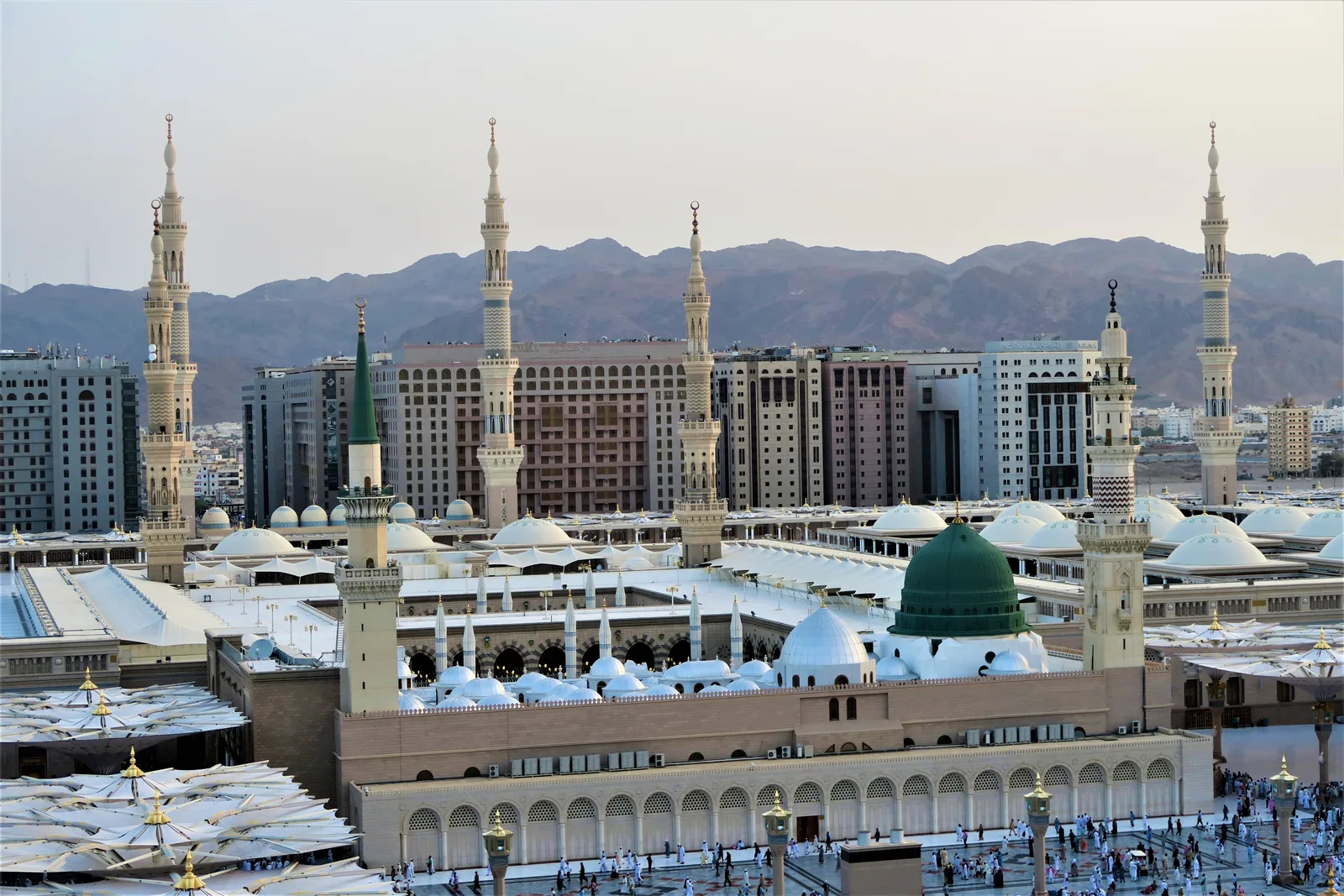
Madinah: plan around the purpose of your visit
Madinah is a city where the purpose of the journey shapes the itinerary. For many Muslim visitors, time at the Prophet's Mosque is the central reason to come. Historical places, museums and the route towards Quba can add context, but they should support that visit rather than turn it into a rushed sequence of stops. Someone considering work or a longer stay needs a different set of decisions about lawful residence, housing and everyday travel.
Begin with the access rules relevant to you, then choose accommodation and transport around the places you can visit. The name Medina in travel writing refers to the city listed as Madinah on VisaWand. Check the actual property and station names when booking, and keep the location of an airport arrival separate from the address of your hotel.
Choosing an area: match the address to the daily route
The central mosque area, the route south towards Quba and the eastern station-and-museum area offer different starting points for a stay. Choose among them according to the journeys you will actually make. For a short religious visit, a convenient pedestrian route may be the priority. For a museum-focused outing or a train connection, the eastern address deserves separate consideration. For a longer stay, the workplace or institution should guide the housing search.
Ask for the property's precise address and identify the entrance you will use, rather than relying only on a district label. Check the last part of the route after leaving a vehicle, especially if the group has luggage or mobility needs. Establish a clear meeting point for a return pickup and keep the property contact available. These details are particularly useful when several people arrive separately or when a booked experience ends at a different location from where it began.
Use the first day to test the routes you expect to repeat. Notice where you can take a break, buy an ordinary meal and arrange transport. Keep the itinerary focused on a manageable part of the city each day; nearby on a map does not always mean convenient for every traveller's pace, access rules and appointments.
City access and mosque access are different decisions
The official Saudi tourist eVisa terms state that non-Muslims may not enter the Prophet's Mosque and its premises in Madinah. Do not interpret permission to enter Saudi Arabia as permission to enter every religious site. Establish the boundaries relevant to your proposed visit and follow the instructions at the site. An accommodation description or a sightseeing advertisement does not replace those rules.
For Muslim visitors, distinguish an ordinary mosque visit from a particular booked experience such as prayer in the Rawdah. Arrange the current required permission through the official service and build the rest of the day around the appointment actually issued. Avoid treating a hoped-for slot as a confirmed part of the itinerary. Leave time for arrival, finding the appropriate entrance and following the current arrangements for your group.
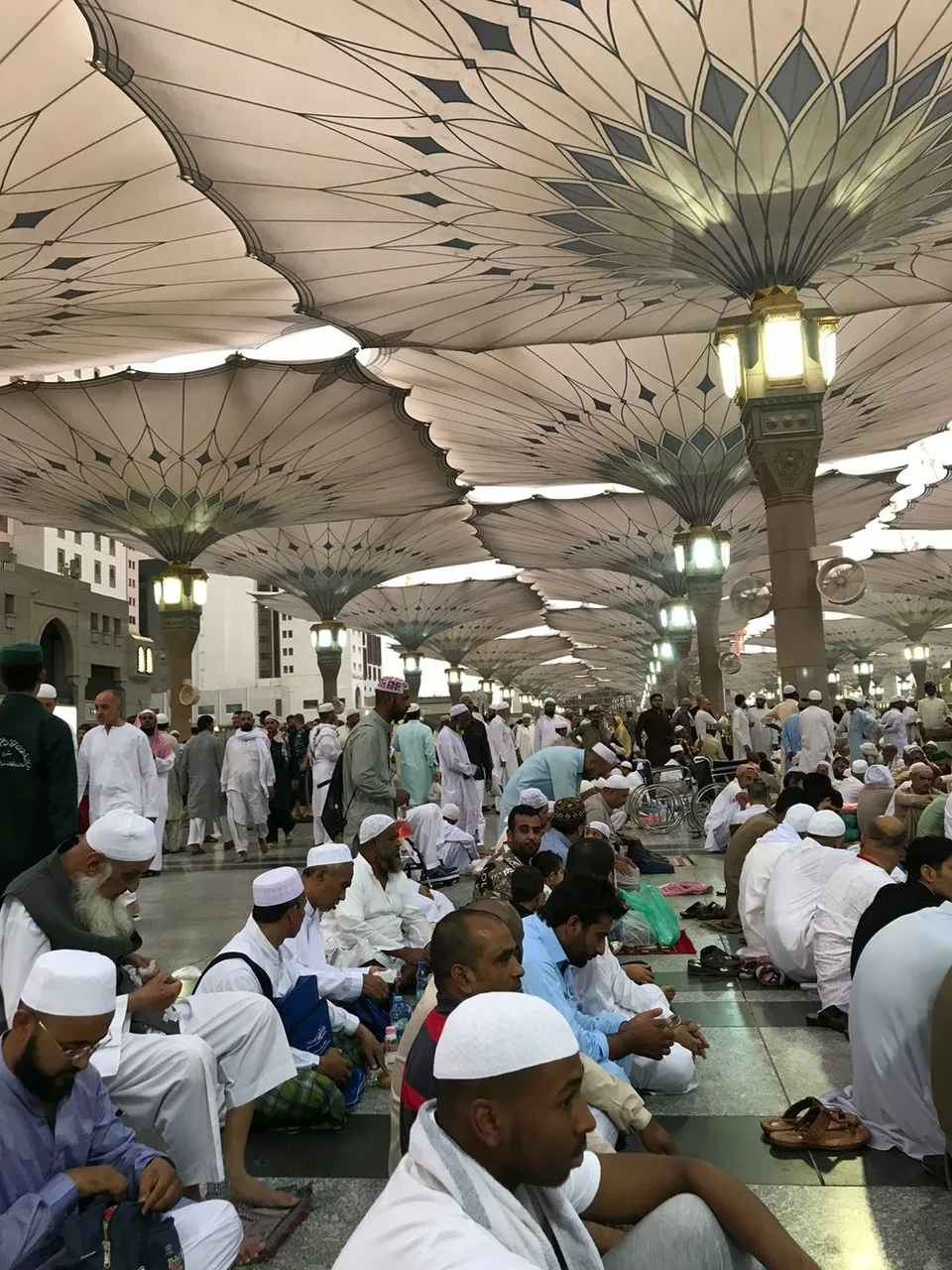
Quba walking trail: choose a comfortable part of the route
The official Madinah tourism information describes a pedestrian trail connecting the Prophet's Mosque with Quba Mosque to the south. Shops, restaurants, food stalls and seating make it a route that can be explored in stages rather than only as a point-to-point journey. Decide how far you want to walk and how you will return before setting off.
Treat the walk as part of the day's programme, with weather and mobility in mind. A pedestrian route does not establish that every visitor can comfortably complete it in one outing, or override restrictions at its religious endpoints. Choose a manageable section, take breaks and arrange transport for the return if that better suits the group.
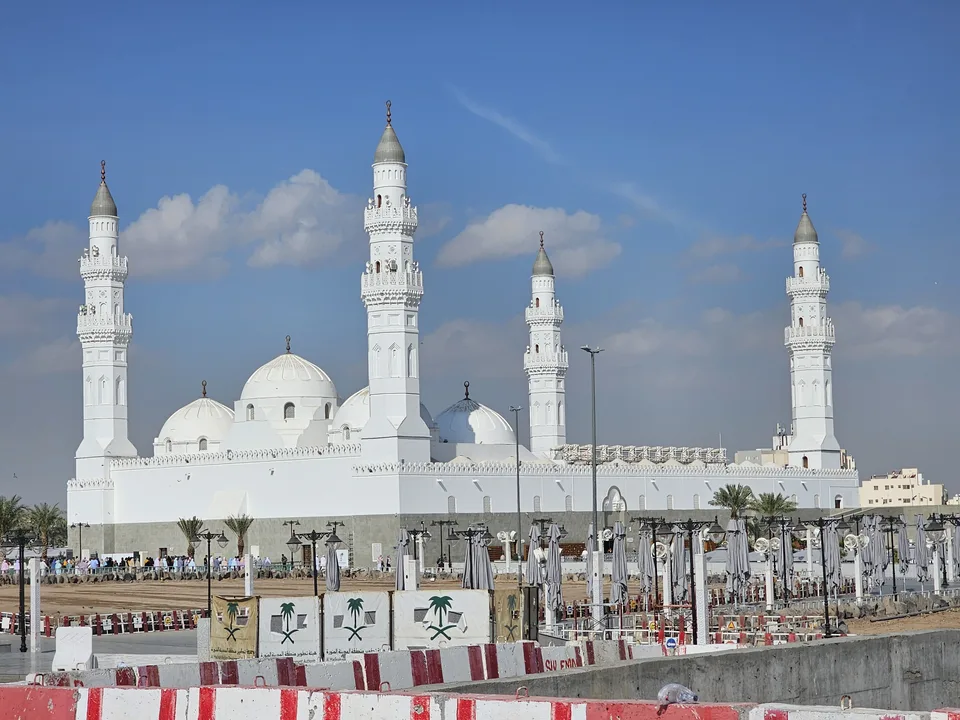
Airport arrivals: check the destination and vehicle capacity
Prince Mohammad Bin Abdulaziz International Airport provides an official ground-transport overview covering taxis, car rental, app-based options and a shuttle connection towards the Prophet's Mosque. Compare the complete journey to your accommodation, including the final walk or pickup point, rather than choosing only by the first advertised fare.
The airport's taxi information directs passengers to licensed vehicles outside the airport building and identifies the main terminal as the service location. Its posted table lists the central Haram area at SAR75 for the five-passenger category and SAR90 for the seven-passenger category. Confirm the fare displayed for your actual destination and the vehicle's luggage capacity before boarding; passenger capacity alone does not establish room for every suitcase.
Allow time for immigration, baggage collection and finding the agreed pickup. A scheduled landing time is not the time you will leave the terminal. If arriving with someone who needs assistance, establish the arrangement in advance and tell the property how you expect to reach it. Check current shuttle details directly before relying on a particular timetable, since the airport overview does not itself provide a complete operating schedule.
Dar Al-Madinah: understand how the city changed
The official Dar Al-Madinah museum information describes a collection concerned with the Prophet's biography and the city's architectural and cultural heritage. Models and images help explain places whose appearance has changed, giving a museum visit a different purpose from seeing a surviving monument outdoors. It is a useful option when you want more historical context rather than another brief stop for photographs.
The tourism page places the museum in Knowledge Economic City, opposite the Haramain station in eastern Madinah. This makes its location important when planning the journey: it should not be assumed to sit beside the central mosque. If combining a museum visit with a train arrival or departure, confirm the museum's current opening arrangements and leave enough time for the station procedures. A nearby location does not make a tightly timed connection reliable.
The published visitor information lists opening from 11am to 6pm except Friday and ticket sales at the gate. Confirm those arrangements for your dates and obtain the current admission charge directly; the page does not provide a price to use as a dependable budget figure. Ask about the language of interpretation or a guided visit if that will determine how useful the collection is to your group.
Uhud: a historical visit that deserves context
The official Uhud tour information presents the area as a place connected with episodes in the Prophet's life and the battle remembered by Muslim visitors. Approach it as a historical and religious setting, with time to understand the landscape and the significance of the visit. A sequence of short stops without interpretation can leave you with photographs but little sense of what they show.
Check the route and access arrangements of any tour before booking, including the transport provided and the walking involved. A destination description does not establish that every part of a mountain or burial area is open to unrestricted exploration. Follow the local arrangements, respect worshippers and other visitors, and choose a manageable outing for the weather and the group's mobility.
Accommodation: compare the walk, the room and the total charge
Choose accommodation around the purpose of the stay. For a Muslim visitor spending much of the day at the Prophet's Mosque, the actual walking route to the relevant entrance matters more than a broad claim that a hotel is near the mosque. Ask about the route, crossings and access arrangements, particularly if travelling with children or someone who needs assistance. A straight-line distance does not describe the complete journey.
For museum visits, meetings or a longer stay, compare the address with the places you need to reach regularly. Eastern Madinah's station and museum area creates a different travel pattern from a central hotel. Decide whether the convenience for one part of the trip outweighs the extra transport needed for another.
Compare the complete price for your dates, including taxes, meals, room occupancy and cancellation conditions. Establish check-in arrangements for an early or late arrival and whether luggage can be stored. If booking several rooms, confirm the proposed room types and any request for connecting rooms directly. A request is not a guarantee unless the property confirms it.
For longer stays, ask about laundry, cooking facilities, workspace and the charges attached to them. Check the lift, bathroom and entrance arrangements when accessibility matters. Keep the property's written answers with the booking so that the decision rests on the accommodation you will receive rather than only promotional photographs.
Haramain journeys: plan the station and the luggage together
Treat an intercity train journey as more than the time spent aboard. Check the departure station, the current ticket conditions and the onward route at the destination before booking. Madinah's Dar Al-Madinah museum is described by the official tourism site as opposite the Haramain station in Knowledge Economic City; the station should therefore be planned separately from a central mosque-area hotel.
Read the baggage conditions for the Haramain service itself. Rules published for another Saudi railway route should not be assumed to apply. Measure luggage before travel and establish what can accompany you aboard, particularly if your airline allowance encouraged packing a large suitcase. Keep the items needed for the journey accessible without opening every bag at the station.
Saudi Post's Haramain luggage service offers a separate option through station branches, with destination-station collection or delivery to a residence described on its official page. Confirm the charge, collection procedure and delivery time before using it. The availability of a logistics service does not establish that luggage will arrive with your train. Retain identification, essential medicines and other items you need immediately, and keep the service receipt until collection is complete.
Renting for a longer stay: understand the agreement
For a residential move, use Ejar's official rental-contract guidance to understand the documentation process. Its service describes contracts entered through a real estate office, followed by review and electronic certification by the parties. The published tenant requirements include valid identification and a mobile number registered in Absher, and its eligibility description refers to citizens and resident individuals. Do not assume that a tourist can complete the same process simply by finding a flat online.
Review the property details, duration, financial terms and conditions before certifying anything. The published Ejar service fee is SAR125 per year; it is a contract-service charge, not the rent, deposit or complete cost of obtaining a home. Establish who handles maintenance, which charges are included and how payments will be recorded. Ask for clarification of a term you do not understand and retain the complete agreement. Ejar's contract procedure supports a rental arrangement; it does not grant an immigration status or permission to work.
Inspect the home against the ordinary day you expect to live. Test the route to the workplace or institution, examine cooling and ventilation, and ask about internet, water, laundry and storage. A central visitor hotel and a practical household address solve different problems. Temporary accommodation can provide time to inspect longer-term options without committing solely from photographs.
Food and dates: compare the product and the meal
Ajwa dates feature in Madinah's official visitor information as a gift and hospitality option associated with the city's farms. When buying dates, compare the variety, weight, packing date and storage instructions rather than relying on a souvenir label alone. Ask for the complete price of the package you want, and check whether it suits the journey home. A seasonal promotion on a tourism page should not be assumed to remain available throughout the year.
For everyday meals, read the actual menu and establish the ingredients relevant to your dietary needs. Choose a stop that fits the day's route, especially when you have a confirmed religious appointment or a train departure. Allow enough time to order and eat comfortably rather than fitting a meal into an uncertain gap between transfers.
If taking food abroad, check the destination country's import rules before purchasing a large quantity. Packaging that looks suitable for travel is not itself evidence that the product can be imported. Keep food purchases separate from claims of medical benefit; a traditional association or a shop description does not establish a treatment effect.
Budget for the dates and the journeys you choose
Start with accommodation for the actual nights, then add airport transport, intercity travel, local journeys, meals and paid experiences. This makes the effect of each decision visible. A central room that reduces the need for vehicles may produce a different total from a cheaper room requiring several transfers, but compare the actual charges rather than assuming one arrangement always wins.
Use the airport's posted taxi categories as a planning reference and confirm the destination fare at pickup. For rail, compare the current ticket conditions and any separate luggage service before payment. For museums, obtain the current admission charge directly when the official visitor page does not publish one. Keep an allowance for a changed plan without turning that contingency into a claim about a fixed daily cost for every traveller.
Tourist visits, employment and study need separate permission
The Saudi tourist eVisa terms permit tourism and Umrah and explicitly prohibit taking paid employment during the visit. Check the current eligibility and the conditions attached to your own grant before booking. A successful application does not make every proposed activity lawful, and the permission for a visit should not be treated as a route to permanent residence.
For employment, use the Ministry of Human Resources and Social Development's guidance for non-Saudi workers with the prospective employer. Establish the required work and residence arrangements, the written contract and the occupation covered before relocating. Do not begin paid work on the assumption that a tourist visa can be sorted out later.
For formal study, consult the Ministry of Education's educational-visa information and the admitting institution. Admission, financial support and the appropriate visa process need to be considered together. Confirm the current conditions for the programme and any accompanying family members rather than assuming that every educational route has identical rights or duration. Keep a longer-term housing commitment aligned with the permission actually obtained.
A practical first three days
For a Muslim visitor, make the first day primarily about settling into the accommodation and understanding the route to the Prophet's Mosque. Keep any confirmed Rawdah appointment protected, with sufficient time for the current entrance and checking arrangements. Do not fill the arrival day with distant stops before you know how tired the group will be after travel.
Use the second day for the Quba route, choosing the walking distance that suits the weather and the group. Include a meal or a break, and decide the return transport before starting. A planned route can still be shortened; completing every step is less important than keeping the day comfortable and the main purpose of the visit intact.
Give the third day to a historical outing such as Uhud or to Dar Al-Madinah Museum, depending on access, opening arrangements and the kind of interpretation you want. Avoid squeezing both into a departure day with a tight train or flight connection. If using the museum near the eastern station, account separately for the station's arrival requirements and any luggage arrangement.
Non-Muslim visitors need an itinerary built around permitted locations and confirmed access, excluding the Prophet's Mosque and its premises. Verify the proposed places directly before booking a package. A tour's title alone does not establish that every stop is appropriate for every traveller.
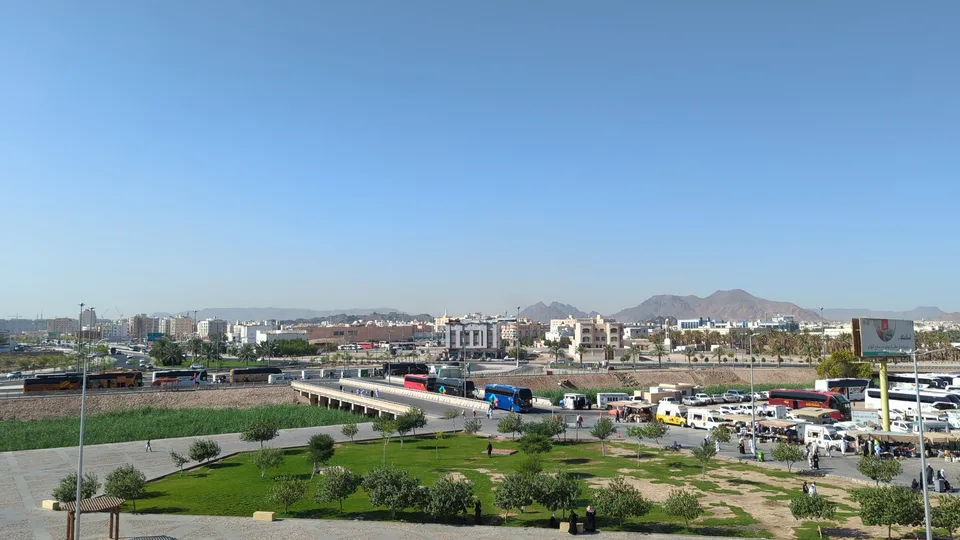
Household needs: establish the services before moving
For a longer stay, confirm the address, utility arrangements and internet service before taking possession of a home. Ask which bills are individual, which are collected through the property and how maintenance requests are handled. Test mobile coverage in the rooms where you expect to work or study. Keep an inventory of supplied furniture and appliances, with the agreed condition recorded.
Check healthcare and insurance arrangements with the employer, institution or insurer relevant to your stay. Establish the providers covered, how appointments are made and whether payment is direct or reimbursed. A nearby hospital does not establish insurance eligibility or the charge for a particular service. Families should confirm school admission requirements, transport and fees directly with the institution before making a housing decision around it.
Choosing the season: let the forecast shape the day
Use the National Center for Meteorology's Madinah forecasts when deciding how to arrange outdoor visits. Check the forecast for the city itself, rather than a regional observation from a coastal or upland location. A current temperature is useful for the day's plan but should not be presented as a year-round climate average.
Put longer walks into the most suitable part of the day and leave an indoor alternative. The Quba trail, Uhud and a museum visit make different demands on the group; rearrange them around the actual conditions instead of expecting one timetable to work in every season. For a religious visit, keep the confirmed appointment and prayer arrangements central to that decision.
Compare accommodation for your actual dates, including the cancellation terms, and verify any special service or seasonal programme directly. A seasonal event advertised in an undated listing is not evidence that it will run during your visit. Book a programme around confirmed arrangements rather than adding an attractive but unverified event to the itinerary.
Rawdah appointments: use the official service
The official Nusuk platform identifies a service for booking an appointment to visit the Rawdah inside the Prophet's Mosque and directs visitors to the Nusuk app. Use that service for the permission required for your visit, and read the instructions attached to the appointment actually issued. The availability of a service page is not a promise that a particular date or time will be available.
Keep the booking details accessible and ensure that the identification and visitor information match your travel documents. Before leaving the accommodation, check the current appointment, entrance instructions and any arrangements relevant to your group. If the planned slot is unavailable, rearrange the rest of the visit around what is confirmed rather than purchasing a supposed guarantee from an unverified seller.
Another destination: make it a separate plan
For Muslim visitors continuing to Makkah, VisaWand's completed Makkah guide provides a separate starting point for the next city's arrangements. Check the current permissions for the purpose and dates of that journey, especially where pilgrimage rules apply. A Madinah hotel booking or a tourist visa should not be treated as proof of permission for every onward activity.
Use the Saudi Arabia country guide and Saudi Arabia destination page for broader planning. The country location directory helps identify other places, while consultant profiles let you compare the stated scope of individual advice. Confirm which pages contain completed guides and which provide directory information before relying on them for an itinerary.
Official planning resources
Reviewed 14 October 2026. Use the official resources linked throughout this guide for admission, transport, housing and immigration decisions. Prices, services and rules can change; confirm the details relevant to your dates. Photography illustrates the locations and is not a live view.
View all official resources
- Official Saudi eVisa conditions and restricted mosque access
- Official Quba walking trail information
- Madinah airport ground transport overview
- Madinah airport licensed taxi fares
- Official Dar Al-Madinah Museum visitor information
- Official Uhud historical tour information
- Saudi Post Haramain luggage service
- Ejar residential rental contract requirements
- Official Madinah Ajwa date visitor information
- HRSD non-Saudi employment requirements
- Ministry of Education study visa pathways
- National Center for Meteorology Madinah forecasts
- Official Nusuk Rawdah appointment service
Plan the next part of your journey
Explore the Saudi Arabia guide, browse other cities or compare consultants for your travel and relocation questions.