Visa
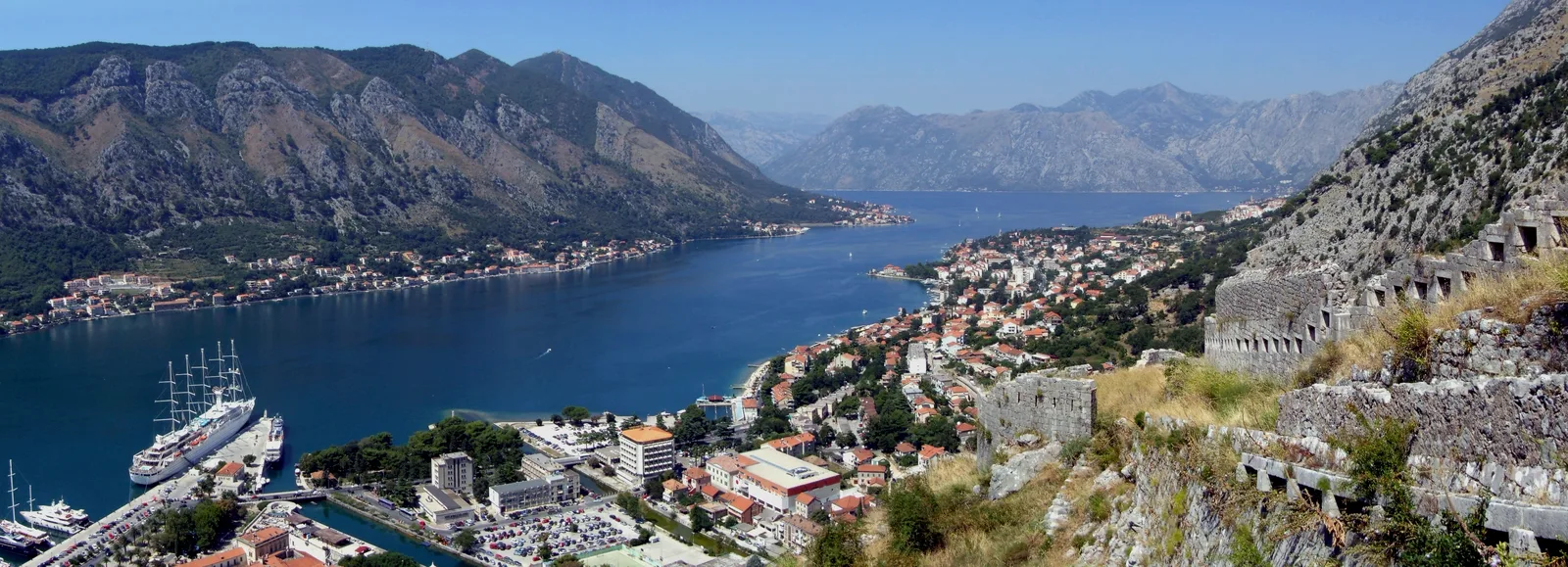
Give Kotor time beyond the first viewpoint
Kotor makes its strongest impression where the town meets the mountain: roofs gathered behind stone walls, a harbour immediately outside, and fortifications climbing a slope that looks far steeper from below. Yet the view is only the beginning. Churches, maritime collections and the settlements around the bay give a short stay considerably more substance than a photograph stop.
Allow three nights if you want the old town, a climb and an unhurried bay excursion. Two full days can work with selective sightseeing. Someone considering a move should stay longer and test an ordinary working week. The Kotor Tourist Organisation is a useful starting point for local information; this guide focuses on Kotor town and identifies excursions to other settlements separately.
Understand the harbour and its history
The UNESCO Natural and Culturo-Historical Region of Kotor includes a landscape of settlements and mountains around the inner bay, rather than simply one enclosed town. Medieval maritime commerce helped support distinctive traditions of architecture, painting and craftsmanship. Kotor’s relationship with neighbouring ports matters as much as the monuments within its gates.
The 1979 earthquake seriously damaged the area’s historic buildings. Restoration forms an essential part of the story behind what visitors see today. Look at the town as a place repeatedly maintained and rebuilt, rather than an untouched medieval exhibit. Its churches, domestic buildings and waterfront belong to a living community, with deliveries, worship and household routines continuing alongside tourism.
Choose a base by the journey you will make
Inside the old town, accommodation puts the main sights close together. Before booking, ask about stairs, lifts, luggage access and the precise position above restaurants or evening venues. A romantic upper-floor room and an easy arrival with a pushchair are different requirements. Request photographs of the entrance if access is important.
Dobrota extends along the bay beyond the town and deserves an address-level comparison: a room near the old town and one much farther along the coast create different daily journeys. Škaljari is another area to investigate for practical access. Prčanj, across the bay, offers a different waterfront setting but requires a considered transport plan. Avoid choosing from a map’s straight-line distance alone; check the actual road, walking route and bus connection.
Explore the old town through its squares
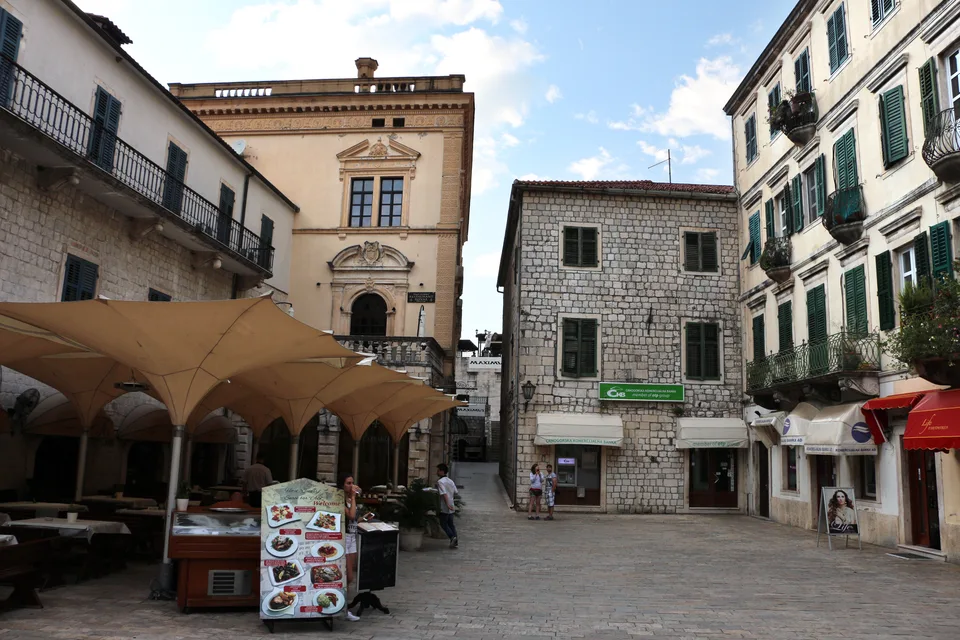
Start at the Sea Gate, then follow the sequence of squares and connecting lanes rather than trying to cover every alley immediately. Arms Square is a useful point of orientation. Notice the change in scale between its open space and the narrower passages leading farther into town. A short first circuit helps you find your accommodation again after dinner.
The municipal monument guide identifies three town gates and the architectural layers behind the palaces. At Flour Square, look for the seventeenth-century Pima Palace. Read façades as well as signs: balconies, portals and family emblems explain how merchant wealth shaped these public spaces. An early walk also gives you time to return to a church or museum after checking its visiting arrangements.
Visit Saint Tryphon and leave room for other churches
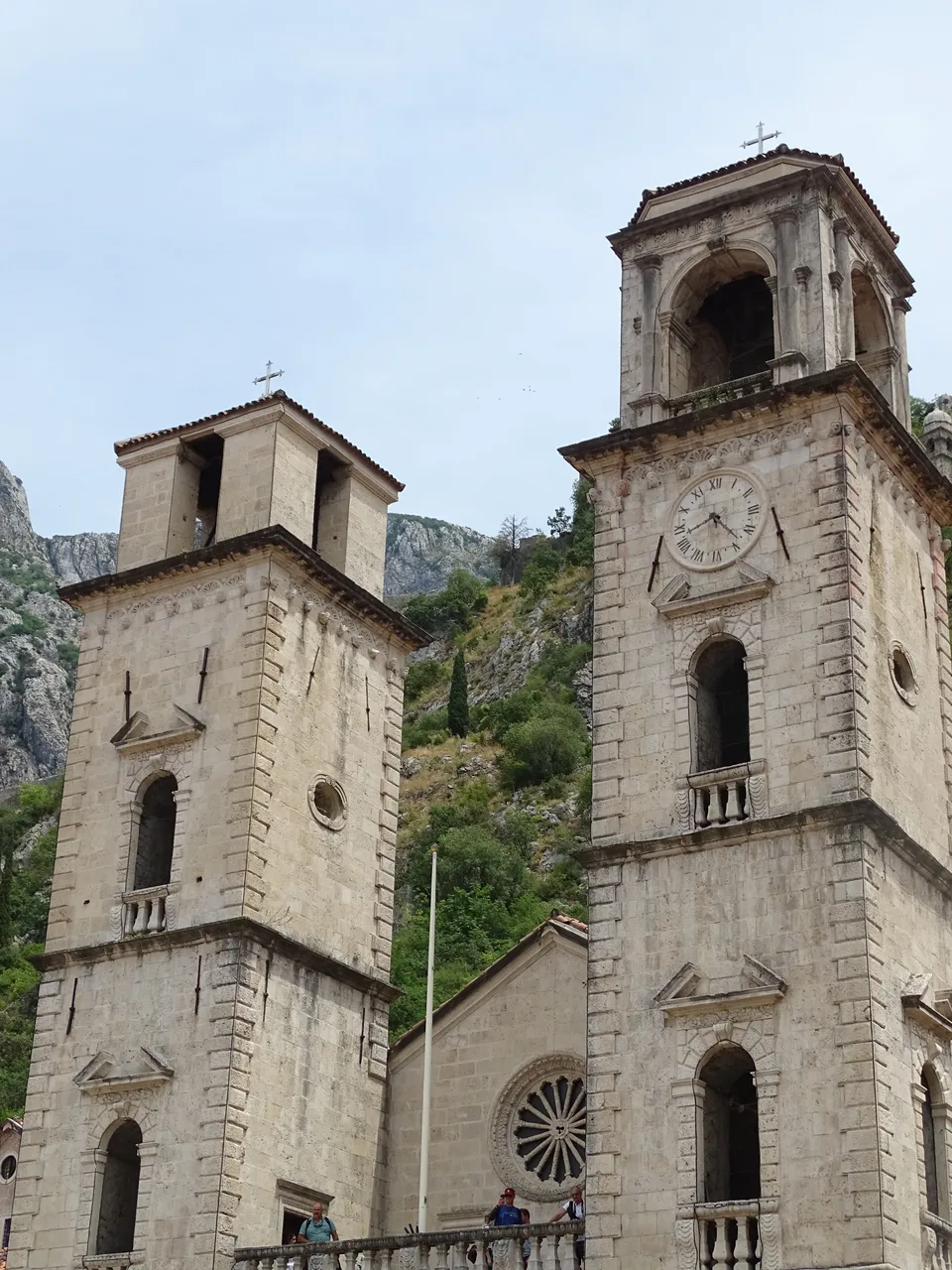
Saint Tryphon’s Cathedral was consecrated in 1166, although earthquakes and rebuilding changed its appearance. Its treasury and decoration reward closer attention than a quick photograph of the towers. Confirm the current admission and visitor access locally; worship and sightseeing have different requirements. Dress appropriately and respect any photography restrictions.
The town’s religious history also includes Saint Luke’s, built in 1195, and Saint Nicholas’s, completed in 1909. Seeing buildings from different periods avoids reducing Kotor to a single architectural style. Choose one or two interiors that interest you, rather than interrupting every service or treating each church as another item to collect. Some details are best understood with a properly qualified local guide.
Treat the fortress as a substantial climb
The hillside ascent is a separate commitment from walking around the lower town. Wear footwear with grip, carry water and allow time to come down without rushing. Heat, rain and your comfort on uneven steps matter more than matching someone else’s advertised completion time. Turning back at a lower viewpoint can still make a worthwhile outing.
The municipality’s published admission notice gives an individual fee of €15. Check the official City Walls website for current arrangements: staffed access is listed as 07:00–20:00 in May–September, 08:00–18:00 in March–April, and 08:00–17:00 in October–November. In December–February the toll booths are closed and climbing is at the visitor’s own risk. The operator prohibits remaining on or climbing the walls after 22:00 throughout the year. Use the official entrances and finish in daylight.
Give the Maritime Museum a proper hour
The Maritime Museum of Montenegro provides a useful counterweight to the fortress panorama. Allow roughly an hour as a planning choice, with more time if shipping history interests you. Combine it with a slower walk through the surrounding streets rather than squeezing it into the final minutes before a bus departure.
Its published adult ticket is €5. The museum lists weekday visiting hours of 09:00–15:00 from October to May and 09:00–18:00 from May to October, with 09:00–13:00 on Saturdays, Sundays and holidays. Confirm arrangements around the seasonal changeover. The institution requires permission for cameras and video cameras; an admission ticket should not be treated as automatic permission to photograph the displays.
Look beyond the best-known museum
The municipal museum organisation offers a different set of visits from the Maritime Museum. Its current local-language admission and opening page lists a €6 combined ticket for the Gallery of Solidarity, the Lapidarium at Saint Michael’s and Saint Paul’s Church. Check which venues will actually be open before choosing a combined ticket.
Winter visiting can require advance arrangements at Saint Michael’s and Saint Paul’s. The published schedules also contain differing statements about the gallery’s Monday access, so ask the organisation directly if Monday is your only available day. This is a good example of why a pass is useful only when it matches both your interests and the opening calendar. Keep an indoor alternative available without assuming every museum operates daily.
Make Dobrota more than a bedroom address
Dobrota’s waterfront offers another way to understand the bay, away from a programme centred entirely on the gates and fortress. Plan a walk that suits your starting address, and check the route before committing to a long return on foot. Leave space for a café stop rather than setting a distance target.
The university’s Aquarium Boka adds a focused indoor visit at the Institute of Marine Biology. Its displays connect the wider Mediterranean with the Adriatic and the Bay of Kotor. The standard published adult admission is €10; reduced card prices have separate conditions. The current opening table lists Wednesday–Sunday, 10:00–17:00, with Monday and Tuesday closed. Recheck it for your dates rather than assuming a summer schedule continues all year.
Separate the cable car from the town-wall climb
The Kotor Cable Car is another outing, with a road journey to its lower station. Consult the operator’s arrival and shuttle information before selecting your ticket. It is especially useful when you want a mountain panorama without tackling the fortress steps, but transport, weather and the activities at the top still need planning.
At this review, the operator’s postseason ticket page advertises €20 for an adult return and €12 one way. It lists opening from 09:00, or 10:30 on Tuesdays, with the last ascent at 18:30 and last descent at 19:00. These are current seasonal arrangements, not a promise for next summer. A return ticket is the straightforward choice unless you have deliberately arranged onward travel. Other attractions at the complex can cost extra.
Take a measured approach to Perast and the islands
Perast makes a coherent excursion of its own. Give it time on foot before deciding whether to add a boat crossing. Ask exactly where a trip lands, how long you will have ashore, whether church or museum admission is included and how the return works. A cheap outward fare is unhelpful without a clear return arrangement.
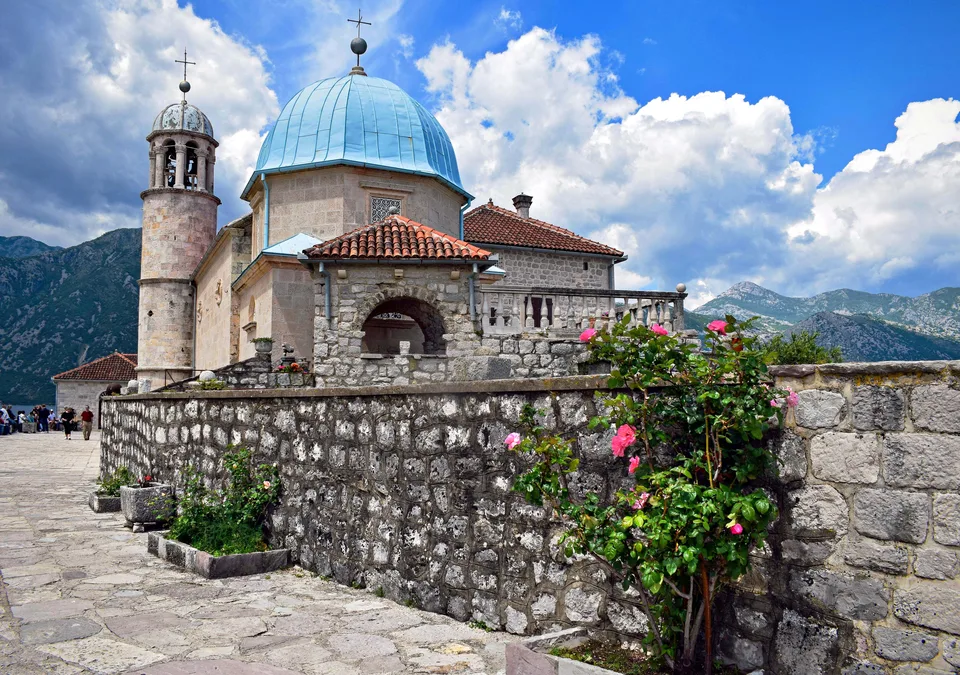
The tourism organisation explains the distinction between Our Lady of the Rocks and Saint George: the former is an artificial island with a church and museum, while the latter is a natural island with a religious and burial history. Do not assume that both have the same landing arrangements. Choose a licensed operator, take weather advice seriously and avoid a timetable that leaves no margin for the return journey to Kotor.
Plan food around the meal, not the view alone
Use a waterfront terrace for the setting when that is what you want, but read the menu before sitting down. Check whether fish is priced by portion or weight, what accompaniments cost and whether a quoted amount covers the entire dish. Ask about ingredients directly if you have an allergy or a strict dietary requirement.
For regional context, the national tourism organisation’s Montenegrin food guide introduces Njeguški pršut and cheeses among the country’s specialities. These belong to a wider regional food tradition, rather than being inventions of Kotor’s old town. Balance restaurant meals with simpler lunches when you want to control spending. For edible souvenirs, ask where a product was made, check packaging and consider your destination’s food-import rules before buying.
Build a budget from the things you will actually use
Price the room first, then add airport transport, meals and selected admissions. The Kotor residence-tax page lists €1 per adult per night, €0.50 for ages 12–18 and an exemption for children under 12. Check whether your accommodation quote includes the charge and request an itemised bill. Other exemptions require appropriate evidence.
Keep an allowance for taxis if your accommodation or evening plans depend on them. Compare the total cost of a farther-out room with one you can reach conveniently on foot. Use current menus and date-specific accommodation quotes rather than an undated “average daily budget”. Before paying for a multi-attraction card, write down the places you will visit during its validity and compare the actual eligible admissions. Unused benefits do not create a saving.
For a concrete sightseeing allowance, the standard wall, Maritime Museum and aquarium admissions listed here total €30 for one adult. That is a selection of attractions, not a complete day’s budget: accommodation, transport, meals and any optional boat outing remain additional. Spread paid visits across your stay according to opening days and energy levels, rather than buying everything for the first morning.
Arrive with a transfer plan
Tivat is the nearby airport: the airport operator’s road information places Kotor about eight kilometres away. That proximity should not be translated into a guaranteed transfer time. Arrange a licensed taxi or confirmed transfer if you need an uncomplicated arrival, particularly with luggage. Establish the fare and meeting point in advance.
The tourism organisation’s visitor transport page also identifies Podgorica and Dubrovnik as options, with substantially longer road journeys. Dubrovnik adds an international border crossing. Compare the whole journey, including flight timing, transfer cost and border requirements, rather than selecting an airport from the airfare alone. If renting a car across the border, obtain explicit permission and the required insurance documentation from the rental company before travelling.
Use local buses with the correct route in mind
Kotor is manageable on foot when your activities are concentrated in the old town. Trips around the bay require more planning. The municipality’s public-transport page links local route information, including Blue Line services. Some files are dated or temporary; confirm the direction, stop and final useful return for the day you travel.
For longer journeys, use the Kotor bus station’s date-based timetable search. Check whether luggage or station charges are additional when buying a ticket. A local coastal service and an intercity departure should not be assumed to share identical boarding arrangements. Save your accommodation address and the name of your stop, and leave time to find the correct departure point before a connection that matters.
Make accessibility questions specific
If you use a wheelchair or have limited mobility, send your accommodation provider a short list of requirements before paying: the route from the drop-off point, thresholds, door widths, bathroom layout and the availability of a working lift. Ask an attraction about the particular rooms you want to visit, rather than accepting a general statement that the building is accessible.
Separate access to the lower town from access to the fortifications. Plan breaks and a convenient meeting point if members of your party choose different activities. For families, establish whether a museum permits pushchairs inside and whether a boat can safely accommodate your equipment. Written answers make it easier to compare options and resolve misunderstandings before arrival.
Choose the season and the day together
Late spring and early autumn are sensible periods to investigate for a sightseeing trip, particularly if climbing is central to your plans. The national tourism seasonal guide identifies July and August as the coast’s busiest visitor period. Avoid treating national temperature summaries as measurements for a particular Kotor street or hillside.
Cruise calls can affect the experience independently of the month. Consult the Port of Kotor’s planned arrivals for your dates, while remembering that schedules can change. An early walk or a later meal may suit you better on a busy day. For winter, confirm accommodation facilities and attraction access individually. Keep the cable car, boat trip and exposed climb flexible enough to move when conditions are unsuitable.
A realistic three-day first visit
On day one, orient yourself in the old town, visit the cathedral when access permits and give the Maritime Museum a proper slot. Leave the late afternoon for squares, coffee and a waterfront walk. This first day works well after an arrival that does not leave you ready for a strenuous climb.
On day two, choose the fortress ascent in suitable conditions, then take a slower lunch and explore Dobrota or the aquarium if open. Replace the climb with the cable car only after arranging the station transfer; trying to fit both into a tightly packed morning defeats the point.
On day three, make Perast the main outing, with an optional island crossing. Add another museum only if its hours and your return arrangements fit comfortably. With two days, keep the old town and choose between the bay excursion and a second major viewpoint.
Test a home through an ordinary week
A successful holiday does not establish whether a particular flat will work for daily life. Rent temporarily before committing to a longer contract, then test the route to work, food shops and essential appointments at the times you expect to use them. Compare a central address with an outer-bay alternative using actual journeys.
Ask explicitly whether a proposed tenancy covers the summer months and whether the monthly amount changes. Inspect heating, cooling, ventilation, hot water and signs of damp rather than relying on an attractive sea-view photograph. Record who pays utilities, internet and building charges, how deposits are returned and what notice is required. Obtain the landlord’s agreement to any address documentation needed for your immigration application. A holiday booking confirmation and a suitable longer-term tenancy serve different purposes.
Check commuting and household infrastructure before signing
Do the commute during a working day, with the transport you intend to use. Test the return after an evening shift or late class, not just the pleasant morning journey. A car-dependent address needs an actual parking arrangement; ask whether a claimed space is reserved, shared or merely usually available.
For remote work, test the connection inside the proposed home with a video call and a file upload. Ask who controls the broadband account, how faults are reported and whether mobile reception provides a realistic backup. Check laundry facilities, rubbish collection arrangements, deliveries and the walk back with groceries. These questions are more revealing than a furnished apartment’s list of appliances, especially when you are comparing homes viewed during a short reconnaissance trip.
Before moving in, record the inventory, meter readings and the condition of furniture with the landlord. Keep copies of the agreement and receipts in a form you can access independently. Establish an emergency contact for the property and how urgent repairs are authorised when the owner is away.
Locate healthcare and education by address
The municipal healthcare directory identifies the Kotor health centre and general hospital in Škaljari. Use it to locate services, then confirm appointments, payment and insurance arrangements directly. A nearby building does not establish your entitlement to publicly funded treatment. Bring documentation for continuing care and check the availability of essential prescriptions before moving.
Families can start with the municipal education directory, but should ask individual schools about places, enrolment documents and language support. For higher education, the University of Montenegro’s Maritime Faculty in Kotor provides current admissions information. Verify the programme language, recognition of previous qualifications, fees and teaching address. University admission, suitable accommodation and permission to reside are connected tasks, but each requires its own confirmation.
Distinguish visiting from working or settling
Start with the government’s Montenegro visa guidance for your nationality and travel document. Some passport holders have a longer visa-free allowance than people entering on the strength of a qualifying foreign visa or residence permit. Do not assume every visitor receives 90 days, or that a permission valid for Montenegro also covers neighbouring countries.
Visitor registration is separate from entry permission. The official registration guidance explains that visitors not using an accommodation provider’s registration service should register within 24 hours through the appropriate local channel. Ask your host for confirmation that registration has been completed.
For a move, consult temporary-residence requirements and the government’s employment-permit guidance. Local work normally requires the appropriate residence and work permission unless an exception applies. Study and family routes have their own evidence. The official digital-nomad guidance addresses electronic work for qualifying foreign businesses; a tourist stay is not a substitute. Seek current advice before committing money, and do not equate property ownership or a temporary permit with permanent residence.
Keep the wider bay and practical risks in perspective
For another day, consider Risan’s Roman mosaics alongside Perast’s museum. Their operator lists a €12 combined admission, with closures that need checking before departure. Alternatively, investigate Tivat or Prčanj as a different base rather than assuming every bay settlement offers the same access or atmosphere. VisaWand’s Montenegro country page provides wider destination context, while its Montenegro consultant listings help you investigate professional advice for an individual case.
The current FCDO safety guidance highlights summer road congestion, licensed taxis, mountain preparation and awareness of boats when swimming. Use marked paths, take local advice and keep essential belongings secure. In an emergency, call 112. The useful question for Kotor is how its compact historic centre and wider coastal journeys fit your plans: a few considered choices usually produce a better stay than trying to exhaust the entire bay.
Official planning resources
Reviewed 17 October 2026. Use the official resources linked throughout this guide for admission, transport, housing and immigration decisions. Prices, services and rules can change; confirm the details relevant to your dates. Photography illustrates the locations and is not a live view.
View all official resources
- Kotor Tourist Organisation
- UNESCO: Natural and Culturo-Historical Region of Kotor
- Kotor municipal monument guide
- Municipal wall admission notice
- Municipal Kotor City Walls visitor information
- Maritime Museum: admission and opening
- Kotor municipal museums: current admission and schedules
- Aquarium Boka at the University of Montenegro
- Aquarium Boka admission
- Aquarium Boka current opening hours
- Cable car station arrival and shuttle options
- Kotor Cable Car: postseason tickets
- Kotor tourism: Our Lady of the Rocks and St George
- Montenegro National Tourism Organisation: regional food
- Kotor residence tax and registration
- Tivat Airport road connections
- Kotor visitor transport and airport information
- Municipal local transport information
- Kotor bus station timetable search
- National tourism seasonal planning
- Port of Kotor planned cruise arrivals
- Kotor municipal healthcare directory
- Kotor municipal education directory
- University of Montenegro Maritime Faculty Kotor
- Montenegro visas and entry conditions
- Official entry and visitor registration guidance
- Temporary residence application categories
- Work and seasonal employment permits
- Government digital nomad residence guidance
- FCDO Montenegro practical safety advice
Plan the next part of your journey
Explore the Montenegro guide, browse other cities or compare consultants for your travel and relocation questions.