Visa
Make room for the capital between island journeys
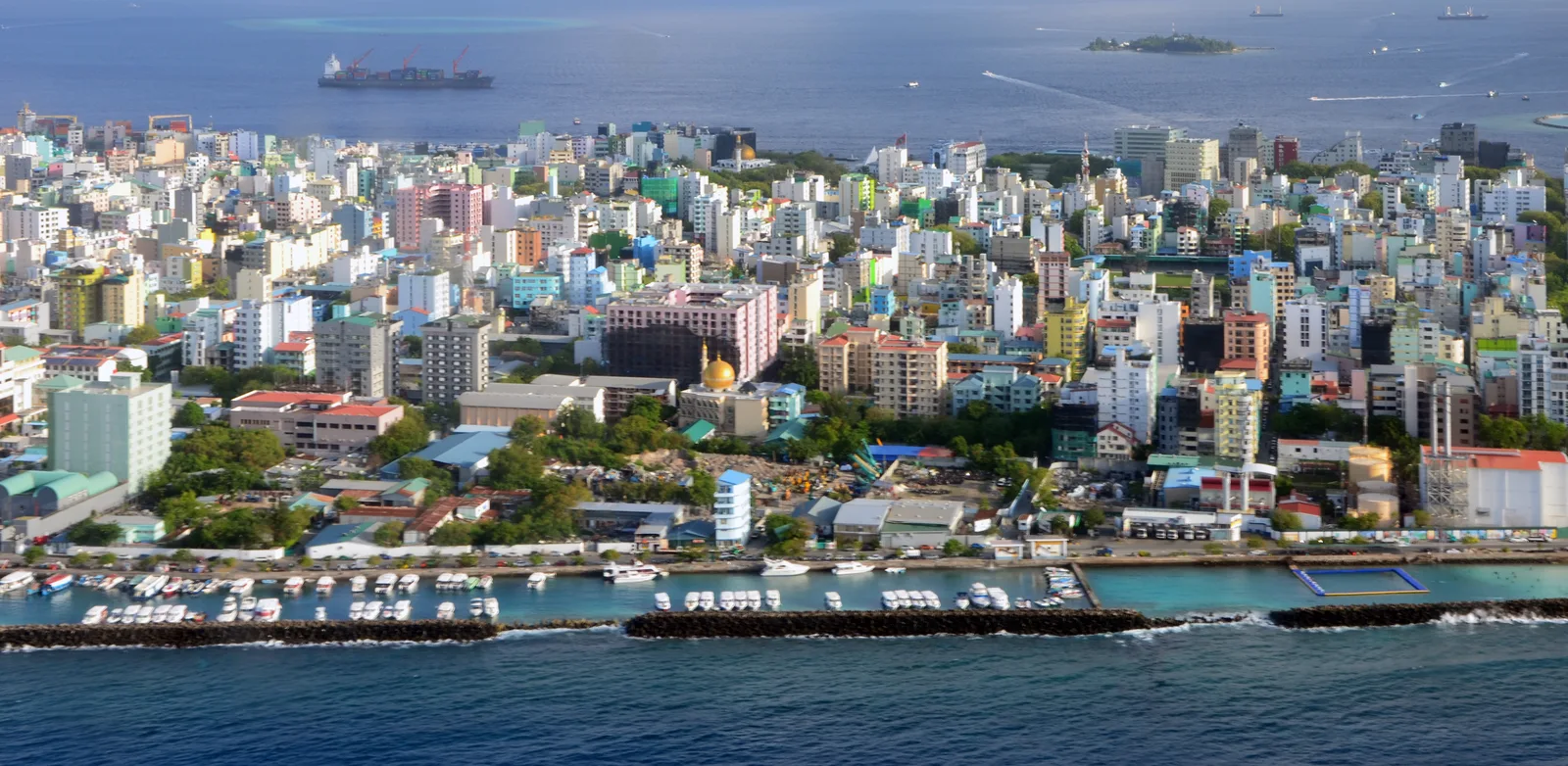
Malé rewards a traveller who wants to understand the Maldives beyond a resort photograph. Buildings crowd the waterfront, boats connect everyday life across the sea, and a short walk can move from a market counter to a centuries-old religious site. It is a capital with work to do, rather than a beach resort enlarged into a city. Come for history, food and the practical experience of an island society’s urban centre.
One full day gives a useful introduction. Two nights make it easier to explore without turning every pause into a calculation about the next transfer. A longer stay makes sense for particular interests, appointments or research into living here; it should not be chosen simply because the capital lies close to the international airport.
Start with VisaWand’s Maldives country guide for the national framework. This guide concentrates on Malé and the decisions around it: which island to sleep on, how to reach the right terminal, what a room quote includes and how to visit respectfully. Those choices matter more than attempting to collect every landmark before returning to the airport.
Get the three island names straight
Malé is the historic capital island. Hulhulé is the airport island. Hulhumalé is the neighbouring planned urban development, with homes, services and visitor accommodation. A booking described as being in the “Malé area” may refer to different places, so check the complete address and map pin before paying. A sea view does not establish that the hotel is beside your intended departure point.
The airport’s transport guide confirms road-based connections between Malé, Hulhumalé and Velana International Airport, alongside boat transfers to other islands. These are different journeys. Do not assume an airport arrival means you have reached central Malé, or that a city hotel includes the onward crossing to a resort.
For a move, compare the actual home and workplace rather than two island names. The Hulhumalé land-use plan helps explain the planned residential, commercial and other zones. It describes an urban framework, not a guarantee that every proposed facility is operating. Likewise, development capacity and old location-database populations should not be presented as the city’s current census total.
Begin with the old mosque and its craftsmanship
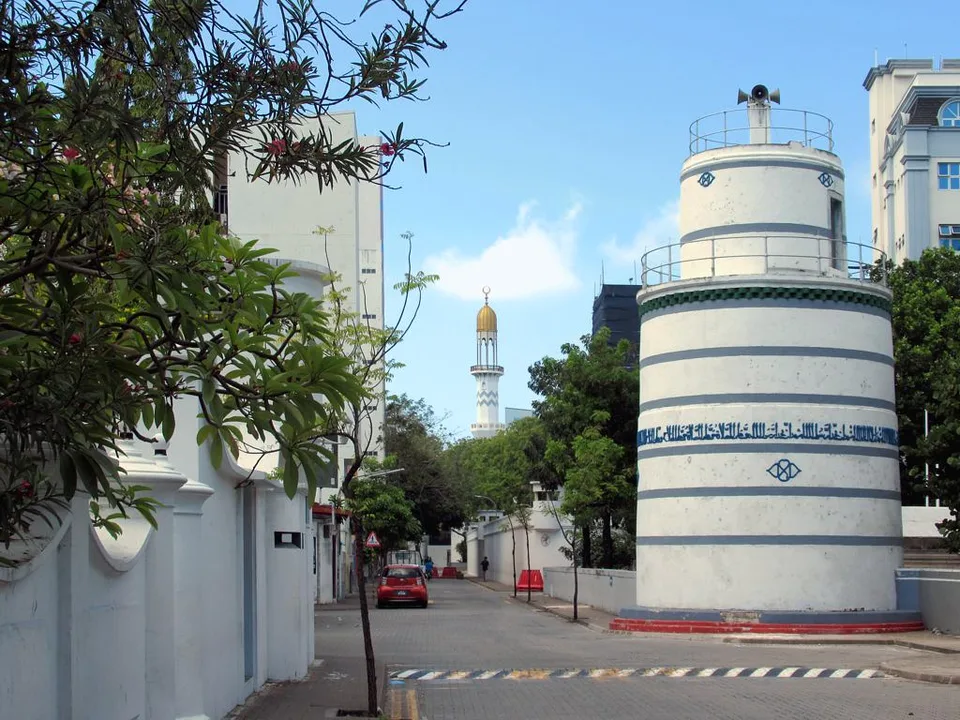
Hukuru Miskiy, the Old Friday Mosque, offers a close encounter with the materials and skills that shaped Maldivian architecture. Visit Maldives’ heritage account dates the mosque to 1658 and the adjacent round minaret to 1675. It describes interlocking coral blocks, carved surfaces, timber work and lacquer decoration. These are details worth looking at slowly, rather than treating the stop as another exterior photograph.
Be precise about its international status. UNESCO includes Malé’s Friday Mosque within the Coral Stone Mosques of Maldives Tentative List entry. A tentative listing is not inscription on the World Heritage List. Some tourism descriptions blur that distinction, so the UNESCO record is the appropriate reference.
This remains a religious place. Ask about visitor permission, dress and photography before entering any part of the complex, and respect worship rather than planning around an assumed opening schedule. A guide may help explain the craftsmanship and historical setting; confirm what the visit includes. If access is unavailable, allow the exterior and the surrounding streets to remain worthwhile instead of pressing for an exception.
Give the northern centre a measured morning
The tourism board’s capital-city overview places Republic Square near the northern shore and the Islamic Centre beside it. The centre opened in 1984, giving the area a different architectural expression from the older coral-stone mosque. Viewing the two within the same outing makes the city’s layers easier to appreciate without requiring a long journey between distant districts.
Choose a small group of stops, then leave time to understand what you see. Ask before photographing people, avoid obstructing entrances and take your cue from staff or worshippers around religious buildings. A modestly dressed visitor who has checked access can enjoy the morning without assuming every public-looking doorway is a tourist entrance.
Nearby Sultan Park occupies former royal-palace grounds, while the National Museum adds another possibility for exploring the country’s past. The museum first opened in 1952 and a new museum building opened in 2010. Reliable current ticket and opening details were not established for this guide, so confirm them directly before making a museum visit the anchor of a short layover. Keep an alternative walk and café stop available.
See the markets without interrupting their work
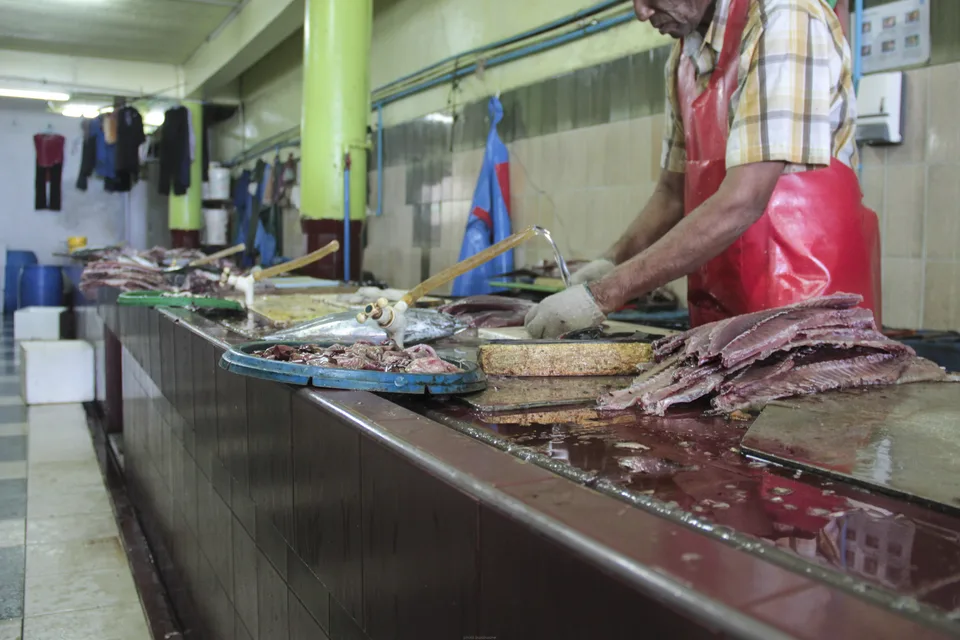
Visit Maldives’ destination guide to Malé locates the Fish Market along the northern waterfront and the Local Market a block to its west. The former connects the harbour with seafood trading; the latter offers produce from the islands alongside imported goods. Together, they give a more tangible sense of everyday supply than another hour browsing souvenir shelves.
At the fish market, watch from a position that leaves workers room to lift, cut and serve. The scene is a workplace, with wet surfaces and sharp equipment, rather than a demonstration arranged for visitors. Ask before taking a close photograph of somebody. If the activity or smell does not suit your party, a brief look is enough; nobody needs to stay merely to complete a checklist.
In the produce market, ask what is seasonal and how an unfamiliar ingredient is prepared. Buy quantities you can use and check whether your accommodation has somewhere suitable to store them. If you plan to carry food onward, investigate the next destination’s import requirements before purchasing. A sealed packet or a market receipt does not establish that a product may cross a border.
Use meals to explore Maldivian food
The tourism board’s introduction to Maldivian cuisine explains the central roles of fish and coconut. Mas huni combines tuna with grated coconut, onion, chilli and lime, typically eaten with roshi flatbread at breakfast. Garudhiya is a fish soup served with rice and accompaniments. Hedhikaa, or short eats, offer smaller savoury choices around tea, including fish cakes and filled pastries.
Use those names to begin a conversation with a café rather than insisting that every kitchen prepares an identical dish. Ask what is available and how spicy it is. Someone avoiding fish, coconut or another ingredient should explain the restriction clearly; the appearance of a snack does not reliably reveal its filling. Confirm allergy arrangements with the kitchen before ordering.
For budgeting, compare the complete meal: food, water or another drink, taxes and any service charge. A hotel breakfast can be convenient before an early transfer, while a separate café breakfast may give you more choice on a free morning. Decide according to your schedule and needs. If a particular meal matters to the visit, ask the venue about its menu and opening arrangements for your chosen date.
Choose accommodation around the purpose of the stay
For a heritage-focused visit, a Malé address can reduce repeated journeys back to the capital. For an airport night, compare a city hotel with accommodation on Hulhumalé using the actual transfer arrangement, not a generic “minutes from the airport” promise. If your main aim is a resort stay, establish whether an urban stop adds something useful or simply creates another room change.
Ask about the room itself: natural light, ventilation, air conditioning, lift access and whether the route from the drop-off involves steps. Confirm the bed configuration and luggage storage rather than relying on maximum occupancy. Travellers arriving before check-in should agree on what happens during the gap, especially when they need somewhere to rest or wash before sightseeing.
Check cancellation terms against the timing of your onward boat or flight. An included airport transfer may have conditions about hours, passenger numbers or waiting time. Request the meeting point and contact details in writing. For a longer visit, kitchen access, laundry and a quiet place to work can matter more than an impressive view from a shared rooftop.
If you need an accessible room, discuss the whole route: vehicle boarding, the building entrance, lift dimensions, bathroom layout and the space beside the bed. Request current photographs where a description is ambiguous. An accessible airport service cannot resolve a staircase at the hotel, and a central address does not establish step-free access to the room.
Price the room after taxes and transfers
MIRA’s Green Tax guidance distinguishes accommodation categories. Since January 2025, qualifying hotels and guesthouses on inhabited islands with fifty or fewer registered rooms charge US$6 per tourist per taxable day; the higher categories charge US$12. Children under two at check-in are exempt. The calculation uses twenty-four-hour blocks, with a twelve-hour rule for the checkout block. Ask the property to identify the rate applicable to your booking.
Separately, MIRA’s tourism GST notice sets the tourism-sector rate at 17 per cent from July 2025. That is not a universal rate for every purchase in a neighbourhood shop. Obtain an inclusive quote showing room charges, service charges, taxes and transfers, and check the currency in which payment will be collected.
For two chargeable adults spending two complete taxable days at a qualifying US$6 property, Green Tax alone would be US$24. That example excludes the room and other charges. Compare final totals for your dates rather than applying one hotel’s tax category to another. Keep enough flexibility for an additional urban night if an onward journey changes, and read the relevant cancellation and insurance terms before departure.
Know which airport connection you are buying
Velana Airport’s published transport information lists a public ferry between Hulhulé and Malé at MVR15, operating from 5.30am to midnight at fifteen-minute intervals. Its ticketing location is near Terminal 2 on Hulhulé, with the Malé end identified as Hulhumalé Ferry Terminal. That terminal name does not mean the boat takes you to Hulhumalé island. Confirm directions at the airport, particularly if you arrive at a different terminal.
The same airport guide lists buses and private-hire options. Compare the entire journey to your accommodation, including luggage, the walk from the stop and any assistance you require. A ferry fare is useful information, but it does not establish that a particular sailing suits your arrival time or physical needs.
For resort or other-island travel, confirm the exact departure jetty and the operator’s check-in requirement. Provide flight information where requested and establish who handles a missed connection. Avoid scheduling city sightseeing inside the minimum margin between immigration clearance and a fixed boat departure. The capital can be enjoyed more comfortably when the transfer has a realistic place in the itinerary.
Use local transport according to its own rules
The RTL operator’s travel FAQs distinguish Greater Malé services from the wider inter-island network. Greater Malé bus routes use fixed fares and require a tap when boarding; distance-based rules described elsewhere in the FAQ apply to specified atoll routes. Contactless EMV bank cards are accepted. Check the current route and fare in the operator’s app or service information before travelling.
For Greater Malé ferries, tickets are tied to their allocated route, and QR tickets are non-refundable under the published FAQ. Do not buy a ticket merely because its destination sounds similar to the place you need. If you are taking a speed ferry farther afield, check the separate boarding, identification and baggage instructions for that service.
Within the city, divide walks into manageable sections and allow time for crossings, heat and finding the right entrance. A short map distance does not mean an effortless journey with a suitcase or pushchair. Prospective residents should test the commute at their likely working hours, including the return after a late finish. Keep a workable alternative for the days when the usual connection does not fit.
For a paid walking tour, ask where the group meets, how much walking is involved and whether transport or admission is included. Specify the latest time you must be back at your departure point. A private itinerary can be shortened deliberately; joining a longer group outing and leaving early may create a more complicated return than expected.
Explore Hulhumalé as another urban setting
Hulhumalé offers a different perspective on the capital region: a planned island with distinct residential areas, visitor accommodation and a beachfront. Use the development map to locate the specific phase and street you mean, then verify what is operating around the address. A development image or a future transport proposal is not evidence of the services you will find on arrival.
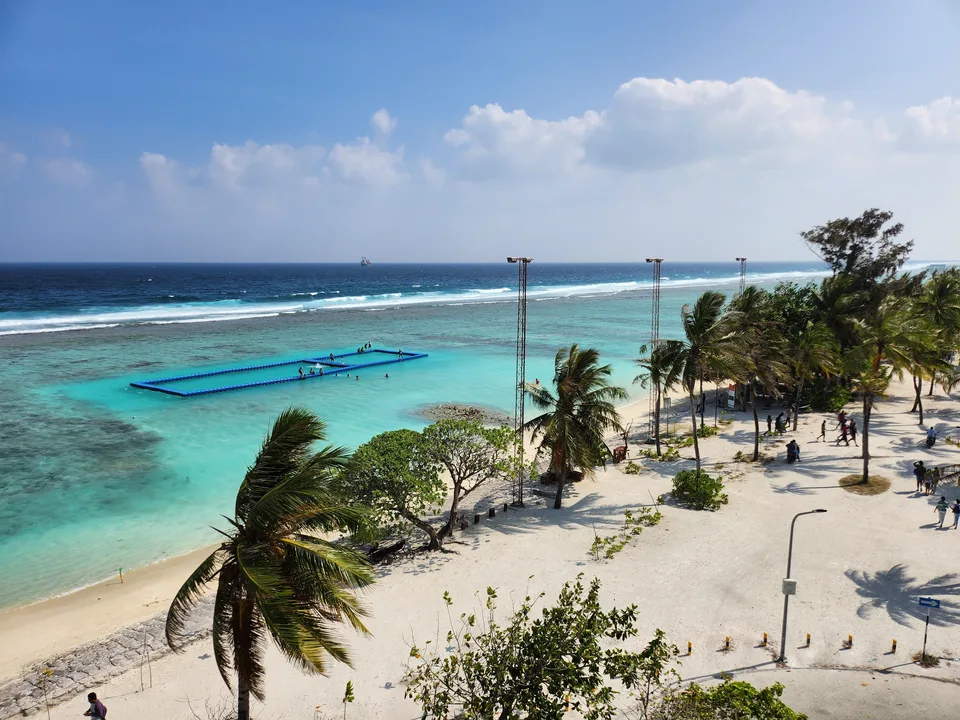
For a visitor, choose a limited outing: a beachfront walk, a meal and time to look at the surrounding streets. Follow local instructions about bathing, dress and access. An inviting photograph cannot establish water conditions or whether a particular stretch is suitable for swimming that day. Ask locally and respect warnings, barriers and boat activity.
If you are comparing homes, repeat the visit as an ordinary errand rather than a holiday walk. Locate food shops, a pharmacy and the transport stop you would actually use. Test mobile reception and any internet connection that matters to your work. VisaWand’s Hulhumalé location page provides geographical and directory context; it should not replace investigation of an individual property or current service.
Respect the rules of an inhabited island
Malé’s everyday setting differs from a private resort. The FCDO’s current local-law guidance advises covering shoulders and avoiding short or tight shorts outside resorts, including on local beaches. Alcohol possession and consumption outside resorts can lead to arrest and deportation. Public observance of a religion other than Islam is illegal, and same-sex relations are illegal. Consider these restrictions when deciding whether the destination suits your circumstances.
During Ramadan, follow advice about not eating, drinking or smoking in public during daylight outside resorts. Ask your accommodation about meal arrangements. Avoid protests or rallies, and follow current local instructions. Religious visits should be planned around permission and worship, rather than an expectation that admission is available whenever you arrive.
The Health Ministry’s tobacco and vaping notice adds another important restriction. People born on or after 1 January 2007 may not purchase or use tobacco products. Electronic cigarettes and vaping products are banned for everyone, including import, possession and use. Check the official rules before packing rather than relying on an old traveller’s account of what passed through customs.
Choose dates with the monsoon in mind
The Maldives Meteorological Service’s climate explanation describes the southwest monsoon, normally from mid-May to November, as the wetter season. January to March is the northeast monsoon’s drier period; April and December are transitional months. Warmth and humidity persist throughout the year. Those national patterns help frame a trip but do not predict an individual day in Malé.
For a cultural stay, plan outdoor walks in comfortable intervals, with places to pause and water available. Keep an indoor alternative whose opening arrangements you have checked. A shower need not erase the whole day, but a tight itinerary can become awkward when it leaves no room to wait, dry off or change the order of visits.
Sea conditions matter separately from your willingness to walk in rain. Follow forecasts, warnings and operator decisions for boat travel, and allow flexibility around onward connections. Pack so that essential documents and electronics remain protected during transfers. Choose dates and booking conditions together, especially when the journey combines a city hotel with a more distant island stay.
A realistic two-day introduction
On the first morning, focus on the northern centre: the old mosque area, Republic Square and the Islamic Centre, with access checked at religious sites. Continue to the markets if the party is comfortable, then stop for lunch. Keep the afternoon for a confirmed museum visit or a shorter park-and-café interval. Finish early enough to return without rushing through unfamiliar streets.
On the second day, choose Hulhumalé for a different urban perspective, including a meal and a manageable beachfront walk. Someone continuing to another island can instead use that day for the transfer, preserving time for check-in and delays. There is no benefit in adding a capital excursion if it makes the main journey uncertain.
For a same-day layover, reduce the plan to one small area and one meal. Check luggage arrangements, immigration requirements and the actual return connection before leaving the airport. Travellers researching relocation should reserve another ordinary working day for viewings, commuting and service enquiries. Holiday impressions are valuable, but they do not answer the practical questions of a household.
Investigate the home and essential services
Inspect a potential rental before making a long commitment. Ask about ventilation, cooling costs, water pressure, lift reliability and what happens during a service interruption. Check the cooking and laundry arrangements, storage and access with groceries. Put rent, deposits, repairs, utilities, notice and any shared-space conditions in writing, and obtain local advice where the agreement is unclear.
For water, MWSC’s billing FAQs recommend an alternative bill for a specific period when tenants change. Agree on the starting readings and who is responsible for payment. STELCO’s service guidance distinguishes new connections from other electricity work; establish the existing account and connection arrangements with the owner instead of assuming a tenancy automatically transfers them.
Indira Gandhi Memorial Hospital’s service information provides a starting point for medical enquiries. Check appointment access, charges, insurance and prescription continuity for your circumstances. Confirm school or childcare places directly before choosing an address. A prospective resident should assemble these answers alongside the commute and immigration route, rather than allowing a convenient first hotel to determine every later decision.
Keep tourism separate from a longer move
Use Maldives Immigration’s current tourist-entry requirements before booking. Tourist visas are granted on arrival subject to clearance, with requirements including a machine-readable passport, suitable validity, confirmed travel and accommodation arrangements and sufficient means, or approved sponsorship. Entry on Israeli passports is prohibited. Complete the free IMUGA Traveller Declaration within ninety-six hours before arrival through the official portal.
Work requires a different process. Immigration’s Work e-Visa guidance says newly arriving workers need a valid Entry Pass, with the employer or authorised representative obtaining the e-Visa within fifteen days of arrival. Current permission depends on the relevant work arrangements; a tourist booking is not a substitute. For study, confirm the required authorisation with Immigration and the institution before committing.
The residence categories also have specific eligibility conditions. Renting a flat does not itself create a right to settle permanently. Compare VisaWand’s Maldives destination information and consultant directory when preparing questions, and use the Maldives location directory for other places to investigate. A directory entry is not necessarily a completed guide. Match the lawful purpose, island and transport plan before making commitments that depend on staying.
Official planning resources
Reviewed 16 October 2026. Use the official resources linked throughout this guide for admission, transport, housing and immigration decisions. Prices, services and rules can change; confirm the details relevant to your dates. Photography illustrates the locations and is not a live view.
View all official resources
- Velana Airport: transport and directions
- HDC: Hulhumalé land-use plan
- Visit Maldives: Hukuru Miskiy and Munnaaru
- UNESCO: Coral Stone Mosques tentative listing
- Visit Maldives: capital city and historical landmarks
- Visit Maldives: destination guide, Exploring Malé
- Visit Maldives: Maldivian cuisine
- MIRA: Green Tax rules and current rates
- MIRA: tourism GST rate change
- RTL: bus and ferry travel FAQs
- FCDO: Maldives laws, culture and safety
- Maldives Health Ministry: tobacco and vaping restrictions
- Maldives Meteorological Service: seasonal climate
- MWSC: water billing and tenant changes
- STELCO: electricity services
- IGMH: hospital services and appointments
- Maldives Immigration: tourist entry requirements
- IMUGA: free Traveller Declaration
- Maldives Immigration: Work e-Visa
- Maldives Immigration: residence categories
- Malé City Council: municipal information
Plan the next part of your journey
Explore the Maldives guide, browse other cities or compare consultants for your travel and relocation questions.