Visa
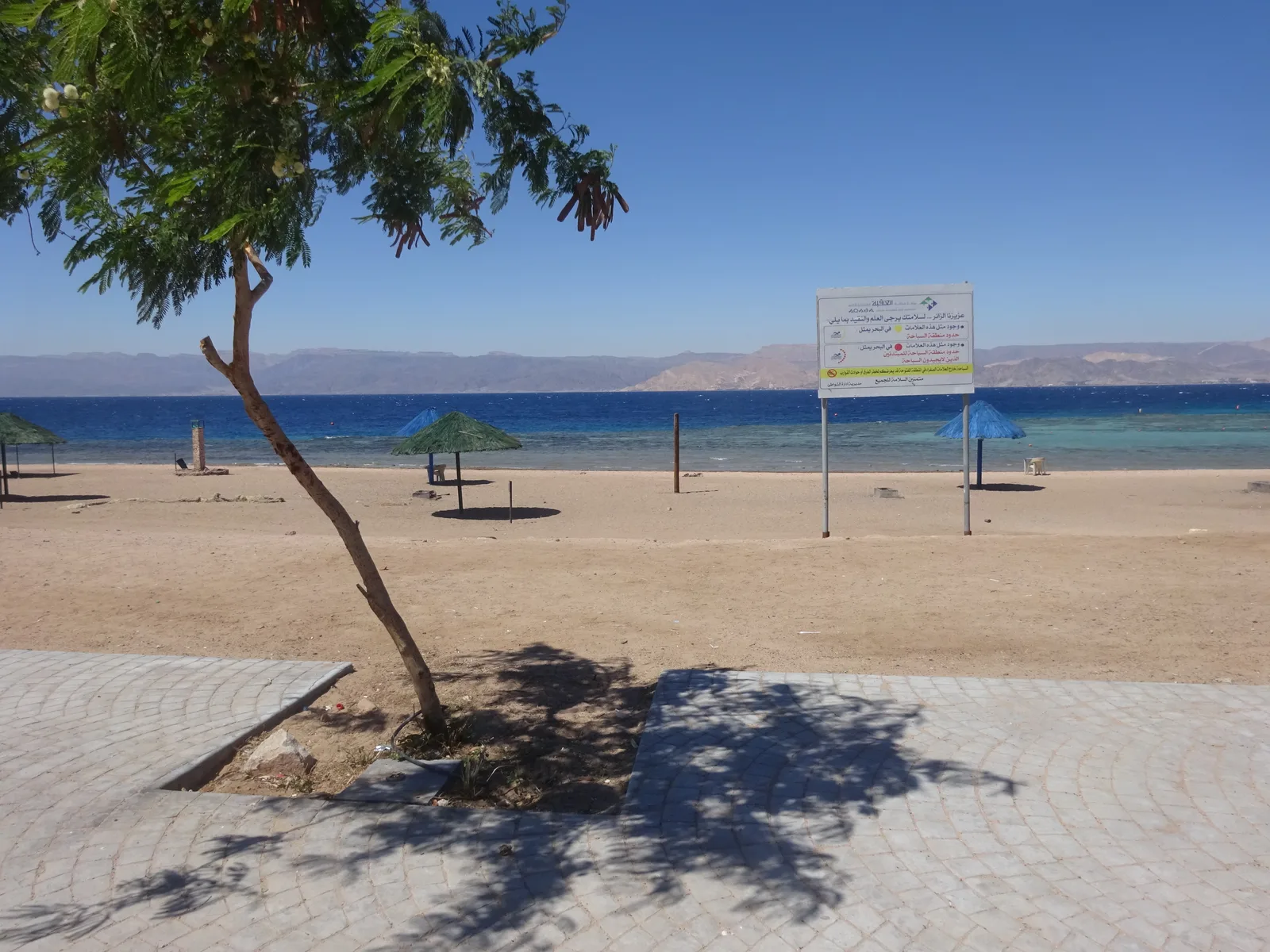
A Red Sea stay with choices that matter
Aqaba brings together a working Jordanian city, a resort coastline and access to Red Sea reefs. You can spend a morning among archaeological remains, eat beside the waterfront and arrange a guided underwater outing without changing your overnight base. The important decision is which version of Aqaba you want: a central hotel for city life, a southern dive base, or a resort where the beach is the main attraction.
Current conditions must also shape that choice. At this guide’s review, the US State Department’s Jordan advisory, issued on 23 October 2026, advised reconsidering travel because of terrorism and armed conflict. Read your own government’s advice, confirm insurance and check transport before making non-refundable commitments. A resort’s normal opening does not establish that the wider journey will operate as planned.
If travelling, allow roughly three nights for an introduction that combines the city and coast. Add time for separate visits to Petra or Wadi Rum rather than treating both as quick extras. Use VisaWand’s Jordan country guide and Jordan destination directory to put Aqaba into a wider itinerary.
Understand the coastline before booking
Aqaba sits at the northern end of the Gulf of Aqaba, an arm of the Red Sea. The city centre, southern beaches and individual resort developments should be treated as distinct areas when comparing accommodation. A hotel’s photograph of blue water tells you little about its distance from the restaurant or dive pickup point you will actually use.
Central accommodation is worth investigating if you want to combine waterfront walks, historical stops and meals around town. A southern base may make repeated sea outings easier, but check transport back to the centre. For a resort stay, establish whether access to the beach, pools and other facilities is included in your particular room rate.
There is also a naming trap: the ancient city of Ayla and the modern Ayla Oasis development are different places. The developer’s Marina Village information describes contemporary dining, retail and waterfront promenades. That can be an enjoyable outing, but it is not the archaeological site. Save separate map pins so a driver or booking confirmation takes you to the intended destination.
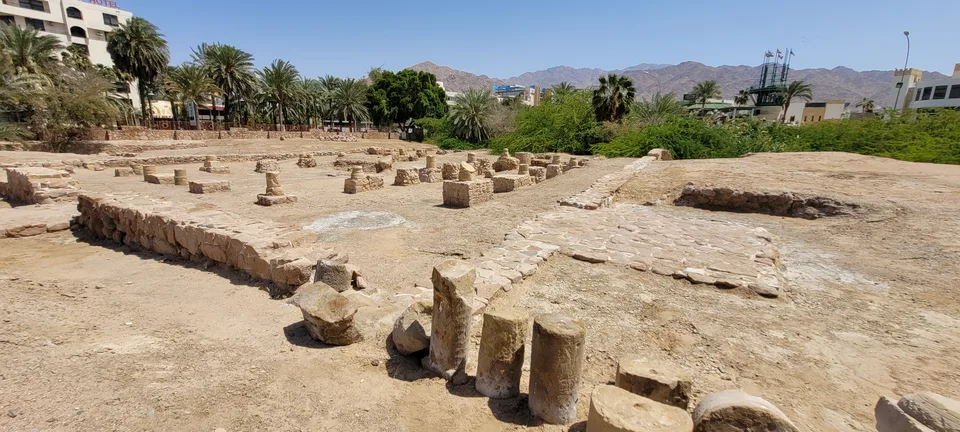
Follow the earlier city at ancient Ayla
The remains of ancient Ayla offer a useful counterpoint to the hotel-lined waterfront. Visit Aqaba’s history and culture information identifies walls, gates, a mosque and other structures associated with the Islamic city and its role on a pilgrimage route. Looking at the ground plan helps explain the settlement as a place of movement and exchange, rather than a collection of isolated stones.
Read the interpretation and orient yourself before photographing individual features. Stay on permitted routes, avoid climbing fragile remains and carry water: an outdoor archaeological visit needs a different approach from browsing an air-conditioned gallery.
Ayla can fit into a central-city morning, followed by a meal or waterfront break. Confirm current access before relying on a specific opening time or ticket price; a current official tariff was not established during research. A short, attentive visit gives useful historical context.
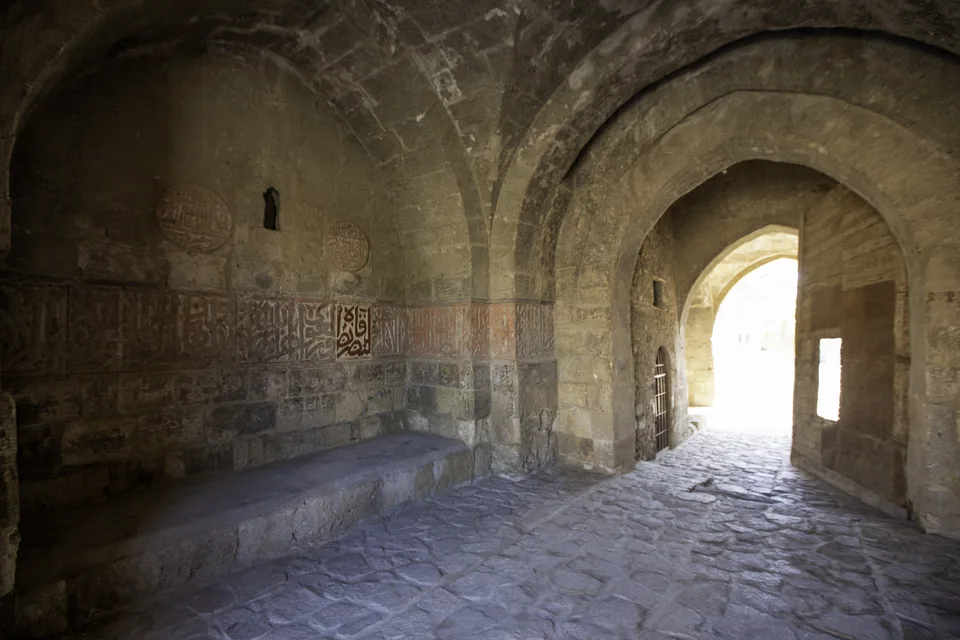
Pair the castle with its waterfront setting
Aqaba Castle introduces another part of the city’s history. The tourism authority links its Mamluk fabric to Sultan Qanswah al-Ghawri’s reign, with later Ottoman alterations and uses that included a caravanserai and barracks. Its passages and defensive architecture make more sense when considered alongside the city’s position on routes between sea and interior.
Combine the castle with the Great Arab Revolt Plaza and the nearby waterfront if access and weather allow. Keep museum access, castle admission and any surrounding public space separate when checking opening arrangements. The presence of a historical building does not establish that every room or exhibition inside it is currently open.
Allow a break rather than scheduling all of Aqaba’s outdoor history in the hottest part of the day. Ask staff which areas are accessible if steps, uneven surfaces or narrow passages would affect your visit. Comfortable shoes will be more useful here than beach footwear, particularly if you plan to continue walking afterwards.
Leave time for the city between attractions
Aqaba rewards some unscheduled time around its streets and waterfront. Use a short walk to understand where people buy everyday necessities, where your next meal might be and how the hotel area connects with the rest of town.
Sharif Hussein bin Ali Mosque is a prominent architectural stop. The tourism authority’s cultural visitor guide identifies it among Aqaba’s places of worship and explains mosque etiquette. Ask about current visitor access, cover shoulders and knees, and bring a head covering if required. Remove shoes where instructed and give worshippers space; an exterior visit may be the appropriate choice at a particular time.
For photography, look beyond a single landmark view while respecting privacy. Ask before taking close portraits or photographing people at work. Keep phones and cameras away from security installations and border procedures. A relaxed waterfront outing should still fit local instructions and the conditions on the day.

Choose a beach by access and facilities
The Aqaba Special Economic Zone Authority’s marine-reserve information describes a seven-kilometre stretch of the southern coast and states that entry to the reserve’s beaches is free. That is a useful distinction from paid beach clubs. Free beach entry does not include equipment, guided activities, hotel pools or every service a visitor might want.
Before setting off, establish the actual beach, transfer arrangements, toilets, shade, changing facilities and food options available that day. Travellers with limited mobility should ask about the route from parking to the water, not just whether a site is described as accessible. Families need to check supervision and sea conditions themselves.
Modern resort developments have their own access rules. Ayla’s public-access FAQ says Marina Village welcomes visitors while some beach clubs and amenities charge admission. Ask for a dated quote and its inclusions instead of relying on an old day-pass price. A promenade visit and a full beach-club day are different purchases.
Make snorkelling and diving fit your experience
Visit Aqaba’s dive-site overview identifies shore and boat access, reefs such as Japanese Garden and wrecks including Cedar Pride. The range is part of the destination’s appeal, but a famous site name is not a statement that it suits every swimmer or diver. Let a qualified operator match the outing to your experience, health and the day’s conditions.
Ask about guide supervision, equipment fitting, group size, entry and exit, and the arrangements if conditions change. For scuba, explain your certification and how recently you last dived. A first underwater experience should be booked as the appropriate introductory programme, rather than chosen solely because a guided-dive listing has a lower price.
Avoid touching coral, standing on reefs or collecting marine life. Snorkellers should also seek advice about a suitable entry point and flotation where needed. Plan any flying or further diving around professional guidance for your actual activity. Clear water, gentle conditions and particular wildlife sightings should never be treated as guarantees attached to a booking.
Use published activity prices as comparisons
For a concrete benchmark, Coral Garden Diving Center’s published price list gives JOD 35 per person for one shore dive and JOD 60 for two. It lists equipment rental, hotel transfers to the site and back, professional instruction or guiding, and water or tea among the inclusions. Its Discover Scuba programme is separately priced at JOD 85.
The same operator lists shore snorkelling at JOD 20, including transfer and specified equipment, with some extras charged separately. These are one business’s published offers, not a regulated citywide tariff. Confirm which programme you qualify for and the final inclusions before paying.
The centre is identifiable in PADI’s dive-centre directory, which provides a useful independent check of its institutional listing. That does not replace checking the instructor, insurance and arrangements for your own outing. Compare like with like: a boat trip, an introductory course and a guided shore dive can involve different staff time, equipment and transport.
Pick accommodation around the days you want
A central hotel can work well when you want several short walks and meals around town. A dive-focused property may simplify early departures or equipment logistics. A large resort can suit a trip built around pools and beach time, provided you accept the cost and time of travelling elsewhere.
Check the actual beach relationship carefully. “Sea view” does not necessarily mean direct beach access, and access may depend on your booked room category or an arrangement with another venue. Ask whether transfers are included, when they operate and whether beach equipment or towels cost extra.
Compare complete quotations for your dates: taxes, breakfast, extra beds, cancellation, transfers and any minimum-stay condition. For apartments, verify cooking facilities, cleaning, laundry and who handles maintenance. Families should request the precise bed configuration. Travellers needing step-free access should ask for photographs and measurements of the entrance, bathroom and route to facilities before committing to a room.
Arrive with a practical onward plan
Visit Aqaba’s air-arrival information identifies King Hussein International Airport as the city’s airport. Check your airline’s dated timetable and current operating notices rather than assuming that every carrier on an older tourism list still serves Aqaba in the same season. Build some flexibility into any onward booking that depends on the flight arriving on time.
Arrange the airport transfer directly with your hotel or a transport provider, giving the full address and party size. Confirm the total charge, luggage capacity, child seats if needed, and the procedure after a delay. A current official fixed taxi tariff was not established during research, so this guide does not present an anecdotal fare as a dependable price.
If arriving overland or by sea, obtain current operating information from the responsible operator and border authorities. A visa eligibility page is not proof that a crossing will be open. Keep arrival documentation and a contact for your accommodation available offline. Avoid scheduling an essential dive or paid excursion immediately after a journey with several separate stages.
Use intercity transport with the correct terminal
JETT’s live schedule lists connections involving Aqaba, Amman, Petra and Wadi Rum. Check the dated departure, boarding terminal and destination before booking. An Amman route can refer to a particular terminal rather than every hotel district, and the final journey at either end needs its own allowance.
The operator’s current booking service is the appropriate place to confirm fares. Older timetable copies, including staging pages, are not a sound basis for presenting a current city-to-city price. Save the booking confirmation and establish luggage conditions, check-in arrangements and what happens if a departure changes.
Within Aqaba, walking can suit a compact group of central stops when temperatures and surfaces allow. Southern beaches and resort areas need a separate transport plan. For a hired driver, agree the return journey, waiting time and exact pickup location, particularly after a sea outing. A low outward price is less useful if the return has been left unresolved.
Eat well without turning every meal into a journey
Choose some meals near the area you are already visiting. Ask for a current menu, check the full bill and explain dietary needs directly. With seafood, establish the portion or weight being charged and how preparation affects the price before ordering. A waterfront setting does not by itself establish the origin or freshness of a particular catch.
For a resort-area comparison, Tala Bay’s dining directory lists Aziab at Grand Tala Bay, Solero at Marina Plaza and Sea Bass among its venues. These are identifiable options within that development, rather than evidence of typical prices across central Aqaba. Confirm visitor access and any reservation or transport requirement.
At the modern Ayla development, use the current dining directory to choose between cafés and a longer meal. Leave room to compare ordinary city options too. During Ramadan or a public holiday, ask about actual meal service and opening arrangements in advance. For allergies, a translated ingredient explanation is more useful than assuming a familiar dish is prepared identically everywhere.
Budget for the coastline you choose
Use Jordanian dinars when comparing local costs. Room type, private transfers, beach-club admission and sea activities will shape the total more than a single inexpensive meal. Separate compulsory charges from optional extras so you can see where a resort package genuinely saves money and where it adds services you will not use.
At the published activity rate above, two eligible divers would pay JOD 70 for one shore dive each. Two shore-snorkelling places would instead be JOD 40 before separately charged extras. Treat these as examples from the named operator, then add actual accommodation and transport quotes for your dates.
Keep a reserve for changing transport plans and check card acceptance before committing to smaller services. For shopping, ask about materials and origin, obtain receipts for valuable items and check home-country import rules for food or other restricted products. For a prospective move, deposits, household equipment and utility setup belong in a separate initial budget rather than the holiday’s daily spending figure.
Choose the season and protect the middle of the day
The tourism authority’s essential information describes a hot desert climate, mild winters and very hot summers, and suggests March–May or September–November for more comfortable visits. Those periods are useful starting points, not promises of a particular sea temperature or swimming condition.
Plan substantial city walking early or later in the day during hot weather, with water and a shaded or indoor break available. Ask about effective room cooling before a summer stay. A winter sea outing may still call for suitable exposure protection chosen with the operator, even when the afternoon feels pleasant on land.
Check a genuinely current forecast and local sea advice before activities. Check the forecast’s issue date; a saved forecast does not establish today’s conditions. If the itinerary continues to Petra or the desert, check those places separately: a comfortable Aqaba waterfront evening does not describe the weather throughout Jordan.
A realistic three-night introduction
Use arrival day to settle in, establish the immediate area and confirm transport for the next morning. A short waterfront walk and a nearby dinner can be enough after a long journey. Keep the first evening flexible if the arrival is delayed.
Spend the first full day on a manageable group of central historical stops: ancient Ayla, the castle and the waterfront, with the sequence adjusted to current opening and heat. Include mosque architecture as access permits and leave time for a proper break. These places are more rewarding with context than as a rapid series of photographs.
Reserve the second full day for a suitable guided sea activity or a beach day. Confirm the operator’s return time and keep the evening uncomplicated. On departure day, allow for transfer and check-in rather than adding one last tightly timed outing. This itinerary is a suggested allocation of time; access, weather and regional conditions determine what is sensible on the actual dates.
Add Petra or Wadi Rum with sufficient time
Aqaba can form part of a route with Petra and Wadi Rum, but they are substantial destinations in their own right. Decide whether you want a brief organised excursion or an overnight stay that allows more time on the ground. Check transport, site arrangements and relevant travel advice for the route you choose.
If Petra is part of the plan, official Jordan Pass packages cost JOD 70, 75 and 80, reflecting one, two consecutive or three consecutive Petra visiting days alongside other included attractions. Calculate the value against the places you will actually enter. Someone staying solely on Aqaba’s coast may have little reason to buy the same package as a visitor spending several days at archaeological sites.
VisaWand’s Wadi Musa destination page helps locate the settlement associated with a Petra stay. Compare the Amman destination page when planning arrival and departure nights. Avoid turning a map of Jordan’s main attractions into an itinerary with no allowance for travel or rest.
Assess a longer stay through ordinary routines
For a possible move, begin with the workplace, campus or other fixed commitment. Test the journey at the hours you would normally travel, then visit groceries, a pharmacy and any school you are considering. A holiday’s convenient beach address may produce a different daily commute from the one your household needs.
Inspect cooling, water supply and storage, hot water, internet availability, drainage and maintenance arrangements before signing a lease. Ask for recent electricity and water bills and establish which meters are shared. Put the deposit, inventory, repair responsibilities, renewal and early-departure terms in writing.
Aqaba Water Company publishes services for connections, reconnection and bill enquiries. Clarify with the landlord who holds the account and handles any change. For resort apartments, ask separately about building or community charges and exactly which amenities residents may use. A rental contract should not be mistaken for a grant of immigration status or unrestricted access to adjoining hotel facilities.
Make healthcare and family arrangements explicit
Identify an appropriate provider before treatment becomes urgent. Aqaba University Hospital publishes its location and patient contact information; confirm the service you need, payment arrangements and insurance directly. Hospital presence is not evidence that every specialist, emergency procedure or insurer arrangement is available on demand.
Carry prescription information and check medicine-import requirements with the relevant authorities or a qualified provider. Arrange insurance that covers the actual activities you intend to undertake, including diving where applicable, and check evacuation conditions. The UK government’s emergency information gives 911 for ambulance, fire and police in Jordan.
Families should confirm school admission and costs for the specific child, curriculum and year group before committing to housing. Students need a named programme, campus location, timetable and accommodation arrangement from their institution. Compare private housing with any confirmed institutional offer, and ask about transport and healthcare rather than assuming those are bundled with tuition or enrolment.
Resolve entry permission separately from relocation
Use the Ministry of Interior’s visa services for the category and nationality involved. Visit Aqaba’s visa information describes special arrangements with conditions on arrival point, departure and registration, and warns that some nationalities require permission before travel. Do not assume that every border entry or passport receives an unconditional free visa.
The Jordan Pass FAQ says the pass is not a visa. Its own pages state two whole nights and purchase before arrival for the visa-fee benefit; the UK entry guidance currently says three nights. Check the official conditions for your itinerary before relying on a saving, particularly if an Aqaba arrangement already affects your visa fee.
Employment requires the appropriate labour and immigration permissions: consult the Ministry of Labour’s non-Jordanian worker guidance. The Interior Ministry also lists separate work, study and family residence services. Tourism, study, employment and permanent relocation are distinct purposes. For a case involving dependants or a longer move, use the responsible authorities and, where useful, VisaWand’s Jordan consultant listings before making commitments dependent on approval.
Official planning resources
Reviewed 26 October 2026. Use the official resources linked throughout this guide for admission, transport, housing and immigration decisions. Prices, services and rules can change; confirm the details relevant to your dates. Photography illustrates the locations and is not a live view.
View all official resources
- US State Department: Jordan travel advisory
- Ayla Oasis: Marina Village
- Visit Aqaba: Ayla, castle and waterfront history
- Visit Aqaba: cultural visitor guide and mosque etiquette
- Ayla Oasis: public access and beach facilities
- Visit Aqaba: diving and dive-site directory
- Coral Garden Diving Center: published activity prices
- PADI: Coral Garden Diving Center listing
- Visit Aqaba: King Hussein International Airport
- JETT: live route and booking information
- Tala Bay: dining directory
- Visit Aqaba: seasons and practical information
- Jordan Pass: official packages and prices
- Aqaba Water Company: services and customer information
- Aqaba University Hospital: location and patient contact
- UK government: Jordan emergency information
- Jordan Ministry of Interior: visa application services
- Visit Aqaba: visa and travel requirements
- Jordan Pass: eligibility and visa-fee conditions
- UK government: Jordan entry requirements
- Jordan Ministry of Labour: non-Jordanian workers
- Jordan Ministry of Interior: residence application categories
Plan the next part of your journey
Explore the Jordan guide, browse other cities or compare consultants for your travel and relocation questions.