Visa
Stay long enough to see beyond the deer
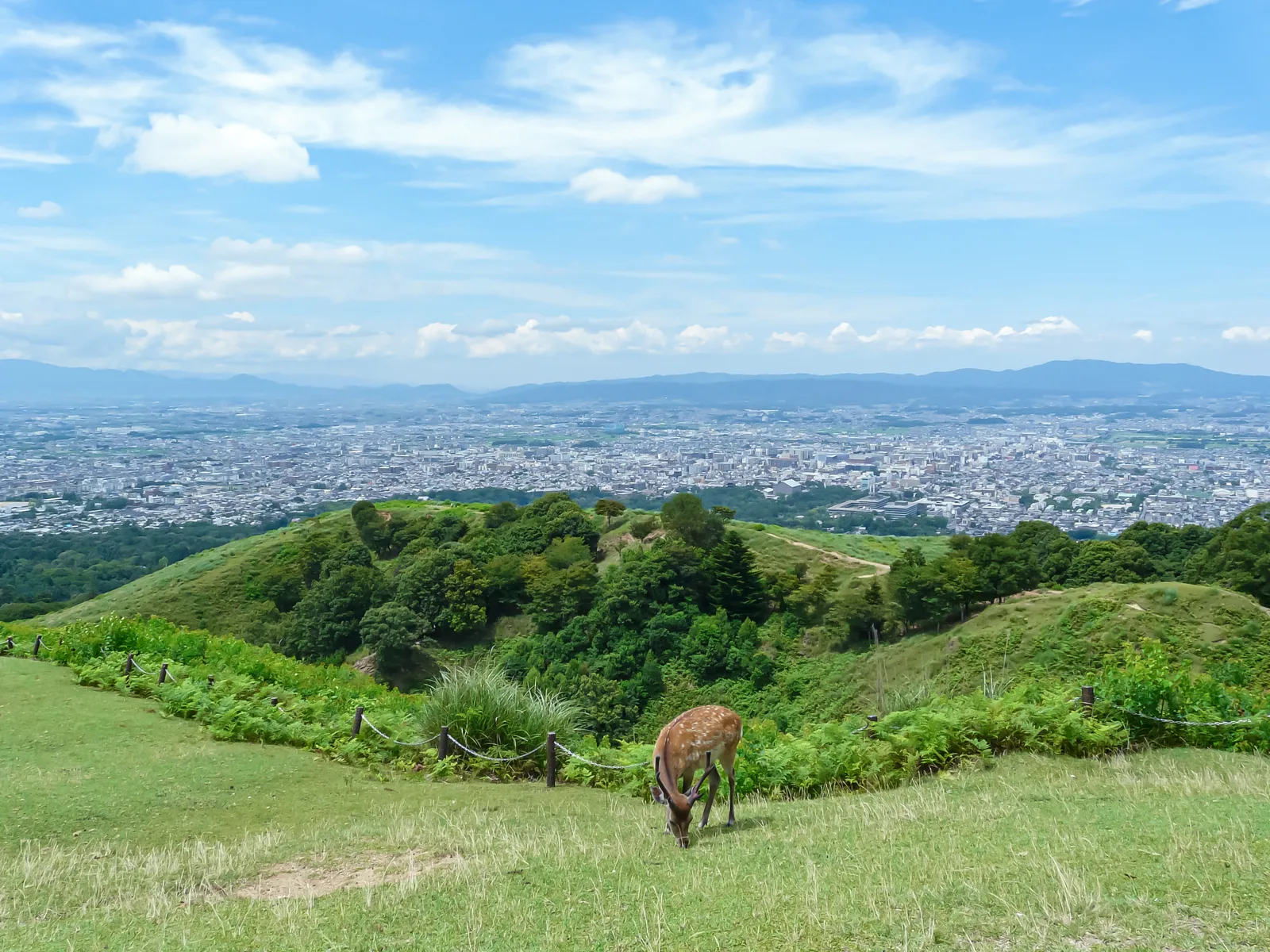
Nara’s appeal becomes clearer when you stop treating it as a brief excursion from Kyoto or Osaka. The deer and Great Buddha draw first-time visitors, but the city also rewards an evening among merchant houses, a separate journey to the western temples and time to understand the remains of its ancient capital. The sights belong to different parts of a living city, rather than one enclosed historical park.
Two nights make a useful first stay: devote one full day to the eastern temple and shrine area, then choose Naramachi or the western sites according to your interests. A relocation visit needs additional working days for appointments and commuting trials. Use VisaWand’s Japan country guide for national planning, then make your local choices around the Nara addresses you actually need.
Understand the capital behind the monuments
Nara served as Japan’s capital from 710 to 784. The UNESCO description of Ancient Nara identifies eight components: five Buddhist temples, Kasuga Taisha shrine, Kasugayama Primeval Forest and the palace site. They are not eight temples gathered in one walkable precinct. Political administration, religious institutions and a sacred landscape together explain the designation.
That distinction helps shape a visit. Tōdai-ji and Kasuga belong to a plausible eastern day, while the palace remains and Nishinokyō temples require a different journey. The buildings also have different histories of reconstruction and conservation. Look for explanations of the fabric in front of you rather than assuming every visible structure has stood unchanged since the eighth century. Nara offers a stronger experience when the relationship between places matters as much as the individual photograph.
Choose between the two station areas
JR Nara and Kintetsu Nara are separate stations. Write the operator’s name into every meeting point, hotel search and arrival plan. Kintetsu is convenient for approaching the eastern sightseeing district; a JR-side hotel can simplify travel using the JR network and the airport bus. Neither choice removes the need to check the final walk with luggage.
For a short stay, compare the station area with Naramachi and the park side according to how you want to spend the evening. A quieter looking lane may involve a longer walk to dinner, while a transport location may make an early departure easier. Check the accommodation entrance and actual route, not just a map pin. The city tourism association’s access guide explains the separate rail approaches and links to their operators.
Visit Tōdai-ji with the correct ticket and cash
The Great Buddha Hall gives scale and focus to an eastern Nara day. Its roofline, broad frontage and approach are worth observing before going inside. Keep enough time to look at the hall and its setting, rather than moving straight from the admission gate to the next stop.
Tōdai-ji’s official admission information lists ¥800 for an ordinary adult and ¥400 for a primary-school child. Separate halls charge separately; the fee is not an unlimited ticket to the whole temple. The Great Buddha Hall and Tōdai-ji Museum joint ticket is ¥1,200 for adults. Payment is cash only. Hall opening is 7:30am–5:30pm from April through October and 8am–5pm from November through March. Tōdai-ji Museum is a different institution from Nara National Museum; check which one an itinerary or ticket actually means.
Give Kasuga’s approaches their own time
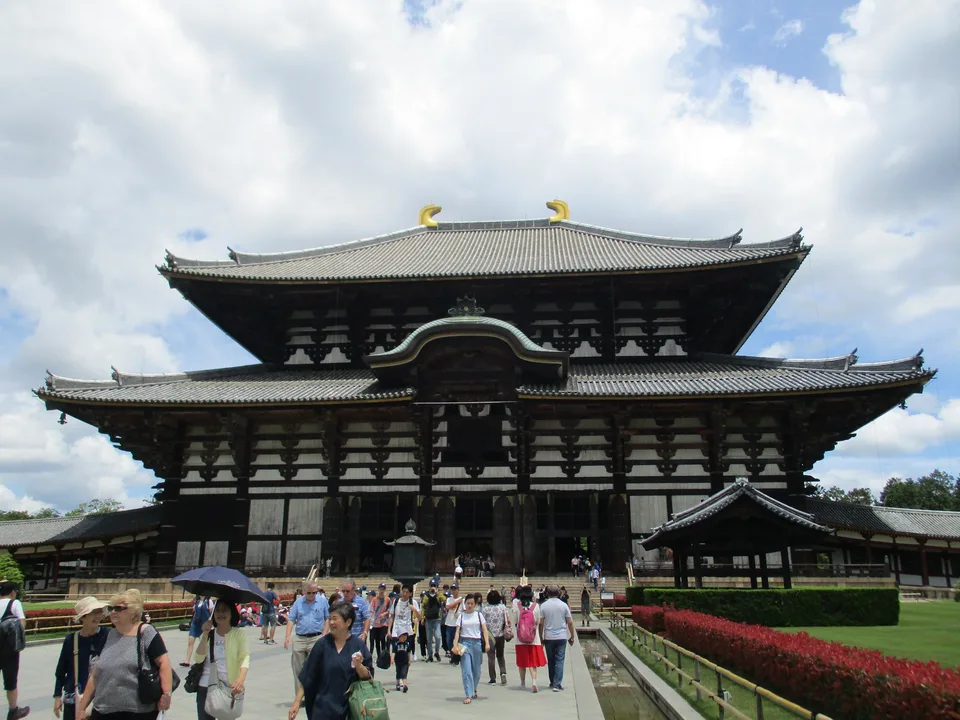
The stone lanterns, wooded approaches and shrine architecture make Kasuga Taisha a different experience from the Great Buddha Hall. Avoid treating the journey through the grounds as dead time between attractions. It is part of how the shrine is encountered, and a reason to leave space in the eastern itinerary.
The shrine’s visitor information separates general worship from special admission to the inner cloister. The latter costs ¥700 and normally receives visitors from 9am–4pm, with restrictions around ceremonies. The museum and botanical garden have separate admission charges. Check the published ritual exceptions before making a paid area the centrepiece of your day. If the walking distance is a concern, consult the bus arrangements to Kasuga Taisha Honden and identify the remaining approach rather than assuming the stop delivers you to every part of the shrine.
Watch the deer as wild animals
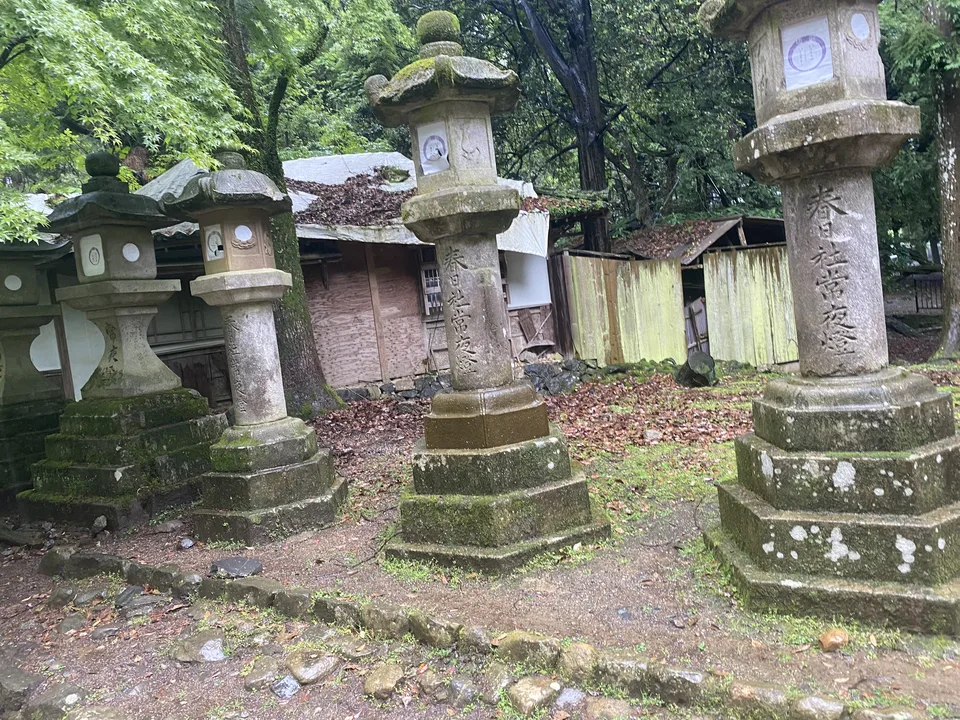
The deer can be close to people without being safe to touch. The Nara Deer Preservation Foundation’s guidance warns that they can bite, kick, butt and rush. During the September–November rut, males can be particularly dangerous, including animals whose antlers have been cut. Give them space and do not approach for a close portrait.
Keep children beside you and leave room to step away. Observing from a distance is a worthwhile encounter in itself; feeding is optional. Follow the local instructions if you choose to use deer crackers, and keep food, maps and loose possessions secure. Avoid pursuing an animal that moves away or standing in its path to manufacture a photograph. In the birthing season, do not approach fawns. Plan for wildlife behaviour rather than a guaranteed interaction with a cooperative pet.
See Kōfukuji with realistic expectations
Kōfukuji remains an important stop, but its familiar five-storey pagoda should not be the basis for an unobstructed skyline photograph. The temple’s conservation project explains that the protective enclosure was completed in March 2025 and now gives March 2034 as the planned repair completion. Earlier references to 2031 have been superseded.
Use that knowledge to decide what you want from the visit. Someone interested in the wider temple and its religious art may still make it a priority; someone primarily seeking the classic pagoda view should adjust expectations before arriving. Check current access to individual buildings and exhibitions rather than treating works on one structure as proof that everything is closed. Historical photographs can help explain what is being conserved, but should not be mistaken for the view available during your trip.
Plan around Nara National Museum’s gallery closure
The museum’s current closure notice is essential reading: its Buddhist Sculpture Hall closed on 14 September 2026 and is scheduled to remain closed until around spring 2028. The Ritual Bronzes Gallery remains available with free admission during that closure. Use these temporary arrangements when planning a visit, rather than budgeting for the museum’s usual ¥700 permanent-collection admission.
The 78th Shōsō-in Treasures exhibition runs from 24 October to 9 November 2026 in the East and West New Wings. Ordinary adult advance timed tickets cost ¥2,000; limited same-day counter tickets, if available, cost ¥2,200. These exhibition arrangements are separate from the free bronzes gallery. Check your date, entry window and cancellation conditions before purchasing. If Buddhist sculpture is your main reason for visiting Nara, make the functioning temple collections part of your planning instead of assuming the museum hall will be accessible.
Slow down among Naramachi’s houses
Naramachi’s merchant-house streets provide a change in scale after the monumental temple precincts. Narrow frontages, latticed façades and small businesses make close observation more rewarding than rushing between landmarks. Cafés, craft shops and accommodation share the district with places of worship and ordinary local life.
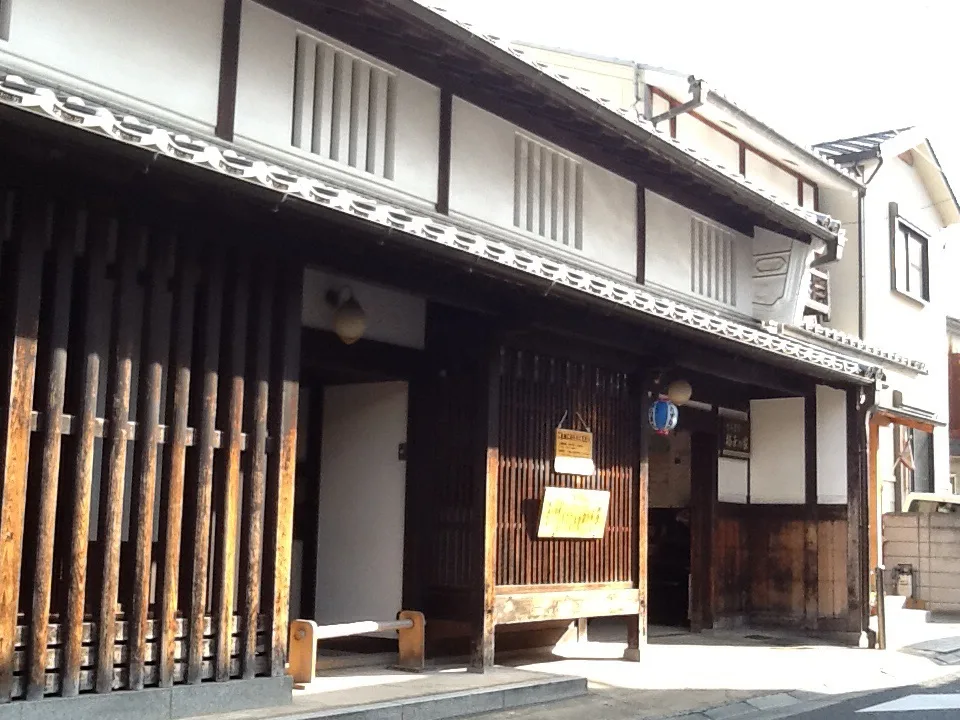
Choose a few stops and leave the rest for walking. The pictured Kōshi-no-Ie exterior illustrates the townhouse vocabulary, but the photograph dates from 2014: use current visitor information for access and opening details. Respect entrances that belong to homes or businesses and ask before entering a space that looks private. If craft shopping matters to you, identify the maker or material you want to learn about rather than assuming every attractive object is locally produced. A smaller, considered purchase can carry more meaning than a bag filled in haste.
Make the palace site a separate choice
The palace remains explain the administrative city behind Nara’s temples. UNESCO distinguishes the archaeological site from reconstructed features: a recreated gate or hall helps interpret the capital, but is not an intact eighth-century building. Come with that question in mind and the large landscape becomes easier to understand.
The Nara Palace Site Museum is free and normally opens Tuesday–Sunday, 9am–4:30pm, with last admission at 4pm. Monday public holidays alter the closure pattern, and year-end closures also apply. Its published approach is about ten minutes on foot from Yamato-Saidaiji Station. Those are museum arrangements, not universal opening hours for every facility across the palace site. Check the specific places you want to enter and leave time between them. Avoid making a museum closure day the only day you can explore the area.
Head west when temple architecture matters most
Nishinokyō offers an alternative focus to repeating the eastern park walk. Plan a western temple day around the buildings and collections you want to understand, with enough time for access journeys and a meal. Choose this extension because the subject interests you, rather than from a sense that every World Heritage component must be collected on one trip.
Tōshōdai-ji’s official information lists adult admission at ¥1,000, with opening from 8:30am–5pm and reception ending at 4:30pm. Kintetsu Nishinokyō is the nearest rail station; buses also serve the temple. Special exhibitions can require an additional charge. Compare the rail journey with the bus route from your actual base. A pass covering an area does not establish that every possible transfer is the fastest or most comfortable way to travel through it.
Arrive by the rail service that fits your base
From Osaka Namba, the city tourism association gives approximately 40 minutes by a direct Kintetsu service. From Kyoto, its limited-express estimate is about 35 minutes, with a surcharge required. JR alternatives include the Miyakoji Rapid from Kyoto and Yamatoji Rapid from Osaka. Journey times are approximate; check the operator’s current timetable before making a connection.
If arriving by Shinkansen elsewhere in Kansai, include the change onto the Nara-bound service in the total journey. Your ticket’s coverage and the convenience of the destination station can matter more than a small difference in advertised running time. For an early hotel departure, test where the relevant platform is and whether you need an extra reservation. Keep station names in Japanese as well as English when arranging a taxi or asking for help.
Use the airport bus timetable literally
The Kansai Airport–Nara bus timetable lists an adult single fare of ¥2,400 and a child single of ¥1,200. The published journey range between the airport and JR Nara is 100–120 minutes. Allow additional time for traffic and the airport process; the scheduled arrival is not a flight-connection guarantee.
The table does not show every service stopping at Kintetsu Nara. Airport departures terminate at JR Nara in the published inbound schedule, and intermediate stops differ on outbound journeys. Read the row for your intended departure. Include the journey from that stop to your accommodation. For an airport-bound bus, confirm reservation requirements through the operator before travel. If arrival falls outside the useful bus schedule, compare rail connections and the final local journey before committing to a flight.
Buy a bus pass after choosing the day’s area
The Nara Park and Nishinokyō one-day bus pass costs ¥600 for adults and ¥300 for children. It covers designated local bus areas for a calendar day, making it worth comparing with individual journeys when you intend to move between several stops. It is a bus product, not a general rail ticket or an attraction admission pass.
The wide version adds the Hōryūji area and costs ¥1,100 for adults and ¥550 for children. Check the boundary and purchase location before travelling west: the operator says this ticket is not sold at Yamato-Saidaiji or Nishinokyō stations. If your eastern day will mostly be on foot, a pass may add little value. Decide how much walking is comfortable, mark the remaining bus journeys and then compare the options for that particular day.
Eat kakinoha-zushi and explore regional flavours
Kakinoha-zushi brings a useful regional story to a meal. The agriculture ministry’s account describes pressed sushi made with fish such as mackerel or salmon, vinegared rice and a persimmon-leaf wrapping. Its inherited food culture is associated with Gojō and Yoshino, while today it is recognised more widely as a Nara Prefecture speciality.
Choose a current shop menu and ask how the product should be stored and eaten. A transportable meal still needs the maker’s handling instructions. If you avoid fish or have dietary restrictions, check the whole preparation rather than assuming a vegetable-looking component makes a dish suitable. For a temple-heavy day, protect time for lunch: arriving hungry just before an afternoon admission deadline makes both the meal and the visit less satisfying. Check evening opening separately when choosing accommodation around a restaurant you hope to use.
Budget for the paid interiors you will actually enter
Some of Nara’s most enjoyable time is spent walking, but paid interiors add up when you choose several. Great Buddha Hall admission and Kasuga’s special inner-cloister admission total ¥1,500 for an ordinary adult. Adding the ¥600 bus pass makes ¥2,100 before meals, hotel costs or other tickets. Tōshōdai-ji is a separate ¥1,000 choice on a western day.
Keep the museum distinction in the budget: the currently free bronzes gallery and the timed Shōsō-in exhibition are different offers. Compare a hotel’s total for your actual dates, room occupancy and meal arrangements, then keep a reserve for a taxi or changed plans. Accommodation and restaurant figures vary too much to treat an unverified nightly average as a quote. Select fewer interiors if you prefer sustained looking to a succession of ticket gates.
Pick accommodation for the evening and the departure
Station hotels suit travellers prioritising arrival and onward transport; Naramachi accommodation can put a different evening atmosphere near your door. A park-side address can suit an early start towards the monuments. Compare the actual walking route, luggage access and dining options before choosing on the strength of the room photograph alone.
Ask about bed configuration, private bathroom, lift access, laundry and luggage storage. For a traditional inn with meals, confirm arrival deadlines and precisely which meals are included. Families should verify each child’s bedding and price rather than assuming the headline room rate covers everyone. Longer-stay visitors need practical answers about cooking equipment, cleaning charges and internet reliability. Inspect cancellation terms against your onward travel, especially if you are planning around a particular exhibition window or a short relocation reconnaissance.
Plan for basin heat and cold mornings
The Japan Meteorological Agency’s Nara normals give a January monthly mean of 4.5°C and an August mean of 27.8°C. June averages 184.1mm of precipitation and July 173.5mm. These are climate figures for the Nara observation point, not a forecast for your stay or a description of every upland area in the prefecture.
Spring and autumn are useful starting points for a walking itinerary, subject to actual conditions and availability. Summer calls for shade, indoor breaks and a shorter list of exposed stops. Winter needs warm layers, particularly for the first departure and outdoor approaches. Keep shoes suitable for wet paths and allow an indoor alternative without assuming every museum gallery is open. Autumn deer behaviour is another reason to plan the park visit around observation rather than close encounters.
A two-day itinerary with room to choose
Day one: start at Tōdai-ji, giving the Great Buddha Hall a substantial morning slot. Take a meal break, then continue towards Kasuga at a pace suited to your party. Leave time for the approaches and the deer without feeding becoming the day’s objective. If your chosen museum exhibition is important, book its entry first and shorten another part of the route.
Day two: choose between a deeper western visit and a slower central day. For the west, combine the palace museum and a selected Nishinokyō temple while checking their separate opening arrangements. For the centre, explore Naramachi and the accessible parts of Kōfukuji, accepting the pagoda enclosure. Keep the final return to the correct station in the schedule. One day in Nara means choosing one of these experiences, rather than attempting both at speed.
Test a move through everyday journeys
For a possible move, begin with a workplace or campus address. Test the journey at the hour you would travel, including platform access, changes and the final walk. A pleasant sightseeing base may be inconvenient for a daily commute. Compare housing locations with grocery shopping, childcare or school arrangements and the last useful service home.
The prefecture’s foreign-resident consultation service offers free, confidential assistance. Its current timetable lists English desk support on Wednesdays, rather than every working day; telephone interpreting arrangements cover additional languages. Check the relevant service before attending. Use a scouting stay to establish the practical questions you need answered, not to assume a weekend visitor experience predicts working life. If family members will follow later, include their daily destinations and access needs before settling on a lease.
Read the lease and arrange the household
Use the official housing guidance for foreign residents to prepare for rental discussions. Request an itemised initial payment and monthly total, including any deposit, key money, guarantor charge, insurance and management fee. Confirm renewal, cancellation and restoration conditions in writing. Ask which furnishings and appliances are included, and whether internet installation needs a separate arrangement.
The municipal international-resident support page and prefectural service links provide starting points for administrative and household questions. Establish who activates water, electricity and gas, how your building handles rubbish and which collection calendar applies to the address. Identify a clinic that can support your communication needs before you need a routine appointment. Families should confirm school admission and required paperwork directly. A serviced holiday room and a conventional tenancy involve different responsibilities; use the first to investigate the second carefully.
Separate a visit from work, study and settlement
Check Japan’s official visa-exemption conditions against your nationality, passport and activity. Short-visit permission is not employment authorisation, and permitted stays are not identical for every passport. A housing search or successful holiday does not establish that you qualify to live and work in Japan.
For employment or study, use the foreign ministry’s work visa information and student visa information, with advice from the relevant Japanese mission about your circumstances. A Certificate of Eligibility does not itself guarantee visa issuance. Students should confirm whether separate permission is required for paid work. Permanent residence involves a distinct assessment rather than following automatically from a lease or accumulated visits. The long-stay overview helps identify the appropriate route before committing to a move. Keep immigration decisions separate from the convenience of your preferred neighbourhood.
Choose the next destination at the right scale
Hōryūji in Ikaruga can be a purposeful extension for visitors interested in early Buddhist architecture, but it belongs to a separate area and World Heritage property. Do not add it to an already full eastern Nara day simply because it shares a prefecture. Broader regional travel needs the same care: a place appearing in a prefectural guide is not automatically close to your hotel.
Use VisaWand’s Japan location directory to compare other places; its entries do not all contain completed guides. The completed Kyoto city guide can support an onward stay. For professional planning, explore the Japan destination page and consultant listings, then confirm each adviser’s scope and fees. Give Nara enough time to answer the questions that brought you here before adding another destination.
Official planning resources
Reviewed 16 October 2026. Use the official resources linked throughout this guide for admission, transport, housing and immigration decisions. Prices, services and rules can change; confirm the details relevant to your dates. Photography illustrates the locations and is not a live view.
View all official resources
- UNESCO: Historic Monuments of Ancient Nara
- Nara City Tourism Association: reaching Nara
- Todai-ji: official admission and opening hours
- Kasuga Taisha: official visiting information
- Nara Deer Preservation Foundation: behaviour and visitor safety
- Kofukuji conservation project: five-storey pagoda repairs
- Nara National Museum: current hours, closures and admission
- Nara National Museum: 78th Shosoin Treasures exhibition
- Nara Prefecture: Naramachi area guide
- Nara Palace Site Museum: official visiting information
- Toshodai-ji: admission and access
- Nara Kotsu: Kansai Airport to Nara bus timetable
- Nara Kotsu: Nara Park and Nishinokyo one-day bus pass
- Nara Kotsu: wide one-day bus pass
- Japan agriculture ministry: kakinoha-zushi
- Japan Meteorological Agency: Nara climate normals
- Nara Prefecture: consultation service for foreign residents
- MLIT: rental-housing resources for foreign nationals
- Nara City: support information for international residents
- Japan foreign ministry: short-stay visa exemptions
- Japan foreign ministry: working visas and Certificates of Eligibility
- Japan foreign ministry: student visa
- Japan foreign ministry: work and long-term visas
- UNESCO: Buddhist Monuments in the Horyu-ji Area
Plan the next part of your journey
Explore the Japan guide, browse other cities or compare consultants for your travel and relocation questions.