Visa

Choose the shoreline that suits your trip
Negril offers two very different Jamaican holidays within one destination. Along the beach, the day can revolve around sand, swimming and meals close to your room. On the West End, accommodation and restaurants occupy a rocky coastline, with sea views replacing the convenience of walking straight into shallow water. Choosing between them matters more than compiling a long attraction list. Start that decision before comparing room prices or reserving any excursions.
The Jamaica Tourist Board’s Negril information introduces a resort town on Jamaica’s western coast, rather than a large city with a dense sightseeing centre. Come for time beside the sea, boat outings when conditions permit, Jamaican cooking and evenings outdoors. Start with the Jamaica country guide for national planning, then compare the exact position of individual properties. A hotel described simply as “Negril” may be a poor match for the holiday you imagined.
Check recovery conditions before paying
Hurricane Melissa struck Jamaica in October 2025. The UK government’s current Jamaica travel advice still describes damage in western parishes, including communities with disrupted water, electricity and medical access. Meanwhile, the Jamaica Tourist Board’s travel alerts report operating airports and ongoing recovery, with reopening information for accommodation and attractions. These describe different scales of the same situation: an accessible destination can still contain damaged roads and properties.
Before booking, ask your accommodation for a recent, specific account of its water supply, electricity, beach access, restaurant service and airport route. Request confirmation of any facility that determines your choice, including a pool or accessible bathroom. Read cancellation terms against your insurance cover. The photographs in this guide are dated archival views; they illustrate geography and setting, not verified conditions after the hurricane.
Understand the beach, town and cliffs
The name Seven Mile Beach is widely used in Negril tourism, but treat it as a familiar destination name rather than a precise distance for your walking plans. Long Bay forms the main beach corridor; Bloody Bay offers another accommodation setting farther north. Check a map and your hotel’s actual waterfront rather than assuming every address has interchangeable access to the same stretch of sand.
The town area serves everyday needs and connects the beach corridor with the West End. It is useful for understanding the working settlement behind the resort image, but it is not a substitute for a beachfront address. On the West End, confirm how you reach the water and whether a taxi is needed for beach visits. Sea steps, ladders, narrow paths and road crossings can matter more than a room’s photograph.
For a mixed group, discuss those details together before selecting a base. Someone seeking long walks on sand and someone seeking a secluded cliffside room may picture entirely different trips. Keeping a shared map of the accommodation, meals and planned outings exposes the compromise early, while changing a reservation is still straightforward.
Put the coastline in historical context
Negril’s identity is closely tied to its coastal landscape. To give a beach holiday historical depth, investigate the Jamaica National Heritage Trust’s account of Negril Point Lighthouse, built in 1894. It provides a documented landmark on a coastline otherwise often presented through resort advertising. Do not assume that a heritage listing establishes current visitor access or permission to climb the tower.
A worthwhile visit can combine looking at the coast with learning how navigation and settlement depended on it. Arrange any lighthouse-area outing around confirmed access and safe transport, rather than arriving expecting a staffed attraction. Elsewhere, allow ordinary encounters with food, buildings and daily commerce to broaden your understanding. Guides and hosts can explain local context, but distinguish their interpretation from independently verified historical facts.
Give the beach an unhurried morning
Plan a first morning with very little scheduled. Establish your route from the room to the sand, identify where you can find shade and drinking water, and ask about conditions before entering the sea. A beach holiday becomes more enjoyable when you know how to take a break without turning every decision into a purchase or a taxi journey.
Choose water activities individually. Ask a prospective boat operator about the route, flotation equipment, weather policy, passenger numbers and the practical boarding arrangements. Confirm what happens if conditions change before departure. A photograph of clear water does not establish safe swimming on your particular day. Families should discuss supervision explicitly, and travellers who cannot comfortably use a ladder should check boats and waterfront properties before paying.
If your main ambition is simply to read, swim and rest, protect that time. Book a room whose outdoor space you would enjoy even when you decide against going into the water. Shade, somewhere comfortable to sit and a convenient bathroom are useful selection criteria, particularly for a multigenerational party spending much of the day together.
Experience the West End without jumping
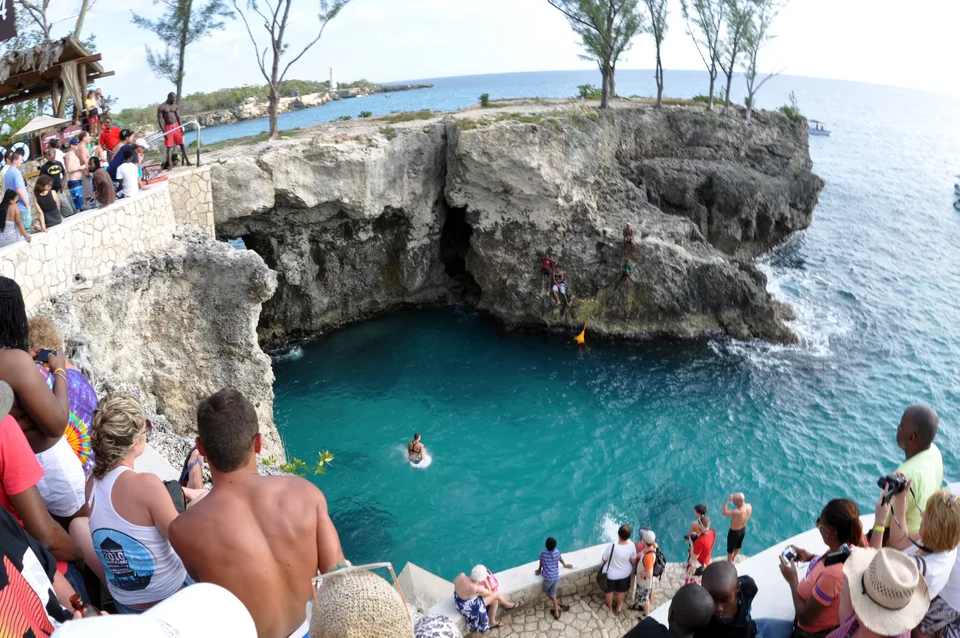
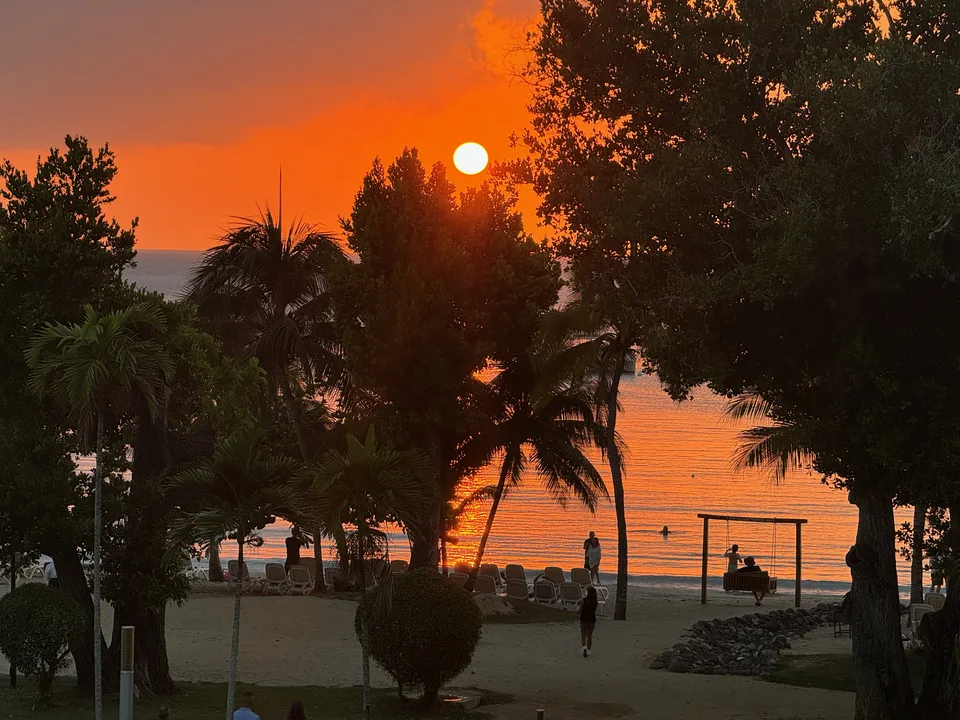
The rocky cove and sunset setting at Rick’s Cafe make it a recognisable West End stop. Its own visitor information lists daily opening from noon to 10pm and no admission or cover charge. Meals, drinks and optional facilities still cost money. Confirm current opening and any special-event arrangements directly, especially while recovery work continues across the region.
Cliff jumping is not a necessary part of the experience. The operator describes it as undertaken at your own risk; watching other people jump does not establish that it is suitable for you. Choose a table or viewing position, enjoy the coastal setting and arrange your return transport before the evening becomes busy. If sunset matters, check the day’s timing and weather rather than expecting the sky to reproduce a promotional photograph.
Choose accommodation by access and policy
Beachfront hotels suit travellers who want repeated, uncomplicated trips between room and sand. Larger resorts may simplify meals and organised activities, while smaller properties can make it easier to plan meals independently. Compare the full booking conditions: meal inclusions, taxes, transfers, room configuration and the distance to places you actually intend to use. A cheaper room can lose its advantage through repeated transport charges.
Ask for the category of room you will receive, rather than judging the booking from photographs of the property’s most expensive accommodation. Confirm bed arrangements, steps between facilities and the meaning of any sea-view description. Travellers with reduced mobility should request precise information about surfaces and entrances; a ground-floor room alone does not resolve the journey to the restaurant or water.
Cliff properties offer a different relationship with the water. Tensing Pen’s own accommodation questions provide a useful example of why policies need checking: its published age rules differ between December–April and May–November, with separate arrangements for full-property bookings. Do not infer that every West End hotel is adults-only, or that a quiet-looking property accepts children on every date. Request written confirmation for your party and travel period.
Arrive through Montego Bay with a plan
Sangster International Airport at Montego Bay is a practical arrival point to investigate for Negril. Compare your flight’s arrival time with the final transfer you can actually book. A late landing, baggage delay or immigration queue can change which connection is sensible. Leave a margin rather than building the whole journey around an optimistic road-time estimate.
The airport’s ground-transfer operator directory places authorised operators in the arrivals ground-transportation hall and lists JUTA Negril at desk 2. Arrange a clear meeting point, destination address, passenger count and luggage allowance. Ask whether your quotation covers the entire vehicle or each passenger, and whether stops or delays change the cost. Travellers needing adapted transport should confirm the equipment and transfer arrangements directly, not rely on a generic accessibility label.
Compare coach savings with the last connection
On 21 October 2026, the Knutsford Express fare table displayed Montego Bay Airport–Negril fares of J$2,350 online and J$2,500 for the standard adult category. These are Jamaican dollars, not US dollars. Check the actual travel date, departure and current fare before purchasing; a displayed route price does not guarantee a seat following your flight.
The operator’s journey and luggage information explains that fares are one way and office to office, with no hotel stops. Include the final connection in your comparison with a private transfer. Its published allowance includes one bag up to 50lb and a carry-on; verify charges if your luggage differs. The useful comparison is the complete journey for your group, including waiting and the hotel connection, rather than the coach ticket alone.
Plan local journeys and the evening return
Negril’s spread-out accommodation makes transport part of the daily budget. Before setting off, agree the destination, total price, currency and whether you are reserving a return journey. Keep the property’s address available offline. A driver who understands a hotel name may still need the specific entrance or building, particularly when a booking is in a smaller rental.
The FCDO’s Jamaica safety advice recommends approved transport and describes Jamaica Tourist Board identification for tourism taxis and minibuses, including the blue windscreen sticker and driver identification. Ask your accommodation to help arrange a trusted service. After an evening out, having a confirmed return avoids making rushed choices beside an unfamiliar road. Check walking conditions in daylight before relying on the same route after dark.

Make food part of the visit
Jamaican cooking deserves space beyond whatever comes with the room. Use menus to explore dishes and ingredients, then ask how food is prepared if you have dietary requirements. Miss Lily’s Negril restaurant information lists options including ackee and saltfish and festival, giving one concrete menu to examine before choosing where to eat. This is an example to research, not a claim of a personal dining experience.
Check whether a price is in Jamaican or US dollars, and what taxes or service charges will be added. Do the same when comparing a meal plan with independent dining. A kitchen can help with breakfast and snacks, but confirm cooking equipment, refrigeration and reliable water before paying extra for self-catering. Do not assume that a kitchenette means the supplies you need are within comfortable walking distance.
For allergies, communicate the ingredient and cross-contact concern clearly, then decide whether the kitchen can meet it. A familiar dish name does not establish identical ingredients across restaurants. Keep an easy alternative available on your first evening, when travel delays may leave you with less time and energy to investigate unfamiliar menus carefully.
Build a budget around ordinary days
Divide your spending into accommodation, arrival and departure transfers, meals, local journeys and optional outings. Then cost one realistic day from your chosen property. Include breakfast if it is excluded, transport to a different shoreline, drinking water and the evening return. This makes two apparently similar room rates easier to compare without inventing a town-wide average that conceals different travel styles.
Shopping is best approached with the same clarity. Agree prices and currency before a purchase, keep receipts for important items and check transport home for anything bulky. For crafts, ask about the maker and materials rather than treating an unverified origin story as a guarantee. Leave space in the budget for changed plans: bad weather may replace a boat trip with a meal, another taxi journey or a quiet day at the property.
Keep your comparison in a single currency using the rate and fees your payment provider actually applies. Avoid assuming a round exchange rate when evaluating a large accommodation bill. Ask a property how payment is collected, when the balance is due and what happens to a deposit after cancellation; those terms can affect affordability as much as the nightly headline rate.
Match the season to your flexibility
Heat, sunshine and rain affect how comfortably you use the coast, so arrange demanding walks and transfers with opportunities to rest. Use the Meteorological Service of Jamaica’s forecast close to departure and during the stay. A seasonal description cannot tell you whether a particular boat outing or stretch of road is suitable tomorrow.
Hurricane season normally runs from June to November, according to the official safety advice. Travel during that period calls for attention to forecasts, cancellation conditions and disruption cover. Recovery from an earlier storm can also outlast the season itself. Compare flexible accommodation and transport terms with the savings on a restrictive booking, and avoid placing an essential flight immediately after a distant excursion with little margin for disruption.
Spend three days without excessive driving
On day one, settle into your chosen shoreline. Take a short orientation walk in daylight, confirm local transport and have an uncomplicated meal. Leave the afternoon flexible for swimming only if conditions suit. An arrival day is a poor time to commit to a timed outing, especially after an international flight and a road transfer.
On day two, keep the morning for the beach or a properly checked water activity. Visit the West End later for a meal and coastal views, with your return arranged. On day three, choose one additional interest: investigate lighthouse-area access, spend more time along the beach, or take a separately researched excursion. Avoid combining several distant stops merely because they appear together in a tourism feature. Three slower days reveal more than three days spent chasing transfers.
If travelling with children, keep one familiar meal and a return to the room within each day’s plan. If travelling alone, choose evening arrangements that leave you comfortable with both the setting and the return journey. For a longer holiday, repeat a favourite stretch of coast before adding more mileage. Familiarity can improve a stay: you learn where you prefer to sit, how long a journey actually takes and which arrangements deserve another booking. Keep the final afternoon light enough to pack, reconfirm the airport transfer and absorb a change of plan without sacrificing sleep before departure.
Test a longer stay before signing a lease
A holiday address is not automatically a good home. For a longer stay, try the neighbourhood while following an ordinary weekday routine: buying groceries, preparing meals, doing laundry and reaching appointments. Inspect noise, ventilation, security, access after rain and the practical route to shops. Ask which utilities are included and how interruptions are handled before comparing monthly prices.
Read the tenancy agreement for payment currency, deposit handling, notice, repairs and responsibility for utilities. Obtain receipts and document the property’s condition. The Rent Assessment Board’s documentation guidance shows the importance of agreements, receipts and supporting evidence when raising rental matters. A photograph of a desirable coastline cannot answer whether a particular landlord, contract or building suits your household. Consider a short initial booking while inspecting longer-term options in person.
Check household details at the inspection: functioning locks, windows, cooking equipment, storage and any promised furniture. Record who handles maintenance and how to report an urgent fault. If a vehicle will be necessary, establish parking arrangements before signing. For a household arriving with substantial belongings, compare the practical cost of moving them with renting a furnished property for an initial trial.
Check work routines and essential services
If employment is part of the move, test the real commute at the times you would travel. If you depend on internet access, ask for evidence from the actual room or building and understand backup arrangements. A claim of Wi-Fi in a listing establishes little about a video call during an electricity interruption. Budget for the tools and services your own work requires.
Separate a personal trial of daily life from any assumption that work is legally permitted during it. Before accepting a role or conducting business, establish the relevant immigration and employment requirements. A convincing plan combines permission, income and workable household arrangements; enthusiasm for a holiday destination addresses only one part of that decision.
Check water conditions through the National Water Commission’s supply advisories and direct questions to the landlord. The Western Regional Health Authority lists Negril Health Centre, but confirm current services, hours and your treatment needs directly. Do not mistake regional-office contact details for clinic opening hours. For households with children or ongoing medical needs, confirm suitable provision before committing to a lease; proximity on a map does not establish availability.
Separate entry permission from a move
Consult PICA’s entry visa requirements using your nationality and circumstances. A visa requirement, permission to enter and the period granted on arrival are separate matters. Do not assume everyone receives the same number of days. Jamaica Customs’ passenger information states that the electronic C5 arrival declaration is mandatory and free; use the official government C5 portal rather than paying an unofficial intermediary for the form.
For a longer visit, read PICA’s extension-of-stay procedure and apply before existing permission expires. Employment requires checking the Ministry of Labour and Social Security’s work-permit rules and any applicable exemption. Study needs its own appropriate arrangements, while PICA’s permanent-residence information sets out separate categories and evidence. A holiday booking, rental contract or property purchase does not itself authorise employment or permanent residence. Discuss your specific purpose before making irreversible commitments.
Keep medical and practical contingencies realistic
Carry the medication you need with appropriate documentation and check its entry requirements before travel. Review insurance for the activities you actually plan and the possibility of evacuation, not just a generic holiday label. The FCDO’s Jamaica health information gives 110 for an ambulance and explains why medical planning matters. Confirm arrangements for pre-existing conditions with qualified providers rather than relying on a hotel’s reassurance alone.
Keep copies of bookings, insurance contacts and identification available securely offline. Agree how your group will communicate if mobile service fails. These preparations are particularly relevant while recovery continues, but they should support an enjoyable trip rather than fill every hour with checks. Once the essentials are settled, leave enough flexibility to enjoy the coast at the pace that brought you here.
Compare other bases before deciding
Use the Montego Bay destination page when comparing airport access and a different accommodation base. Lucea’s destination page and Savanna-la-Mar’s destination page help locate other western Jamaican settlements; they should not be mistaken for interchangeable resort experiences or promises of completed guides. Assess actual journey distances and services before planning a relocation around any nearby name.
Explore the Jamaica destination directory for the wider geography and the Jamaica consultant listings if you need professional help assessing immigration options. Verify a consultant’s credentials and scope before paying. Negril works best when its particular shoreline, transport needs and current conditions match your expectations. Choose those fundamentals carefully, and a modest itinerary can provide a richer visit than an overfilled list of attractions.
Official planning resources
Reviewed 21 October 2026. Use the official resources linked throughout this guide for admission, transport, housing and immigration decisions. Prices, services and rules can change; confirm the details relevant to your dates. Photography illustrates the locations and is not a live view.
View all official resources
- Jamaica Tourist Board: Negril
- FCDO: current Jamaica travel advice
- Jamaica Tourist Board: current travel alerts
- Jamaica National Heritage Trust: Negril Point Lighthouse
- Rick’s Cafe: visitor questions
- Tensing Pen: accommodation and age policies
- Sangster International Airport: transfer operators
- Knutsford Express: fare table
- Knutsford Express: journey and luggage questions
- FCDO: Jamaica safety and transport
- Miss Lily’s: Negril restaurant and menu
- Meteorological Service of Jamaica: daily forecast
- Rent Assessment Board: basic documentation
- National Water Commission: supply advisories
- Western Regional Health Authority: Negril Health Centre
- PICA: entry visa requirements
- Jamaica Customs Agency: arriving passengers
- Official Electronic C5 arrival form
- PICA: extending a stay
- Ministry of Labour and Social Security: work permit and exemption instructions (PDF)
- PICA: permanent residence
- FCDO: health and medical care in Jamaica
Plan the next part of your journey
Explore the Jamaica guide, browse other cities or compare consultants for your travel and relocation questions.