Visa
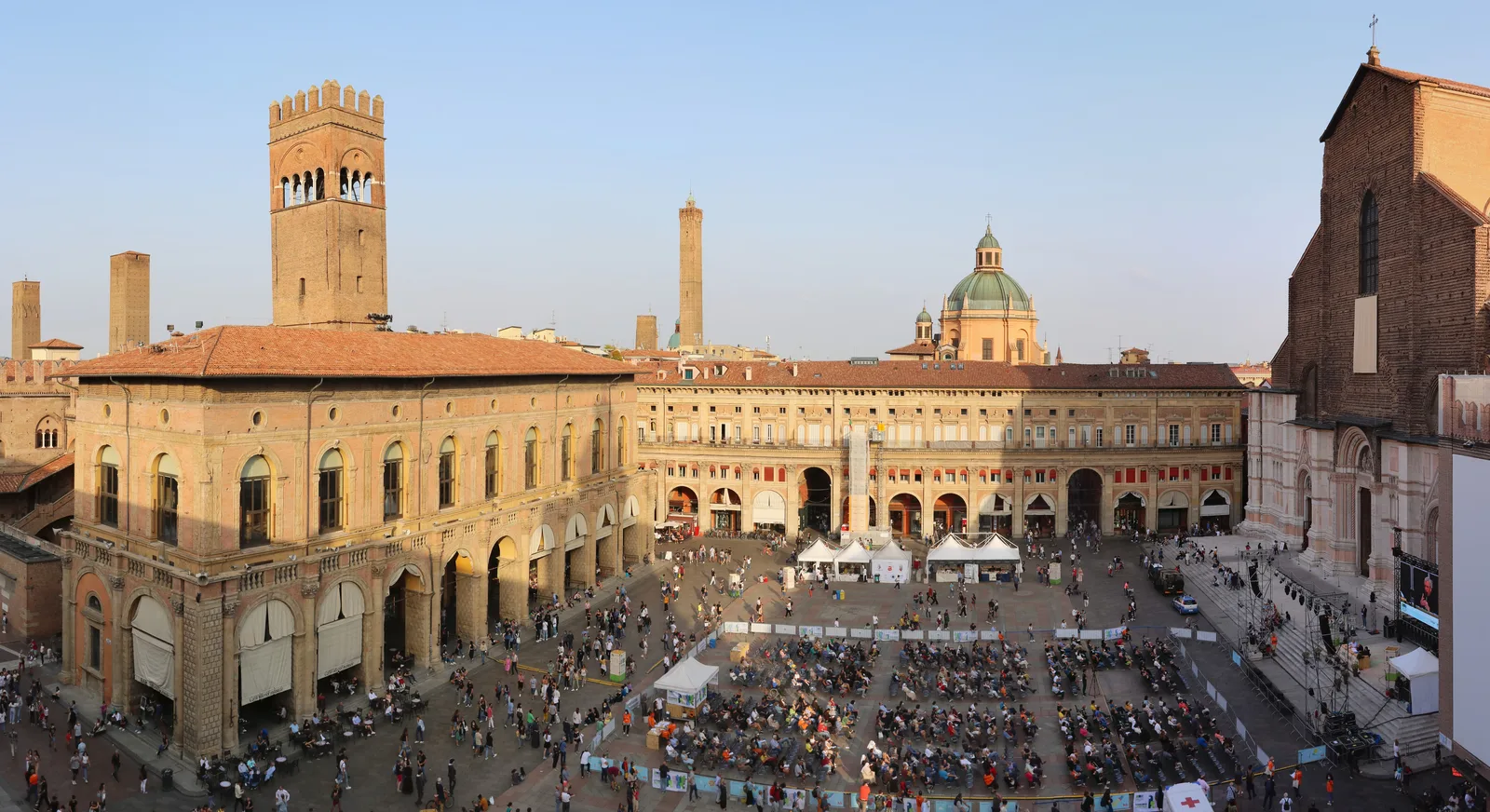
Give Bologna a stay of its own
Bologna makes a persuasive case for slowing down. Covered pavements lead between university buildings, food shops and substantial churches; beyond the centre, residential streets and the first hills reveal a city with more uses than sightseeing. It suits a short break built around walking and meals, or a longer Italian journey with rail excursions. Allow two full days for the central sights and a third for San Luca or another city, rather than treating every connection as an invitation to leave.
The regional capital of Emilia-Romagna works well as a base when you want city sights, food and onward rail connections within the same stay. Use Bologna Welcome's official visitor information for events and current access, and VisaWand's Italy country guide for broader preparation. If a move is the objective, spend part of the visit testing ordinary journeys and housing choices. Enjoying a central apartment for a weekend answers different questions from finding somewhere workable for a year.
Understand the city through its porticoes and university
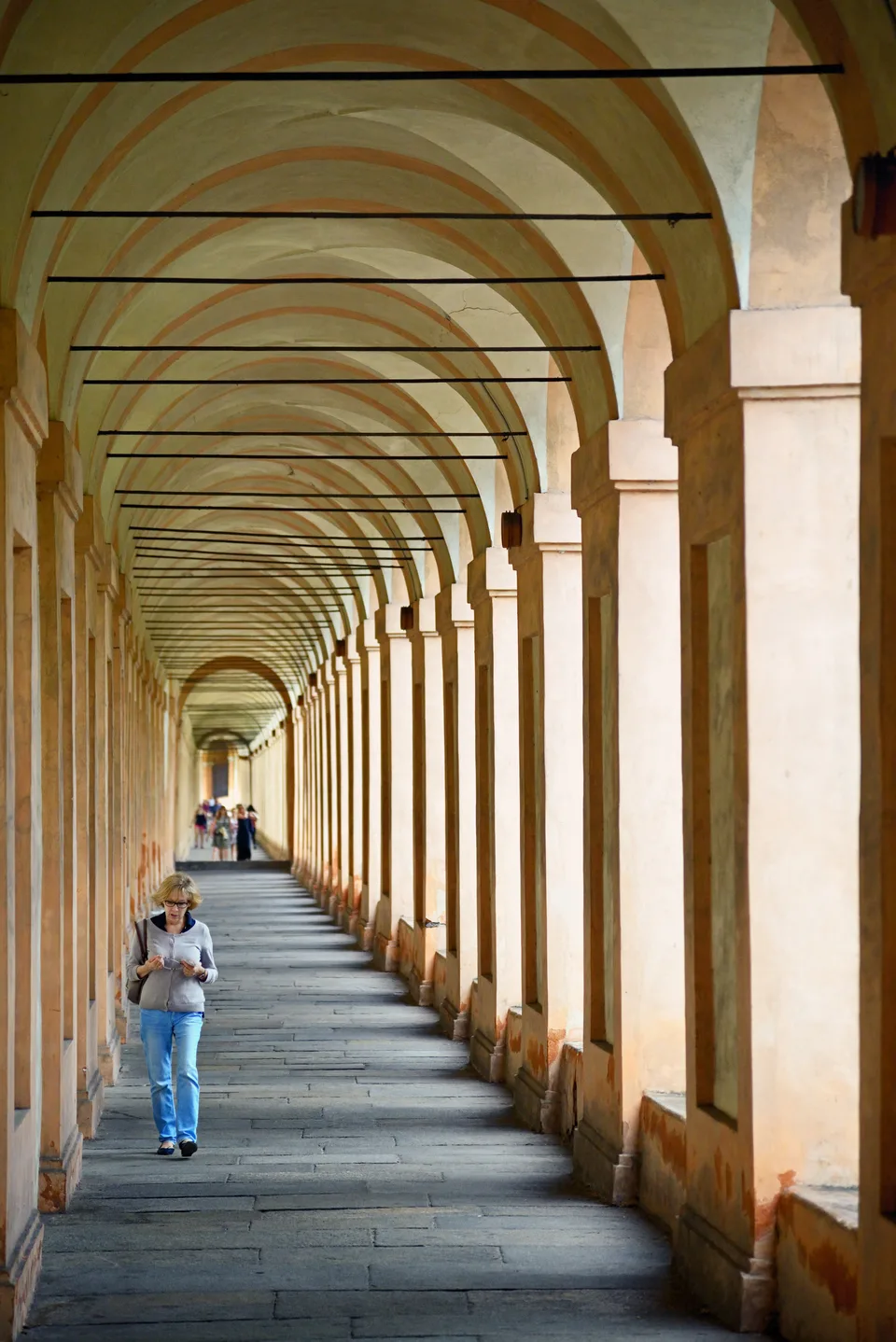
Bologna's porticoes are both architecture and everyday infrastructure. Shops open beneath them, people pause out of the rain, and routes continue through changes in building age and scale. The UNESCO inscription awarded in 2021 covers twelve selected ensembles and their surroundings, representing the larger network. It does not mean every covered pavement belongs to one continuous protected monument. Look for differences in columns, vaults and materials as you walk, rather than judging the city by a single photogenic arcade.
The university's own history describes 1088 as the conventional founding date of its Studium. That distinction matters: an institution developing through medieval teaching and student organisation is more interesting than a simple birthday claim. Its legacy appears in former teaching buildings and the present university district. Historic palaces, religious complexes and commercial lanes share space with people studying, shopping and working, so interiors have separate opening rules and residential doorways remain private.
Choose a base by the journeys you will make
Around Piazza Maggiore, you can reach many central visits on foot and return easily between bookings. The Quadrilatero's old market streets, immediately nearby, suit browsing and food stops, though a room above busy businesses deserves questions about noise. Towards Santo Stefano, the sequence of squares and porticoes works well for an evening walk. Around Via Zamboni, university life is part of the appeal; inspect the actual street and room orientation if quiet evenings matter.
The station area helps with early trains and repeated excursions. Bolognina, north of the railway, offers a different view of the city, with residential streets and contemporary cultural interests. Check which station exit and pedestrian route serve your accommodation. Saragozza suits an itinerary extending towards the portico of San Luca, but a hillside address can add a real climb. Compare door-to-door journeys instead of assuming that every address described as central is equally convenient.
Book accommodation for the building as well as the postcode
Choose among hotels, guesthouses, hostels and apartments according to the support and equipment you need. A hotel reception can simplify a late arrival; an apartment may offer laundry and cooking space for a longer stay. Verify those facilities individually. In an older building, ask about the floor, lift dimensions and any steps before the lift. A listing's broad accessibility symbol cannot explain the complete route from pavement to bedroom.
For summer, confirm bedroom cooling and whether its use is included. For winter, ask about heating arrangements. Compare the final price after cleaning charges, local accommodation tax and cancellation terms, then establish check-in instructions. If arriving by car, request the property's current access and parking directions before driving into the centre. A parking space somewhere nearby is different from permission to take your car to the front door.
Price several possible dates if your schedule is flexible. A change in room availability can matter more than a modest difference in bus fares, especially when you need a family room or step-free access. Keep cancellation deadlines in your calendar and save the property's written answers to questions that affect whether the stay will work.
Arrive with the final connection already understood
Bologna Centrale is the useful starting point for many rail arrivals. Search Trenitalia's current train times for your exact date and station, paying attention to changes and departure-specific conditions. Large stations take time to navigate, particularly when changing levels or finding another service. Avoid placing a non-refundable attraction booking immediately after a train or flight whose delay would leave no recovery margin.
The Marconi Express airport fare is €12.80 single or €23.30 return between the airport and Centrale. The advertised €2.30 Central Station–Lazzaretto fare does not cover the airport journey. Products have different date and return-validity rules, so choose the ticket that matches your plans. Check the operator's service notices before departure: maintenance or replacement transport can change the journey. Build the full transfer around walking, waiting and your onward connection, rather than treating the advertised monorail running time as an airport-to-hotel guarantee.
Some dated digital and contactless airport products include a seventy-five-minute urban TPER connection measured from turnstile validation. Check the conditions for the specific product before buying a second fare. This integration does not turn an urban ticket into an airport ticket. Groups should compare their actual passenger categories rather than multiply a headline reduced fare that may not apply to everyone.
Use urban buses deliberately
Many central sightseeing routes are manageable on foot; buses become more useful when luggage, fatigue or an outer address changes the calculation. The current Bologna urban fare table lists an ordinary or contactless ticket at €2.30 and a day ticket at €9. Coin-machine purchases aboard cost €2.50. These are urban products, not a general allowance for airport transport or regional excursions. Check the route's fare area before travelling beyond the city.
Under TPER's ticket rules, the ordinary ticket lasts seventy-five minutes from validation and the day ticket lasts twenty-four hours. Validate when boarding and again when changing bus. For contactless payment, keep using the same card or digital device; switching between a bank card and its phone-wallet version can disrupt recognition of the journey. Check the reader's acceptance signal. Do not assume that purchasing a ticket in an app completes any separate activation step required by that product.
Begin at Piazza Maggiore, then enter San Petronio
Piazza Maggiore gives the first day a clear centre: spend time looking at the surrounding civic buildings before disappearing into the smaller streets. It is also a convenient meeting point if members of a group want different visits. Continue into the Basilica of San Petronio, whose scale and Cassini meridian offer reasons to look beyond the unfinished appearance of its façade. General basilica admission is free; selected chapels require a separate ticket.
Check worship times and current entrance instructions rather than assuming tourist access throughout the day. Visitors avoiding steps can investigate the side ramp from Via de' Pignattari. Clothing and behaviour should suit an active church. Afterwards, return to the square or nearby streets for a break before the next interior. Keeping one substantial booking in each half-day leaves more room for what you notice between the headline sights.
Replace the closed Asinelli climb with a realistic viewpoint
The official Two Towers listing currently states that Asinelli is closed and Garisenda is not accessible. Their silhouettes remain part of the city's identity, but an old itinerary promising a tower climb is misleading. Follow local barriers and pedestrian diversions around the maintenance area. Do not buy an experience on the assumption that a reopening date exists unless the official operator confirms it for your visit.
An alternative is the Clock Tower at Palazzo d'Accursio, with standard admission of €10 including the Municipal Art Collections. The tower visit involves stairs and has no lift. Its reservation and the collection's opening hours require separate attention; inclusion in one ticket does not mean both are open at every tower slot. For anyone unable to climb, the squares and porticoes still provide a rewarding architectural day without forcing an unsuitable ascent.
Reserve the Archiginnasio rather than arriving on an old price
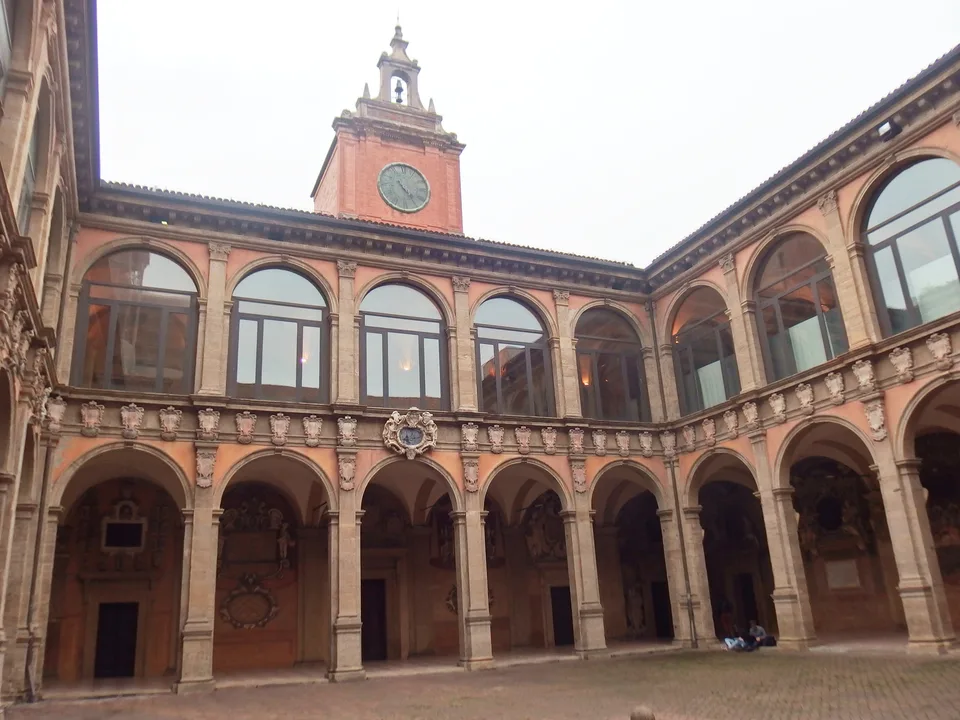
The Archiginnasio was built in 1562–63 and served as the university's seat until 1803. Coats of arms around its courtyard make academic history visible, while the wooden anatomical theatre connects the building to the teaching of medicine. Wartime damage and reconstruction are part of its story. The building's free entrance is distinct from the paid visitor experience, and the working library is not open for general tourist visits.
The current reservation service requires online booking for the theatre visit: €10 with an audio guide or €12 for the guided option at the standard rate. Bring your own smartphone and earphones for the audio tour, and avoid bulky bags. Access to the Stabat Mater hall can be restricted by institutional activity. For step-free first-floor access, investigate the lift entrance at Via de' Foscherari 2 and coordinate arrangements; the courtyard's surfaces present separate barriers.
Leave time for Santo Stefano
Santo Stefano rewards a different pace from a timed museum. Known as the Seven Churches, it combines buildings and spaces from different periods; its origins are debated, so the most appealing founding story should not be presented as settled history. Notice how the scale changes between church interiors, courtyard and cloister. The square outside is worth time even if your arrival falls outside the complex's visitor hours.
The official listing describes free admission with a donation. The full complex normally closes on Monday, while religious services can limit tourist visits on other days. Check the current timetable before arranging a tight sequence of appointments. A visit here can pair naturally with the Quadrilatero, but give each a purpose: quiet attention inside the complex, then shopping or lunch in the commercial streets, rather than rushing through both for photographs.
Make San Luca a considered half-day
The San Luca sanctuary stands on Colle della Guardia, reached by the portico extending roughly four kilometres from Porta Saragozza. More than six hundred arches do not make it a level walk: the hillside section requires sustained effort. Start with water, appropriate shoes and enough time to turn back. Covered sections provide shelter, but do not remove heat, slippery surfaces or the physical demands of the ascent.
Church entry is free, with tourist access subject to services. The dome viewpoint is a separate experience with its own charges and opening information. The basilica has lift access, while the dome and crypt are not accessible in the same way. Anyone needing an alternative to the walk should arrange transport and confirm the final arrival route. Allow a relaxed return rather than following the hill outing with another inflexible reservation in the centre.
Eat through the city's pasta traditions
Fresh egg pasta is central to Bologna's sfoglia tradition: tagliatelle, lasagne and filled shapes offer different ways to understand the same craft. A practical approach is to choose one dish carefully at lunch and leave room for another meal, rather than ordering a catalogue of specialities at once. If considering a pasta class, read the actual programme, language, duration and dietary arrangements before booking.
Traditional tortellini in broth contain meat ingredients, including pork products; the broth itself also needs checking. Vegetarians and people avoiding pork should discuss fillings, sauce and preparation directly. Larger tortelloni are a different shape and do not establish suitability simply by name. Read menus and any cover charge before sitting down, and ask about portion size if ordering several courses. A simple café breakfast and grocery purchases can help balance the cost of a longer restaurant meal.
Shop with a purpose and calculate your own budget
The Quadrilatero is useful for comparing food products and seeing the relationship between market lanes and surrounding civic spaces. Ask how fresh purchases should be stored and whether they will travel well. Check your destination's import rules before carrying meat, dairy or other restricted food across a border. A product sold in Bologna may come from elsewhere in the region; ask about origin if local production matters to the purchase.
Use actual admissions to construct a transparent sightseeing budget. An Archiginnasio audio visit at €10, Clock Tower ticket at €10 and urban day ticket at €9 total €29 before meals and accommodation. That is an example, not a citywide daily average. If you mostly walk and make only two separate bus journeys, the ordinary fares may cost less than a day product. Compare any visitor pass against the precise admissions and reservations you would use.
Choose seasons around walking and indoor alternatives
Spring and autumn are sensible starting points for a visit centred on porticoes and the hill walk. Keep rain protection available and leave an indoor option in the schedule. For summer, plan exposed stretches earlier, allow breaks and prioritise suitable accommodation cooling. In winter, check heating and daylight before committing to a long afternoon outside. Bologna's inland setting calls for different expectations from an Italian beach holiday.
Use ARPAE's Bologna weather information for forecasts and relevant environmental notices near your travel date. Seasonal expectations cannot establish the conditions of a particular weekend. Heavy rain can change an uphill outing; heat can make an otherwise modest route tiring. Museums, the Archiginnasio and unhurried meals provide alternatives when the weather discourages a longer walk. Check attraction calendars alongside the forecast, especially when a Monday affects the available indoor choices.
A three-day itinerary with room between bookings
Day one: start at Piazza Maggiore and San Petronio, then walk the Quadrilatero before your reserved Archiginnasio visit. Continue towards Santo Stefano if its timetable allows. Leave the evening for dinner and a shorter walk near your accommodation. If arriving late, save the theatre reservation for another day and use the first evening simply to find your bearings.
Day two: explore the university streets and choose the Clock Tower and art collections if the stairs suit you. Plan around the collection's actual opening hours. Keep time for browsing, a café and another part of the centre instead of filling every gap with an attraction. The Two Towers area should be approached according to current access restrictions, without expecting a climb.
Day three: give San Luca the morning or a substantial half-day, adjusting the route to weather and mobility. Spend the remainder at a slower pace, or substitute an excursion to one nearby city if that matters more to you. With only two days, choose between the hill and an additional interior; trying to preserve every activity usually removes the time that makes Bologna enjoyable.
Test housing and the commute before a move
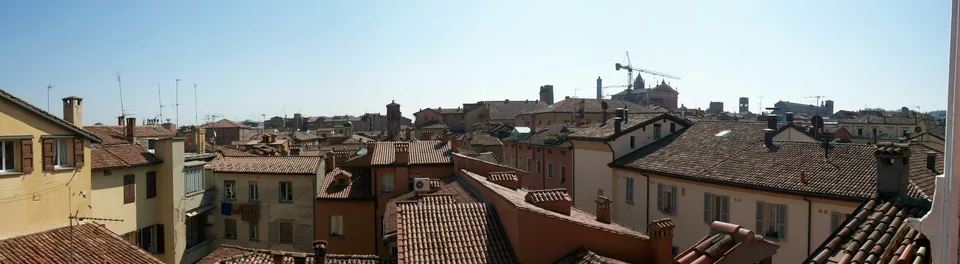
For a longer stay, compare each address with your actual workplace or teaching building. Test the journey at the relevant hour, including the walk to the stop, evening services and any uphill section. A larger room outside the centre can be attractive, but its value depends on the commute and household costs. Inspect heating, cooling, ventilation, appliances and internet arrangements, and establish which utility and condominium charges sit outside the rent.
The university's housing information links students to SAIS and ER.GO options. Subsidised residence places have eligibility and application requirements; they are not guaranteed with admission. Seek a written, appropriately registered lease and verify the person authorised to let the property before paying. Compare current offers for your dates rather than treating an old student budget as a reliable market rent. Book temporary accommodation if necessary while checking a longer-term home.
In a shared flat, establish whether the offer is for a private bedroom or a bed in a shared room, and how bathrooms and cooking facilities are allocated. Ask how bills are divided, what the deposit covers and how notice works. Photograph the agreed condition at handover and record meter readings where appropriate. Families should check usable space and school journeys as carefully as the advertised bedroom count.
Organise essential services as separate tasks
Arrange the codice fiscale through official guidance and establish the documents required for municipal residence registration. A tax identifier, lease registration and immigration permission serve different purposes. Keep appointments, receipts and copies organised. Before choosing a home, locate groceries, laundry, pharmacy access and relevant school or childcare services, then check utility account transfers and waste arrangements.
For students, the university's healthcare guidance explains status-dependent SSN registration and insurance options. Voluntary student registration currently starts at €700 per calendar year, subject to eligibility; payment alone does not activate coverage. Confirm the complete process with the local health authority. Other residents need the rules applicable to their own status, and visitors need appropriate travel arrangements. Do not assume that a policy suitable for a brief holiday will meet the conditions of a study permit or cover every household member.
Check how to obtain repeat prescriptions before moving, including whether documentation needs translating and how medicines are named locally. For household budgeting, separate initial costs such as deposits and account setup from recurring rent, bills and commuting. Keeping that distinction makes two seemingly similar rental offers easier to compare and reduces surprises during the first month.
Keep visiting, studying and working legally distinct
Start with the Foreign Ministry's Visa for Italy checker, selecting nationality, country of residence and travel purpose. Its visa-duration guidance explains the relevant short-stay limit of ninety days within any 180-day period across Schengen. Tourism permission does not establish a right to take a local job or settle permanently. Confirm the appropriate work or study route before making commitments that depend on it.
For arrivals on an Italian national visa, official arrival guidance requires the relevant residence-permit application within eight working days. EU citizens follow different arrangements; the university's entry and residence information separates the categories for exchange students. Longer-term settlement has additional eligibility conditions, not an automatic conversion from repeated holidays. Use VisaWand's Italy destination page and consultant listings to compare assistance and its scope; authorities decide applications, and a consultation cannot guarantee permission.
Choose one nearby city to complement Bologna
Modena's official visitor information centres on its cathedral, Piazza Grande and Ghirlandina ensemble, alongside food and other interests. Ferrara's official tourism portal offers a different emphasis, connecting medieval streets with Renaissance planning. Choose according to what you want from the day, then check rail connections and the final walk. Neither needs to be combined with another city simply because the map makes the distances look manageable.
For geographic orientation, use VisaWand's Modena location page and Ferrara location page, alongside the Italy location directory. These listings help place destinations and consultant services; consult the official visitor sites for the excursions' detailed arrangements. Returning to Bologna for an unhurried evening can be a better finish than attempting one more connection.
Official planning resources
Reviewed 15 October 2026. Use the official resources linked throughout this guide for admission, transport, housing and immigration decisions. Prices, services and rules can change; confirm the details relevant to your dates. Photography illustrates the locations and is not a live view.
View all official resources
- Bologna Welcome: official visitor information
- UNESCO: The Porticoes of Bologna
- University of Bologna: institutional history
- Bologna Welcome: Quadrilatero market district
- Bologna Welcome: Bolognina district
- Marconi Express: airport fares and ticket conditions
- Marconi Express: service and operating notices
- Trenitalia: train times and bookings
- TPER: Bologna urban fare table
- TPER: ticket validity and fare rules
- TPER: contactless payments
- Bologna Welcome: Basilica of San Petronio
- Bologna Welcome: Two Towers and current closure
- Bologna Welcome: Clock Tower and Municipal Art Collections
- Bologna Welcome: Archiginnasio palace
- Bologna Welcome: Archiginnasio reservations
- Bologna Welcome: Santo Stefano complex
- Bologna Welcome: Sanctuary of San Luca
- Bologna Welcome: fresh egg pasta traditions
- Bologna Welcome: tortellini ingredients and traditions
- ARPAE: Bologna weather and environmental information
- University of Bologna: housing services
- Italian government: codice fiscale guidance
- Italian government: municipal residence registration
- University of Bologna: international student healthcare
- Foreign Ministry: Visa for Italy checker
- Foreign Ministry: visa types and duration
- Foreign Ministry: arrival formalities
- University of Bologna: exchange student entry and residence rules
- Italian government: EU long-term residence
- VisitModena: official city visitor information
- Ferrara Terra e Acqua: official visitor information
Plan the next part of your journey
Explore the Italy guide, browse other cities or compare consultants for your travel and relocation questions.