Visa
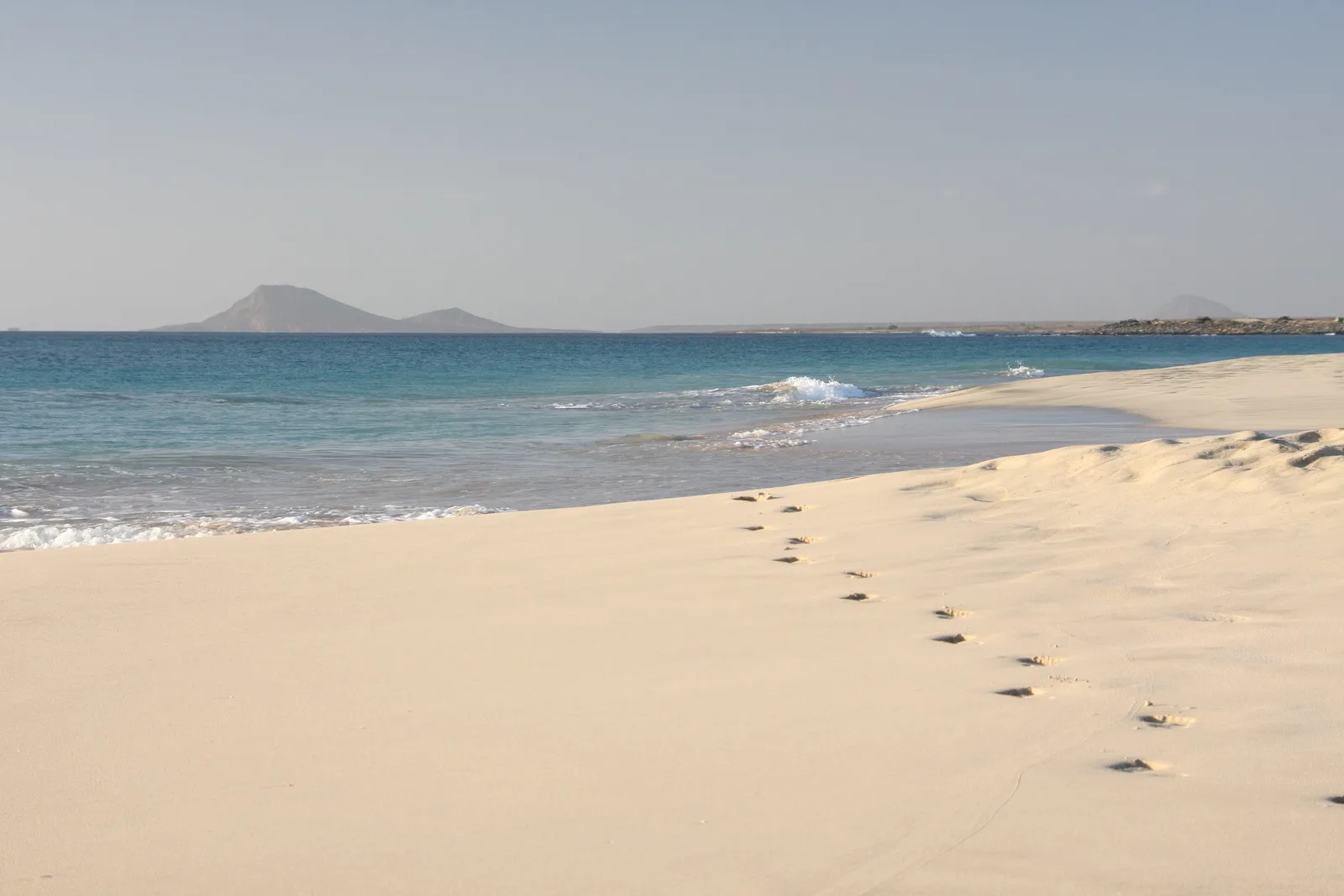
Santa Maria is a beach town with an island beyond it
Santa Maria, at the southern end of Sal, is a place to slow down: spend time by the water, learn a watersport, eat beyond the resort and leave room for an island excursion. Its appeal comes from combining a small town with a substantial visitor economy. Choose it for that combination, rather than expecting the museums, public transport and neighbourhood variety of a national capital.
Give a first visit several usable days, with accommodation chosen around how much time you want in town. A week can accommodate lessons, beach days and an excursion without constant packing. A shorter stay can work if the international flight schedule fits, but count the days after arrival and before the airport journey, not simply the nights purchased.
Start with the official Sal island information and VisaWand’s Cabo Verde country guide. Sal is one island within an archipelago. Another island’s scenery, hospital, ferry connection or cultural attraction should not be described as though it sits just outside Santa Maria.
Decide early whether this is principally a resort holiday or a town-based stay with independent outings. Both can work, but the distinction affects meals, transport and the value of an all-inclusive package. Someone who expects to eat out and take lessons most days should calculate those extras before paying for facilities they may barely use.
Salt, fishing and the growth of tourism
The municipality’s historical account dates Santa Maria’s foundation as a salt-extraction settlement to 1830 and its elevation to vila status to 1935. Salt therefore belongs at the centre of the town’s story, alongside fishing and the later development of tourism. A beach holiday becomes more interesting when you understand what supported settlement before the hotels arrived.
The same municipal chronology links the construction of Sal’s airport in 1939 with the development of Espargos. It also records the arrival in 1963 of the Belgian couple whose holiday house subsequently became Hotel Morabeza. These histories help explain why the airport, administrative centre and principal visitor town occupy different places on the island.
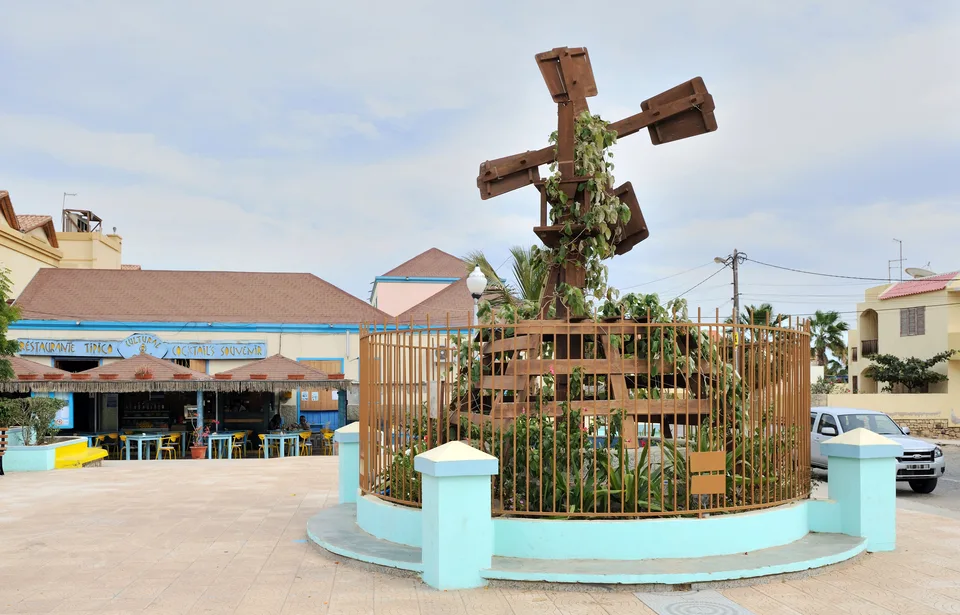
In Santa Maria itself, allow time for the streets around the centre and the waterfront, rather than moving only between a hotel entrance and a tour vehicle. Marcelo Leitão square offers one point of orientation. The older photograph accompanying this section records the square’s windmill structure, not a guarantee that the surrounding shops remain unchanged. Ask before photographing people at work and keep entrances and working areas clear.
Pick the town, the hotel strip or a quieter complex
A central address suits visitors who want a choice of meals and straightforward access to the town’s streets. A beachfront hotel can suit a different routine: breakfast, pool, a beach visit and a planned outing. The useful question is how you will spend each day, rather than which broad area is universally best.
Check the precise property on a map, including the entrance, route into town and the location of any facilities advertised separately. A complex marketed with Santa Maria in its name may still require transport for dinner or shopping. Do not assume that a nearby beach provides a practical walking route after dark, or that a distance across sand is equivalent to a paved, accessible path.
For families, compare the room layout and daily routine before the pool photographs. Establish sleeping arrangements, meal times, cooking options and the age rules for activities. Travellers with mobility needs should request details of surfaces, steps, lifts and the bathroom. An apartment may provide space, while a hotel may simplify meals and transfers; the better choice depends on the services actually included in the booking.
Beach days need a choice of conditions
Santa Maria’s beach and pier are the obvious starting points for understanding its coastal character. Watch activity from a considerate distance, leave space for people carrying equipment and do not assume that every stretch of waterfront is organised for visitors. A beach photograph captures a moment; it does not establish present-day swimming conditions, lifeguard cover or accessible facilities.
The current safety guidance recommends using beaches with a lifeguard on duty and following warning flags. It warns of strong tides, currents and unpredictable waves. Choose the swimming place for the conditions and the least confident swimmer in your party. A watersports beach can be attractive to watch without being an appropriate swimming choice for children.
Arrange shade, drinking water and a way to keep valuables secure before settling in for a long afternoon. Check whether a lounger, parasol, shower or toilet is available and whether its use requires a purchase. Keep children within active supervision even when the sea looks inviting. For anyone who mainly wants relaxed water time, a property with a suitable pool may be worth considering alongside proximity to the shore.
Watersports: book instruction for your actual level
For an identifiable operator enquiry, Hotel Morabeza’s water-sports page describes the independently operated Mitu & Djo centre beside its Beach Club and mentions wing foiling and stand-up paddleboarding. Follow the operator’s current programme and ask which activity and location suit your experience. Advertising an activity does not mean it can safely operate in every combination of wind and sea conditions.
A useful quotation states lesson duration, group size, equipment, transport, insurance requirements and cancellation arrangements. Ask whether the price buys supervised instruction or only equipment rental. Beginners should establish how the instructor assesses swimming ability and what happens if conditions change after the session starts. Experienced participants should check the equipment and rescue arrangements rather than assuming previous experience removes those questions.
Leave flexibility in a lesson-based holiday. Put the first assessment early in the stay so that an unsuitable day does not consume the only remaining opportunity. Avoid booking a demanding island excursion immediately after the first session if you do not know how tiring it will be. For diving, confirm medical and certification requirements with the operator and leave the appropriate interval before flying, following qualified advice.
Turtle encounters should follow the conservation calendar
Project Biodiversity’s turtle-season guidance distinguishes nesting observations from hatchery visits. Its specific 2026 notice gives guided nesting-tour dates from 1 July to the end of September, excluding certain beaches. Other general seasonal text on the page is broader. Do not interpret the presence of turtles later in the year as permission to arrange an unsupervised nighttime nesting visit.
The organisation asks visitors to use certified guides, avoid lights and flash, never touch turtles and keep their route to the sea clear. Follow the guide’s instructions rather than approaching for a closer picture. An operator should be able to explain its authorisation, the permitted location and the rules before taking payment. Wildlife sightings remain uncertain even on a properly organised visit.
The hatchery programme is different: seasonal public talks and nest excavations are described as free, with donations welcome. Project Biodiversity explicitly says it does not provide public turtle releases. Confirm the day’s programme directly before travelling to a talk. Do not buy an experience promising that you can handle a hatchling or release it yourself, and keep the distinction clear when explaining the outing to children.
Ponta Preta and the protected southern coast
The coast around Santa Maria includes habitats with a purpose beyond recreation. Project Biodiversity’s protected-area information describes Ponta do Sinó as a system of dunes, salt flats, lagoons, beaches and marine territory, including Ponta Preta and Algodoeiro Bay. Its account identifies pressures from development, vehicles, lighting and disturbance of nesting and feeding areas.
Choose walking, cycling or an organised outing that follows permitted routes. The organisation’s responsible-tourism guidance asks visitors not to drive or walk over dunes and plants, touch or feed wildlife, or remove natural material from beaches. Before booking a buggy or horse excursion, ask where it travels and how the operator avoids sensitive areas. A dramatic coastal photograph is not a reason to leave the authorised route.
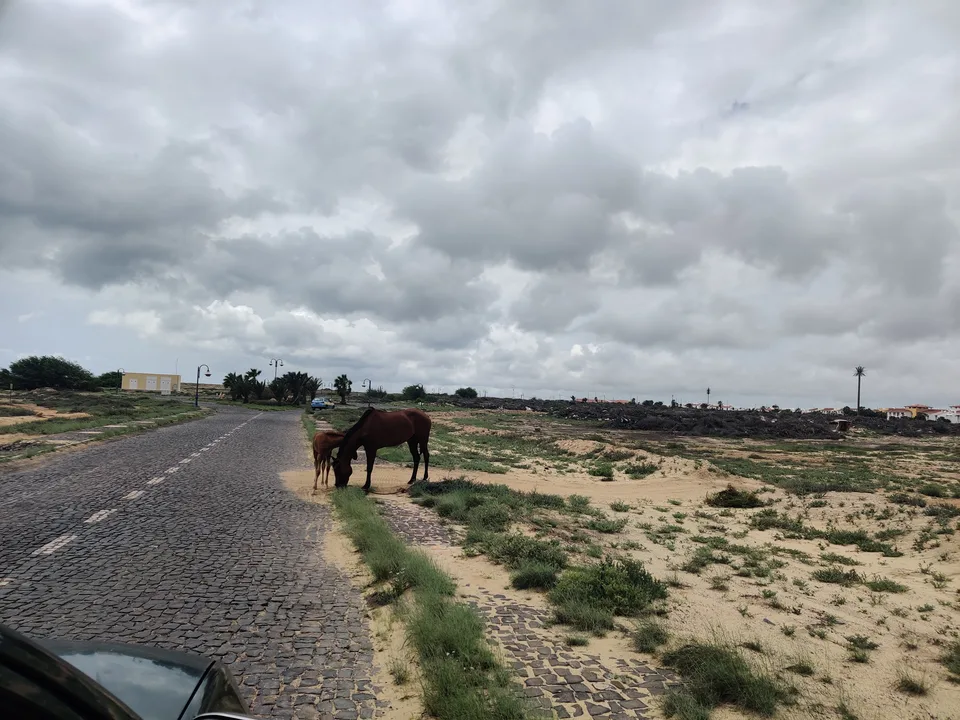
For a self-guided walk, establish the return route and realistic distance before leaving town. Carry water and sun protection, and avoid relying on an exposed shoreline as the only way back. The accompanying road photograph shows the Ponta Preta area, rather than a swimming beach. Select the actual destination with current local information and turn back if conditions or access differ from what you expected.
Pedra de Lume and an excursion around Sal
The conservation organisation’s Sal excursion guide describes Pedra de Lume’s salt pans inside an extinct volcanic crater and the surviving structures associated with salt production. It is a useful counterpoint to Santa Maria’s present-day tourism economy. Visit for the landscape and industrial history, and ask how much of the experience involves walking, interpretation or entering the saline pools.
Reliable current admission and shower charges were not established for this guide. Obtain the total from the visitor operator, including any extras, before deciding whether a quoted tour represents good value. Highly saline water should not be marketed as a verified treatment for a medical condition. Ask about restrictions and practical arrangements if anyone has a health concern, sensitive skin or difficulty negotiating uneven surfaces.
Palmeira, Espargos, Murdeira and Buracona are separate island destinations, not neighbourhoods within Santa Maria. Decide which interests you and agree a route with enough time at the main stop. A long list of place names can conceal a day spent mostly getting in and out of a vehicle. Ask about lunch, entrances, guide language and the return time, and avoid promising a particular optical effect or wildlife sighting.

Hotels, apartments and the full cost of a stay
The Hilton Cabo Verde Sal Resort provides one established beachfront option on Avenida dos Hoteis. Its operator places it less than a kilometre from central Santa Maria and the restaurants near the pier, and lists a pool, spa, watersports centre and children’s club. Confirm the facilities and age arrangements relevant to your party, rather than assuming every service is included in a room rate.
Hotel Morabeza offers rooms and suites as well as the Bazamore apartments opposite the hotel entrance, across the street. That distinction matters: an annex apartment and a beachfront hotel room are different accommodation products. Ask which facilities an apartment guest can use, whether meals can be added and what cleaning or linen service comes with the booking.
Compare package holidays with independent arrangements using the same list of inclusions. Check baggage, airport transfers, meals, drinks, local charges, activities and cancellation conditions. For self-catering, establish cooking equipment, food-storage space and how you will obtain groceries. For a long stay, ask about laundry and the actual internet connection inside the unit. A low headline rate may cease to be economical once several separately charged household needs are added.
Airport transfers and the changing taxi tariff
Amílcar Cabral International Airport serves Sal. For a concrete hotel-operated option, Morabeza’s practical information lists an international-flight transfer at 940 CVE per person, arranged with flight details. Reconfirm this undated published price and eligibility directly; it is a particular hotel service, not the regulated fare for every taxi between the airport and Santa Maria.
There is a reason to be cautious with old fare advice. A September 2026 municipal announcement records approval of an updated taxi tariff and discusses implementation after official publication. The municipality’s tariff page still says the information is being updated. This guide therefore does not present an older quoted airport fare as the current legal tariff. Ask to see the applicable authenticated table and confirm the full charge before departing.
The airport operator’s transport page describes formal taxis and informal hiace services. Its approximate minimum hiace fare is generic information across the islands, not a verified airport-to-hotel fare or a scheduled airport bus. For a shared journey, establish the destination, departure arrangement, luggage and final stop. For a transfer, agree passengers, baggage, waiting allowance and what happens if the flight is delayed.
For a late flight, establish where you can leave bags and whether you can use facilities after checkout. If arranging your own collection, keep the driver’s number and the property’s exact entrance available offline. Agree whether the quotation is per person or per vehicle; the distinction can change the comparison substantially for a family or group.
Food and spending in escudos
The official gastronomy guide presents cachupa as a dish with several variations, combining maize and beans with ingredients that may include meat or fish. Ask what is in the version being served, particularly if you are vegetarian or have an allergy. Trying food in town can add something to a resort stay, with time to compare menus, ask what is cooked that day and enjoy a meal without rushing.
Build the budget in Cabo Verdean escudos, CVE. Check the current exchange information and distinguish the reference exchange rate from what a hotel, bank or payment provider actually offers. A quoted euro price is not automatically better value than an escudo price. Ask which currency the charge will use and retain the receipt.
Keep separate allowances for accommodation, meals, transport, lessons, admissions and compulsory charges. The consular portal lists the international airport security fee at 3,400 CVE, approximately €30.83, where payable. That is separate from a visa and from accommodation-related charges. Ask the hotel to identify any tourist contribution and the applicable age and night limits in writing. Do not assume an all-inclusive description includes every government charge, off-site activity or airport formality.
When to visit and what the season changes
The official climate guide describes a broadly dry November-to-July period and a warmer, wetter August-to-October period. These are archipelago-wide patterns, not a weather guarantee for Santa Maria. An island holiday can still have wind, cloud or conditions unsuitable for a particular activity. Choose the month around your interests and tolerance for changing plans.
For watersports, ask the operator which conditions suit the discipline and your level, rather than selecting dates solely from a general sunshine chart. For wildlife, use the conservation calendar and the current authorised programme. For a swimming-focused family holiday, assess pool facilities and lifeguard arrangements alongside the weather. None of those choices is settled by a national average temperature alone.
Pack for time outdoors without assuming every evening will feel like midday. A light extra layer, sun protection, suitable footwear and protection for documents are practical additions. Keep an alternative plan for an excursion day that becomes unsuitable. If you plan to visit another island, leave room around the connection rather than arranging it immediately before the international flight home. Operational disruption can cost more than an additional flexible night.
Four days without rushing the island
Spend the first full day in Santa Maria: orient yourself around the centre, visit the waterfront considerately and choose a beach or pool session according to conditions. Keep dinner straightforward while learning the routes between the accommodation and town. After a late arrival, resist making the first morning depend on a prepaid early departure.
Use day two for a lesson or guided marine activity suited to your experience, leaving the remainder flexible. A second session can be more rewarding than fitting several unfamiliar activities into one afternoon. On day three, make the island excursion your main plan, selecting the stops that interest you and agreeing the inclusions beforehand. Leave time for the salt-industry landscape instead of treating every viewpoint as a photo break.
Use day four for a slower town day, another lesson or a confirmed conservation activity appropriate to the season. Prospective residents should replace some leisure time with a property viewing, grocery shop and trial journey to work or school. This sequence is a suggested balance, not a timetable that guarantees every combination. Keep the final flight day simple and confirm airport collection with enough margin for the operator’s check-in requirements.
Living here requires a workable household plan
A longer stay needs a different budget from a beach holiday. Before signing a lease, establish the rent period, deposit, service charges, utilities, repairs responsibility and notice conditions. Verify the owner or agent’s authority and have an independent professional review the agreement. A holiday apartment’s weekly price does not establish the cost or legal terms of a residential tenancy.
Ask who supplies water and electricity to the actual address, how accounts are paid and whether there are shared or backup-system charges. Test water pressure, appliances, mobile reception and internet inside the unit. Find out who responds to an urgent fault and how to obtain assistance outside office hours. Inspect the approach road and daily shopping route as carefully as the view from the balcony.
Families should confirm school admission, curriculum, language, fees and transport directly before committing to housing. Anyone with regular medical needs should assess continuity of care and prescriptions before moving. Work out a typical weekday, including commuting and errands, during the reconnaissance stay. Living beside the sea can be attractive, but the practical decision depends on whether the place supports the household’s work, education and health needs throughout the year.
When viewing a furnished property, record the inventory and existing damage with the manager. Ask whether air conditioning, cleaning and linen changes are included or metered separately. Keep the lease and receipts available outside the unit, and make sure every adult in the household knows how to contact the manager.
Entry, residence and essential health preparation
Use the Cabo Verde government’s visa information and nationality-specific advance-visa list to identify the rules for your passport and purpose. Complete official EASE pre-registration separately where required. UK entry guidance says British citizens may visit visa-free for up to thirty days, should register at least five days before arrival and must show proof; from 1 July 2026, missing registration or proof attracts double TSA at the border. Do not generalise that visa exemption to every nationality.
Passport guidance differs: the national portal states three months beyond the stay, while British guidance requires six months after arrival. Resolve the rule relevant to your document with the consulate and carrier before travel. The consular FAQs explain TSA and exemptions. The residence-visa categories cover purposes including employment, investment, qualifying study and family reunification. Tourism does not establish local work permission or automatic permanent residence.
Official health advice identifies 130 for an ambulance and warns of limited medical facilities. Arrange suitable treatment and evacuation insurance, discuss health preparation with a clinician and plan prescription supplies. Use VisaWand’s Cabo Verde visa consultant directory and consultant listings for further enquiries. The Cabo Verde location directory helps compare destinations; it does not mean every entry contains a completed guide.
Official planning resources
Reviewed 21 October 2026. Use the official resources linked throughout this guide for admission, transport, housing and immigration decisions. Prices, services and rules can change; confirm the details relevant to your dates. Photography illustrates the locations and is not a live view.
View all official resources
- Visit Cabo Verde: Sal
- Sal municipality: history
- UK FCDO: Cabo Verde safety
- Morabeza: Mitu and Djo Water Sport Center
- Project Biodiversity: turtle season and visitor rules
- Project Biodiversity: Sal protected areas
- Project Biodiversity: responsible tourism
- Project Biodiversity: Sal excursions
- Hilton Cabo Verde Sal Resort
- Hotel Morabeza
- Morabeza: practical visitor information
- Sal municipality: September 2026 taxi tariff decision
- Sal municipality: taxi tariff information
- Cabo Verde Airports: public transport
- Visit Cabo Verde: gastronomy
- Visit Cabo Verde: climate
- Cabo Verde government: visas
- Cabo Verde: nationalities requiring visas before travel
- EASE: official traveller pre-registration
- UK FCDO: Cabo Verde entry
- Cabo Verde Consular Portal: EASE and TSA
- Cabo Verde Consular Portal: residence and visa categories
- UK FCDO: Cabo Verde health
Plan the next part of your journey
Explore the Cabo Verde guide, browse other cities or compare consultants for your travel and relocation questions.