Visa
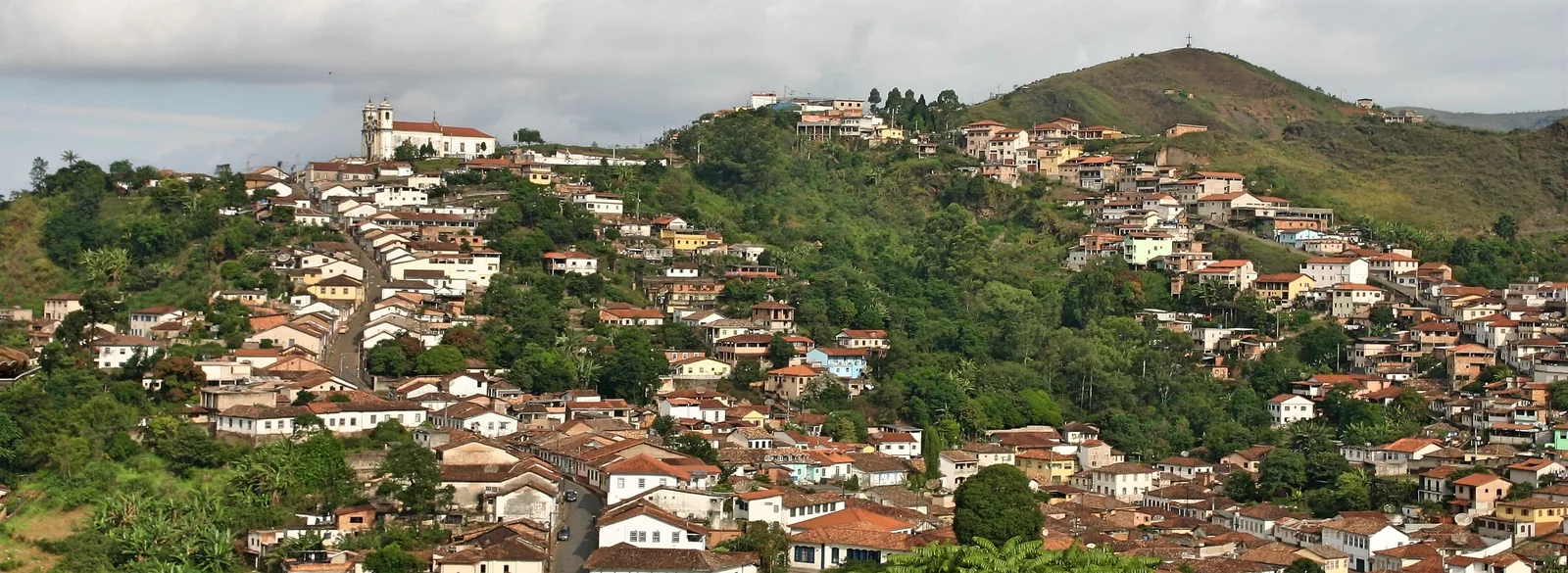
A historic city best explored at a slower pace
Ouro Preto’s first impression is vertical: streets rise towards churches, tiled roofs tumble down slopes and viewpoints reveal another hill beyond the one you have just climbed. The historic centre rewards walking, but the distances on a phone screen tell only part of the story. Accommodation, footwear and the route home deserve thought before you assemble an ambitious sightseeing list.
Come for Baroque architecture, religious art, the history of gold mining and the experience of a Brazilian university town within a preserved urban landscape. Two or three nights let you see more than a day trip’s principal façades. A longer stay makes sense for specialised interests, study or assessing whether the city’s daily routines would suit you.
This is Ouro Preto in Minas Gerais, southeast Brazil. Its municipality includes districts well beyond the historic centre, so check an accommodation address carefully. VisaWand’s Brazil guide provides the national background; the Brazil destination page helps place Ouro Preto within a wider journey. For the visit itself, allow generous pauses and choose a few interiors to appreciate properly.
For questions that published listings leave unanswered, the municipal tourism office gives its address as Rua Cláudio Manoel, 61, Centro, and lists turismo@ouropreto.mg.gov.br for contact. Check its attendance arrangements before making a special journey. It is a useful starting point for identifying the responsible attraction or service; admission decisions and specialist access arrangements still need confirmation with the individual venue.
Read the beauty alongside the history
The city developed around the eighteenth-century gold rush and served as the capital of Minas Gerais province from 1720 to 1897. UNESCO’s Historic Town of Ouro Preto description explains how its irregular streets and buildings follow the rugged terrain. The World Heritage inscription recognises an urban ensemble, including churches, civic buildings, bridges, fountains and houses, rather than one isolated monument.
Aleijadinho and Manuel da Costa Ataíde are central names in the artistic story. The 1789 Inconfidência Mineira, a conspiracy against Portuguese rule, adds another dimension to the visit. Avoid reducing the city either to decorative churches or to a simple tale of national heroes. Its surviving places invite questions about wealth, political power and whose labour made that wealth possible.
Mining interpretation is particularly important here. Seek explanations that address the knowledge and work of enslaved Africans alongside the objects produced from gold. There is no need to romanticise dangerous underground labour in order to appreciate the skill of the people who undertook it. Give historical interpretation as much time as the architecture’s photographic appeal.
Choose an area by the walk you will repeat
A room near Praça Tiradentes offers a useful reference point for a first visit. Check the precise approach, however: “close to the square” may include a steep final climb or a staircase. Ask the property how a taxi reaches the entrance and whether you will need to carry luggage any distance.
Compare addresses towards Antônio Dias and Pilar according to the places you intend to visit and where you want to eat in the evening. There is no universally best quarter. A quiet room with a manageable route to dinner may serve you better than a panoramic room that makes every errand demanding. Read recent information about noise and access, then confirm anything essential directly.
Bauxita deserves a different assessment for people connected with the university. UFOP’s housing information identifies it beside the Morro do Cruzeiro campus, while also describing student accommodation in the historic centre. A visitor primarily interested in churches and a student attending classes may have quite different ideal addresses. Test the journey that will matter to you most often.
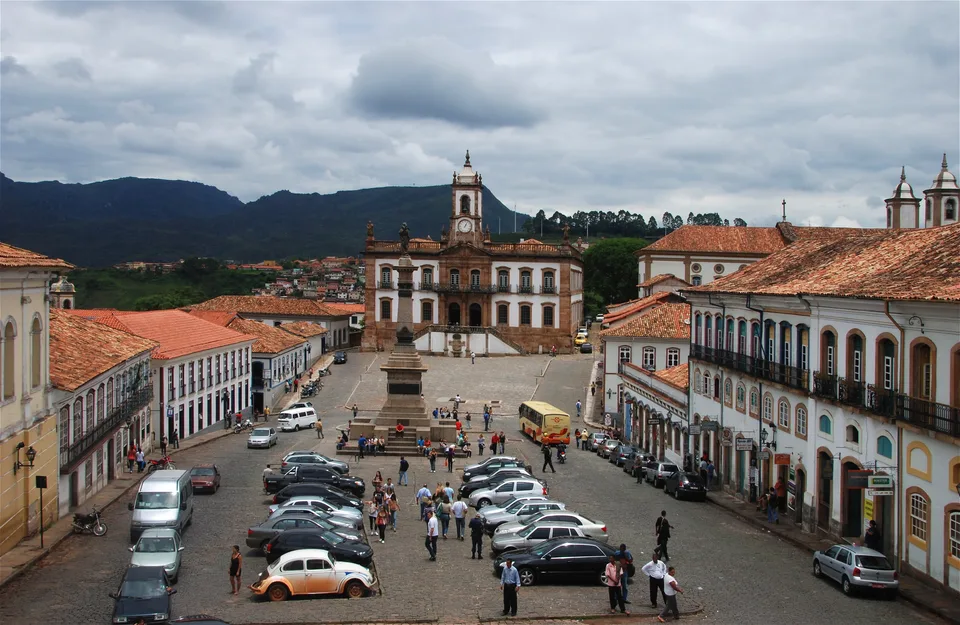
Start with Praça Tiradentes and the museum
Praça Tiradentes is a useful place to begin understanding the central area. Pause to read the arrangement of the square and the surrounding public buildings before heading into the adjoining streets. For a short first walk, it also gives you a recognisable point to return to while you establish the city’s gradients and directions.
The Museu da Inconfidência occupies the former municipal chamber and prison building at Praça Tiradentes, 139. Inaugurated in 1944, it preserves material connected with the conspiracy and the wider history and artistic culture of Vila Rica. A visit provides context that is easy to miss when the surrounding buildings become only a backdrop for photographs.
Check practical arrangements with the museum. Its institutional page and official registry entry differ over admission and weekend hours. The institutional page lists Tuesday–Thursday opening from 10am to 6pm, with last entry at 5pm, and later Friday hours. Do not assume a free visit or a particular Sunday opening from an older listing; confirm the current arrangements before building your day around them.
Give São Francisco more than a passing glance
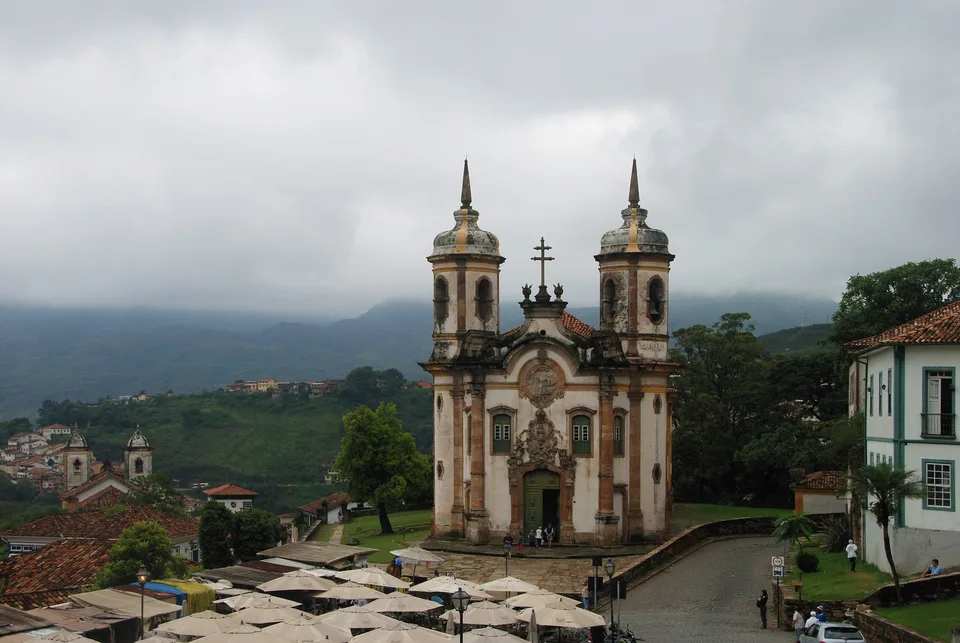
São Francisco de Assis is a natural choice if you have time for only a small number of church interiors. The municipality’s actual church record identifies Aleijadinho’s design and the use of curves in its plan and façade. Look at how the exterior is composed before entering, rather than treating the doorway as a quick route to the next photograph.
That listing gives sightseeing hours of 8.30am–5pm, Tuesday to Sunday, with Monday closed. It directs visitors to contact the church about the current admission fee. Check again around religious celebrations or any works. Worship and tourist access have different purposes; a service is not simply an alternative visiting slot when sightseeing is closed.
Make time to sit and look. Keep voices low, follow the photography instructions displayed on the day and dress for an active religious building. If you would benefit from interpretation, arrange a suitable guide rather than expecting every detail to explain itself. A well-informed visit to one church can be more rewarding than a hurried sequence of five.
Compare Pilar’s exterior with its interior
The Basílica de Nossa Senhora do Pilar offers a different artistic experience. The municipal description stresses the carved and gilded decoration and explicitly corrects a common exaggeration: the visible gold is gilding, not solid gold. Look for the relationship between painted surfaces, carving and the organisation of the interior rather than concentrating only on a dramatic claim about quantities of precious metal.
The detailed visitor schedule lists Tuesday–Sunday sessions of 9–10.45am and noon–4.45pm. That break matters when planning a morning walk. Confirm the admission charge with the parish. The municipal record says the basilica ticket also covers the sacred-art museum; check the arrangements at purchase rather than assuming all neighbouring religious sites share a ticket.
The parish’s Museu de Arte Sacra information places that collection in the crypt beneath the sacristy. Ask about the route if stairs or confined spaces could be a problem. An exterior photograph cannot establish what the internal access will involve, particularly in an older building adapted to additional visitor uses.
The parish’s architectural account also explains a revealing distinction: the present stone front developed through nineteenth-century rebuilding, while important parts of the carved interior belong to the eighteenth century. The façade and decoration therefore tell different stages of the building’s history. Notice the arrangement of the nave, side passages and chancel as well as individual objects. This gives the visit a clearer purpose than trying to absorb every name and date in a single circuit.
Take the mining story underground thoughtfully
The municipal Mina Du Veloso listing presents the site as both an eighteenth-century gold mine and a place interpreting African knowledge in colonial mining. It describes galleries where traces of work by enslaved miners remain visible. The address is in São Cristóvão, so plan the journey separately from an assumed continuous circuit around the central square.
Contact the site about the current tour, admission, language and access requirements. Its published Sunday hours are inconsistent within the same municipal page, so a precise Sunday finishing time would be unreliable here. Give the operator your actual needs before booking, especially if anyone is uneasy underground or has difficulty with uneven surfaces.
Treat the visit as interpretation of a workplace and its human history. Ask what the route involves and follow the guide’s instructions throughout. Do not enter unregulated workings or assume that an accessible entrance means every passage is suitable for everyone. The value lies in understanding what you are seeing, not in completing the greatest possible underground distance.
Book a pousada for comfort as well as character
An older building can make a memorable base, but inspect the practical details of the room on offer. Ask about stairs, bathroom access, ventilation and the approach from the street. Confirm whether a photograph shows your room category or a different part of the property. If you need step-free access, request a description of the entire route.
For cooler nights, check bedding and any heating arrangements rather than assuming they are standard. For rainy periods, consider a comfortable indoor place to sit and somewhere to dry clothing. A room with a view is appealing; a room that lets you rest comfortably between outings is essential.
Clarify breakfast, parking, reception hours and the final price, including any charges collected separately. Travellers arriving by car should confirm that parking is actually available for their booking and how it is reached. Those arriving late should obtain explicit check-in instructions. Choose cancellation terms that fit the reliability of your onward transport and the importance of fixed-date events.
Reach Ouro Preto through the right airport connection
Belo Horizonte International Airport at Confins, CNF, is a practical air gateway. The municipality’s arrival page gives a reference road distance of 142 kilometres from the airport to Ouro Preto. This is a separate transfer, not a quick city-airport hop. Compare a prearranged vehicle with a connection through Belo Horizonte, allowing for baggage collection and traffic.
BH Airport’s ground-transport information includes Conexão Aeroporto buses, taxis, app-based services and rental cars. Its bus information mentions Terminal Álvares Cabral in Lourdes. Confirm the terminus of the particular bus you choose: arriving at a Belo Horizonte airport-bus terminal does not necessarily place you at the departure point for an Ouro Preto coach.
If using two buses, establish both legs and the transfer between them before committing to the connection. A late flight may make an overnight stay in Belo Horizonte more realistic. Do not rely on a proposed direct airport service described in an old news item; obtain a current, bookable departure for your intended date.
Use coaches and local buses for different journeys
Pássaro Verde advertises the Belo Horizonte–Ouro Preto route, with fares from R$61.55 when checked for this guide. That is a starting price, not a quotation for every departure or the total cost of an airport journey. Check the selected service, baggage conditions, boarding location and final amount before purchase.
Within the municipality, Consórcio Rota Real’s current route directory lists urban and district services, including Bauxita–Rodoviária and connections involving São Cristóvão, Piedade and other areas. Use the appropriate route rather than assuming all buses serve the historic sights. Confirm the stop and the return direction, particularly where one-way streets or a hillside layout make the two boarding points different.
For longer stays, try the service at the hours you would actually use it. A route that works for a leisurely afternoon may be less convenient for an early class or evening shift. Keep the operator’s current information available and ask about payment arrangements before relying on a particular card. This guide does not quote an unverified universal local fare.
Plan food and shopping around a compact day
Choose a place for lunch near the part of town you are exploring rather than adding an unnecessary crossing of the centre. Look at the menu, portion size and pricing method before ordering. A leisurely lunch can be a useful break between climbs; it need not become another scheduled attraction that forces the rest of the day to hurry.
For a specific regional food tradition, look towards São Bartolomeu’s handmade fruit preserves, especially goiabada cascão, a textured guava preserve. The municipality records this tradition as intangible heritage from 2008. If buying preserves, check the maker, ingredients, packaging and transport suitability. A locally associated product is more informative when you understand how and where it is made.
When shopping for craftwork or souvenirs, compare quality and ask about the material rather than assuming every item is locally produced. Buy manageable quantities and keep receipts where appropriate. For a longer stay, identify ordinary grocery, laundry and household-shopping options as well. The city you need for everyday life extends beyond its most photographed retail streets.
Build a realistic budget without false precision
Keep accommodation, intercity travel and admissions as separate parts of the budget. Add meals, local journeys and anything required for a chosen excursion. A coach’s advertised starting fare does not cover the airport connection, and a church’s admission does not establish the cost of visiting several unrelated sites.
Use current quotations for the dates and party size you actually need. Museum information is inconsistent enough that it would be misleading to build a supposedly exact cheap-day total from published fragments. Check eligibility for any concession directly and carry the required evidence. Do not assume a foreign student card qualifies wherever a reduced price is mentioned.
The free part of the experience is substantial: streets, views and the setting of public squares reward attention. Spend admission money where an interior or guided interpretation adds something you value. Set aside a transport reserve for a day when fatigue, rain or heavy luggage makes another climb unattractive. That flexibility is often more useful than fitting one extra attraction into the programme.
Match the season to walking and indoor visits
The municipality’s geographical information describes an average altitude of 1,179 metres and rainfall concentrated in summer. The elevation helps explain why packing solely for an imagined tropical holiday is a poor fit. Bring layers suitable for cool evenings as well as protection for wet-weather walks.
For a visit centred on walking, compare the drier part of the year with the appeal of greener scenery and quieter indoor time during wetter periods. Check a current forecast before substantial outdoor outings. Typical seasonal conditions are context, not a guarantee for a particular weekend, and the weather can alter which part of an itinerary is comfortable.
Use shoes with dependable grip and take extra care on wet stone, steps and slopes. Keep an indoor visit or a relaxed meal available when a planned walk becomes less attractive. If a festival or religious celebration is the reason for travelling, verify its dates and programme before arranging accommodation; a recurring event’s usual month is not a confirmed schedule.
Use three days without racing the hills
Day one: settle into your accommodation, orient yourself around Praça Tiradentes and visit the Inconfidência museum if its confirmed opening fits. Keep the first walking circuit modest. The aim is to understand the centre and your route home, not to exhaust the group before the main sightseeing begins.
Day two: visit São Francisco during its sightseeing hours, then allow a substantial lunch break before another chosen interior or a shorter street walk. If Pilar is part of the day, account for its published late-morning closure. Avoid treating every church as interchangeable; leave time to notice the differences.
Day three: choose a prearranged mine visit, a slower exploration of Pilar or a carefully planned outing beyond the centre. Change the order around Mondays, weather and actual access. Travellers considering a move can use an additional day for housing viewings and ordinary errands. This is an achievable outline, not a promise that every attraction will be open in this sequence.
Give the surrounding districts their own planning
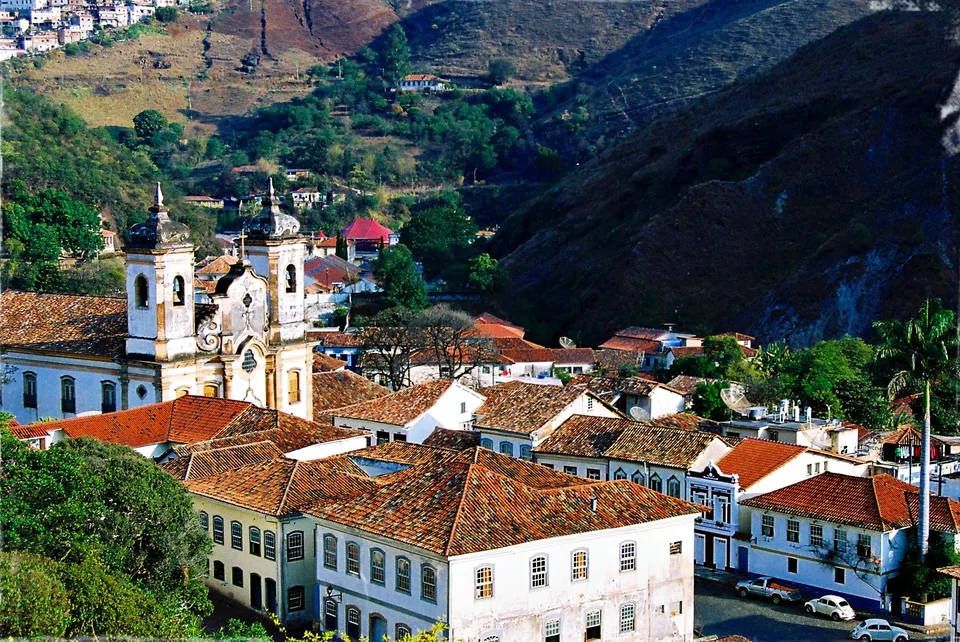
The municipal district directory makes clear that Ouro Preto covers more than the historic centre. Lavras Novas, São Bartolomeu and Cachoeira do Campo belong to a wider visitor geography. Check which place a property or excursion actually serves before assuming it is conveniently located for a short stay in town.
Lavras Novas particularly needs a transport check. The operator’s published timetable has limited departures that differ by weekday, and it does not present a Sunday schedule. For example, its Tuesday and Thursday listings show an Ouro Preto departure at 5pm and a Lavras Novas departure at 5.45am. That is not a flexible same-day sightseeing shuttle. Confirm the current return or arrange another transport option.
Compare VisaWand’s Lavras Novas location page and Mariana location page when considering an extension. For Mariana, note that a February 2026 municipal railway update discussed restoration after suspension, rather than publishing a resumed timetable. Verify an operating service before basing your journey on the old tourist train.
Test the routines of living here
Inspect prospective housing in person and walk the routes to groceries, work or classes. Check the building after rain where possible, asking about damp, ventilation, repairs and the condition of plumbing. Establish which bills are included and whether the internet connection has been tested in the actual unit. An attractive façade is only one part of a functioning household.
For water and account questions, Saneouro’s customer information provides official channels for checking services and bills. Clarify responsibility for outstanding accounts and changes of account holder before signing. Keep an itemised initial budget covering the deposit, moving costs, furniture where needed and the first month’s transport.
Students should discuss housing eligibility and current selection procedures with UFOP. Federal and private repúblicas are distinct arrangements, and a university housing description is not a promise of an immediately available room. Ask about shared costs and household expectations. Families and anyone with continuing medical needs should separately confirm schools, suitable providers and medication access before committing to a longer move.
Separate a holiday from permission to live and work
Brazil’s entry rules depend on nationality and purpose. The consulate’s electronic visitor-visa guidance confirms that Australian, Canadian and US passport holders again require visas for tourism or business from 10 April 2025. Other passports need their own check with the responsible consulate. Do not confuse a visitor visa’s validity with an unlimited permitted stay.
Local employment requires the appropriate work and residence procedure. Eligible remote workers with an overseas employer can examine the separate digital nomad requirements, which include financial evidence and medical cover alongside other documents. Renting a room and having an internet connection do not establish immigration permission.
Formal education has a separate study residence route, while longer-term settlement depends on a qualifying residence category and required registration. VisaWand’s consultant directory can help identify professional assistance; check credentials and service scope. For onward planning, use the Belo Horizonte location page and Brazil location directory, remembering that a location listing does not necessarily contain a completed guide.
Official planning resources
Reviewed 17 October 2026. Use the official resources linked throughout this guide for admission, transport, housing and immigration decisions. Prices, services and rules can change; confirm the details relevant to your dates. Photography illustrates the locations and is not a live view.
View all official resources
- Ouro Preto Tourism: visitor assistance
- UNESCO: Historic Town of Ouro Preto
- UFOP: student housing options
- Ibram: Museu da Inconfidência visitor information
- MuseusBr: Museu da Inconfidência registry record
- Ouro Preto Tourism: São Francisco de Assis church
- Ouro Preto Tourism: Basílica do Pilar
- Pilar Parish: Museu de Arte Sacra
- Pilar Parish: architecture and construction history
- Ouro Preto Tourism: Mina Du Veloso
- Ouro Preto Tourism: arrival and district transport
- BH Airport: airport connections and vehicle pickup
- Pássaro Verde: Belo Horizonte–Ouro Preto coach
- Rota Real: current Ouro Preto and district routes
- Ouro Preto Tourism: São Bartolomeu and fruit preserves
- Ouro Preto Municipality: geographical information
- Ouro Preto Tourism: municipality and districts
- Rota Real: Lavras Novas bus timetable
- Ouro Preto Municipality: tourist-railway restoration update
- Saneouro: household water and account questions
- Brazilian Consulate: electronic visitor visas
- Justice Ministry: employment residence procedure
- Brazilian Consulate: digital nomad visa
- Federal Police: residence for study
- Justice Ministry: residence categories
Plan the next part of your journey
Explore the Brazil guide, browse other cities or compare consultants for your travel and relocation questions.